Alimentary Canal

Introduction

The digestive system is made up of organs that digest food, assimilate its nutrients, and eliminate any leftover waste. The gastrointestinal (GI) tract, which connects the mouth to the anus, is essentially a long, continuous tube. For a variety of harmful bacteria, the alimentary canal serves as an immunological barrier. Gut-associated lymphoid tissue (GALT) and the various pH conditions that exist throughout the alimentary canal perform this role.

What is the Alimentary Canal?

Because of their complicated body plans, humans have a digestive tract with two openings: a mouth at one end and an anus at the other. The food material travels in a single path along the alimentary canal as it passes through several specialised organs. The Alimentary Canal is a similar tube whose main purpose is to facilitate food particle circulation and ultimately assist in nourishment.

Check out online study options are a great way to clear the science concepts you need. Study Science class 7th Lesson 2.

Parts of Alimentary Canal 

Mouth: The mouth, also known as the oral cavity or buccal cavity, where the alimentary canal starts, contains teeth and a tongue that help break down food particles.

Pharynx: It is commonly referred to as the throat area. When food is swallowed, it travels via the pharynx.

Oesophagus: The throat and stomach are connected by a lengthy tube called oesophagus.

Stomach: The stomach is a structure that resembles an extended pouch that is situated between the oesophagus and the small intestine. Here, the food is transformed into a liquid suspension to facilitate absorption.

Small Intestine: As a result of the high rate of nutrient absorption in this area, it is sometimes referred to as the “workhouse” of digestion. It is the Alimentary Canal’s longest section.

Large Intestine: The alimentary canal’s terminus is located here. The “leftovers” in this area are used to absorb water and vital nutrients, which are eventually expelled through the anus
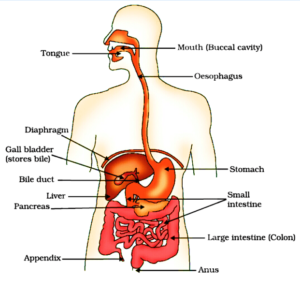
The digestive system is made up of organs that digest food, assimilate its nutrients, and eliminate any leftover waste

The Structure and Parts of Stomach

  • The lower surface of the stomach’s curve to the left and the upper surface to the right is referred to as the lesser and larger curvatures, respectively. 
  • The fundus, body, and pylorus are its three parts. The fundus, which is the main part of the stomach, is elevated above the esophageal entrance. 
  • The stomach’s body and pylorus are it’s middle and base, respectively. 
  • The incisura angularis is the point where the body region and the proximal antrum converge.
  • The muscularis mucosa, a thin layer of smooth muscle, is composed of the inner mucus epithelium, a bigger loose connective tissue called laminar propria, and the innermost layer of the gastrointestinal wall, known as the mucosa.
  • Connective tissue, blood vessels, alveolar tissue, and Meiisner’s nerve plexus make up the submucosal layer.

Which are the Parts of the Alimentary Canal and What are their Functions?

Parts of Alimentary CanalStructureFunctions
Buccal Cavity
  • The vestibule and actual oral cavity make up the mouth. 
  • A hard palate is the roof of the mouth, which divides the nasal cavity from the oral cavity.
  • The muscular tongue has numerous taste buds and covers the base of the mouth.
  • Dentin makes up teeth, which are covered in enamel, the toughest tissue.
  • Ingestion of food.
  • Tongue helps in producing the sense of taste by detecting chemicals present in food.
  • Teeth chew and grind the food material into smaller pieces. During mastication, incisors are used for cutting the food pieces, canines for tearing, premolars and molars for chewing and grinding.
Pharynx
  • It is a muscular structure resembling a tube. 
  • It connects to the oesophagus and the trachea, two passages.
  • Here, swallowing is carefully timed to prevent food particles from entering the trachea.
Oesophagus
  • It is a muscular, extensible, mucus-coated tube that runs from the pharynx to the stomach. 
  • At each end, a muscular sphincter protects it.
  • Peristalsis causes the bolus to move toward the stomach. The lower or cardiac sphincter stops food from passing from the stomach back into the oesophagus.
Stomach
  • Just behind the diaphragm is where the stomach is located.
  • Chief cells, which secrete the enzymes found in gastric juice, parietal cells, which secrete hydrochloric acid, and intrinsic factors, which work in conjunction with vitamin B12 to preserve the lining of the stomach wall, cover the inner surface of the stomach and its glands.
  • Releases hydrochloric acid, which helps to break down food particles, and activates dormant pepsinogen to produce pepsin, which aids in the breakdown of proteins. 
  • Along with food, it also contributes to bacterial death.
Small Intestine
  • In the abdominal cavity, the small intestine looks like a lengthy, coiling loop. 
  • There is a brief duodenum section, then the jejunum region, and the longest region, the ileum. 
  • The mucosal layer, which is the small intestine’s innermost layer, is covered in numerous microscopic folds known as villi
  • The vermiform appendix, a structure that resembles a worm and is located at the back of the small intestine, has no known physiological function.
  • The small intestine’s surface area is increased by microvilli, which improves food absorption. 
  • In the small intestine, the presence of secretory cells at the base of crypts prevents bacterial development. 
  • The duodenum is where food is continuously broken down, whereas the jejunum and ileum primarily help the body absorb the food that has been digested.
Large Intestine
  • It resembles a large muscular tube connecting the rectum and small intestine. 
  • It consists of the anus, colon, rectum, and caecum. 
  • There are sigmoid, transverse, ascending, and descending sections in the colon. 
  • The caecum is a structure resembling a pouch.
  • The lubricating mucus covered in faeces is produced by the existing intestinal mucus glands. 
  • Here, undigested food stuff concentrates and salts and water are absorbed. 
  • The rectum acts as a holding area for faces.

Summary

Because of their complicated body plans, humans have a digestive tract with two openings: a mouth at one end and an anus at the other. The lower surface of the stomach’s curve to the left and the upper surface to the right are referred to as the lesser and larger curvatures, respectively. In the abdominal cavity, the small intestine looks like a lengthy, coiling loop. The lubricating mucus covered in faces is produced by the existing intestinal mucus glands.

Frequently Asked Questions (FAQs)

1. What is the Function of the Epiglottis?
Ans. Epiglottitis is a flap-like structure that covers the glottis, the windpipe’s entrance, when food is swallowed. This stops the food from choking and entering the windpipe.

2. What Function does Meiisner’s Nerve Plexus Serve?
Ans. Meissner’s nerve plexus controls the gastrointestinal tract’s secretions and local blood flow and aids in the start of the peristaltic movement.

3. Where are Delta Cells Found and what do they do?
Ans. The pancreatic islets of Langerhans contain delta cells. Somatostatin, a hormone that prevents the body from producing other hormones, is produced by these cells.

4. What Pigments are Present in Bile, and where do they Come From?
Ans.  The bile pigments include greenish biliverdin and yellowish bilirubin. Dead red blood cells’ haemoglobin is degraded, and the bile pigments that result are expelled.

5. What Function does E. coli Serve in the Human Digestive System?
Ans. E. coli is a type of bacteria that helps with digestion, breaking down food particles for absorption in the small intestine and producing vitamin K.
Agriculture – Agricultural Practices

Introduction

Agriculture has played a significant role in the rise of human civilization, but organic farming of domesticated species has produced food surpluses that have enabled people to live in urban areas. Agriculture is the art and science of creating and cultivating soil, increasing yields, and keeping animals. Agriculture and farming have historically been essential to human life. The expansion of agriculture and farming was a factor in the development of civilization.

What is Agriculture? 

Agriculture is characterized as the practice of growing plants and animals for human consumption. Various parameters need to be considered in agriculture, such as the type of crop, soil characteristics, environment, and so forth. Farmers decide which crop should be cultivated at what time and location based on these parameters. Aside from that, reasonable soil, environment, and season are insufficient to produce a high-quality product. It necessitates several tactics that need to have been used.

Want to get an “A” on your Science exams? Let our expert teachers be your guide toward improving your grades and reaching your highest potential. Watch the related video of this chapter in Class 8th Science lesson no 1.

Importance of Agriculture

Social and Economical Aspect:

  • Agriculture increases the availability of food, which improves population nutrition and promotes population health
  • A small number of people cannot do agriculture. Each of its processes requires the input of numerous persons. Consequently, this results in the creation of jobs.

Environmental Aspect:

  • Waste management depends heavily on agriculture. The biodegradable wastes can be transformed into manure, which the plants can use as a source of food.
  • With the right treatment, bare soil can be turned into crops, ensuring agriculture’s efficient use of land resources. 
  • It significantly contributes to preserving the microclimate of any location and raises the standard of the ecosystem as a whole.

What are the Basic Agricultural Practices?

Those consecutive actions that are taken to guarantee the proper production of crops are referred to as “agricultural practices.” To guarantee a yield of great quality, this must be done. The next section has a quick discussion of the steps.

Steps of Agricultural Practices

  • Preparation of soil:
    • It is crucial to prepare the soil to make sure it is rich, well-drained, well-aerated, uniform, and can hold enough moisture. This stage is essential because the soil must survive numerous adverse situations. After all, it is exposed to them. 
    • Typically, the preparation is carried out with the aid of various tools, such as a hoe and a plow.
    • To provide the best aeration, the soil must be dug out and loosened.
    • To spread the dirt equally and avoid lumping, leveling is done after plowing. 
    • Finally, there is a chance that the soil has run out of nutrients, which could be bad for plant growth. Manure and fertilizers are thus applied to restore it.
  • Seed selection and sowing
  • Choosing the right seeds is crucial to getting a good crop. 
  • A quality seed, also known as an HYV or High Yielding Variety seed, guarantees improved plant growth, increased disease resistance, and increased yield. 
  • The chosen seeds must be planted in the prepared field after being chosen. 
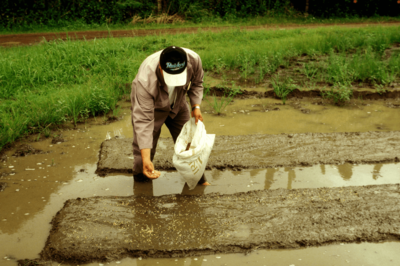
  • Sowing is the distribution and burying of seeds into the soil, whether by hand or with the aid of machines.
    A farmer sowing the seeds into the soil by hand
  • Irrigation
  • To meet the crops’ water needs, the best possible amount of water is applied to the soil where the crops are growing. 
  • A source of water, such as ponds, wells, rivers, etc., is typically supplied by a variety of channels, such as canals or pipelines.
  • Crop maintenance
    • Considering that the crops must grow for a long period and are exposed to the elements, they need some maintenance. 
    • In essence, they can be destroyed by the numerous pests, birds, rodents, etc. that are likely to attack them.
    • Unwanted plants known as weeds can encroach on cropland and compete with crops for nutrients, stifling the development of crops. 
    • To protect them, it is therefore imperative to apply weedicides, insecticides, etc. 
    • To stop bird assaults, farmers frequently construct scarecrows.
  • Harvesting
    • It is the process of gathering the crop’s valuable components, and it is typically carried out after the crop is fully mature and has reached its ideal development stage. 
    • It can be carried out manually with implements like a sickle or with the aid of machines.
  • Storage
  • In this last step, the harvested goods are moved to the granaries or storehouses before being distributed to the market. 
  • To prevent desiccation, it is essential to dry the items before storing them, especially grains and pulses.
  • The items are additionally fumigated to deter rodent and pest infestations.

What are Sustainable Agricultural Practices?

The concept of sustainability is the prevention of resource depletion by the adoption of specific actions that preserve both the health of the natural world and the future of humanity. Some of the measures taken in agriculture are discussed below.

  • Making sure that soil is properly used and prepared to prevent erosion.
  • Reducing water use through the application of new methods and tools.
  • Drop-by-drop watering is done with drip irrigation, which is time-controlled. In the revolutionary practice of hydroponics, nutrients are dissolved in water and fed to plants to provide them with nutrition.
  • The use of biodynamic farming methods is recommended.
  • Crop rotation proposes that different crop types should grow in a specific region.
  • Promoting the expansion of the pests’ natural predators to reduce the need for pesticides, weedicides, and other chemicals.

Summary

Agriculture is characterized as the practice of growing plants and animals for human consumption. Agriculture increases the availability of food, which improves population nutrition and promotes population health. The biodegradable wastes can be transformed into manure, which the plants can use as a source of food. It is crucial to prepare the soil to make sure it is rich, well-drained, well-aerated, uniform, and can hold enough moisture.  Crop rotation proposes that different crop types should grow in a specific region.

Frequently Asked Questions 

1. Define Pesticides?
Ans. Pesticides are a class of chemicals that include insecticides, herbicides, and fungicides that are used to control pests (harmful organisms) in agriculture. Examples include glyphosate, DDT, etc.

2. Why is it no Longer Advisable to use Fertilizers Today?
Ans. Fertilizers are extremely damaging to the environment. Overuse of fertilizers creates contaminants that travel via the water and air. They obliterate the water and soil microorganisms. They contribute to a phenomenon known as “biomagnification.” So it is not recommended to use more fertilizers.

3. Which Crop Diseases are Prevalent?
Ans. Common bacterial diseases include fire blight, necrosis, and Granville withering. Exfoliation, wheat black rust, and other common fungi-caused illnesses are only a few examples.

 4. What is the Indian “Green Revolution”?
Ans. With the use of technology, agricultural systems in India were transformed into modern industrial systems during the Green Revolution of the 1960s. This period included the use of HYV, mechanized farming tools, irrigation systems, fertilizers, and pesticides.

5. Define Genetically Modified Crops?
Ans. Genetically modified crops are those whose genomes have undergone genetic engineering modifications to exhibit desired features like higher nutrient production and pest resistance. For example, BT brinjal.

Advantages of Dams

Introduction

A dam is a physical structure that slows or restricts the flow of subsurface or surface water. Dams build reservoirs that serve multiple purposes, including flood control, irrigation, human consumption, industrial use, aquaculture, and navigability. Although they are more frequently erected on rivers, dams can be constructed anywhere. They may also be built on streams and estuaries.

What is a Dam?

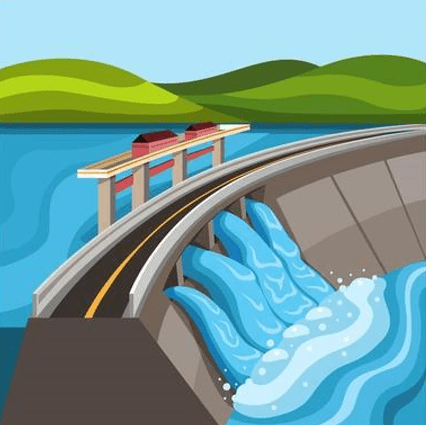
A dam is a sizable, barrier-like structure that is erected across a body of flowing water. Water is held back and stored for later use because of construction. A reservoir is a term used to describe the vast amount of water storage created on the upstream side of a river when it is prevented from flowing by a barrier. Floodgates on dams can be opened or closed to allow only a small flow for human use.

During floods, gates also enable the release of extra water from the reservoir side. A surplus of water collects on the reservoir side of a river when it floods. To let surplus water out, the floodgates are slowly opened. Dams are primarily built for this reason.

For more help, you can Refer to lesson 16 – Water in Science Class 7. Checkout the video Lesson for a better understanding

Uses of Dams

  • Irrigation: In recent years, irrigation for crops has primarily been provided by dams. Rainfall in tropical nations like India is only experienced for a portion of the year. However, agriculture is a year-round industry that uses water for growth, depending on the stage of growth. While others, like rice and sugarcane, require excessive amounts of water. Agriculture was made possible by irrigation, even in remote areas with low subterranean water levels.
  • Electricity: The floodgates are opened, allowing the reservoir’s water which is already under high pressure to pass through the turbine that powers the generator. A turbine transforms the kinetic energy of water into mechanical energy, which is then transformed into electrical energy by a generator.
  • Reservoirs are a great place for recreation. Many reservoirs provide the local people with camping, boating, and fishing facilities.

Advantages of Dams

  • Hydroelectric power, which is produced by dams, is independent of all fossil fuels. As a result, hydroelectricity is a source of energy that is constantly replenishing and can be used. With a growing population comes a rising need for energy. One of the safest methods to address the energy situation is using hydroelectric electricity.
  • A reservoir maintains a sizable water reserve that is mostly used to store fresh water that can be used later in times of water scarcity.
  • You can irrigate with the reservoir water. Crop plants can be effectively watered across long distances. Food is produced on the irrigated farmlands. Demands for drinking water are alarmingly rising along with population growth.
  • Floods are prevented by dams, which redirect water flow. Numerous lives are saved every time water is slowly released from reservoirs through floodgates, and property damage is also avoided. 
  • A reservoir is a gathering place for many aquatic animals, including fish and turtles. When dams are built, a river that is already flowing becomes a lake. It becomes a lake environment when freshwater fish and turtle species seize the opportunity to multiply.

Disadvantages of Dams

  • To create a sturdy basement and reservoir, large layers of dirt must be dug out during the dam’s construction. The earth’s topography is harmed by this. Because of this, earthquakes happen more frequently. However, effective engineering, design, and planning can stop such destruction. 
  • Dams are substantial, concrete buildings. They are not built economically
  • Dam construction necessitates a vast area. It is necessary to move the local farmers and residents to the area. Their social and economic lives are affected, and there are long-term repercussions.
  • In addition to displacing people, the natural habitat is also greatly disturbed. Concerns about the flora impacted by dam construction are mostly focused on deforestation and the loss of agriculturally productive land. 
  • Natural wildlife that lives in the dam region is also out of control and occasionally even poses a threat to its population. To maintain their populations, breeding grounds and nesting locations are crucial. When other factors perturb these areas, their population changes. 
  • Bird species are disturbed, in addition to terrestrial and aquatic species. 
  • Fish living in freshwaters are the primary food source for migratory birds that nest on riverbanks. 
  • Migratory birds lose their feed and are prevented from reproducing as they do throughout the year due to the drastic shift in aquatic life caused by dam building.
  • The groundwater table in the surrounding areas is decreased as a result of deepening the riverbed to create reservoirs. This has a significant negative influence on nearby, naturally occurring vegetation.

Summary

A dam is a physical obstruction that slows or restricts the flow of subsurface or surface water. Floodgates on dams can be opened or closed to allow only a small flow for human use. In recent years, irrigation for crops has primarily been provided by dams.  A reservoir maintains a sizable water reserve that is mostly used to store fresh water that can be used later in times of water scarcity. Dams are substantial, concrete buildings. They are not built economically.

Frequently Asked Questions 

1. Do Dams Last Forever?
Ans. A dam may be built in around ten years, and its lifespan is about one hundred years. Certain mechanical components, including motors and gates, need to be changed after a dam has been in place for 50 years. However, operational dams will undergo routine inspections. When necessary, all repairs and maintenance will be carried out right away.

2. Can we Rely Solely on Hydroelectricity to Provide our Electricity?
Ans. A renewable energy source is a hydroelectricity. Since the dam-related operation does not disrupt the water cycle, the claim that water will not run out is valid. The problem is that rivers and streams are the only sources of flowing water that dams may use. Hydroelectric power cannot be the only source of sustainably produced energy.

3. What Connection does a Dam have to Greenhouse Gases?
Ans. Large expanses of vegetation are flooded when a dam is built, submerging numerous trees. Low oxygen levels can be found near the bottom of stagnant waters in reservoirs. The reservoir’s lower layers, which are abundant in biomass, effectively release methane into the atmosphere as it breaks down.

4. What Advantages do Dams Offer to Farmers?
Ans. Large amounts of water are stored in reservoirs where they can be irrigated for use in agriculture. Croplands can also be effectively irrigated in semiarid areas far from the riverbed. Rainfall is not necessary for farmers to be able to cultivate.

How do Metals and Non Metals React

Metals and Non-Metals

Introduction

The crust of the Earth is packed with a variety of abundant and inexhaustible minerals, as we have studied in our geographical class. These minerals are a blend of natural elements that are extracted and used for various things. Each element and mineral has unique qualities of its own that make it useful.

Metals

Metals are among the sorts of elements that make up the crust of the Earth. They are a combination of substances that are frequently hard, malleable, ductile, glossy, etc. Metals are also effective electrical conductors. They can be found in a free state (without any combination) or a mixed state in the Earth’s core (with a mixture of oxygen, rock, and dust). 

Non-Metals

Non-metal elements are those that do not exhibit non-metallic properties. They are not malleable like metals and have different physical characteristics from metals. They are brittle and ductile as well. When compared to metals, they have a low density. Non-metals can be solid, liquid, and gas, and they are mostly bad conductors of electricity. Non-metals include things like oxygen, phosphorus, and sulphur.

How Do Metals and Non Metals React with Each Other?

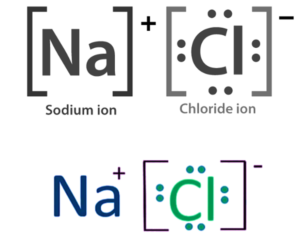
  1. Metals react with non-metals by transferring electrons from metal atoms to non-metal atoms, resulting in the formation of ions.
  2. This process produces an ionic compound.
  3. Metal atoms transfer electrons to non-metal atoms.
  4. Metal atoms become positive ions, while non-metal atoms become negative ions.
  5. Example Sodium Chloride (NaCl)

What Reactions Occur Between Metals?

Metals interact with one another by their degree of reactivity, or strength. The less reactive metal is displaced when a metal reacts more vigorously than the metal with which it is bonding. It could be solid, liquid, or molten.

In other words, metal A is more reactive than metal B if it displaces metal B. Galvanic corrosion results from the collision of two metals. Two distinct metals connected by an electrolyte are required for galvanic corrosion to occur. If this occurs, the corrosion process will be initiated by the electrolyte. More reactive metals corrode more frequently.

Salt solution of A + Metal B > Salt solution of A + Metal

\[Zn\left( s \right){\rm{ }} + {\rm{ }}CuS{O_4}\left( {aq} \right) \to {\rm{ }}ZnS{O_4}\left( {aq} \right){\rm{ }} + {\rm{ }}Cu\left( s \right)\]

Summary

The concept of metals, non-metals, and their properties are all included in this article. The characteristic of metals and non-metals differ, and each has a unique state of reactivity. Each element and mineral has distinct properties of its own that make it useful.  A variety of organic elements are combined to form these minerals, which are then extracted and used for various purposes.

Frequently Asked Questions

1. What Characteristics do Non-Metals Generally have?

Ans. The characteristics of non-metals are as follows.

  • A metal’s qualities depend on its size.
  • They often have bad electrical conductivity. The main characteristic that sets them apart from metals is this one.
  • Due to their greater electronegativity, non-metals have a higher potential of attracting more electrons.
  • They retain their electrons and borrow from the metals due to their higher electronegativity.
  • The states of non-metals include solid, liquid, and gas. They are brittle by nature in the solid state, giving rise to ductile and non-malleable states.

2. What Significant Function do Non-Metals Play in Our Lives?

Ans. Non-metals such as nitrogen and phosphorus are used in fertilizers to increase plant yield. Phosphorus is used to make matchsticks and fireworks. Chlorine, a non-metal, is used in the water purification process. Carbon, a non-metal, is used in the majority of fuels.

3. What Happens to Metals During Recycling?

Ans. The majority will be smelted into ingots, so they can be melted and processed at metal facilities across the nation. The recycling facilities’ rubbish to the grocery store shelves can be accessible within as little as six weeks.

A Strong Base and a Strong Acid with Examples and pH Value

An Introduction to Acids and Bases

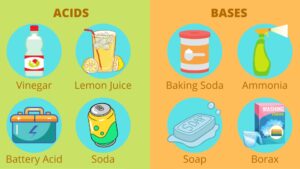
Acids are substances with a pH below 7 that release hydrogen ions or a proton when combined in an aqueous solution. The dissociable protons or hydrogen groups, also known as acidic hydrogen, that easily split apart in solution or the presence of bases are the main constituent of these acids.

Bases are substances that yield hydroxyl ions when combined with water in an aqueous solution when combined with water in an aqueous solution, yield hydroxyl ions. Their pH is higher than 7. Therefore, a base has a basic group that separates in an aqueous media or a dissociable hydroxyl group. Bases may also be referred to as substances that are hydrogen acceptors because they are substances that can either receive or accept hydrogen ions.

The pH Scale

The pH scale determines the strength of an acid or base by specifying the degree of dissociation. A strong acid or base dissociates in water, producing massive amounts of hydrogen or hydroxyl ions. A dissociation constant is used to calculate an acid or base’s dissociation of an acid or base.

Strong Acid

Since extremely acidic hydrogens are extremely acidic hydrogens present, strong acids HA has a high dissociation. Commonly, these hydrogens are attached to extremely electronegative groups (often halogens like chlorine, fluorine, and iodine). 

Low pH is found in strong acids. The amount of hydrogen ions in a solution is related to the pH. The negative logarithm of the concentration of hydrogen ions is the mathematical representation of pH.

\[pH =  – \log [{H^ + }]\]

The dissociation constant of acids, a parameter \({K_a}\), is used to account for the degree of dissociation. Increased dissociation and hence higher acidity are indicated by a high \({K_a}\) value. 

In chemistry, the \(p{K_a}\) value—the negative logarithm of \({K_a}\)—which is the logarithmic acid dissociation constant—is taken into account for convenience. Therefore, stronger acids will have a low pKa value and a high acid dissociation constant \({K_a}\) value, and vice versa.

\[p{K_a} =  – \log {K_a}\]

 Examples of Strong Acids

Strong AcidsFormula
Hydrochloric AcidHCl
Sulphuric AcidH2SO4
Nitric AcidHNO3

Strong Base

Strong bases NaOH are substances that split apart in solution to form high quantities of hydroxyl ions. In addition, bases have the potential to be strong proton acceptors, which means that they could grab a proton from the water molecule \({H_2}O\) in an aqueous solution to produce an \(O{H^ – }\) ion.

\[NaOH \to N{a^ + }(aq) + O{H^ – }(aq)\]

The base dissociation constant Kb describes the level of dissociation in the case of bases. Stronger bases are associated with lower values of the logarithmic base dissociation constant, or, which is equivalent to \(p{K_a}\).

\[p{K_b} =  – \log {K_b}\]

Similar to pH, the concentration of hydroxyl ions is related to pOH. A strong base that supplied a lot of hydroxyl ions would have low pOH because the concentration of hydroxyl ions is a negative logarithm.

\[pOH =  – \log [O{H^ – }]\]

The equation pH + pOH = 14 relates pH and pOH in an aqueous solution. If one is known, the other can be used to compute either pH or pOH.

Strong bases commonly have a pH range of 13–14.

Examples of Strong Bases

Strong BasesFormula
Calcium HydroxideCa(OH)2
Sodium HydroxideNaOH
Potassium HydroxideKOH
Lithium HydroxideLiOH
Image source: Englisplus Podcast

Summary

Strong acids and bases are the subjects of this article, which also examines how strong acids or basic solutions are based on their pH. Strong acids and strong bases have a high degree of dissociation. Strong acids and bases dissociate in solution, releasing a lot of proton and hydroxyl ions. Strong bases have high pH, whereas strong acids have low pH. 

Frequently Asked Questions

1. What is the Body’s pH?

Ans. The pH of human blood ranges from 7.35 to 7.45, making it very slightly alkaline. With a pH range of 1.5 to 3.5, the human stomach is the most acidic organ in the body. To break down food for digestion and remove any unwanted microorganisms, the stomach is kept at a low pH.

2. What are the Main Differences between a Strong Acid and a Weak Acid?

Strong AcidsWeak Acids
When exposed to water, strong acids completely dissociate into their ions.In an aqueous solution, weak acids are molecules that partially dissociate into ions.
A strong acid solution has a very low pH.A weak acid solution has a pH of 3-5.
It releases all the H+ ions to the solution.Partially releases all H+ ions to enter the solution.

3. What are the Main Differences between a Strong Base and a Weak Base?

Strong BasesWeak Bases
In a solution, a strong base can completely dissociate into its cation and hydroxyl ion.A weak base partially dissociates into its hydroxyl ion and cation, resulting in an equilibrium state.

Acromegaly

Introduction

The endocrine system consists of many organs such as glands, that include the thyroid, adrenal, parathyroid, pituitary, thymus, hypothalamus, pancreas, and pineal. Hormones, which are chemical messengers secreted by these glands, are responsible for the coordination of different organ systems of the body. Endocrine diseases are caused by either insufficient or excessive secretion of hormones. The pituitary gland, a tiny organ on the underside of the brain, secretes the hormones like growth hormone (GH) and somatotropin, which control bone and muscle growth as well as height. Acromegaly, which alters the body’s appearance, results from GH hypersecretion.

What is Acromegaly?

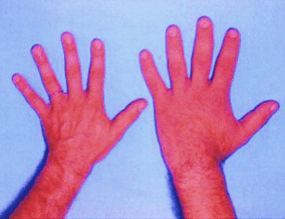
In case of Acromegaly, hands and feet are tingling and have no feeling.
Acromegaly is a rare hormonal condition brought on by the pituitary gland’s ongoing hypersecretion of growth hormone (GH). The increased GH secretion in adults causes the hands, feet, and face to have larger bones. It results in enlarging of the hands, feet, and face.


What are the Causes of Acromegaly?

When the pituitary gland secretes too much GH into the blood, the liver is signalled to generate an additional hormone called insulin-like growth factor-1 (IGF-1). It controls how bones and other tissues grow. Acromegaly results from the IGF-1 being triggered by greater levels of GH. Acromegaly in adults has been linked to tumours such as non-pituitary and pituitary tumours.

Pituitary tumours: It is an adenoma of the pituitary gland, a non-cancerous tumour. It secretes an excessive amount of the GH hormone, which results in acromegaly symptoms. This tumour grows slowly and takes a while to become apparent. The tumour pressing on nearby brain regions may cause headaches and vision loss.

Non-pituitary tumour: It is a tumour that has grown in the pancreas, lungs or other parts of the chest. This is an uncommon tumour instance. While this tumour occasionally secretes growth hormone (GH), more frequently it releases growth hormone-releasing hormone (GH-RH), which causes the pituitary gland to release excessive amounts of GH.

Acromegaly Symptoms

Acromegaly can cause a variety of symptoms, but the most prevalent ones are swollen hands and feet. The symptoms can include the following and are recognizable.

  • Enlarged facial characteristics include the face bone, nose, lips, and tongue.
  • Excessive sweating and odour from the skin
  • Very thick, greasy, and coarse skin
  • Aching joints
  • Headaches
  • Distorted vision
  • Expansion of skin tags
  • Deep voice
  • Fatigue and weakened muscles 
  • The separation between teeth
  • Gaining weight 
  • Hands and feet tingle and have no feeling
  • Abnormal female hair growth
  • Unreliable menstrual cycles 
  • The effects of abnormal thyroid hormones on skin, hair, and weight
  • Male erectile dysfunction

Facts About Acromegaly

  • Acromegaly is a term for growth hormones and tumour-related enlargement. 
  • It is typically brought on by a benign tumour called a pituitary adenoma, which is found on the anterior lobe of the pituitary gland. 
  • It is not a genetic illness and only affects people in their middle years. 
  • Children who experience an increase in GH exhibit gigantism.
  • Acromegaly is a dangerous illness that can cause blindness in its victims. 
  • The remedy is accessible and capable of averting serious consequences.
  • Acromegaly is an uncommon illness that affects a very small number of people worldwide.

Acromegaly Diagnosis

Acromegaly is difficult to diagnose because the early signs are not always present. The results of the imaging and blood testing show that the person has acromegaly.

Blood tests: 

IGF test: The blood level of GH often varies throughout a person’s lifespan. IGF levels are more consistent throughout the day than GH levels, even though GH and IGF-1 are closely related hormones. To determine the level of IGF hormone in the blood, a blood test is used.

Oral glucose tolerance test: Using this test, you may see how your growth hormone levels respond to changes in blood sugar. Several time intervals can pass after consuming the glucose solution before the blood is drawn. Drinking sugar typically lowers GH levels, but if someone has acromegaly, GH levels won’t drop.

Imaging tests:

The imaging tests are used to pinpoint the tumour’s site and track its expansion. Two imaging exams exist: 

  • MRI (Magnetic resonance imaging): To determine the location and size of the pituitary tumour, an MRI scan is used. To obtain an in-depth image of the inside organs and tissues, radio waves and magnets are employed. 
  • Computerized tomography (CT): If an MRI scan is not possible, a computerized tomography (CT) scan is performed to get images of the inside organs and tissues.

Treatments

Acromegaly-related long-term consequences can be avoided by the patient with certain treatments. Some of these remedies include 

  • Surgery: The location and size of the tumour affect the course of treatment. Only surgery is required if the tumour is to be eliminated. However, if only a portion of the tumour is removed after surgery, chemotherapy and radiation treatment are still required. 
  • Chemotherapy: Drugs and injections are used to control hormone levels and treat symptoms that help the body return to normal.
  • Radiation therapy: Radiation therapy is used to treat acromegaly when medicine and surgery are ineffective. Through sophisticated equipment, it allows the radiation beams to reach the target tumour’s location. Although it can lower the level of growth hormone, the full effects don’t appear for several years.

Summary

Acromegaly is a rare hormonal condition brought on by the pituitary gland’s ongoing hypersecretion of growth hormone (GH). Acromegaly results from IGF-1 being triggered by higher levels of GH. Acromegaly can cause a variety of symptoms, but the most prevalent ones are swollen hands and feet. It is not a genetic illness and only affects people in their middle years. Drugs and injections are used to control hormone levels and treat symptoms that help the body return to normal.

Frequently Asked Questions

1. How is Gigantism related to Acromegaly?
Ans. Acromegaly and gigantism are both GH (growth hormone) diseases. Hormonal issues result from the pituitary gland’s excessive GH production. However, their signs and symptoms vary.

2. What is the Glucose Tolerance Test Conducted in Acromegaly?
Ans. Using this test, you may see how your growth hormone levels respond to changes in blood sugar. Several time intervals can pass after consuming the glucose solution before the blood is drawn. Drinking sugar typically lowers GH levels, but if someone has acromegaly, GH levels won’t drop.

3. Who gets Acromegaly and how Frequent is it?
Ans. Acromegaly is a rare genetic condition. It is a rare condition that can occur in middle-aged people if they produce too much GH.

4. What is Pituitary Adenoma?
Ans. A pituitary adenoma is an adenoma of the pituitary gland, a non-cancerous tumour. It secretes an excessive amount of the GH hormone, which results in acromegaly symptoms. This tumour grows slowly and takes a while to become apparent.

Molecular Mass

The molar mass of a molecule is its weight. Expressed in Daltons. When dealing with the mass of a single or specific well-defined molecule, molecular weight is more commonly used than molecular weight when dealing with sample-weighted averages.
Molecular weights of small to medium-sized molecules are measured by mass spectrometry and used to determine the elemental composition of molecules or compounds.

lead magnet

What is Molecular Mass?

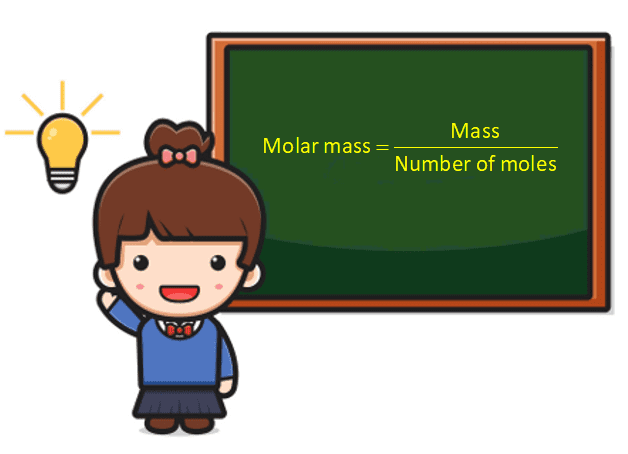
Molecular mass is also called molecular weight. The molecular weight of a molecule is its weight or mass. Different molecules of the same compound can have different molecular weights because elements have different types of isotopes present in compounds. The ratio of molecular mass to combined atomic mass is a measure of relative molecular weight. Molecular weight and molecular weight are separate but related concepts. The molar mass of a substance is defined as the mass divided by the number of moles of that substance. The unit of molar mass is g/mol. 

How to Find Molecular Mass?

To calculate molecular weight, first, use the periodic table to determine the atomic weight of each element. Multiply the number of atoms by the atomic mass of each element to sum the masses of all elements in the molecule.

The Formula of molecular mass/ molecular mass equation

The formula of molecular mass or molar mass is. 

Molecular-Mass

How to Calculate Molecular Mass?

A compound’s total mass is referred to as its molecular mass or molecular weight. It is equal to the sum of the atomic masses of all elements. 

Molecular Mass Examples

There are some examples of molecular mass:

H2O: In the periodic table, hydrogen has an atomic mass of 1u, and oxygen has an atomic mass of 16u. As a result, the molecular mass of a water molecule can be calculated as follows:

Hence, the molecular mass of water molecules is 18u.

NH3: In the periodic table, the atomic mass of hydrogen is 1u and the atomic mass of nitrogen is 14u. As a result, the molecular mass of an ammonia molecule can be calculated as follows:

Hence, the molecular mass of ammonia gas is 17u.

CaCO3: In the periodic table, calcium has an atomic mass of 40u, carbon has an atomic mass of 12u, and oxygen has an atomic mass of 16u. As a result, the molecular mass of calcium carbonate can be calculated as follows:

Hence, the molecular mass of calcium carbonate is 100u.

CaCl2: In the periodic table, calcium has an atomic mass of 40u, and chlorine has an atomic mass of 35.45u. As a result, the molecular mass of calcium chloride can be calculated as follows:

Hence, the molecular mass of calcium chloride is 110.9u.

The Molecular Mass of Compounds

The molecular mass of a compound can be found by using the following steps.

  • Determine the compound’s molecular formula.
  • Determine the atomic mass of each element in the compound using the periodic table.
  • Multiply the atomic mass of each element by the number of atoms in the compound. In the molecular formula, this number is denoted by the subscript next to the element symbol.
  • Add these values for each atom separately.
  • The total value will be the compound’s molecular mass.
lead magnet

The Molecular Mass of Elements

An element’s molecular mass is the sum of the atomic masses of its constituent atoms. Using the periodic table, calculate the atomic mass of each element.

Conclusion

Molecular mass is defined as the sum of the atomic masses of the elements present in a molecule, whereas molar mass is the ratio of compound mass to a compound number of molecules. Mechanical properties generally increase as molecular weight increases. A polymer’s molecular weight is directly related to its properties (strength, processability, and brittleness). The smallest molecular mass is hydrogen. Molecular mass is useful for analyzing experiment results.  Knowing the molecular formula allows you to calculate the molecular mass. 

Also Read: Formula Unit Mass and How is it Calculated?

Frequently Asked Questions

1.What is the Molecular Mass Equivalent to?

Ans: Molecular mass is a number equivalent to a molecule’s amount of nuclear masses.

2.What are the Characteristics of Polymers?

Ans: A polymer is a large molecule composed of chains or rings of linked repeating subunits known as monomers. Polymers have high molecular masses because they are made up of many monomers, and they also have high melting and boiling points.

3.What is a Compound Composed of Identical Molecules?

Ans: A compound is a substance made up of identical molecules made up of atoms of two or more chemical elements. Atoms of over 100 different chemical elements make up all matter in the universe, both in pure form and in chemical compounds.

Acquired and Inherited Traits

Introduction 

All living things can create new versions of themselves, and each of their cells contains a nucleus that contains chromosomes. Each of the 23 pairs of chromosomes in humans contains thousands of genes. The information that determines the personality or trait passed down from parent to child and shapes an individual’s identity can be carried by a gene. Because genes do not carry information about qualities, some traits are not passed down from parents. i.e., not DNA-encoded. These are acquired by repeated activities, injuries, illnesses, or other environmental factors and are not inherited. It might affect the organism’s general phenotype.

What are Acquired Traits?

A characteristic that emerges to alter the processes of development in an uncommon setting is known as an acquired trait. It contains traits that are both behavioral and physical.

Darwin, Lamarck, and Acquired Traits

Lamarck and Acquired Traits

  • According to Jean-Baptiste Lamarck, acquired characteristics can be passed down through the generations. He believed that organisms could change how they behaved in response to their surroundings and that the acquired traits might be passed down to their progeny. 
  • Giraffes, for instance, lengthen their necks to reach the leaves of higher trees for food. There is a chance that future generations of offspring will also have long necks. 
  • He therefore initially postulated that acquired attributes are passed down from parent to child, which may help the population’s young members to be environment friendly.

Let our expert teachers be your guide toward improving your grades and reaching your highest potential. For more help, you can refer to EVS Class 5 Lesson 21. Check out the video Lesson for a better understanding.

Darwin and Acquired Traits

  • Lamarck’s theory was initially accepted by Charles Darwin in his first book, Theory of Evolution. 
  • He held the view that a species does not evolve as a result of changes to an organism. 
  • The variations among members of the same species of organisms help them survive in the environment. 
  • He saw various instances in real life that demonstrated how someone could exercise, run, eat properly, and become healthy, but fitness is not passed down from parent to offspring. 
  • Later, when he had convincing proof that acquired qualities are not passed down to succeeding generations, he withdrew Lamarck’s idea.

Acquired Traits Examples

Acquired traits are received from the environment. The following are some examples of acquired traits: 

  • Example 1: It’s not necessary for a person born to be a bodybuilder to have incredibly huge muscles. Even after training and frequent exercise, the larger muscles are a learned trait; they cannot be passed from parent to child.
  • Example 2: An animal’s characteristics that determine its size, weight, and health are dependent on the food it consumes. It can alter the color of the animal’s body in some cases. Flamingos have white feathers at birth and eat larvae, algae, and shrimp for food. The presence of beta-carotene in algae and several other meals causes the bird’s feathers to turn pink. As a result, color is the acquired attribute in this case.

Inherited and Acquired Traits

Inherited traits Acquired traits These
These characteristics can be passed on from one generation to the next. These traits or characteristics evolved as a result of the environment’s response and are not passed down to subsequent generations. 
It can be developed from an individual’s birth. It may evolve throughout a person’s lifetime. 
Since it is somatic, evolution cannot benefit from it. Directly evolved through genetic variation.
These traits can be passed on through DNA inheritance. These traits can be learned and seen; they are not inherited.
Examples include color blindness, nose shape, hair, eye, and eye color Examples include losing muscular mass, losing a finger in an accident, losing body weight, and losing abilities. 

Purchased Traits

Characters or traits that have been acquired are those that have been purchased via particular efforts based on physical and environmental factors. Throughout a person’s lifetime, these traits develop. It could be a behavioral or physical characteristic.

Physical trait behavioralBehavioral traits
  • Hairstyle
  • Hair dyeing
  • Scars
  • Weight and height of the body
  • Broken bones
  • Tattoos
  • Dancing
  • Learning skills
  • Writing
  • Reading
  • Swimming
  • Painting
  • Playing games 

Inheritance Laws

Gregor Johann Mendel used his research on pea plants to explain the theory of inherited qualities. He said that the features in phenotype that are visible are known as dominant traits, and the traits in phenotype that are invisible are known as recessive traits.

Mendel applied the following laws of inheritance to understand the inherited traits:

First Law: Law of Dominance

When two different character types exist in an adult, only one of them manifests in the F1 generation and is referred to as the dominant trait, while the other one does not manifest and is referred to as a recessive trait.

Second Law: Law of Segregation

Although one of the two is not visible in the F1 generation, the alleles do not mix and are retrieved as such in the F2 generation. This law is also known as the gamete purity law.

Third Law: Law of Independent Assortment

When two sets of traits are combined again, one pair of characters can be separated on its own during gamete development.

Summary

A characteristic that emerges to alter the processes of development in an uncommon setting is known as an acquired trait. According to Jean-Baptiste Lamarck, acquired characteristics can be passed down through the generations. Lamarck’s theory was initially accepted by Charles Darwin in his first book, The Theory of Evolution. Characters or traits that have been acquired are those that have been purchased via particular efforts based on physical and environmental factors.

Frequently Asked Questions

1. When Darwin published his first paper, why did he exclude Lamarck’s Hypothesis?
Ans. Lamarck’s concept was initially accepted by Darwin, but he eventually recognized the compelling evidence that acquired features are not inherited. He consequently deleted the incorrect claim regarding the acquired features.

2. What are Dominant and Recessive Traits?
Ans. Alleles that express their influence on a live organism’s phenotype are known as dominant traits, whereas alleles that do not express this influence are known as recessive traits.

3. Write down Five Traits one can Inherit from his Parents.
Ans.

  • Eye color
  • Height of tree
  • the Shape of nose
  • Color blindness
  • Blood group

4. In the Course of one’s Life, what Traits or Characteristics does one Acquire?
Ans. Learning abilities, huge muscles, singing, drawing, dancing, swimming, and a myriad of other acquired attributes can all be developed throughout a lifetime.

5. Explain Lamarck’s theory of Acquired Characteristics.
Ans. According to Lamarck, environmental factors can cause organisms to change their behavior or phenotype, and this change can be passed down to succeeding generations. For instance, the ability of the giraffe’s neck to extend to reach tree leaves is passed down to the offspring.

Acoustic Neuroma

Introduction

Following cell differentiation and proliferation, cell division is the process through which cells are multiplied. Tissues are groups of cells, and the abnormal growth of tissue in an organism is referred to as a tumour. Tumours typically originate as a result of certain disruptions in cell development and the generation of new cells. When a tumour’s growth is restricted, it is benign (non-cancerous), but when it spreads to the body’s key organs, it is malignant (cancerous).

What is Acoustic Neuroma?

Acoustic neuroma is a non-malignant and rare tumour that is also called a Vestibular schwannoma. It is produced by the Schwann cells that surround and support the nerves. The vestibular and auditory nerves, which control balance and hearing, respectively, compose the branches of cranial nerve VIII, commonly known as the vestibulocochlear nerve, where tumours have grown. A critical instance develops when the tumour grows rapidly and continuously.

Causes of Acoustic Neuromas

  • Some people have a rare genetic condition called neurofibromatosis type 2, which is characterized by the formation of tumours on the nerves. Acoustic neuroma is a result of this condition. 
  • Acoustic neuromas are reported in only 5% of patients with neurofibromatosis type 2 (NF2 patients). 
  • In the majority of cases, the exact aetiology of auditory neuroma is unknown. However, some risk variables, including family history, radiation exposure, age, and loud noise exposure, are still thought to be the root cause.

Symptoms of Acoustic Neuroma

Along with other difficulties, the growth of tumours in the vestibulocochlear nerve might affect balance. The following are the symptoms of such tumorous growth:

  • Impaired hearing: Acoustic neuromas 90% of the time accompany some degree of hearing loss. The tumour’s pressure on the nerve or the discharge of compounds harmful to hearing can both cause hearing loss. 
  • Tinnitus: Patients with tinnitus experience a high-pitched hissing or buzzing sound in their ears. Tinnitus can occasionally become persistent. Hearing loss may or may not be present in tinnitus patients.
  • Vertigo and loss of balance: Vertigo, a sudden sensation of the head tilting and spinning, is caused by the growth of a tumour on the balance and auditory nerve. Because of this patient can become unsteady and lurch. 
  • The fullness of the ear: Acoustic neuroma patients may experience full ears as if water is trapped in the ear canal. Hearing loss is frequently to blame for this.
  • Other signs and symptoms of an acoustic neuroma include facial numbness, headaches, nausea, changes in taste, and difficulty swallowing.

Diagnosis of Acoustic Neuroma

The examination of the ear is typically the first step in the diagnosis of an acoustic neuroma, which is then followed by evaluations of the patient’s medical history, imaging, and hearing capacity. Tumours in the brain may be detected with MRI or CT scans using magnetic resonance imaging (MRI) or computerized tomography (CT). The following tests are crucial for determining the presence of an acoustic neuroma: 

  • Audiometry: An audiometer uses a painless hearing test to quantify one’s hearing depending on how loud sounds are and how quickly they vibrate. 
  • Pure Tone Average (PTA): it is a measurement used to assess hearing impairment for speech comprehension. A higher rating denotes a hearing impairment.
  • Speech Reception Threshold (SPT):  The patient can hear speech at this volume at least 50% of the time. A higher score, similar to PTA, denotes hearing impairment.
  • Discrimination in speech (SD): It is a test of the patient’s capacity to distinguish between speech in quiet and noisy settings. Hearing loss is indicated by the lower score.

Treatment for Acoustic Neuroma

The course of treatment for an acoustic neuroma might vary; it is typically determined by the patient’s general health, the size and progression of the tumour, and its symptoms. Three treatment methods are available:

  • Monitoring: Adults who have primary slow-growing tumours may not exhibit any symptoms, making patient surveillance a valuable alternative for follow-up care. The ideal situation for a monitor is when the tumours are up to 1.5 cm in size. Before the tumour grows to a dangerous size, surgery must be performed to remove it.
  • Surgery: Acoustic neuromas can potentially be treated surgically. The surgical procedure’s main goals are to eliminate the tumour and avoid facial paralysis. Complete excision, however, may not always be possible due to the tumour’s proximity to vital brain regions. This procedure carries the potential for several side effects, including hearing loss, tinnitus, cerebrospinal fluid leakage via the nasal route, face numbness, etc.
  • Radiation therapy: It is a non-surgical option; stereotactic radiosurgery, which is most frequently used, can stop the growth of the tumour and lessen the death of neighbouring cells. With this technique, the gamma rays are directed precisely to the tumour without damaging nearby cells. For patients with big tumours, this treatment is not advised.

Summary

Tumours typically originate as a result of certain disruptions in cell development and the generation of new cells. Acoustic neuroma is a non-malignant and rare tumour that is also called a schwannoma. Acoustic neuromas are reported in only 5% of patients with neurofibromatosis type 2 (NF2 patients). Along with other difficulties, the growth of tumours in the vestibulocochlear nerve might affect balance. Tumours in the brain may be detected with MRI or CT scans using magnetic resonance imaging (MRI) or computerized tomography (CT).

 Frequently Asked Questions

1. How does Stereotactic Radiosurgery Work?
Ans. With the help of a 3D coordinate system, stereotactic surgery may find small targets inside the body and carry out a variety of minimally invasive surgical procedures on them, including biopsy, ablation, lesion, stimulation, injection, implantation, and radiosurgery, etc.

2. Define Audiometry?
Ans. A diagnostic hearing test is called audiometry. The loudness of the tone and the speed of the sound determine one’s capacity to hear it. For the detection of hearing impairment, it is crucial.

3. What is the Speech Reception Threshold?
Ans. The speech reception threshold is the lowest degree of speech hearing at which a person can recognize 50% of spoken words. Each ear has reached its speech reception threshold. It serves as a reference point for supra-threshold tests and serves to validate the thresholds discovered using PTA.

4. What is Tinnitus?
Ans. Patients with tinnitus experience a high-pitched hissing or buzzing sound in their ears. Tinnitus can occasionally become persistent. Hearing loss may or may not be present in tinnitus patients.

Resistance of a System of Resistors

Introduction

Electrons encounter resistance when they go through a conductor because of the molecules’ attraction forces. The nature of the material determines how much of this resistance is provided. The resistance of the material determines how much electricity flows as a result of voltage differences. Ohm’s law relates electric current (I), voltage (V), and resistance such that,

V = IR

Electrical resistors are devices that provide resistance to an electric circuit. The zigzag symbol in an electrical circuit diagram stands in for a resistor.

System of Resistors

Systems of resistors can be arranged in series or parallel.

1. Resistors in Series Arrangement:

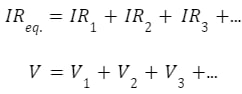
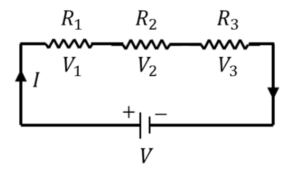
The resistors are arranged in this configuration along the current’s path, one after the other (end to end). As the current passes through the first resistor, its output current enters the second resistor as an input, and the second resistor’s output is then transferred to the third. The equivalent resistor, whose total equivalent resistance is simply the sum of the individual resistance of all the resistors linked in series, may replace all the resistors in a circuit. The equivalent resistor’s formula is:

Each resistor in a series circuit receives the same amount of current, and the voltage across each resistor varies proportionally to its resistance.

The total voltage of the circuit is equal to the sum of the voltage across each resistor when the total current, I, in the circuit is multiplied by both sides of the equation.

2. Resistors in Parallel Arrangement:

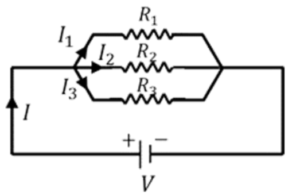
All the parallel resistors in this configuration share an input lead and an output lead, i.e., they are connected across each other. Each resistor in a parallel combination has the same voltage across it, which is the same as the circuit’s overall voltage. At a junction, the electric current is split based on the resistance of each resistor. At the output junction, the whole output current is combined once more and flows through the circuit.

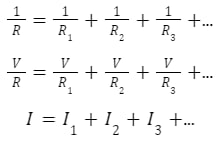
Equivalent resistance in parallel is given as follows:

Since the total voltage on each side of the equation is the same, the voltage across each resistor is also the same. We can see that the circuit’s total current, I, equals the sum of the currents flowing through all the resistors.

Summary

Small electrical components known as resistors provide resistance to the passage of electricity in an electric circuit. A circuit can link many resistors in series or parallel configurations. If many resistors are replaced with a single resistor that has the same resistance as the combination, the equivalent resistance of that resistance is the same as the resistance of the series and parallel combination of resistors. The combination formula for series resistors is, Req.=R1 + R2 + R3 +…, and for the parallel combination 1R = 1R1 + 1R2 + 1R3 +…

Frequently Asked Questions

1. What are the Factors on which the Resistance of an Object Depends?

Ans: An object’s electrical resistance is determined by the characteristics of its material and form. The formula takes into consideration these elements:
R= ρ (l/A)
Where A is the cross-sectional area of the material, Rho is its resistivity, and l is the length of the material through which electricity is flowing.

2. What is Electrical Conductivity?

Ans: The inherent capacity of a substance to carry electricity is known as electrical conductivity. It shows how readily electricity can go through the substance. The symbol for conductivity is (sigma), which is just the reciprocal of resistance such that: σ = 1/ ρ
Conductivity equals. Like resistivity, which is a broad attribute of a material that depends on its size. Air is a superb insulator with very low conductivity, whereas metals are typically good conductors with high conductivity and low resistance. Even at temperatures close to absolute zero, superconductors exhibit conductivity.

3. What is the SI unit of Resistivity and Conductivity?

Ans: The most used system of measuring in contemporary times is the SI unit or the International System of Units. The globe uses this contemporary metric system, which is utilised in all languages.
The SI unit of resistivity- ohm metre (Ω.m).
The base SI unit of resistivity- kg.m³.s−³.A-².
The SI unit of conductivity- siemens per metre (S/m).
The base SI unit of conductivity- kg-¹.m-³.s³.A².