Algal Blooms

Introduction

Algae are photosynthetic eukaryotes with one or more cells that live in watery environments. They serve as the foundation of aquatic food chains that supply nutrients to a variety of aquatic herbivores. An algal bloom occurs when the population of algae suddenly increases, usually as a result of changed environmental conditions. A bloom of algae resembles foam or scum floating over the water. Some algal blooms emit a foul stench as a result of the overgrowth of bacteria. A distinguishing characteristic of an algal bloom is the physical colouring of the water.

What is an Algal Bloom?

Algal blooms occur either in freshwater or marine water systems, resulting in the rapid growth of algae. As a result of the pigments, water appears red, brown, reddish-brown, or green. The size of algae may vary from unicellular organisms to macroscopic multicellular organisms. In contrast to multicellular entities, algal blooms are characterised by microscopic organisms. In stagnant water, an algal mat forms when the population size is elevated. As a result, aquatic organisms have less oxygen available to them.

Algal blooms seen in freshwater result in the rapid growth of algae. As a result of the pigments, the water appears green.

Improving your Science concepts. Study Science Lesson for classes 6th, 7th, and 8th.

What are the causes of Algal Bloom?

Climate: 

  • During the time of summer, ponds and lakes experience a marked increase in temperature and light intensity, both of which may lead to algal blooms.
  • The stillness of stagnant water, such as ponds and lakes, causes the top layers of water to heat up while the deeper layers of water remain relatively cool. 
  • As a result of low wind speeds, surface water tends to be still, allowing thermal stratification to occur. 
  • Extended drought due to poor rainfall and reduced water flow into freshwater systems make them stagnant. This is an added advantage for algae to multiply their numbers.

Nutrient load:

  • Dissolved minerals provide nutrients to aquatic species. When water is overloaded with nutrients (excess nitrogen and phosphorus), algae are fertilized and grow rapidly. The process of loading nutrients into the water body is known as eutrophication.
  • Nitrogen and phosphorus-rich fertilizers are sprayed on farmlands and crops. Water streams drain fertilizer into lakes and reservoirs after heavy rains. Water bodies are polluted by urban wastes carried by stormwater runoff.
  • Algal blooms on shorelines are caused by nutrients carried by rivers and deposited into oceans.

United effect:

  • Algal bloom cannot be solely caused by nutrient enrichment. Several factors must come together to produce an unusual environmental condition for algae to bloom. 
  • It is possible for algae not to bloom in muddy ponds, even though the water is nutrient-rich, warm, and stagnant.
  • Due to the turbidity of muddy waters, and lack of sunlight needed for photosynthesis they cannot grow.

Importance of Algal Bloom   

  • Algal blooms render water unsafe for consumption by both animals and humans. 
  • Some algal blooms have a slimy appearance and a bad odour. 
  • They cause serious economic losses by making the water unfit for leisure activities like swimming, boating, and fishing. 
  • In the water, some algal blooms release poisons or compounds that can seriously ill human beings. They are referred to as harmful algal blooms (HAB).

Effects of Algal Bloom

Effect on the ecosystem:

  • Algal bloom can be thought of as a disturbance to the natural environment because of its impact on it. Any species’ population fluctuations can have a direct or indirect impact on other creatures living in the particular ecosystem. A single algae species’ overpopulation stunts the development of other organisms, which has clear implications for the food chain
  • Dead zone: The lifespan of algae is brief. After the life cycle is complete, a fast rise in population causes dead biomass to accumulate. It creates a need for extensive breakdown. Dissolved oxygen is depleted by decomposers, which reduces its availability to other life forms. Aquatic organisms have a difficult time surviving and exhibit significant mortality in a habitat with little dissolved oxygen. A dead zone results from this. Dead zones result in significant economic losses for the fishing and shellfish industries.
  • The dead, rotting algae float as floating particles that block fish gills and kill them. 
  • When algae create poisons that are detrimental to people and other living things, then they are known as harmful algal bloom (HAB). Direct contact with HAB can result in a deadly disease and severe sickness, fever, diarrhea, and skin rashes.
  • Water that has algal blooms is unsafe for drinking and other recreational uses.

How does Algal Bloom affect the Quality of Water?

  • Depending on the species, algal blooms can look like scum, froth, or paint. 
  • They could tint the water and emit a foul, pungent stench. 
  • Algal pigments give water its reddish, pinkish, yellowish, brownish, or golden appearance. 
  • Water becomes unsafe for drinking when algae develop. Drinking water that contains dangerous algal blooms poses serious health hazards. 
  • The neurological system, liver, and gastroenterological system are all negatively impacted by toxins. 
  • Toxins in HAB water cannot be eliminated by boiling or cooking.

Summary

Algal blooms occur either in freshwater or marine water systems, resulting in the rapid growth of algae.  During the summer, ponds and lakes experience a marked increase in temperature and light intensity, both of which may lead to algal blooms. Algae are fertilized and grow rapidly when water is overloaded with nutrients (excess nitrogen and phosphorus). Algal blooms render water unsafe for consumption by both animals and humans.  The dead, rotting algae float as floating particles that block fish gills and kill them.

Frequently Asked Questions 

1.How Long does an Algal Bloom Last?
Ans. Algal blooms are a transient phenomenon that continues for a maximum of five months. While apparent algal blooms fade away as a result of cleaning and restoration efforts, toxins cannot disappear unless the water goes through an effective treatment procedure.

2. How can Algal blooms be Stopped in Lakes and Reservoirs?
Ans. Aerators are installed in lakes to prevent immobility. Aerators continuously circulate water to avoid stagnation since motionless water causes thermal stratification.

3. Describe Red Tide.
Ans. Algal bloom in oceans is frequently referred to as “red tide.” When ocean waters are physically discoloured, it is more acceptable. Red tides are not always dangerous algal blooms.

Alcohol Drug Abuse Prevention Control

Introduction

Drugs, often known as medicines, are composed of chemical or natural compounds used to identify, treat, and prevent diseases or their symptoms. These medicines, when taken in limited amounts, are beneficial, but can be dangerous if not taken as prescribed. Drugs are known to alter a person’s mental state and physical well-being. As a result, long-term drug usage of more than the prescribed amounts may result in physiological alterations and can prove fatal.

Long-term drug usage of more than the prescribed amounts may result in physiological alterations and can prove fatal.

Drug Abuse

Drug misuse is characterized as the unintentional use of medications that are not being used therapeutically in the required amounts. It unduly alters a person’s mental state and causes several issues, such as behavioural modifications, criminal activity, and a lack of efficacy in society. Nicotine, alcohol, heroin, club drugs, marijuana, and others are some of the drugs that are abused.

Sources of Drugs

Drugs initially were found in plant extracts, but recently are also synthesized in laboratories. Common sources of drugs-

  • Plant source

Plants are a rich resource of various medicinally important compounds. Hence these can be used in treating various ailments. Following are a few plants and the drugs that they provide.Nux vomica– Strychnine,Papaver somniferum- Morphine, Atropa belladonna – Atropine, Digitalis purpurea- Digitoxin and digoxin.

  • Animal source

Glands and internal organs of some animals are a rich source of various medicines such as Sheep thyroid giving thyroxine, the Liver of cod fish giving col liver oil, Pancreas of pigs providing insulin. Etc.

  • Microbial sources

Various microorganisms release various chemical components for their self-defence which can be used as antimicrobial medicines by humans. Some of the drugs given by microbes are-Penicillin, Streptomycin, Dextran, Xanthan etc.

  • Biosynthetic sources

Biosyhtetic drugs are drugs engineered in labs but organisms (plant or animal or microbe) are used for the development of the drugs. Some methods through which biosynthetic drugs are made are-the rDNA technology, immunology, biotechnology, molecular biology etc. For eg- the Hepatitis B vaccine.  

Prevention and Control

The social experiences of children and adolescents affect how their minds develop. This may lead to the development of the habit of smoking, drinking alcohol, or using drugs. Hence parents and instructors should direct them in the appropriate direction and prevent such kinds of abuse.

The following actions can be taken to prevent and manage alcohol and drug abuse:

  • Children typically imitate the behaviours of their family members, neighbours, and role models. Therefore, how parents and other family members feel about using alcohol, drugs, and smoking may have an impact on how children think.
  • Hence, if any member of the family drinks or uses drugs then that should be stopped immediately.
  • Continue monitoring the child’s attitude and behaviour patterns.
  • When children are struggling with pressures, stress, disappointments, and failures, they require counselling, and parents and teachers should take the appropriate steps to do so.
  • If it is discovered that the youngsters are abusing alcohol and/or drugs, their family members should notify the parents and take immediate action on that matter.
  • Such issues of drug abuse are highly-sensitive matters, hence should be dealt with with care and precaution.

Summary

A substance that interacts with the body’s macromolecules to produce a physiological or psychological response is considered a drug.  It can be given by several means, including ingestion, inhalation, intravenous, and smouldering. Regular usage of alcohol and drugs can result in drug addiction, which then leads to drug dependency, which adversely affects both the individual and society. Drugs target the human central nervous system and hence can negatively impact the body. Hence, their use should be minimized, and patients should only take medicines when necessary and for therapeutic reasons only.

Frequently Asked Questions 

1. What are synthetic drugs?
Ans: Synthetic medications are those that have had the chemical derivatives of natural drugs rearranged to change their original qualities and chemical structures. Examples include phenytoin, antihistamines, paracetamol, acetylsalicylic acid, and chloroquine.

2. What are semi-synthetic sources?
Ans: Semi-synthetic drugs are from natural sources, and are hybrids that merely undergo chemical alterations, to increase their effectiveness. Examples include heroin (from morphine), ampicillin (from penicillin), and homatropine (from atropine).

3. Give the most common causes of drug abuse.
Ans: Disappointments, Depression, Failures, exposure to drugs from parents or family members, Curiosity, etc are some of the few reasons for drug and alcohol abuse.

Air Pollution Control

Introduction

The thin layer of air or gases that surrounds the earth is known as the atmosphere.

The earth’s life depends on air, which is a fundamental component of nature. One of the most important worldwide issues is the contamination of the air. The air we breathe is contaminated with dangerous chemicals, biological agents, or physical things which not only harm the environment and materials but also endanger the health of people and other living things. Both natural and artificial causes are contributors to air pollution, but human activity is the main contributor.

Types of Pollutants

There are basically two types of pollutants- 

  • Primary pollutants– These pollutants are directly emitted from various resources and lead to air pollution. Some of the primary pollutants are- Carbon monoxide, Sulphur dioxide, Nitrogen oxides, Suspended particles, Volatile organic compounds, Chlorofluorocarbons, etc.
  • Secondary pollutant-When there is a chemical or physical interaction between primary pollutants and an atmospheric component, secondary pollutants are formed. These secondary pollutants are not any specific chemicals or particles. Some secondary pollutants are- Smog, Ground level ozone, sulfuric acid, nitric acid with water vapour, etc.

Let our expert teachers be your guide toward improving your grades and reaching your highest potential. Study online science tuition for classes 6th, 7th, and 8th.

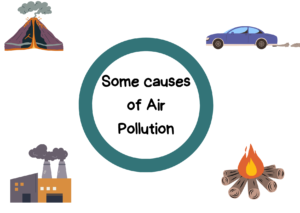
Causes of Air Pollution

Causes of air pollution are as follows-

  • Burning fossil fuels like coal, oil, and gasoline results in the majority of air pollution since they are used to provide energy for transportation or electricity.
  • Several particulate matter emissions, including, CO2, SO2, and CO, can result in pollution from industrial activity.
  • Smoking tobacco, cooking smoke, hazardous chemicals from home painting supplies, etc. all contribute to air pollution.
  • Ammonia is one of the most hazardous gases in the environment and is produced as a byproduct of numerous agricultural usage.

This image shows the various reasons for air pollution.

Harmful Effects

Air pollution has adverse effects on humans as well as the environment. Following are the ill effects of air pollution-

Air pollution effect on humans-

  • Aerosol sprays and paint removers include methylene chloride, which can be carcinogenic.
  • Gasoline and benzene can lead to leukemia.
  • Lung cancer is brought on by gases generated when fossil fuels are burned.
  • Asthma and other respiratory illnesses like COPD are caused by suspended particles such as dust, pollen, ashes, etc.
  • The likelihood of pneumonia, lung inflammation, chest pain, cough, exhaustion, shortness of breath, and fever is increased by nitric oxide and sulphur dioxide exposure.

Air pollution effect on the environment-

  • Acid Rain is the term for the precipitation of dangerous nitric and sulfuric acids along with rainwater. These gases are generated by the burning of fossil fuels and combine with rainwater to produce various acids, such as nitric acid and sulfuric acid.
  • Aquatic life and various tree species are negatively impacted by acidic buildup in the water body by a major decline in biodiversity.
  • Buildings, monuments, and sculptures built of sandstone, limestone, marble, and granite are damaged and discoloured by acid rain.
  • Ozone depletion occurs due to air pollutant such as CFCs. Due to this depletion UV light then penetrates the earth’s surface and has serious consequences like DNA mutation, skin cancers etc.
  • Also, air pollution causes other harmful effects such as Global warming, and climate change which affect the biodiversity of the Earth adversely.

Prevention

To prevent air pollution following should be done-

  • Reduction of forest fires.
  • Stop burning crackers.
  • All chimneys should contain filters.
  • Use green energy 
  • Using carpooling and public transportation.
  • The Air Act of 1981, which forbids burning fuel that contributes to air pollution, must be followed.
  • Implement planting trees.
  • Paper, plastic, metals, and organic materials should all be recycled and used.

Control

Following ways are there to control air pollution-

  • Reduce vehicular pollution. Numerous vehicles on the road each day produce dangerous air pollution. Use fewer cars and more environmentally friendly forms of transportation.
  • Using alternative and eco-friendly forms of  fuels.
  • Utilizing unleaded gasoline
  • Plant more trees. 

Summary 

When dangerous chemicals like chemical, biological, and physical pollutants from both man-made and natural sources contaminate the atmosphere, it causes air pollution, which is an unwelcome change. Rising morbidity and mortality, has an impact on not just the climate but also on public and individual health. Carbon monoxide, carbon dioxide, lead, nitrogen oxides, ground ozone, particulate matter, sulphur oxides, CFC’s, Hydrocarbons etc. are examples of common air pollutants which cause air pollution. Plants are referred to as the “lungs” of an ecosystem as they take in carbon dioxide and give fresh oxygen to the environment. Hence, they should be planted more to prevent air pollution.

Frequently Asked Questions 

1. Describe a Scrubber.
Ans: A scrubber is a device that traps any particle matter or other similar contaminants in the air and cleans the air to prevent pollution. It contains an ionized liquid that traps the small particles of a contaminant.

2. Explain Alternative Fuels.
Ans: There are several compounds known as alternative fuels that can be used in place of traditional fuels like gasoline, diesel, etc. CNG, hydrogen, and other such fuels are examples of alternative fuels. These are unconventional and don’t pollute the air.

3. What is Smog?
Ans: Smog is an air contaminant and is made when fog, smoke, and sunlight are combined. Sulphurous smog and photochemical smog are the two types of smog. When sulphur oxides are present in significant concentrations in the air, sulphurous smog, also known as London smog, forms. When sunlight and at least one volatile organic compound (VOC) react in the sky, photochemical smog, often known as Los Angeles smog, is created.

Ac Generator

Introduction

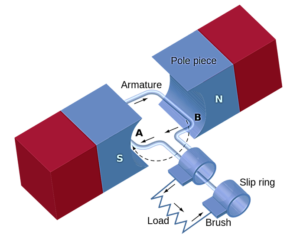
An engine used to convert mechanical energy into electrical energy is an AC generator. Steam turbines, gas turbines, water turbines, and other similar devices all generate this energy. It creates a sinusoidal waveform of alternating current. Alternators are another name for AC generators. The electromagnetic induction law of Faraday is the foundation of an AC generator. According to this rule, anytime a conductor is exposed to a variety of magnetic fields, an electromotive force (EMF) is generated across it. This EMF is referred to as an induced EMF. Electromagnetic induction is the term for this phenomenon. Induced electromagnetic induction is the process by which a coil develops a potential difference as a result of changes in the magnetic flux flowing through it. Several types of AC generators, including polyphase generators, rotating field generators and spinning armature generators.

For more details watch the video of the Science Course for classes 6th, 7th, and 8th.

What is an AC Generator?

An AC generator is an engine that converts mechanical energy into electrical energy in the form of an alternating driving force. To provide a consistent magnetic field, an AC generator uses two magnet poles.

AC Generator Parts and Function

An electromagnet with two poles, the North Pole and the South Pole, is a component of an AC generator.  Below is a discussion of certain AC generator components, including the rotor, slip rings, and armature loop.

a. Field

The output voltage of an AC generator is obtained from the source using conductor loops. The field’s main function is to provide a magnetic field that will stimulate the gadget.

b. Armature

The armature coil is a coil that is part of the generator and produces output voltage. An armature coil’s job is to move electricity through the generator.

c. Prime Mover 

The primary mover of an AC generator is either an engine or a turbine. It serves as the appliance’s power supply.

d. Rotor 

A rotor is a revolving component with magnetic field spirals. It generates the necessary output voltage.

e. Stator

A stationary part holding the armature spirals is called a stator. A stator includes three different parts. They are stator frame, stator core, and armature spirals.

  1. Stator frame: A frame that grips the stator core and armature spirals.
  2. Stator core: There are slots in the inner part of the core that hold the armature spirals. A steel or iron is coated on the walls of the stator core to decrease the eddy current losses.
  3. Armature winding: They are bounded on the stator core.

f. Slip Rings

There are two small rectangular blocks fixed with slip rings called carbon brushes. They are attached to the galvanometer.

Principle of Electric Generator

The basis of AC generators is Faraday’s law of electromagnetic induction. A current-carrying coil placed in a consistent field of force produces the driving force that is referred to as the law.

Construction and Working of an AC Generator 

An AC generator consists of a rectangular coil with two magnet poles attached to it on either side. Two rings are used to fasten the coil’s (or loop’s) perimeter. The rings are joined together with brushes. When a conductor travels in a magnetic field, an electric 

The generator induces a current in it.

Working of an AC Generator

Between the magnet’s poles, a rotating rectangular coil, also known as an armature, is used. The magnetic field’s vertical axis is the centre of rotation. The flux in contact with the armature changes as it rotates constantly. The alteration in flux results in the generation of an emf. As a result, the galvanometer, slip rings, and carbon brushes produce an electric current. While direct current only travels in one direction, alternating current sometimes flips direction.

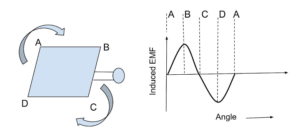
The production of the AC generator shown in the above graph is described as

  1. Induced EMF is zero when the coil is at point A because it moves equidistantly from the magnetic field’s curve at that point.
  2. A gradient of 90o is created between the coil‘s motion and the magnetic field as it moves from point A to point B, and induced EMF is at its highest level during this time.
  3. Moving the coil from A to B results in the same motion being equally far from the magnetic field and no generated EMF.
  4. The induced EMF is once more at its highest when the coil is moved from C to D since its motion is antiparallel to the magnetic field and its angle is 270o.
  5. The coil completes one cycle and moves equally far from the magnetic field when it moves from D to A. Induced EMF is therefore zero.

Advantages of AC Generator Over DC Generator

Category

AC Generator

DC Generator

Output VoltageHigher Output Voltage.It cannot generate a higher output voltage as it damages the functioning of the commutator.
ConstructionSimpler constructionConstruction is complicated due to a commutator.
FunctioningWorks on the principle of electromagnetic induction.DC generator functioning is more complex than an AC generator.
MaintenanceIt demands less maintenance.It demands more maintenance than an AC generator.
CostCheaperCosts higher than AC generator
EfficiencyTransmission efficiency is higher as AC reduces transmission losses. Transmission efficiency is lower.

You can also read “What is AC Voltage Capacitor?” for explanation of AC voltage.

Summary

A generator is an engine that changes one type of energy into another. Large currents are produced by electric generators for usage in industrial and domestic applications. There are two different kinds of electric generators: DC generators, which convert mechanical energy into direct current. A generator of alternating current that converts mechanical energy. On the Faraday law of EMI theory, an AC generator was placed. In an AC generator, the flux in contact with the armature varies as it rotates continuously. The shift in flux causes an emf to be generated. As a result, the galvanometer, slip rings, and carbon brushes produce an electric current. As an AC generator produces higher output voltage, it is easier to build, requires less maintenance, is more efficient, and is less expensive than a DC generator. Large currents are produced by electric generators for usage in industrial and domestic applications.

Frequently Asked Questions 

1. Can we Generate EMF without Rotating the Coil in an AC Generator? Explain.

Ans: Yes, emf may be produced without the coil revolving. If the armature is made to move at a velocity perpendicular to the magnetic field, Emf can also be produced.

2. What is the reason for Heat Loss in the Generator?

Ans: Reasons for the heat loss in the generator can be, (a) generation of the by-products like carbon dioxide, and molecular friction, which can reduce the efficiency. The heat loss hinders the efficiency of the generator. So, the efficiency is never 100%. 

3. What is the Driving Force?

Ans: Induced emf is also termed as the driving force and can be expressed as, 

                                                      ε = N B Aωsinωt

where N is the number of turns in the coil, B is a magnetic field, A is an area, ω is the angular velocity

So, in an AC generator, the induced emf is proportional to the applied magnetic field.

4. Give examples of DC Sources.

Ans: The electrical appliances like radios, televisions, and solar panels. DC only travels in one direction and lacks any polarity.

Mirror Formula and Magnification

Introduction

In simple words, a reflecting surface is a mirror. The research about mirrors dates back centuries, in Germany, mirrors were first created 200 years ago. Famous chemist Justus Von Liebig discovered mirrors in the year 1835, where the transparent glass was converted into mirrors by applying a coating of silver on one side of it. There are several proofs of using polished metal surfaces as mirrors in ancient civilizations. There are some types of mirrors that can reflect sound, which is an intriguing feature of mirrors, known as acoustic mirrors. In World War 2, those that could hear the sounds made by enemy aircraft were used.

What is Mirror?

A reflecting surface is a mirror. The law of reflection governs how a mirror functions. According to the law of reflection, when a light ray strikes a reflective surface, the incident light ray, the reflected light ray, and the normal all lie in the same plane, and the angle of incidence and angle of reflection are both equal.

Improve your Science concepts. Study Science Subject for classes 6th, 7th, and 8th.

Types of Mirrors

There are three types of mirrors that are widely used

a. Plane Mirrors

A smooth reflecting flat surface characterises plane mirrors. We utilise these common mirrors most frequently in our daily life. The reflection of the image in a plane mirror is in the same proportion as the original, but the images are inverted from left to right.

b. Convex Mirrors

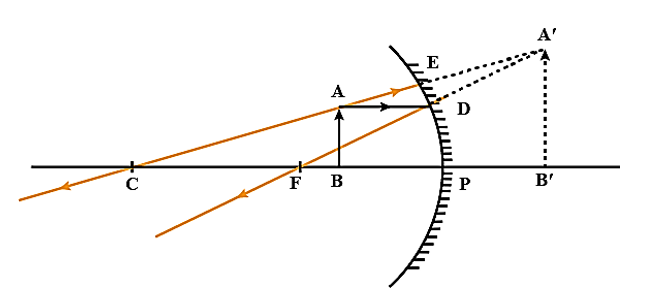
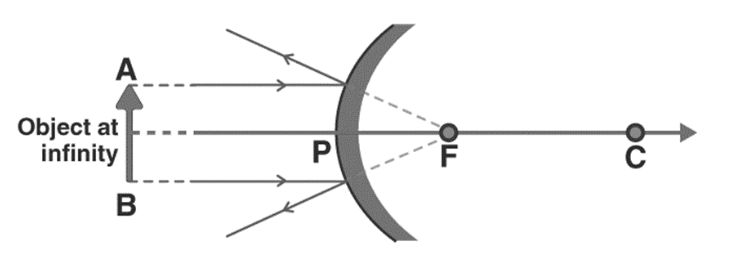
Convex mirrors are spherical mirrors. These mirrors have an outward curvature. Convex mirrors provide a simulated, erect, and reduced image. These also go by the name of diverging mirrors.

c. Concave Mirrors

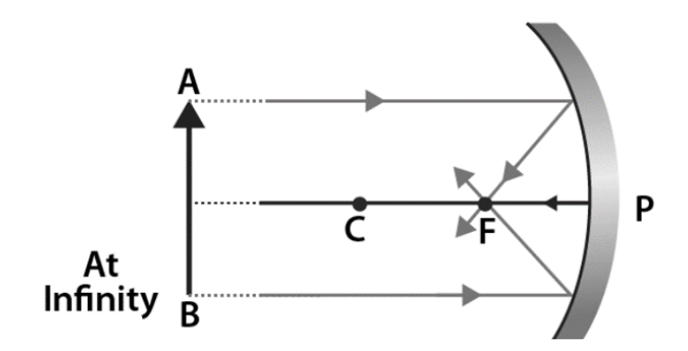
Concave mirrors are spherical mirrors as well, but they have an inward curve. The positioning of the object affects the concave mirror’s ability to produce an image. These also go by the name of converging mirrors.

Mirror Formula

The relationship between an object’s distance, an image’s distance, and the focal length of the mirror is given by the mirror equation/mirror formula. If the distance between the object and the mirror is u, the distance between the image and mirror is v, and f is the focal length of the mirror. Then the mirror formula can be expressed as

Mirror Formula

                                                                                                                      1⁄f = 1⁄u + 1⁄v

What is Magnification?

Magnification is an increase in the size of the image that a spherical mirror produces about the size of the item. The height of the picture to the height of the object is known as the magnification ratio.

Magnification Formula for the Mirror?

The magnification formula of the mirror can be given as,

                                                                                                m = h‘⁄ h

Where m is the magnification, h’ is the height of the image, and h is the height of the object.

The Magnification Formula of the Mirror can also be given as,

                                                                                           m = –v ⁄ u

where m is the magnification, v is the distance between the image and mirror, and u is the distance between the object and mirror.

Therefore, if the height of the object and image are equivalent, then the magnification will be equal to 1. Magnification will be greater than 1, or the image will be enlarged, if the image size is larger than the object size. Image size will be reduced if the image is smaller than the object, or if the magnification is less than 1.

Concave mirrors can either generate an erect or inverted picture depending on the object’s location, while convex mirrors always provide an upright image. As a result, depending on where the item is maintained, the magnification of a convex mirror is always positive, whereas the magnification of a concave mirror can be either positive or negative. Convex mirrors usually create pictures with lower quality, therefore their magnification is less than 1.

Summary

Concave, convex, or plane surfaces can all reflect light, including mirrors. The relationship between an object’s distance, an image’s distance, and the focal length of the mirror are known as the “mirror equation” or “mirror formula.” Magnification is an increase in the size of the image that a spherical mirror produces about the size of the item.

Frequently Asked Questions (FAQs)

1.What is the Focal Length of a Mirror?

Ans: Focal length is the distance between the Centre of the mirror and the focus of the mirror. And Focus is the point through which the reflected light rays pass when incident light rays are parallel to the principal axis. The focus is on the midpoint of the pole and centre of curvature. We can find the focal length of any mirror using the below formula

                                                                                                           1⁄f = 1⁄u + 1⁄v

In most cases, the focal length is given in millimeters/centimeters. We may determine the angle of view, how much of the scene will be reflected in the mirror, and the mirror’s magnification by looking at the focal length.

2. What is Normal?

Ans: Normal is a line that is drawn perpendicular to the mirror’s surface. The term “Normal line” refers to this line. The incident angle and reflected angle are split into two equal angles by the normal line. It is a fictitious line. The angle of incidence and angle of reflection are terms used to describe the angle between an incident ray and the normal and the angle between a reflected ray and the normal, respectively. To understand what occurs when the angle of incidence, angle of reflection, and angle of refraction vary, a normal is drawn.

3. What is the relation between Focal Length and Magnification?

Ans: Magnification decreases as focal length increases, and thus the mirror magnification is inversely related to the focal length of the mirror. 

Since, the mirror formula can be expressed as,

                                                                     1⁄f = 1⁄u + 1⁄v

And the formula for the magnification of the mirror is,

                                                                   m = –v ⁄ u

Thus, by combining the above two equations, we can get,

                                                                     m = –f ⁄ f-u

Therefore, mirror magnification decreases with increasing focal length, while mirror magnification increases with decreasing focal length. The relationship between the mirror’s magnification and focal length is shown above.

Sign Convention for Reflection by Spherical Mirrors

Introduction

To measure the focal length, the distance of the object or image from the mirror, and the mirror’s magnification when studying the reflection of light by spherical mirrors and the generation of pictures by spherical mirrors, several sign conventions must be learned. A spherical mirror‘s pole, sometimes referred to as the origin or origin point, serves as the source of all signals. This sign convention is known as the New Cartesian Sign Convention.

Sign Convention for Reflection by Spherical Mirrors

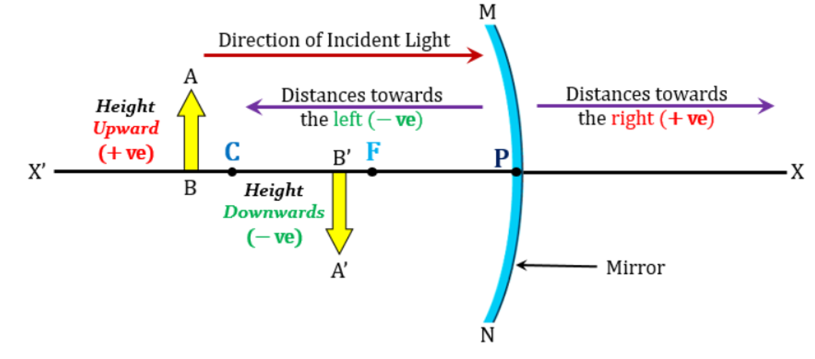
The sign convention for the mirror was developed with the notion that items are always placed on the left side of the mirror, causing incident light to pass from left to right. For spherical mirrors, the following sign convention applies:

  • From the pole, every measurement is taken.
  • When measured in the direction of the incoming light, distances are thought of as positive; but, when measured in the opposite direction, they are thought of as negative.
  • Upward values are positive and descending values are negative when measuring distances perpendicular to the main axis.

Sign Convention Diagram

sign convention for spherical mirror

Sign Convention for Concave and Convex Mirror

Concave Mirror Sign Convention

  • The distance of the object seems to be negative since it is always in front of the mirror.
  • The concave mirror’s focal length and radius of curvature are both viewed as negative since the focus and centre of curvature are in front of the concave mirror.
  • The distance is determined as – (negative) when the image forms in front of the mirror and as + (positive) when it does so behind the mirror (positive).
  • When an image is upright, height is positive; when it is inverted, height is perceived negatively.
Sign Convention for Concave Mirror


Convex Mirror Sign Convention

  • The object distance is displayed as negative since the object is always in front of the mirror.
  • The radius of curvature and focal length are viewed as + (positive) in the case of a convex mirror since the centre of curvature and focus is located behind the convex mirror.
  • Since convex mirrors always form an image behind a mirror, the image’s distance is considered to be positive.
  • Since an upright image always forms when using a convex mirror, the image’s height is seen as positive.
Sign Convention for Convex Mirror

Mirror Formula

The distance between an object’s main axis point and the mirror’s pole is referred to as the object distance and is presented by u. The image distance is the distance between a spherical mirror‘s pole and the location of an item on its primary axis and marked with v. Therefore, the formula for the focal length (f) in a spherical mirror can be expressed as                                                                                                                                                                                                      1⁄f = 1⁄u + 1⁄v

Summary

To understand the relationship between the object distance, its image distance, and focal length, the Sign convention is a crucial component of this topic. Additionally, due to the Cartesian system we utilise in the unique mirror sign convention, all mirrors have distinct signs for many variables. We put up a relationship between them using the mirror formula to gain a clearer image, and we can utilise this relationship to solve our numerical difficulties.

Frequently Asked Questions (FAQs)

1. Is the Object Distance Positive or Negative in the Concave Mirror?

Ans: A concave or convex mirror’s object distance is always negative because objects are always positioned on the left side of the mirror, and a spherical mirror’s sign convention dictates that distances to the left of the mirror are always negative. When an image forms on a concave mirror, the image distance v will be negative if it does so on the left side and positive if it does so on the right.

2. What is a Virtual Image?

Ans: Anything that is placed in front of a mirror produces an image. The image is a real image if the object’s light rays strike the mirror, reflect off of it, and then coalesce to form the image. If the image must be produced by extrapolating the reflected light beams backwards rather than converging, it is referred to as a virtual image. Any kind of mirror, whether concave, convex, or planar, may create a virtual picture. These pictures are displayed on the lens or the mirror.

3. What is the Sign Convention we use in the Concave Mirror?

Ans: The object’s symbol is interpreted negatively since it is constantly placed in front of the mirror. The focal length and radius of curvature have negative signs because the concave mirror‘s centre of curvature and focus are in front of it. An image’s height is seen positively while it is upright and negatively when it is inverted. When an image forms in front of the mirror, the distance is estimated as – (negative), and when it forms behind the mirror, the distance is calculated as + (positive) (positive).

Sources of Energy – An Overview

Introduction

Sources of Energy

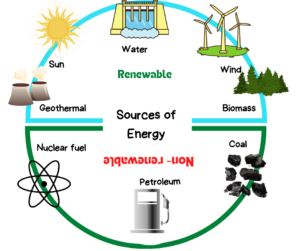
The ability to work emanates with energy. For any action, we require energy in the form of mechanical, chemical, electrical, static, kinetic, muscular, and other forms. Understanding the several energy sources is necessary for utilising all forms of energy, which can be obtained from various sources, including both natural and artificial ones. Interestingly, natural energy sources include the sun, wind, tidal, geothermal, and gravitational energies, while artificial energy sources include biomass, coal, petroleum, and a host of others. To ensure that the energy resources survive for a long time, it is crucial to save and use them as effectively as possible. Although not all energy sources release dangerous gases, their use can occasionally lead to pollution. Moreover, energy comes in two forms: traditional and unconventional sources.

Conventional Sources of Energy

Conventional energy sources are non-renewable, which implies that after they have been utilised, they cannot be reused. Coal, oil, natural gas, fuel wood, and nuclear energy are a few examples of traditional/conventional sources of energy. Coal, natural gas, and petroleum account for 90% of the commercial energy produced worldwide, while nuclear power accounts only for 10%.

Types of Conventional Sources of Energy

a. Coal

  • Coal, a sedimentary rock in the black-brown range, is the most prevalent conventional energy source and has a long lifespan of 200 years. Long-term exposure to heat and pressure transforms dead plants into lignite and anthracite, which are then finally transformed into coal.
  • There are several applications for coal, such as fuel for steam engines in trains and the production of electricity.
  • About 70% of the total energy used in our nation is generated by coal.

b. Oil

  • Due to the variety of uses for oil, it is one of the most significant conventional energy sources.
  • The oil extraction procedure, which entails several processes, is used to obtain the oil.
  • Oil is utilised commercially and in a variety of sectors, including the food, cosmetic, and transportation industries.

c. Petroleum and Natural Gas

  • Petroleum is made up of Alkanes and cycloalkanes.
  • Methane, ethane, propane, butane, and hydrogen sulphide are all components of natural gas.
  • Natural gas is created when gas comes into contact with the petroleum layer and is a black liquid when it is in its raw state.
  • Petroleum is used to make things like plastic, petrol, and diesel.
  • Compared to other fuels, natural gas produces less air pollution.

d. Nuclear Energy

  • Nuclear materials that contain radioactive elements are used to create energy.
  • 300 or more nuclear reactions are required for the production of nuclear energy.
  • Some negative effects of nuclear energy include its radioactivity and danger.
  • From one location to another, it is simple to travel by rail or ship. For instance, coal, oil, and natural gas are raw materials.

Advantages of Conventional Sources of Energy

  • For any energy, the installation of conventional plants is simple.
  • There is no need to wait for energy to be generated because it may be produced quickly depending on the needs.
  • Alternative forms of energy are readily accessible and renewable resources that may be utilised again.
  • Solar energy, wind energy, tidal energy, geothermal energy, biomass, and solar energy are a few examples of non-conventional sources.

Non-conventional Sources of Energy 

  • Alternative forms of energy are readily accessible and renewable resources that may be utilised again.
  • Solar energy, wind energy, tidal energy, geothermal energy, biomass, and solar energy are a few examples of non-conventional sources.

Solar Energy

  • In solar power plants, sunlight is transformed into electrical energy to produce solar energy.
  • Although solar energy is the most significant non-conventional energy source, it is also the least consumed.
  • Solar energy comes from renewable resources, is widely accessible, and is non-polluting. 
  • Solar ovens, solar panels, solar heaters, and solar cells are a few examples.

Wind Energy

  • Turbines are used to generate electricity from wind as a source of energy.
  • The power output rises along with the wind speed.
  • These wind turbines are situated where the wind speed is strongest and at its highest altitude.
  • Wind energy is positioned close to agricultural regions and is pollution-free.

Biomass Energy

  • Wood, sewage, plants, animals, and other organic materials are used to create biomass.
  • Burning this material releases heat energy, which is then transformed into electrical energy.
  • Cooking, lighting, and the production of power are among the uses of biomass.
  • A total of 14% of the world’s energy comes from biomass.

Tidal Energy

  • Tidal energy is produced by turning the mechanical energy of tides into electricity.
  • This energy source can be used in areas that are close to oceans and seas.

Advantages of Non-Conventional Sources of Energy

  • These resources are very less expensive and renewable.
  • Non-conventional sources are environmentally friendly.
  • These resources require low maintenance.
  • Offer long-term use as compared to conventional sources.

A comparison between the Conventional and Non-Conventional Sources of Energy.

Conventional Source of Energy

Non-Conventional Source of Energy

Conventional sources of Energy is being used for a longer period.Non-conventional energy sources have lately been created and are environmentally beneficial.
Conventional resources are a prominent cause of environmental pollution due to the emission of gases and smoke.Since non-conventional energy is derived from renewable 
Non-renewable sources of energy.Renewable sources of energy.
Examples – Coal, Petroleum, Natural Gas, oil, and Nuclear Energy.Examples-Wind Energy, Solar Energy, Tidal Energy, Hydropower Energy, and Thermal Energy.

Summary

Conventional sources of energy emit greenhouse gases while producing power and are limited, therefore then-conventional energy sources, which are renewable and environmentally favourable are suitable for sustainability. The major conventional energy sources are coal, oil, petroleum, natural gases, etc. while the non-conventional sources include solar energy, wind energy, tidal energy, biomass energy, etc.

Frequently Asked Questions

1. Why should we Conserve Energy?

Ans: Energy conservation is a measure used to protect and preserve energy sources from becoming extinct. We must save our energy supplies for later use. Utilisation must be reduced to conserve. Our needs are growing daily, yet we only have a limited amount of energy resources. 

2. What is a Renewable Source of Energy?

Ans. Renewable energy comes from naturally occurring, regenerative sources. Renewable energy sources include wind, solar, biomass, thermal, etc. Renewable energy can be continuously replenished without running out.

About 16% of the world’s energy consumption is made up of renewable sources. Renewable energy is a plentiful and sustainable source of power. Sunlight is the most significant and widely available renewable energy source.

3. What are the Advantages of Non-Conventional Sources of Energy over Conventional Sources of Energy?

Ans. The natural limitations of conventional energy sources, which emerged after millions of years and are subject to extinction at any time, make them very vulnerable. The abundance of non-traditional energy sources in nature makes them increasingly significant and practical. Additionally, non-traditional sources of energy are environmentally beneficial and don’t damage or contaminate the environment. The cost of fuel generated from unconventional energy sources is lower than that of traditional energy sources.

Force on a Current-Carrying Conductor in a Magnetic Field

Introduction

Every day, new technological components are developed as technology advances throughout the globe. Electricity powers every other home, public space, and industry. People utilise electricity, and they use it for a variety of things. But how is it that this electric current has a particular level of power and continues to flow without any breaks? It is done with the aid of an object known as a conductor. Electric current may readily flow via the conductor. A conductor is built into anything that uses electricity to operate. These currents produce forces that flow in one direction. Let’s discover more about it.

Current Carrying Conductor 

A conductor that is transporting current can withstand the current’s force. Each current has a specific voltage that defines the electrical power. Electric bulbs can burst at high voltage, whereas low voltage results in weak electric current. There is no electric field surrounding the conductors. Unless a charge or electric field is given to it, it is neutral. The conductor’s sole responsibility is to transmit the current uninterruptedly to each source.

Magnetic Field due to Current Carrying Conductor.

A conductor that is conducting current generates a magnetic field everywhere around it. A current, as we all know, is a net charge that moves across a medium. The presence of moving charges in a conductor is a prerequisite for the creation of magnetic fields. Due to the magnetic fields‘ extra charge, an electric field is created. All of these elements help the current flow through a conductor smoothly.

Force on a Current Carrying Conductor in a Magnetic Field

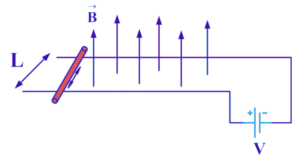
A conductor experiences forces because of the external magnetic field. When two magnetic fields interact, there will be attraction and repulsion (according to their properties) based on the direction of the magnetic field and the direction of the current. That’s how a conductor experiences force. This phenomenon is termed Magnetic Lorentz force. This was found by H. A. Lorentz. This force is perpendicular to the direction of the charge and also to the direction of the magnetic field. It is a vector combination of the two forces.

The equation of the force on a conductor having a charge q and moving through a magnetic field strength of B is given as,

F = qvBsinθ

This equation can also be written as,

Where L is the length of the wire and t is the time. Rearranging the above equation, we get,

The Direction of a Force in a Magnetic Field

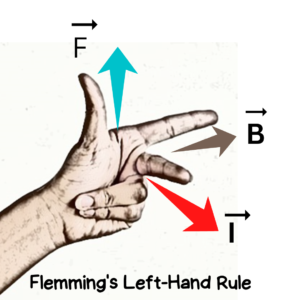
It is believed that the force acts perpendicular to the current’s direction. The left-hand rule is used to accomplish this. John Ambrose Fleming established this regulation. It is important to remember that the magnetic force is orthogonal to both the direction of motion and the charge velocity. Understanding which direction is applied to it is made easier by the left-hand rule.

State The Rule to Determine the Force or Direction

The direction of force, as we have seen in the article above, is perpendicular to both the magnetic field and the direction of the current. And the Right-hand rule-I decides this. The best mnemonic to remember the direction of force and current flow through the right hand is this example. The details are as follows:

  • Place a hand between the magnetic field.
  • The direction of the thumb points to the direction of the current (I).
  • The fingers are facing the direction of the magnetic field (B).
  • Now, the palm is facing the direction of the force (F).

Fleming’s Left-Hand Rule Definition

The current-carrying conductor will feel a force that is perpendicular to both the direction of the current and the magnetic field if it is put in the external magnetic field, according to a rule developed by John Ambrose Fleming. According to Fleming’s Left-Hand Rule, the thumb points in the direction of magnetic force, the forefinger points in the direction of the magnetic field, and the middle finger points in the direction of current if our forefinger, middle finger, and thumb are positioned perpendicular to one another. The late 19th century saw the development of this regulation.

Summary

Conductors have moving charges that are required for the magnetic field. Force moves in a perpendicular direction to the magnetic field and electric current. The magnetic field also exerts equal and opposite force in the current-carrying conductor.

Frequently Asked Questions

1. What is an Insulator?

Ans: We are aware that conductors enable uninterrupted electric current flow through them. However, it may also be prevented from flowing. Insulators carry out the work. Insulators are regarded as poor conductors of electricity because they do not permit electrons or atoms of materials to travel through them. Additionally, insulators have high resistance. Insulators still have some electric charge even if they prevent current passage. As a result, its primary use is high voltage resistance. Some examples are non-metals.

2. What are some High-Conduction Metals?

Ans: Metals that conduct heat and electricity in a very efficient way are called high-conduction metals, such that of gold, silver, and copper. In these materials copper is for construction purposes, making wires, cables, motors etc. because it’s cheaper than gold and silver. However, gold is used at very specific places due to its cost, and it is robust to environmental hazards like sulphur, oxygen, and water, whereas silver and copper react with environmental hazards.

3. What is a Semiconductor?

Ans: Semiconductors are materials that combine conductivity and insulator properties. Due to their capacity to both deliver and resist current flow, semiconductors are primarily employed in the production of electronic products and equipment. Doping the impurities into the crystal’s structure can change them. Silicon and gallium arsenide are two common semiconductors.

Magnetic Field Due to a Current-Carrying Conductor

Introduction

H.C. Oersted discovered the magnetic effect surrounding the current-carrying conductor in the 19th century. The region around a magnet or current-carrying conductor where another object feels a magnetic force caused by the magnet or current-carrying body is known as the magnetic field. A current-carrying conductor creates a magnetic field all around it homogeneously due to the flow of current-carrying electrons, which generates a magnetic field, and its magnitude is proportional to the current in the conductor. Therefore, the distance from the current-carrying conductor and the total current in the wire control the magnetic force felt by any object near the current-carrying conductor.

What is a Magnetic Field?

An invisible field called a magnetic field surrounds a magnet or a magnetic substance. The magnetic force operates in this field. Other magnetic objects can be drawn into or pushed away from this field by this magnetic force. A magnetic field develops when electrons move in a certain direction having a negative charge. A magnetic field can be represented by drawing magnetic field lines that are continuous lines originating from the north pole of the magnet and migrating towards the south forming continuous loops. Inside a magnet, this orientation is the opposite.

Magnetic Field due to Current Carrying Conductor

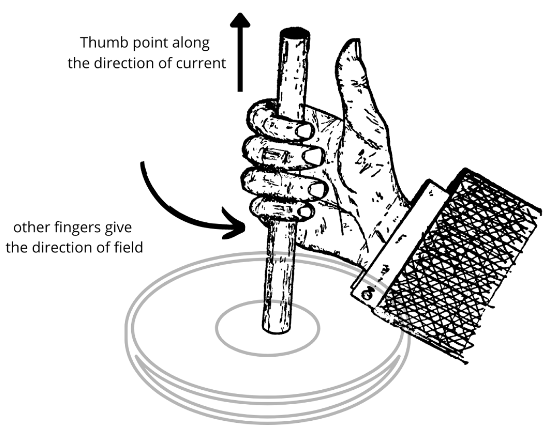
We are aware that stationary charges generate an electric field whose strength is proportional to the charge. The same theory may be used in this situation. Moving charges generate a magnetic field proportional to the strength of the current, which causes the conductor carrying the current to generate a magnetic field everywhere around it. Electrons are responsible for producing this magnetic field. Due to its magnitude and direction, the magnetic field can be considered a vector quantity. The magnetic field’s direction is parallel to the wire’s length. It may be provided using the right-hand thumb rule. According to this rule, if we grasp the conductor carrying the current in our right hand and point our thumb in the direction of the current, our curled fingers will point in the direction of the magnetic field lines. This is seen in the diagram below.

Magnetic Field due to a Current-Carrying Wire

Consider a current carrying wire having a current I, then the magnetic field strength B, at a distance r from the wire can be estimated using the formula such that

The direction of the produced magnetic field due to a current-carrying wire is estimated with the help of the right-hand thumb rule, as shown in the below figure.

Magnetic Force on a Current-Carrying Wire

The equation of the force on a conductor having a charge q and moving through a magnetic field strength of B is given as,

F = qvBsinθ

This equation can also be written as,

F =

Where L is the length of the wire and t is the time. Rearranging the above equation, we get,

formula for Magnetic Force on a Current-Carrying Wire

Relation between the Current and Magnetic Field 

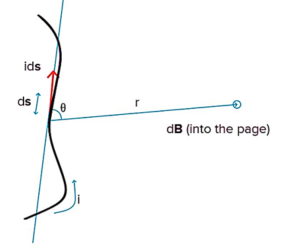
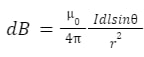
The relation between current and magnetic field is given by Biot Savart’s Law, such that,

Relation between the Current and Magnetic Field 

Summary

A magnetic field can be created when electrons moving in a certain direction have a negative charge. An invisible field called a magnetic field surrounds a magnet or a magnetic substance. The magnetic force operates in this field. The relationship between the magnetic field and current strength is direct.

Frequently Asked Questions (FAQs)

1. What is the law of Biot Savart?

Ans: By this law, the magnetic field generated due to a small current-carrying element depends upon the square of the distance between the point and the current-carrying element, the magnitude of the current, the length of the current element, and the sine of the angle formed by the current’s direction and the line connecting it. This law is comparable to Coulomb’s law in electrostatics. The vector quantity is represented by this element.

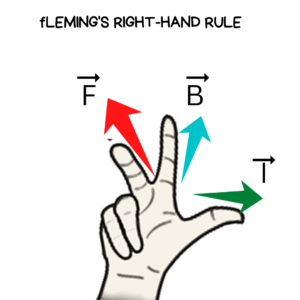
2. What is the Right-Hand Rule of Fleming?

Ans: When our thumb, index finger, and middle finger are arranged so that they are all perpendicular to one another, this law states that the thumb indicates the direction of the conductor’s motion, the middle finger gives the direction of the current induced, and the index finger gives the direction of the magnetic field. Fleming’s Right-Hand Rule determines the direction of the current that develops when a conductor moves through a magnetic field. This principle is utilised in electrical generators.

3. How Current Produces a Magnetic Field?

Ans: Ampere recognized that whenever an electrical charge is moving, a magnetic field is created. Similar to how an electrical current passing through a wire creates a magnetic field, the spinning, and circling of an atom’s nucleus accomplish the same. The magnetic field’s orientation is determined by the spin and orbit directions.

Algae

Introduction

When people think of algae, they typically picture slimy, green films that grow in still waterways (freshwater and marine). Depending on the species, an Alga may range in size from microscopic to macroscopic and up to a few feet long. Algae are the primary source of atmospheric oxygen that supports many life forms on earth while being blamed for ruining the beauty of transparent waters. The term phycology refers to the study of algae, and phycologists are those who conduct in-depth research on the organisms.

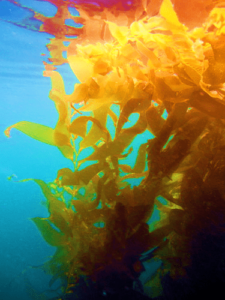
Aquatic algae from shallow water.

What is Algae?

Algae are cosmopolitan autotrophic eukaryotes having one or more cells that are capable of photosynthetic activity. Organelles like chloroplasts, mitochondria, and the nucleus are membrane-bound in algal cells. 

A common mistake students make is memorising Science or a process without understanding the concept behind it. Check out online study options are a great way to clear the science concepts you need. Watch the related video of these Science Concepts.

Examples of Algae

Some well-known algae include euglenoids, diatoms, kelps, Laminaria, Spirogyra, Volvox, Chara, Fucus, Micromonas, Noctaluca, Chilomonas, Gracilaria, and Chlamydomonas.

Characteristics of Algae

Algae can be multicellular or unicellular. They can also be microscopic as diatoms or large and leafy like kelp. They possess certain qualities that are essential for surviving in predetermined living circumstances.

Habitat: 

  • The majority of algal species are found in freshwater and marine aquatic habitats. 
  • Different types of water and temperatures allow algae to survive. 
  • They can also grow on submerged surfaces and damp rocks. 

Morphology:

  • Unlike plants, algae have a simple form. Unicellular algae can organise themselves into filaments or colonies and are either motile or non-motile.
  • Kelp-like multicellular algae contain body features that are intended to serve particular purposes.
When people think of algae, they typically picture slimy, green films that grow in still waterways (freshwater and marine).


Interaction with Environment

Some algae can survive on their own (suspended in water or attached to the substrate), while some species coexist harmoniously with sponges, coral reefs, and fungi. 

Mode of nutrition:

  • Chlorophyll is a pigment found in the majority of algae, which are photoautotrophs (photosynthetic pigment).
  • The facultative and obligate heterotrophic algae are the only real exceptions. They need carbon substrates from their environment to survive. Some people think that algae exhibit mixotrophy (autotrophy and heterotrophy).

Reproduction

  • Mitosis and fragmentation are used in vegetative reproduction. In fragmentation, the damaged component regenerates into a whole body. 
  • Spore formation is the means of asexual reproduction. Mature cells divide and produce spores in their cytoplasm. Upon the emergence of favourable conditions, spores transform into new individuals. 
  • Sexual reproduction is continued by gametes. Zygotes are created when male and female gametes combine. Female gametes can occasionally grow right into zygotes. This process is called parthenogenesis.

Classification of Algae

Based on their colours, distinct phyla of algae are subdivided. 

  • Chlorophyta: Chlorophyll a and b, as well as carotenes, are the pigments found in chlorophyta (green algae). They can be found in colonies, multicellular forms, or unicellular forms. 
  • Rhodophyta: Chlorophylls a and d, as well as phycoerythrin and phycocyanin, are the pigments found in Rhodophyta (red algae). They have a crimson appearance because of the phycoerythrin pigment. 
  • Phaeophyta: Brown algae, or Phaeophyta, are pigmented with fucoxanthin and chlorophyll a and c. This category primarily includes kelps and seaweeds. 

Types of Algae

Depending on where they live, there are several forms of algae. 

  • Cryophilic algae: Grow in snow and ice.
  • Thermophilic algae: Grow in hot climates close to hot springs.
  • Epizoic algae: Live on the bodies of aquatic creatures like turtles. 
  • Edaphic algae: Grow in soil. 
  • Epilithic algae: Grow on rocks. 
  • Endolithic algae: Inhabit coral reefs. Some call it a symbiotic relationship.
  • Corticolous algae: Grow on moist tree trunks.

Chemical Composition of Algae

They contain a variety of pigments, including fucoxanthin, carotenes, phycocyanins, and chlorophyll. Algae have significantly variable cell wall compositions. Cellulose, alginate, carrageenan, agarose, and glycoproteins, including galactans and mannans, are all parts of an algae’s cell wall. Other biomolecules found in algae include lipids, proteins, carbohydrates, nucleic acids (DNA since eukaryotes), and nucleic acids.

Difference between Normal Plants and Algae

Algae, like many sophisticated multicellular plants, use photosynthesis, which explains why chlorophyll is present. They don’t have genuine stems, leaves, or a clearly defined vascular system, which makes them different from plants.

Importance and Uses of Algae 

  • They provide between 30 and 50 percent of the oxygen needed for other life forms on Earth. 
  • Due to their abilities to gel, become colloidal, and create emulsions, red and brown algal extracts such as alginates, agar, and carrageenans are in high demand in the food sector. 
  • Algae are quite sensitive to the condition of the water (pH and composition). They serve as bioindicators of environmental toxicity. 
  • From algae that formerly inhabited sea floors, natural gas and crude oil are created. Nowadays, biofuel made from algae is more and more widespread.

Difference between Algae and Fungi

  • Fungi are saprophytes. They depend on dead and decaying organic material for nutrients while algae are autotrophs. 
  • Algae are very different from fungi, which have chitinous cell walls and no chlorophyll. Both, however, exist as lichens and have a symbiotic connection.
  • Algae (often green algae) receive protection from fungi, and fungi receive nutrition from algae.

The Life Cycle of Algae 

  • Haplontic life cycle: The plant is haploid throughout. A diploid zygote is created when gametes (which are created by mitosis) combine. The zygote proceeds through meiosis and produces meiospores, which grow into young algae.
  • Diplontic life cycle: The body of the sporophytic plant is diploid. The zygote is created by fusing haploid gametes.
  • Diplohaplontic life cycle: In the lifetime, haploid and diploid stages are equally dominant. While diploid sporophytes reproduce asexually, haploid gametophytes proliferate sexually.
  • Triphasic life cycle: The life cycle alternates between three generations.
  • Gametophyte is the dominant stage in a haplontic system. There are two haploid and one diploid generation in the life cycle. 
  • Sporophyte, the dominant stage in a diplobiontic organism, There are two diploid and one haploid generation in the life cycle.

Summary

Algae are autotrophic eukaryotes that have one or more cells that are capable of photosynthetic activity. Algae can also be microscopic multicellular (likely leaf-like Giant kelps or unicellular. Chlorophyll is a pigment found in the majority of algae, which are photoautotrophs. Chlorophyll a and b, as well as carotenes, are the pigments found in chlorophyta. Algae are quite sensitive to the condition of the water. They serve as bioindicators of environmental toxicity.

Frequently Asked Questions 

1. Are there Roots in Algae?
Ans. Algae don’t have actual roots. Algae have hold-fast organs in place of roots, which serve as anchors and keep immobile algae attached to a solid substrate.

2. Describe Kelp Forests.
Ans. Brown multicellular algae make up kelp. They live in shallow waters close to the beach. Several small invertebrates and fish breed in dense, thick-grown kelp. Carnivores such as seals and sea lions eat kelp by diving into it, forming an ecosystem.

3. Are Humans Harmed by Algae?
Ans. Algae pose no threat. Some algae create toxic substances that are dangerous to people. Fever, diarrhoea, and skin rashes are the results of direct exposure to these poisons.

4. Are Algae Capable of Producing Biofuel?
Ans. Following numerous stages, the energy-dense oil produced from algae is transformed into different types of fuel. Each species has a different process.

5. What Occurs if the huge Kelp is Removed?
Ans. Algae with their many cells can regenerate. If the environment is right, the damaged component can regenerate into a new body. If not consumed by herbivores, it otherwise deteriorates and decomposes.