What is Adaptive Radiation | Factors causing Adaptive Radiation

Introduction

Evolution is an intricate and slow process. Various organisms constantly adapt by changing their morphological and anatomical characteristics in response to the change in the environmental conditions of their habitat. They make minor changes in their genetic composition to adapt to their surroundings and thrive in their niche. These, minor alterations in their genes are responsible for the formation of new species. Adaptive radiation is one such process by which organisms of a single species rapidly transform into distinct forms to propagate successfully and thrive in their niche.

Factors causing adaptive radiation

Various factors are causing adaptive radiation some of them are-

  • Geographical isolationGeographic isolation of organisms from the mainland due to the formation of valleys, mountains, earthquakes, etc. becomes one of the main reasons for adaptive radiation to take place. This sudden separation causes organisms to rapidly adapt to new changes and hence evolve.
  • Exposure to new habitat– When organisms are exposed to new habitats, they are exposed to lots of new resources which are available abundantly. This abundance of resources forces them to diversify and adapt in a way that they can exploit those resources to the maximum and thus cause the evolution of new features.
  • Changes in environmental conditions- Change in environmental conditions can occur due to floods, volcanic eruptions, deforestation, weather changes, etc. These changes are sudden and hence force the organisms living in particular habitats to change rapidly and hence lead to adaptive radiations.

All of the above factors cause a change in the genetic composition of the organisms and hence lead to the formation of new and permanent changes in their genotype which then in turn leads to the formation of newer species.

Distinctive features of Adaptive radiation

Distinctive features of adaptive radiation which separate it from other evolutionary changes are as follows-

  • Common ancestry- Organisms that undergo adaptive radiation belong to the same ancestor. 
  • Phenotype-environment correlation- The changes in the phenotype of the species are with the change in the environmental conditions. 
  • Trait utility-The new trait thus formed due to adaptive radiation helps the organisms to survive in the new environment. For eg-Darwin’s finches.
  • Rapid speciation-This adaptation is a very rapid process as the organisms need to quickly adapt to the changing environment for their survival.

Adaptive radiation in mammals

Adaptive radiation can be studied by various examples once such as limb structure in mammals which is used for locomotion.

  • Modern placental mammals are incredibly diverse in terms of size, behavior, and many other features. They may be found practically anywhere in the world.
  • These mammals are descended from a little, short-legged, terrestrial predecessor that consumed insects.
  • The pentadactyl (five-fingered) small legs belonged to the insectivorous ancestor. Despite being terrestrial, the appendages cannot move the creature.
  • The extinction of dinosaurs suddenly caused the remaining mammals to undergo fast diversification. This gave rise to a variety of modern mammals through the process of adaptive radiation.

Mammals followed five separate evolutionary lines and evolved features to fit their respective surroundings, these adaptations are-

  • Arboreal placental animals- These are climbers and are generated by growing appendages with grabbing capabilities. Example: Monkeys and tree-dwelling squirrels.
  • Aerial placental mammals- These mammals can fly. They evolved limbs into flying wings. Examples- are gliding squirrels and bats.
  • Aquatic placental mammals- These can swim in the water. They have appendages that are designed specifically for swimming and surviving in water. Examples- Whales, dolphins, seals, polar bears, sea lions, and walruses.
  • Fussorial placental mammals- These are burrowing mammals and bear strong pentadactyl limbs allowing them to dig down far into the ground. Example- moles and badgers.

Cursorial placental mammals- These mammals evolved limbs to allow for swift ground movements such as running, climbing, walking, etc. Examples-wolves, are horses, pigs, antelopes, and lions.
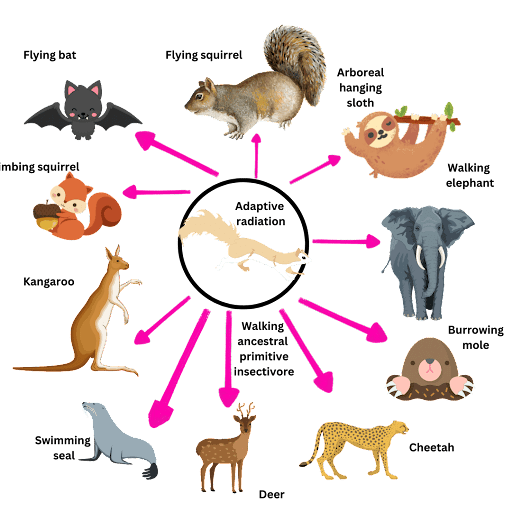
Even though each of the aforementioned groups of placental animals has limbs that are specific for particular habitat, they all shared a common ancestor that had pentadactyl limbs. These evolutionary lines that radiated out in different directions served the purpose of locomotion in their respective habitat.

Summary

Understanding adaptive radiation aids in the comprehension of how organisms interact within a given habitat. Although the food web provides clear knowledge of species interactions, examining adaptive radiation evolution might help us understand how species are dependent on one another. Adaptive radiation enables us to gain new insights into the environmental changes which influence evolution.

Frequently Asked Questions

1. Does adaptive radiation favor biodiversity?
Ans: When a common ancestor diversifies into various forms to fit into the new environment it is known as adaptive radiation. The newly developed adaptive species then gradually diverge from their ancestor until they no longer resemble them. Since adaptive radiation occurs quickly and in multiple directions at once, it leads to biodiversity.

2. How does adaptive radiation operate?
Ans: As a result of being exposed to new ecological conditions, organisms constantly diversify. They do this to take full advantage of the environmental conditions. Therefore, the process of adaptive radiation has been continuously driven by the formation of new ecological niches which increase the availability of newer resources for survival.

3. Is it accurate to say that only species with the ability to move can benefit from adaptive radiation?
Ans: Moving to a new environment is not the only way for an organism to adapt or experience a different environment. Adaptive radiation can also affect sessile plants. For instance, a single common ancestor gave rise to 28 species of Hawaiin silverswords. They belong to three distinct genera and fill various niches.
Electron Configuration

Introduction

The electronic configuration describes the distribution of electrons within an atomic subshell. An electron configuration is a summary of the prediction of the position of the electrons surrounding a nucleus. In every neutral atom, the electron number is the same as the proton number. Now we’ll arrange those electrons so that they form a ring around the nucleus, displaying their energy and the orbital type in which they are located. Electrons occupy orbitals in a specific order based on their energy.

What do you understand by Electron Configuration?

  • The electronic configuration describes the distribution of electrons within an atomic subshell.
  • Atomic electronic configurations follow a standard format in which each atomic subshell containing an electron is listed in ascending order.
  • For high atomic numbers, the standard representation of electronic configuration can be quite lengthy. In some cases, an abbreviated/condensed symbol may be used instead of the standard representation.
  • The electron configuration of Na, for example, is \(1{s^2}2{s^2}2{p^6}3{s^1}\).

How Subshells are important for Electron Configuration?

  • The azimuthal quantum no., represented by the letter “l,” determines the distribution of electrons into subshells.
  • The magnitude of the principal quantum no., n, dictates the magnitude of this quantum number. As a result, when n equals 4, four distinct subshells can exist.
  • For n = 4, the s, p, d, and f subshells correspond to l=0, 1, 2, 3 quantities.
  • Equation 2(2l+1) gives the maximum number of electrons that a subshell can hold.
  • The s, p, d, and f subshells can hold a maximum of 2, 6, 10, and 14 electrons, respectively.

Atomic Electronic Configuration Representation

This section provides examples of a few elements’ electronic configurations.

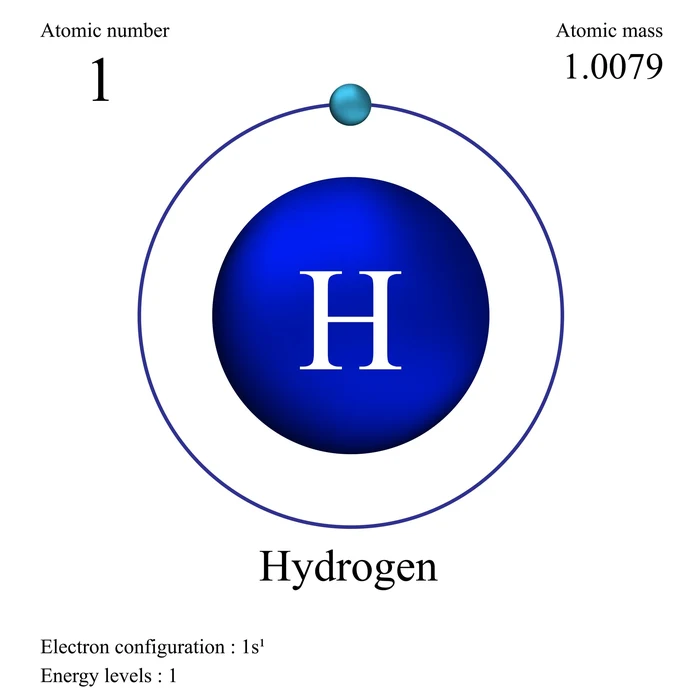
  • The electron configuration of hydrogen has an atomic number of one. As a result, an H atom has one electron, which will be assigned to the subshell of the first shell/s orbit. \(1{s^1}\) is the electronic configuration of H.Atomic structure of hydrogen.
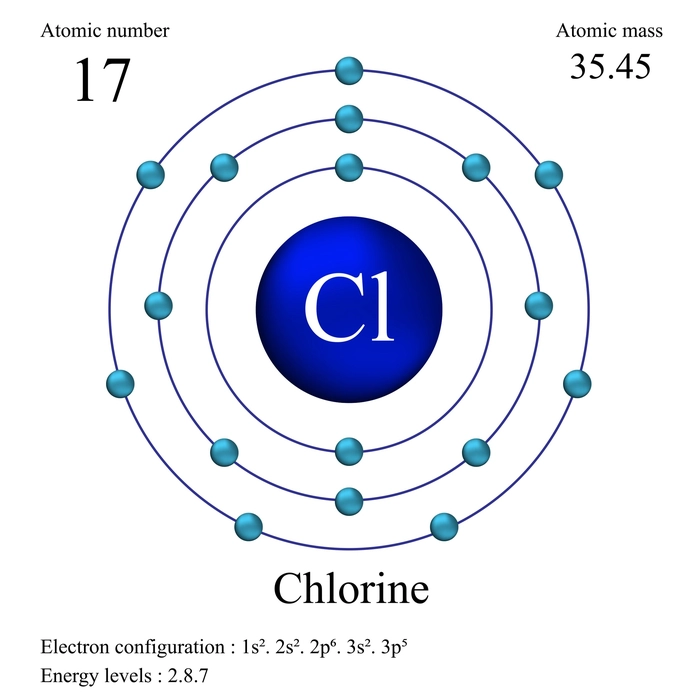
  • The electron configuration of chlorine

Cl has the atomic number 17. As a result, its 17 electrons are distributed as follows:

The K has two electrons.

The L has 8 electrons and the M has 7 electrons.

The atomic structure of chlorine is shown in this image.

The electron configuration of Cl is depicted below. It is written as \(1{s^2}2{s^2}2{p^6}3{s^2}3{p^5}\).

Filling Atomic Orbitals

The following concepts govern how electrons are occupied in atomic orbitals.

Aufbau Principle

“The energy of an atomic orbital is calculated by adding the principal and azimuthal quantum numbers, and according to the Aufbau principle, electrons begin in relatively low energy orbitals and progress to higher energy orbitals.”

Pauli Exclusion Principle

“Only electron pairs with opposite spins can be carried in an atomic orbital, and no two electrons in the same atom have the same values for all four quantum numbers. If two electrons have the same principle, azimuthal, and magnetic numbers, they should have opposing spins.”

Hund’s Law

“Before a second electron is placed in an orbital, each orbital in a specific subshell is said to be entirely filled by electrons.”

Summary

It can be concluded that Electron configuration is the depiction of electron distribution inside an element’s atomic shells. Because the electrons are mathematically positioned in these subshells, the configuration aids in determining their position. The periodic table categorises elements based on their electron configurations. These make up the s, p, d, and f-block elements. The maximum number of electrons that can fit in a shell is determined by the principal quantum number (n). The azimuthal quantum number, represented by the letter “l,” governs the distribution of electrons into subshells.

Frequently Asked Questions

1. Why are specific electron configurations required for elements?
Ans. Electron configurations can shed light on an atom’s chemical behaviour by identifying its valence electrons. It also aids in the organisation of elements into different blocks such as s, p, d, and f blocks.

2. Describe the significance of electron configuration.
Ans. The significance is as follows:

They aid in determining the reactivity state of an atom.

It aids in the identification of both chemical and physical properties.

It foretells an atom’s magnetic properties.

3. For n=3, which subshells are present?
Ans. Each orbital can hold a maximum of two electrons, and there are four subshells present- s, p, d, and f for n=3. The maximum number of orbitals corresponding to the s, p, d, and f subshells is 1,3,5, and 7.

Food Chain And Food Web

Introduction

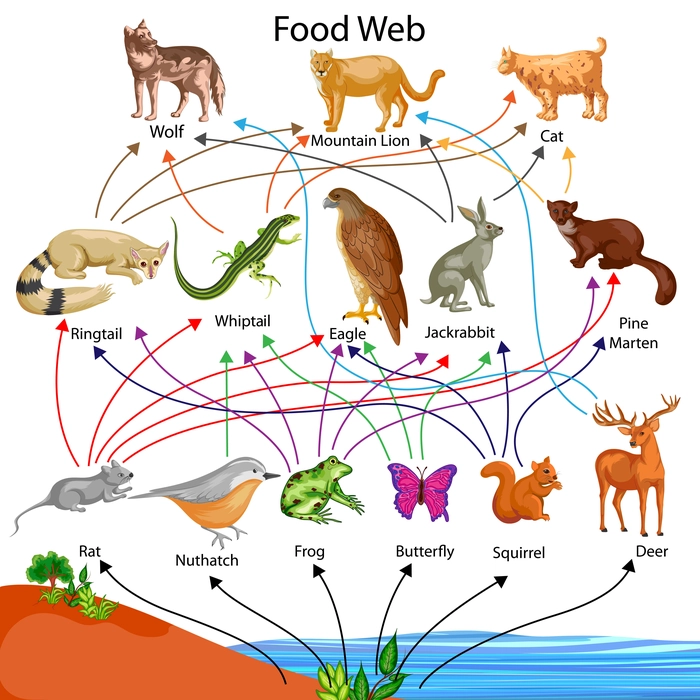
All plants and animals depend on other plants or animals to survive. A example might be a lion consuming a deer or a deer feeding on shrub leaves. In order to depict how energy and nutrients travel through an ecosystem, food chains and food webs were created. In addition to helping us understand the living things that make up an ecosystem, these food chains and webs manage the energy flow within the ecosystem.

lead magnet

Food Chain

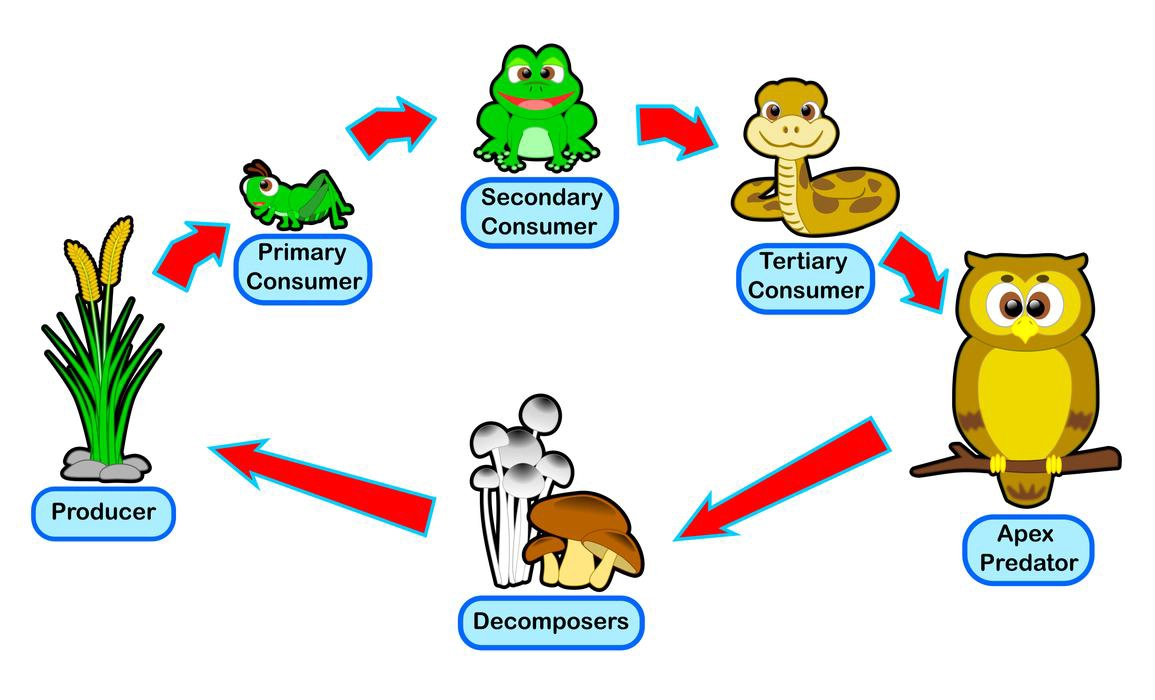
A food chain,is simply an orderly series of actions taking place in an environment where one living organism consumes another one. It is a network of living things that makes up an ecosystem and on which each member depends for sustenance and energy.Food chain includes producers, consumers, and decomposers. The producers are the green plants, then the consumers are other animals, the decomposers are the microorganisms.

Food chain Cycle

There are four basic trophic levels in a food chain. They are as follows:

  • Sun-The sun is recognised as the fundamental source of nourishment for creating food and supporting growth and development.
  • Producers-Green plants are among the producers that make up the first link in the food chain.
Plants belong to the first tropic level.

Consumers-Any species that eats other organisms is a consumer. This is thought to be the largest part of the food chain in the environment.

This image shows primary and secondary consumers.
  • Decomposers-Decomposers are organsisms that decompose the organic content of various plants and animals. They  receive their energy from this organic waste  from the dead objects.
This images shows decomposers (Earthworms)
lead magnet

Types of the food chain

There are basically two types of food chain- The terrestrial food chain and the Aquatic food chain. The terrestrial food chain is seen on the land whereas the Aquatic food chain is seen in water bodies. Examples of food chains are given below.

Terrestrial food chain

  • Nectar (flowers) → butterflies → small birds → foxes
  • Dandelions → snail → frog → bird → fox
  • Rice → rat → owl
  • Leaves → giraffes → lions → jackals
  • Leaves → caterpillars → birds → snakes
  • Grass→ antelope → tiger → vulture

Aquatic food chains

  • Phytoplankton→Zooplankton→Small fishes→Medium fishes→Mahi mahi→Large sharks

Food web

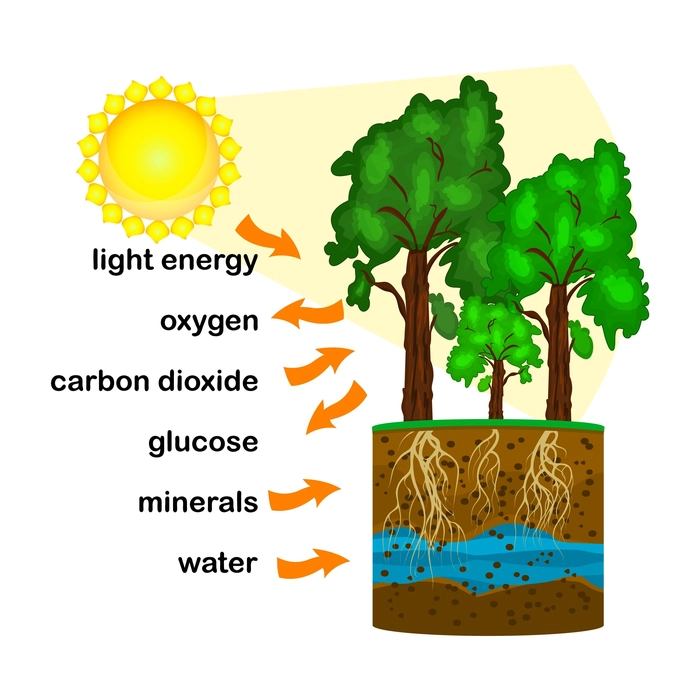
A system of linked food chains is referred to as a “food web”. A food web is made up of different species from the population. There is a common element throughout all of these, namely the requirement for energy to complete the tasks. Most importantly, the sun is the planet’s main source of energy. Green plants use this energy to create food. Once they have captured the energy, it is next transformed by a variety of local organisms in what is known as a food web.The complex and interrelated food networks that make up the food web can be isolated or separated without impairing the ecosystem’s ability to function. As a result, if one organism is removed from it, the flow of nutrients and energy won’t be impacted. Additionally, they exist in several biomes.The variations in each habitat cause a small variation in each food web.

complex food web diagram

Types of the food web

  • Connected Food Web: Scientists use arrows to illustrate how one species is consumed by another in a connected food chain. Each arrow has the same weight. How effectively one species can eat another is not shown.
  • Interaction Food Web : Scientists use arrows to depict one species being consumed by another, just as they do in connected food webs. The weight of the arrows here represents how much one species consumes the other. If one species often consumes another, the arrows shown in such arrangements may be wider, bolder, or darker to reflect the intensity of consumption. The arrow may be very small or not there if the connection between the species is extremely less.
  • Energy flow food webs: Food webs that quantify and depict the energy flow between species are used to illustrate the movement of energy and the connections between the organisms in an ecosystem.
  • Fossil Food Webs: Just as the food chains that make up an ecosystem can evolve over time, so too might the food webs themselves. Using data from the fossil record, scientists try to reconstruct species relationships in an ancient food web.
lead magnet

Difference between Food web and Food chain

Food chain

Food web

Energy moves from a lower trophic level to a higher one along a single, direct conduit.

The various interconnected food chains are where the ecosystem’s energy flow occurs.

There is only one straight chain in it.

It is made up of numerous interrelated food chains.

Movement of nutrients and energy via a single linear pathway.

Numerous linked channels where nutrients and energy travel.

It rises as a result of the expansion of isolated, small food chains.

Due to the existence of complicated food chains, it grows.

Includes 4-6 trophic levels of various species.

Includes several trophic levels of various species populations.

A single species of lower trophic level organism is fed upon by members of the higher trophic level.

Different kinds of lower trophic level species are consumed by members of higher trophic levels.

If even one group of an organism disrupts, it has an impact on the entire chain.

The removal of one group of species has no effect on the food chain.

Summary

A food chain is a straightforward network that shows the linear movement of nutrients and energy from one trophic level to another. A group of interconnected food chains at different trophic levels is known as a food web.A food web also accurately depicts all the many food chains that are present in an environment.

Frequently Asked Questions

1. Who gave the concept of food web?
Ans: Charles Elton is regarded with originally introducing the concept of a food web, commonly referred to as a food cycle, in the year 1927. In his book named Animal Ecology he gave the concept of food web.

2.What are the components of an arctic food chain?
Ans: An arctic food chain is made up of various organisms such as –

Alage→Planktons→Krill→Artic cod→Leapord Seal→Polar bear.

Here- Algae are the producers, Planktons are primary consumers, Krill, Artic cod and Leapord are secondary consumers and Polar bear is the apex consumer.

3.How energy flows in an terrestrial ecosystem?
Ans: In an terrestrial ecosystem the energy flows from producers to the apex consumers. But the energy goes on decreasing as it moves up  from the producers to the apex consumer. Thus the energy pyramid, here is upright and straight.In this transfer of energy from one tropic levels to the next only 10% of the energy is passed, remaining energy is lost.

Adaptations and Habitats

Introduction

Environmental changes are natural and will continue to occur from time to time. Change can be abrupt or gradual, like climate change and global warming. Because of the changing environment, some creatures become extinct while certain species can thrive with very minor alterations. These modifications are passed down across generations, enabling the species to adapt to its environment and increase in population. These modifications are known as adaptations. A natural environment where a species grows and reproduces is known as a habitat.

Depending upon various habitats there are the following adaptations

For more help, you can Refer to Lesson 9 – Living things and habitat in Science Class 6. Check out the video Lesson for a better understanding.

Adaptations in aquatic habitats

Numerous elements, such as light penetration, water composition (nutrient and salt content), oxygen availability, pressure, etc, are various factors that affect life in the aquatic environment. For these purposes, plants and animals are adapted in the following ways-

Plant adaptations-

  • Aquatic plants have tissues called aerenchyma to move oxygen from exposed surfaces to low-oxygen submerged sections. 
  • Aerenchyma also provides buoyancy to the plant and helps it float and helps to absorb natural light and oxygen.
  • The root system is essentially nonexistent because water is all around them. If existent, it is rather small and mostly used for anchorage.
  • To endure water currents leaves on submerged plants are typically tiny or ribbon-shaped.
  • The stems are tall, hollow, light, and slender.
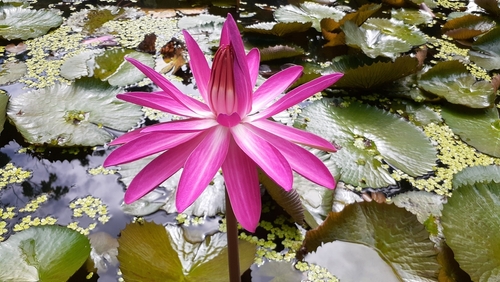
  • Examples include water lilies, sea grass, and lotus.This diagram shows the adaptations of aquatic plants.

Animal adaptations-

  • Aquatic animals use their gills to breathe.
  • Syphons are breathing tubes used by aquatic insects to draw oxygen from the air when submerged in the water. While some creatures, including salamanders, breathe through the skin.
  • The blow holes on larger animals like whales and dolphins allow them to take in oxygen as they ascend to the surface and expel carbon dioxide.
  • Fish have streamlined bodies to lessen swimming-related water resistance.
  • Fins aid in swimming and tails act like rudders to maintain direction.
  • Dolphins, whales, fish, etc. are a few examples.

Adaptations in desert habitat

Deserts are dry areas that only get a little rain occasionally throughout the year. It has an arid climate and rocky, sandy soils. Deserts face high temperatures and intense sunlight. For these purposes, plants and animals are adapted in the following ways-

Plant adaptations-

  • A common desert adaptation is to conserve body fluids and prevent water loss through transpiration. To stop water loss through transpiration, desert plants’ leaves have thick, waxy cuticles.
  • Due to the poor external availability, the stems are fleshy and store a lot of water.
  • Desert plants have spines as a kind of defense against herbivores.
  • To access deep subterranean water resources, plants have long, deep roots.
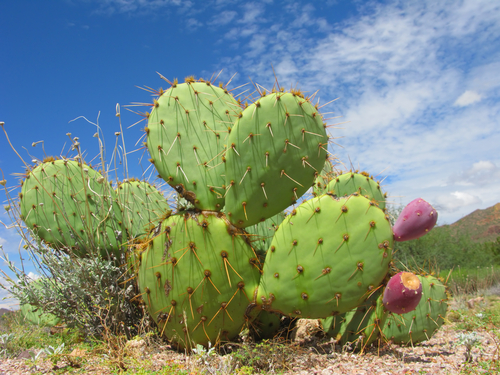
  • Cacti, and agave, are some examples of desert plants.This diagram shows the xerophytic plant and its desert adaptation.

Animal adaptations-

  • The temperature in the desert is usually very high, hence small organisms have evolved nocturnal behaviors to ensure their survival. At night, when temperatures are generally low, they hunt for prey.
  • Many desert animals have skin that is made to keep water from evaporating, and their bodies store lipids which can help them endure prolonged hunger periods.
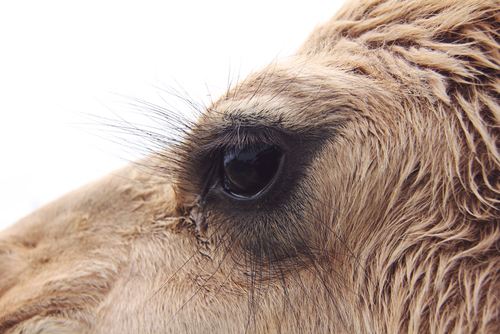
  • High-speed winds frequently carry small sand particles; these animals have large eyelashes, hairy ears, and tight nostrils which prevent sand from getting into their delicate bodily parts.
  • Desert animals include kangaroo rats, camels, and desert cats.This diagram shows the camel with long eyelashes in desert adaptation.

Summary

Every living thing is constantly interacting with its environment. The percentage of survivors they have will determine how long the species will exist. Changes in the environment might be gradual or abrupt. However, organisms—whether they be plants or animals—develop specific inherited traits that enable them to adapt to environmental changes. We refer to them as adaptations. Desert-dwelling organisms have developed adaptations that reduce body water loss. Water-dwelling organisms have developed adaptations that help them breathe and adjust to the water pressure. Adaptations help organisms function better and are essential for survival.

Frequently Asked Questions

1. Give some common examples of adaptations.
Ans: Some examples of adaptations are- 

  • Pointed teeth and claws of carnivores.
  • Varied beak shapes to obtain food.
  • Webbed feet of ducks.
  • Leaves thick cuticles in xerophytic plants.
  • White color fur in arctic animals prevents predation.
  • Uricotelism in xerophytic animals.

2. What are Physical, physiological, and Behavioural adaptations?
Ans: Physical adaptations are characteristics that organisms have acquired as a result of their environment. To live in their ecological niche, organisms engage in internal functional mechanisms known as physiological adaptations. Behavioral adaptations are the behaviors or reactions the organism does in response to its surroundings.

3. Describe camouflage.
Ans: The physical adaptation of creatures to resemble or blend into their surroundings to survive attacks from predators is called camouflage.

Plaster of Paris Formula, Baking Soda, Washing Soda

Introduction:

Gypsum powder is called Plaster of Paris which is white. Gypsum is very common in Paris, which is how it earned its name. Gypsum is commonly heated to a higher temperature to make plaster of Paris. This is a dry powder that is mixed with water and hardens. When drying, this becomes flexible. In the field of architecture, plaster of Paris is used in a variety of ways. A famous substance, found in gauze bandages and sculpture materials is called the plaster of Paris.

Components of Plaster of Paris

Gypsum that has been roasted and milled into a fine powder is called plaster of Paris. Chemically it is written as\(\;CaS{O_4}.{\rm{ }}\raise.5ex\hbox{$\scriptstyle 1$}\kern-.1em/\kern-.15em\lower.25ex\hbox{$\scriptstyle 2$} {H_2}O\). Heat is generated as calcium sulfate transforms from its more soluble form\((CaS{O_4}.{\rm{ }}\raise.5ex\hbox{$\scriptstyle 1$}\kern-.1em/\kern-.15em\lower.25ex\hbox{$\scriptstyle 2$} {H_2}O)\) to its comparatively insoluble state\((CaS{O_4}.{\rm{ }}2{H_2}O)\) when water is added.

Properties of Plaster of Paris

  1. POP is an ideal material for forming moulds because it doesn’t stretch or break when dried. Beautiful plasterworks, including cornices, are frequently constructed and maintained with this technique.
  2. It is neither flammable nor combustible. It has a relatively weak chemical reactivity but, in extreme cases, can operate as an oxidizing agent. Hazardous sulfur oxides are produced during decomposition at moderately high temperatures. It creates gypsum \(CaS{O_4}\) by a slow and exothermic reaction with water or air moisture.
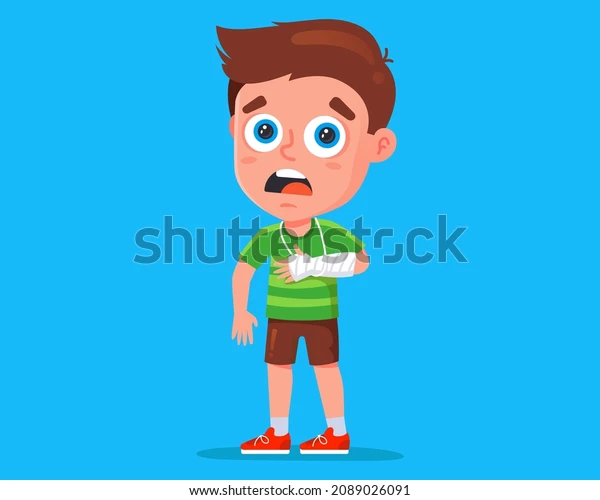
Plaster of Paris helps in setting the broken bones.

Washing Soda

Properties

A white, odorless dust is called washing soda. It has a chemical name termed sodium carbonate decahydrate, and its formula is\(\;N{a_2}C{O_3}.10{H_2}O\).

Its water-absorbing nature allows it to absorb moisture from the surrounding atmosphere. It is very soluble in water and creates a very basic solution.

Preparation

Through Solvay’s method, washing soda is produced. It starts as sodium bicarbonate, which is heated to become sodium carbonate. Finally, sodium carbonate is recrystallized to generate washing soda.

\[NaCl + N{H_3} + C{O_2} + {H_2}O{\rm{ }} \to {\rm{ }}NaHC{O_3} + N{H_4}Cl\]

\[2{\rm{ }}NaHC{O_3} \to N{a_2}C{O_3} + {H_2}O + C{O_2}\]

\[N{a_2}C{O_3} + 10{H_2}O \to {\rm{ }}N{a_2}C{O_3}.10{H_2}O\]

Baking Soda

Baking soda or bicarbonate of soda, also termed sodium bicarbonate,  is a chemical substance with the formula \(NaHC{O_3}\). Bicarbonate anion (\(HC{O_3}^ – \)) and the sodium cation (\(N{a^ + }\)) combine to form baking soda.

Properties

  1. A white crystalline substance with a density of around 2.2 g/mL is known as sodium hydrogen carbonate. It tastes alkaline and is only slightly soluble in water. With an increase in temperature, sodium hydrogen carbonate becomes more soluble.
  2. It is well known that baking soda can neutralize odors. Baking soda is therefore widely used to remove false odors from freezers and other closed spaces.

Preparation

In the reaction of a saturated sodium carbonate solution and carbon dioxide, sodium hydrogen carbonate (baking soda) is formed. Due to its low solubility, the white powder of sodium hydrogen carbonate isolates out.

Summary

Gypsum (calcium sulfate) powder and water are combined to create the plaster of Paris, which quickly dries. Medical professionals use plaster of paris to fix broken bones. Orthopedic casts still frequently utilize plaster of Paris. Washing soda’s pH is higher than that of baking soda. Baking soda, like the Arm & Hammer variety containing sodium bicarbonate, is edible and safe to use on human skin. It is not advisable to consume, breathe, or put alkaline washing soda on the skin.

Frequently Asked Question

1. How to make the plaster of Paris waterproof?

Ans: When the plaster of Paris is cured, it transforms into a highly porous material that will absorb any water that comes into contact with it. Plaster of Paris must have as many surface gaps as possible blocked to behave as waterproof for outdoors or brief exposure to water.

2. Is baking soda a blood pressure raiser?

Ans: Hypertension: Sodium bicarbonate may raise blood pressure. The use of sodium bicarbonate should be prohibited by individuals who already have high blood pressure. Low blood potassium levels: Sodium bicarbonate may decrease blood potassium levels.

3. What occurs if the plaster of Paris is left out in the open?

Ans: Plaster of Paris is a kind of rapid gypsum plaster that hardens when moistened and left to dry as it reacts with the moisture in the atmosphere to form gypsum. It is composed of a fine white powder termed calcium sulfate hemihydrate.

Refraction of Light through a Prism

Introduction

Have you ever questioned why straw that has been dipped in water appears warped? When the water is added to the glass, the straw appears to bend, but when you remove it, you can see that it hasn’t actually bent at all. Refraction is to blame for this; rather than the straw itself, it bends the light around it. Likewise occurs when a pencil is inserted into a glass of only partially full water. If you look at the pencil, you can see that it looks normal above the water but twisted and a little bigger below. There are numerous such instances of refraction in daily life that will be covered in this chapter.

Refractive index of light

The refractive index of any material is given as the ratio of the speed of light in the vacuum divided (c) by the speed of light in a medium (v), and is presented with a symbol, n, such that,

$$
n=\frac{c}{v}
$$

We can infer from this relationship that optical density and light speed both affect the refractive index. With an increase in optical density, the refractive index often rises. Light may bend more when it enters a denser material than when it enters a rarer one. Additionally, as the medium’s medium’s light speed decreases, the refractive index rises.

Prism

A transparent substance that can reflect light and has at least two lateral surfaces that are obliquely inclined to one another is referred to as a prism. It contains five surfaces, including three rectangle lateral surfaces and two triangle bases. The angle of the prism refers to the angle created by two lateral surfaces. For a standard prism, the prism’s angle is always 60°.

Refraction of light through a prism

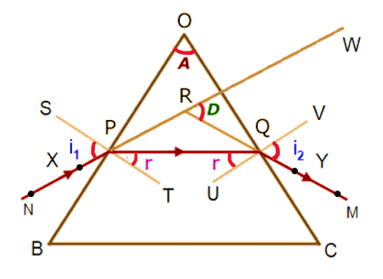
A light ray NP is seen entering glass at the initial surface OB in the diagram as it travels from air. Because glass is denser than air, incoming light is bent toward the normal after refraction. When light enters from glass into air at the second surface BC, it bends away from the usual. A line drawn perpendicular to the surface at the incident ray entry point is called a normal. In contrast to angle of emergence, which is the angle produced between the emergent ray and the normal, angle of incidence is the angle formed between the incident ray and the normal. The angle that the emergent ray (stretched rearward) creates with the incident light is known as the angle of deviation ($\angle D$) (extended forward). The equation can be written from angle of prism (∠A), angle of incidence (∠i) and angle of emergence (∠e). Therefore, the expression is given as,

$$
\angle D=\angle i+\angle e-\angle A
$$

Description: A light-ray deviates from its original path after passing through the prism.
Dispersion through a Glass Prism

Refractive index of a prism

Refractive index of a prism made up of glass is given by the formula,

$$
n=\frac{\sin \frac{(A+D)}{2}}{\sin \left(\frac{A}{2}\right)}
$$

Where n is the refractive index of the prism, A is the angle of the prism and D is the deviation. The deviation is minimum at one point and is called minimum deviation. Using this formula, we can easily calculate the refractive index of the prism.

Angle of deviation

It refers to the angle at which the emergent ray and incident ray make contact. Angle of deviation is affected by a variety of factors.

Refractive index

The refractive index is directly proportional to the angle of deviation. 

Angle of prism 

The magnitude of the angle of deviation increases with an increase in the angle of the prism.

Wavelength of light

As the wavelength increases, the angle of deviation decreases. Therefore, violet deviates the most, because it has a shorter wavelength.

Temperature

As temperature increases, intermolecular space also increases, density decreases, refractive index decreases and angle of deviation decreases. 

Dispersion of light through prism

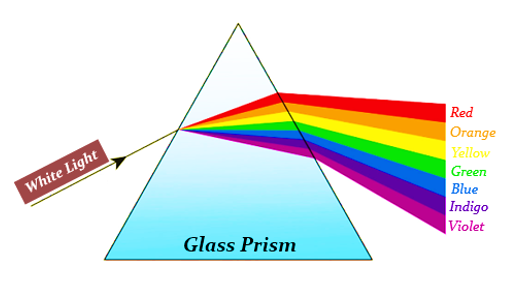
The white light, composed of the whole spectrum) is divided further into its components called the spectrum when it passes through a prism. This phenomenon is called  The white light divides into its seven individual colours. These hues are a part of VIBGYOR (V-violet, I- indigo, B-blue, G-green, Y-yellow, O-orange, R-red). The wavelengths of these hues determine their deviation. Red has the longest wavelength among these colours, whereas violet has the shortest. As we previously established, the angle of departure increases with decreasing wavelength. Due to the fact that light propagates at different speeds, it “bends” or is “refracted” when it travels through a medium. At this point, light passing through a prism is deflected in the direction of the triangle’s base. Each of the many colours that make up light has a unique wavelength. Because of this, each of them bends at a different rate depending on its wavelength, with violet bending at the fastest rate because it has the shortest wavelength and red bending at the slowest rate because it has the longest. As a result, the spectrum of colours in white light are separated into their individual colours when it is refracted via a prism.

Dispersion through a glass prism

Summary

Refraction, which is the bending of light as it travels through two distinct media, has a variety of uses. Light slows down and bends when it passes through a prism. The pool appears to be shallower than it actually is. This results from the way light beams from the water’s bottom curve when they exit the water and enter the atmosphere. Have you ever noticed the water layer forming over a short distance in a desert or on a road on a sunny day? “Mirage” is the name given to this occurrence.

Frequently asked questions

1. Why do stars twinkle in the night sky?

Ans: A significant factor in this phenomenon is atmospheric refraction. The refraction of light caused by the earth’s atmosphere, which is made up of air layers with various optical densities, is referred to as “atmospheric refraction.” Light beams from stars are constantly changing their direction as they pass through the earth’s atmosphere due to the changing optical density of the atmosphere. It might affect the amount of starlight that reaches our eyes. The stars in the night sky appear to twinkle as a result.

2. How many refraction patterns are possible for a light beam when it passes through a prism? Explain.

Ans: The speed of the beam may decrease as it passes through air toward a prism, finally slowing down and bending. It also experiences additional refraction as it passes through the prism. Snell’s law of refraction allows us to draw this conclusion. This law states that a light beam moving from a rarer to a denser material may slant in the direction of normal. In a similar way, light beams can stray from the usual when they move from a denser to a rarer medium. As a result, there are two possible refractions.

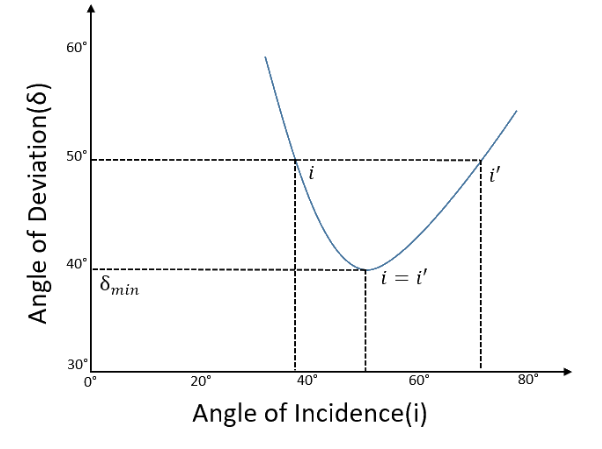
3. Identify the graph and predict which colour of VIBGYOR has the minimum deviation.

A graph with angle of deviation versus angle of incidence
                              A graph with angle of deviation versus angle of incidence

Ans: This is a plot along the X and Y axes against the angle of incidence and the angle of deviation (a). This graph shows how a light beam deviates when it passes through a glass prism. White light splits up into its individual colours when it enters the prism. The wavelength of the light coming in determines how far the deviation extends. Light deviates the least and has the highest wavelength. Red has the highest wavelength among VIBGYOR. Red therefore deviates the least from the norm.


What is Electron Affinity | Factors Influencing Electron Affinity

Introduction

An atom’s energy changes due to electron affinity. A neutral atom gains energy and a negative charge when electrons are added to its outer shell. To stabilise its octet, an element gains electrons. When an element accepts or loses an electron, energy is released. When an element accepts an electron to form a compound, it releases energy, which is referred to as an exothermic reaction. The energy is released in an exothermic reaction in order to attract the electron by a nucleus from another element. When an element loses an electron, it absorbs energy, a process known as endothermic. An atom gains energy when it loses electrons.

What do you mean by Electron Affinity?

When atoms accept electrons, they emit energy, which is referred to as an exothermic reaction. Atoms that lose an electron in a chemical reaction, on the other hand, absorb energy and are known as endothermic reactions. The ability to accept an electron is referred to as electron affinity. When a neutral gaseous atom accepts an electron, it gains a negative ion charge. The first electron affinity is always negative, while the second is always positive. It is difficult to measure the electron affinity of an atom. It is determined by the energy released by ionic compounds. The electron affinity is also measured by an atom’s tendency to act as an oxidising or reducing agent. It is measured in kilojoules/moles. Electron affinity is symbolised by EA.

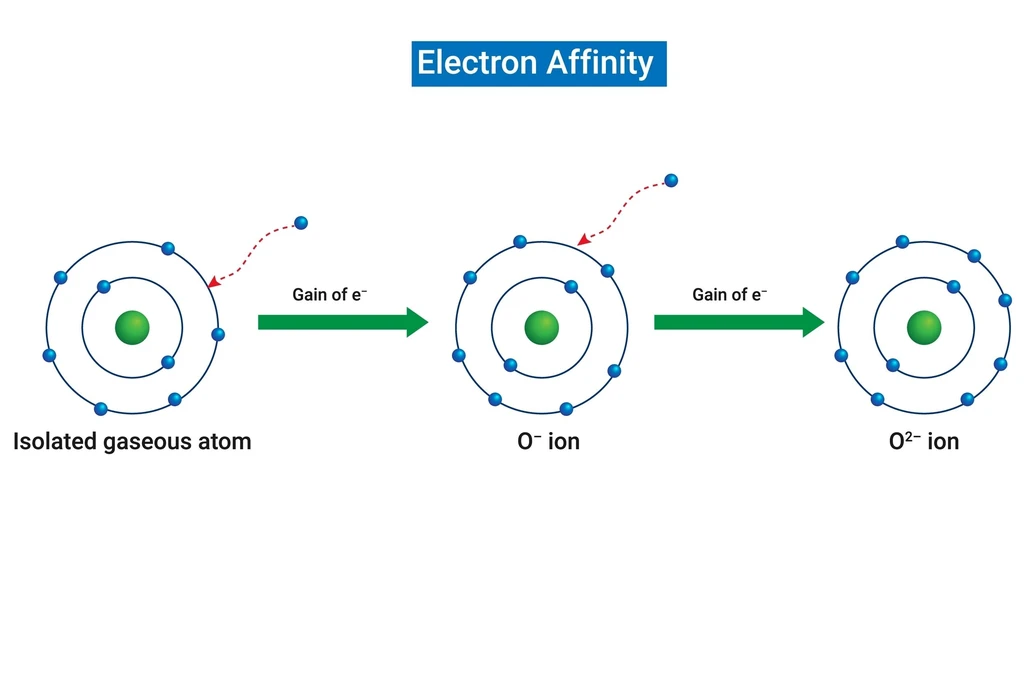
Electron affinity of an isolated gaseous oxygen atom is shown.

Want to get an “A” on your Science exams? Let our expert teachers be your guide toward improving your grades and reaching your highest potential. Study Science tuition for classes 6th, 7th, and 8th.

Factors Influencing Electron Affinity

The atomic size of the element, the nuclear charge on the molecules, and the electronic configuration of atoms are all factors that influence a molecule’s electron affinity.

  1. Atomic size: Atoms with smaller sizes have greater electron affinity than atoms with larger sizes. The nucleus of smaller atoms is more attractive to electrons than the nucleus of larger atoms. As the atom’s size increases, the outer shell becomes further away from the nucleus, and the attraction for electrons in the outer shell decreases. 
  2. Nuclear Charge: The nuclear charge influences electron affinity as well. As the charge on an atom increases, so does the attraction in electrons, and thus the electron affinity. When a molecule is already charged, electron repulsion increases, and the pull from the nucleus increases, resulting in increased electron affinity in charged ions.
  3. Shielding Effect: As the screening effect on an atom’s inner shell is reduced, the electron affinity increases.
  4. Electronic Configuration: The electronic configuration also affects electron affinity. Because elements with full octets have zero tendencies to accept electrons, electron affinity in inert gases is zero. The electronic configuration is crucial in electron affinity. Metals have a lower affinity for electrons than non-metals due to their electronic configuration.

Summary

The ability to accept electrons in gaseous form and form an anion is referred to as electron affinity. The process of accepting electrons generates energy, which is why it is referred to as an exothermic process. When we move from group to group, the electron affinity decreases and increases when we move from period to period. It is denoted by the symbol EA and measured in Kilojoules per Mole (KJ/Mol). Because of electron-electron repulsion, the first electron affinity is always less than the second electron affinity. The atomic size, electronic configuration, screening effect, and nuclear charge of elements all influence electron affinity.

Frequently Asked Questions

1. Why do noble gases have no electron affinity?

Ans. Noble gases have zero electron affinity because their octet is complete, and they do not have an affinity for electrons. As a result, noble gases have no electron affinity.

2. Why does group 17 have such a strong electron affinity?

Ans. Because the halogens are small and have more electrons in the outer shell, the elements of the halogens group have a high electron affinity. A halogen would rather accept an electron than lose seven electrons to complete its octet.

3. Why does fluorine have a lower electron affinity than chlorine?

Ans. Because the atomic size of fluorine molecules is smaller than that of chlorine molecules, the outer shell of fluorine is already filled with electrons, and the nucleus is much closer to the outer shell, the electron repulsion is greater than the force of attraction of the nucleus when an electron is placed in the outer shell of fluorine molecules compared to chlorine molecules.

Electrochemical Cell

Introduction

How does a mobile phone’s battery charge when plugged into its charger, or how does the cell in a TV remote control work? All of these questions have answers in the scientific field of electrochemistry. Electrochemistry is the study of both the use of electricity to conduct non-spontaneous chemical reactions and the production of electricity through chemical reactions. To achieve the goal, cells are used. Cells are components that initiate chemical reactions that produce or generate electricity.

What is an electrochemical reaction?

An electrochemical reaction is any process that is initiated or accompanied by the flow of electrical current, and typically involves the transport of electrons between two substances—one solid and one liquid. An electrochemical reaction occurs when a solid electrode and a material, such as an electrolyte, interact. This flow causes the reaction to release or absorb heat by producing an electric current to pass across the electrodes. When, for example, two electrodes in contact with one another initiate an oxidation and reduction (redox) reaction, the oxidation number of all the atoms involved in the reaction changes.

The process of electrochemical reaction

The properties of the negatively charged\(\;{e^ – }\)determine how matter interacts with an electric current as it flows through a system. Because protons are positively charged matter units found in elements, groups of atoms, or molecules, the electron, the fundamental unit of electricity, is drawn to them. This attraction is comparable to the chemical attraction that particles have for one another. Every chemical reaction changes the structure of an atom’s electrons, and the liberated electrons can either join with matter particles to form reductions or be ejected by them (oxidation). 

Faraday’s rules define the quantitative relationship between a free electron in a current flow and the atoms of a substance, where they cause a reaction. Electrochemical process components are also known as ionic conductors or electrolytes.

What is an Electrochemical cell?

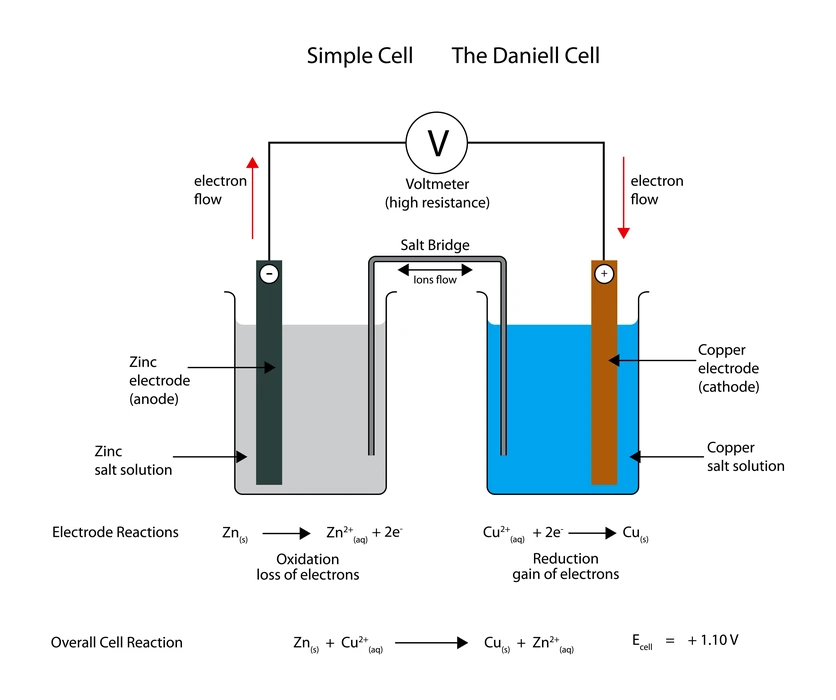
An electrochemical cell is a system that can generate electrical energy from spontaneous chemical reactions. The chemical processes that occur during this process are known as redox reactions. During redox reactions, electrons are transferred between chemical species. They are also referred to as galvanic or voltaic cells. An electrochemical cell is illustrated by the Daniell cell.

The following are the essential components of an electrochemical cell:

  1. An electrolyte is a substance found between electrodes that, when dissolved in polar solvents such as water, produces freely flowing ions, resulting in an electrically conducting solution.
  2. Electrodes are solid electrical conductors that are used in electrochemical cells and are made of good conductors, such as metals.
  3. They are available in two varieties:
  4. The Cathode is the area of the cell where reduction takes place.
  5. The anode is the part of the cell where oxidation takes place.
  6. A salt bridge connects the oxidation and reduction halves of an electrochemical cell, completing the circuit. It is brimming with KCl and other saturated salt solutions. The bridge is required for the ions in the solution to flow between half-cells.

What are the different kinds of electrochemical cells?

There are two major kinds:

  1. Galvanic Cell / Voltaic Cell: Chemical energy is converted to electrical energy in these electrochemical cells.
  2. Electrolytic Cell: In these cells, electrical energy is converted to chemical energy.

Explain its operation

  • Working Principle

The fundamental operating principle of an electrochemical system is the transfer of\(\;{e^ – }\)produced by a redox reaction occurring in it, which results in an electric current.

  • Working Mechanism 

When the switch is turned on after an electrochemical cell has been fully assembled, the galvanometer of the external circuit deflects. The needle of the galvanometer moves in the direction of the beaker containing the copper sulphate solution. It indicates that the current has changed direction from the copper sulphate solution beaker to the zinc sulphate solution beaker. When the circuit is completed, a change occurs that causes zinc atoms in the zinc electrode to oxidise and Cu atoms in the copper rod to reduce. Zinc releases two electrons, which copper accepts via an external circuit.

In Daniell Cells, chemical energy is converted to electrical energy.

Full redox reaction: \(\;Zn{\rm{ }}\left( s \right){\rm{ }} + {\rm{ }}C{u^{2 + }}\left( {aq} \right){\rm{ }} \to {\rm{ }}Z{n^{2 + }}\left( {aq} \right) + Cu{\rm{ }}\left( s \right)\;\;\;\)

Some applications of Electrochemical Cell

  1. Many non-ferrous metals are electro-refined in metallurgy using electrolytic cells, yielding very pure metals such as Pb, Zn, Al, and Cu. 
  2. It is used to recover pure Na metal from molten NaCl by storing it in an electrolytic cell.
  3. Silver oxide batteries are used in hearing aids.
  4. Thermal batteries are used in Navy gadgets for military applications.

Applications of Electrochemistry

  1. Electrical batteries are created using the concept of cells. A battery is a device used in science and technology that stores chemical energy and provides electrical access to it.
    1. Applications in defence (thermal batteries)
    2. Digital cameras (Li batteries)
    3. Audio equipment (silver-oxide batteries)
  2. Electroplating is used for a variety of purposes, including the production of jewellery and the corrosion protection of certain metals.
  3. Electrochemistry is required in a variety of industries, including the chlor alkali industry.

Summary

Electrochemistry is a fascinating subject. Electrochemical reactions are important to comprehend because they have significant academic and practical implications. Understanding the responses allows us to better understand how everyday objects such as a battery or cell work. Chemical energy can be used to generate electrical energy in electrochemical cells, and electrical energy can be used to generate chemical energy.

Frequently Asked Questions 

1. What factors affect electrode potential?

Ans. The reduction potential refers to an electrode’s ability to accept electrons, whereas the oxidation potential refers to an electrode’s tendency to lose electrons. The potential of an electrode is determined by the temperature and metal ion concentration at its surface.

2. Can a zinc pot be used to store copper sulphate solution?

Ans. Copper has a lower reactivity than zinc. As a result, zinc can remove Cu from its salt solution. If the\(\;CuS{O_4}\) solution is kept in a zinc container, copper will be removed from the solution.

\[Zn + CuS{O_4} \to ZnS{O_4} + Cu\]

As a result, the copper sulphate solution cannot be stored in a zinc pot.

3. In the SI system, what is the emf measurement?

Ans. The energy contained in a battery per Coulomb of charge is known as the electromotive force, EMF has a SI unit of volts, which is equal to joules per coulomb.

Ammonotelism- Excretion in Animals & Importance

Introduction 

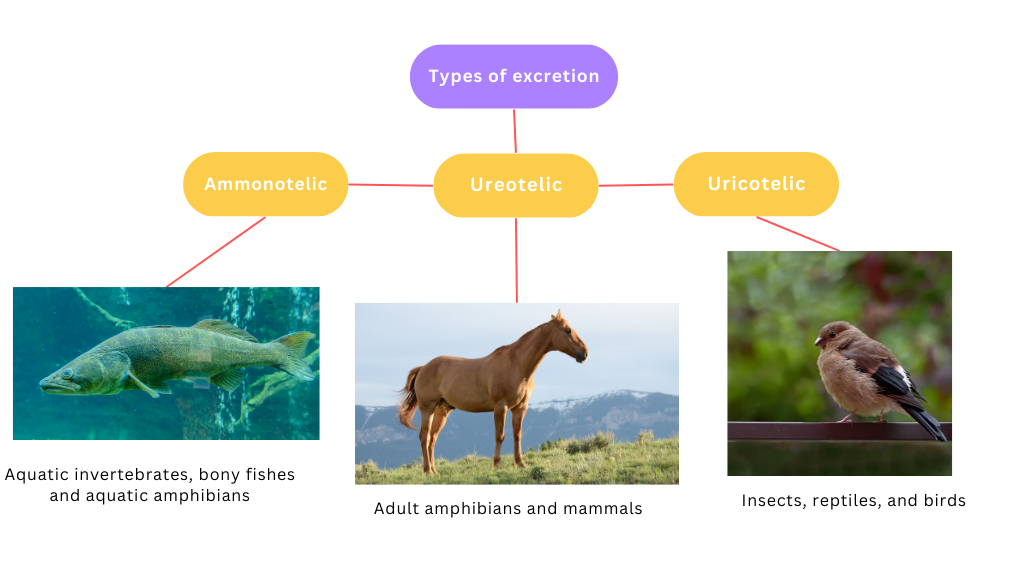
All species, whether they have one cell or many, engage in diverse metabolic processes. The body produces harmful chemicals as a result of these processes. To prevent excessive accumulation of these waste products in the body, they must be excreted. The excretory system of the body performs the function of eliminating waste. Different species emit different wastes, and they are divided into 3 types- , Uricotelic, and Ammonotelic. The poisonous waste products produced by bodily metabolism must be eliminated from the body and this is done through the process of excretion

types of excretionExcretion

Excretion is the process through which nitrogenous waste is expelled from the body. The excretory system in humans and the majority of chordates is responsible for the process of excretion. The human excretory system consists of two kidneys that filter the blood and remove the primary nitrogenous waste- Urea from the body. Nephrons, the kidney’s functional unit, filter blood and remove urea by the process of urine formation. Excretion is a very important step and it helps in maintaining the homeostasis of the body. Various organisms which stay in the abundance of water have their excretory products in the form of Ammonia and such are called ammonotelic organisms.

 Ammonotelism

  • Ammonia is a waste product that some species, including amoeba, protozoa, echinoderms, Platyhelminthes, poriferans, cnidarians, and aquatic mammals, produce.
  • These organisms are known as ammonotelic organisms and the process of excretion by such organisms is known as .
  • To expel waste from their bodies, these organisms perform diffusion. The waste is excreted through their skin, gills, or kidneys.
  • Ammonia has a small molecular size and it easily dissolves in water hence excretion is simple in aquatic animals.
  • Elimination of ammonia from the body is very essential because when ammonia dissolves in water it generates ammonium hydroxide, which can result in necrosis of the tissues.
  • Ammonotelism is the least energy-consuming and most water-intensive method of excretion. This is so because 1 gram of ammonia requires approx 500ml of water.

Physiological Aspect of Ammonotelic Excretion

  • Fish and other aquatic species eat food that is high in protein and other nutrients.
  • These organisms are unable to store amino acids for a long period, hence their intestines are designed for the deamination of amino acids.
  • Uric acid is created during the process of deamination.
  • Uric acid is oxidized which leads to the formation of  Allantoin and allantoic acid.
  • Allantoin is hydrolyzed to form allantoate, and subsequent hydrolysis produces urea and glyoxylate.
  • Urea is further broken down into ammonia and carbon dioxide in ammonotelic species.
  • This ammonia then dissolves with the water and is expelled out of the body. 

Osmoregulation

Osmoregulation is the process of controlling the osmotic pressure of bodily fluids to maintain the water balance of the body. Since the cells of marine creatures are isotonic with saltwater, no regulatory mechanism is necessary. However, to keep the electrolyte balance in the body other organisms’ osmoregulation is a must. Osmoregulation helps maintain salts and water balance in the body. For instance, the antidiuretic hormone (ADH, also known as vasopressin) regulates the content of urine in humans. when the body’s water content is low More water is reabsorbed due to the presence of ADH. This leads to less urine production. More urine is produced when the body’s water content is high. Excretion and osmoregulation work in unison to make sure the steady state of the body is maintained.

Importance of Excretion

Excretion is a very important physiological process of the body. Its significance is given below.
  • Excretion helps in the regulation of blood ionic composition.
  • It helps in controlling blood pH.
  • Regulation of blood volume and blood pressure is done through this process.
  • It helps in maintaining blood osmolarity.
  • The excretion of waste and foreign substances helps in cleaning the body of toxic and harmful wastes. 
  • It assists in the maintenance of osmoregulation in the body.

Summary

Animals’ diets provide them with more amino acids. Ammonia, urea, and uric acid are excretory products that are created during the metabolism of proteins, amino acids, or nucleic acids. Organisms that are ammonotelic release ammonia as a waste product through their gills, skin, and kidneys. Removal of ammonia requires less energy. The regulation of water ion balance and homeostasis depends on the excretion of waste. By controlling the electrolyte balance, every organism keeps its internal environment in a steady state.

Frequently Asked Questions

1. Enlist excretory organs from different organisms.
Ans: Other excretory organs seen in various organisms are-

  • Planaria – Flame cells
  • Earthworm- Nephridia
  • Cockroaches- malpighian tubules
  • Prawns- green glands
  • Molluscs- Renal glands

2. What are ureotelic and uricotellic organisms?
Ans: Ureotelic organisms – They release Urea as a waste product which is less toxic examples-Mammals and amphibians.

Uricotelic organism- They release Uric acid as a waste product which is the least toxic.  examples- Birds, reptiles, and insects.

3. Only aquatic animals are ammonotelic. Give reasons why?
Ans: Ammonia is highly toxic and hence cannot be stored in an organism’s body. Expulsion of ammonia from the body requires lots of water and hence aquatic animals such as fish only have the ability to form waste products in the form of ammonia.

Amphibia – Characteristics And Classifications

Introduction

Mammals, fish, amphibians, birds, and reptiles are among the five classes into which animals are divided. Each one of them needs the environment to survive, including air, food, water, and shelter. The only vertebrates that live part of their lives in water and part on land are amphibians. As a result, they differ from other animal species. An amphibian is a tiny vertebrate organism that requires water or a moist environment to exist. As amphibian’s body temperatures are influenced by their surroundings and they can thrive in both terrestrial and aquatic habitats, they are also referred to as cold-blooded vertebrates. Frogs, toads, newts, caecilians, and salamanders are amphibians.

Characteristics of Class Amphibia

Body 

  • Amphibian bodies are separated into the head, trunk, and tail. Few amphibians just have a head and a tail (frogs). The neck can be absent or present.
  • Some amphibians are limbless, while others have two sets of pentadactyl limbs.
  • The skin is smooth, moist, scale-free, and abundant with mucous glands.

Sense organs

  • Amphibians have two olfactory lobes that are responsible for their ability to smell.
  • Eyes are well developed.
  • Although they lack an external ear, the tympanum shields their middle ear.

Digestive system

  • Amphibians have digestive systems that include the mouth, oesophagus, stomach, and intestine closing in a division called the cloaca.
  • Cloaca participates in the digestive, excretory, and reproductive systems.

Circulatory system

  • Amphibians have a closed circulatory system.
  • They have three-chambered hearts, that are made up of two auricles and one ventricle.
  • There are two circulatory paths; one is for the oxygenation of the blood through the lungs and skin and another route is to carry oxygen to the remaining parts of the body.
  • However, there is incomplete double circulation because the oxygenated blood obtained in the left atrium and the deoxygenated blood received in the right atrium mix very slightly.

Diet

  • Invertebrates like bloodworms, mealworms, earthworms, snails, slugs, locusts, and other creatures are eaten by amphibians. Larger amphibians can also consume small mammals.
  • Young frogs require food most days of the week, whereas adult frogs only require it every two to three days.

Excretory system

  • Amphibians have mesonephric kidneys during the adult stage and have pronephric kidneys at the larval stage.
  • When on land, they expel the majority of their metabolic waste as ammonia (in tail form) and urea (in tailless forms).
  • Kidneys are the primary excretory organ of amphibians.

Reproduction

  • Amphibians can be fertilized internally (by a salamander) or externally (by most amphibians).
  • They attract their mates by making various sounds; for instance, the loud croaking of frogs may be a signal for mates.
  • Since the eggs don’t have shells and get dry when kept on land, the eggs must be laid in freshwater.
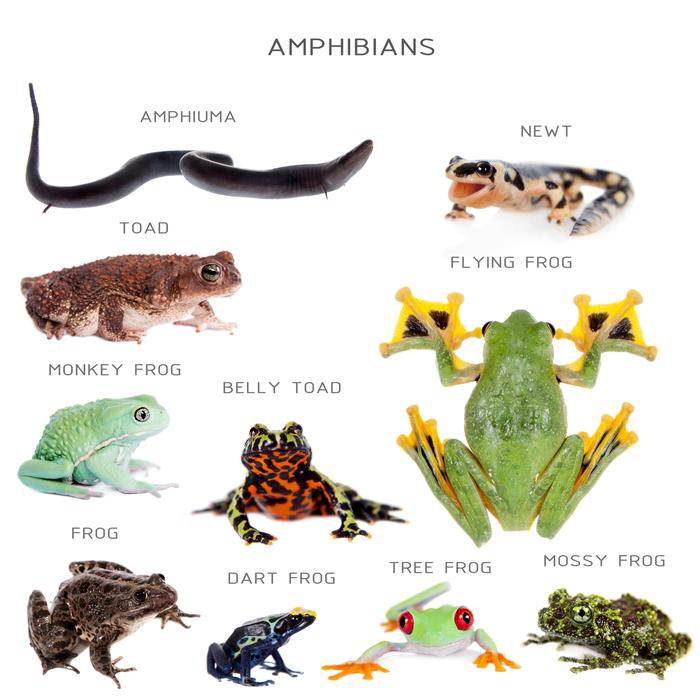
This image shows various examples of amphibians.

Classification of Amphibia

Based on their order, amphibians can be divided into three groups they are-

Apoda (Gymnophiona or Caecilia)

  • The body is elongated and can be differentiated into the head and trunk. 
  • They do not have limbs and hence resemble earthworms.
  • They have small dermal scales
  • As their eyes are covered by bone or skin, they are known as blind worms.
  • They lack tails or may have short tails.
  • Internal fertilization takes place.
  • Eg-Caecilians

Urodela (Caudata)

  • The body is long and differentiated into a head, neck, tail, and four limbs which are of similar length.
  • Their skin is smooth and moist.
  • Through their skin, they breathe.
  • At both the larval and adult stages, they have teeth in their jaws.
  • They are incapable of making sounds.
  • They undergo fertilization either internally or externally.
  • Examples-Newts and Salamanders

Anura (Salientia)

  • The body is differentiated into the head and trunk. But both of them are fused.
  • They have four limbs that are designed specifically for jumping.
  • Their mouth is large.
  • At the larval stage, the tail is present and the adult tail is absent.
  • Due to the presence of a chemical called magainin, the skin secretions of anurans have a naturally occurring antibiotic effect.
  • In anurans, external fertilization takes place.
  • Examples: Toads and frogs

Scientific Classification of Amphibia

The scientific classification of amphibians is as follows-

Domain

Eukaryote

Kingdom

Animalia

Phylum

Chordata

Subphylum

Vertebrata

Class

Amphibia

Order           

Urodela 

Apoda
Anura

Summary 

Cold-blooded creatures called amphibians descended from lobe-finned fish. When they are larvae, they can survive in water, but as adults, they must live on land. Frogs, toads, salamanders, newts, and caecilians are some examples of amphibians that are grouped into orders such as  Apoda, Urodela, and Anura. They have different body types. During the younger stage they breathe through the skin(gills) and as they reach adulthood, their lungs develop and they now breathe through both skin and lungs.

Frequently Asked Questions

1. Explain metamorphosis.
Ans: Metamorphosis is the term used to describe the changes an animal undergoes during its life cycle. When a frog egg hatches, a tadpole is released, which first grows rear legs then develops the front legs, and then finally becomes an adult frog.

2. Give the 5 kingdom classification with examples.
Ans: The 5 kingdom of classification was proposed by RH Whittaker in 1969. 

The 5 kingdom classification is-

  • Kingdom Monera- it includes the prokaryotes.
  • Kingdom Protista- it includes single-celled eukaryotes.
  • Kingdom Fungi- it includes various fungi.
  • Kingdom Plantae- it includes all types of plants
  • Kingdom Animalia- it includes all types of animals.

3. How do amphibians breathe?
Ans: The majority of amphibians can breathe through their skin, which is a thin, permeable organ that is dense with blood vessels. In their larval stage, some aquatic animals, like frogs, have gills that absorb oxygen from the water and expel carbon dioxide as waste.