Coal Products

Introduction

We use a variety of materials for our necessities. Some are naturally occurring, while others are the result of human labour. Natural resources are plentiful as a result of the abundance of numerous resources in nature. Carbonization contributes significantly to global coal production. Coke is the primary by-product of high-temperature carbonization; approximately 4% of the total input coal is converted into tar and crude benzol (light oil), with significant amounts of gas also produced. The following useful products are produced by processing coal without the use of air:

1. Coal and Gas

2. Coke

3. Tar from coal

Coal and Gas

Coal gas is a combustible vapour fuel extracted from coal that is piped to customers. Town gas is a broader term for gaseous fuels produced for commercial sale and community use. In some places, it is also known as manufactured gas, syngas, or producer gas.

Depending on the techniques used to create it, coal gas is a mixture of gases such as, and, as well as volatile hydrocarbons, with minor quantities of non-caloric gases such as and as impurities.

In the nineteenth century, coal gas, which was primarily a by-product of the cooking process, was widely used for lighting, cooking, and heating. The rise in natural gas production coincided with industrialization and urbanisation, and the by-products, coal tars and ammonia, served as key chemical feedstock for the chemical industry.
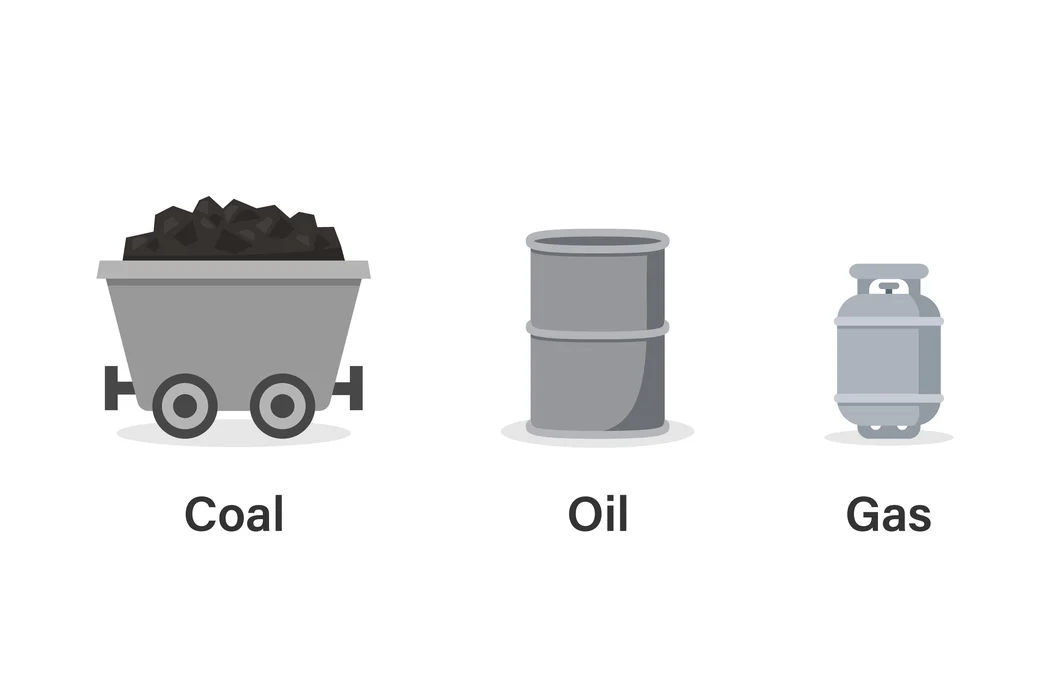
Coal, crude oil, and natural gas are all considered fossil fuels

Coal, oil, and gas production

Coal gas is produced when coal is heated in an enclosed chamber with no air.

When bituminous coal is heated to 400 °C, it relaxes and coalesces, releasing water steam, rich gas, and tar. Crude oil, coal, and gas are examples of fossil fuels. Over centuries, coal oil was produced from the remains of dead trees and other plant debris. Crude oil and natural gas were extracted from dead sea creatures.

Composition of Coal gas

Coal gas is a gaseous mixture of \({H_2}\), CO, and \({H_4}\) that is produced and used as fuel by destructive distillation (burning bituminous coal in an inert atmosphere). Steam is occasionally introduced to combine with the heated coke, increasing gas production. It is primarily composed of \({H_2}\) and \({H_4}\), with trace amounts of other hydrocarbons, carbon monoxide (a lethal gas), carbon dioxide, and nitrogen. It functions as both a fuel and an illuminant.

Uses of Coal

Coal is used for a variety of things, including

1. Electricity generation: Coal is primarily used to generate electricity. When thermal coal is burned, steam is produced, which powers turbines and generators that generate energy.

2. Liquification, as well as Gasification, is the process by which coal is burned and crushed with steam to produce town gas for home heating and lighting. It is liquefied to produce synthetic fuels that are similar to petrol and diesel.

3. Chemical, as well as other industries: Syngas can be used to create chemicals such as methanol and urea. Coal is widely used in the paper, textile, and glass industries. Coal is also used to make carbon fibre and other speciality components such as silicon metals.

Define Coke and State its Properties

Coal is distilled destructively to produce a high-carbon product. Coke is known as a virtually pure form of carbon due to its high carbon concentration. It’s a greyish-black solid that’s hard and porous. It is used as a reducing agent and a fuel in mineral extraction and steel production.

1. It has nearly pure carbon properties.

2. It is hard, porous, and black.

3. When it burns, it produces no smoke.

Uses of Coke

1. In metal extraction, it is used as a reducing agent.

2. Used in the steelmaking process.

3. It can also be used to generate energy.

Define Coal Tar and State its Properties

Coal Tar is a by-product of the coke manufacturing process. It has the same colour as coke, but it is a thick, viscous liquid with a foul odour. It is used to make synthetic colours, pharmaceuticals, fragrances, plastics, paints, and other products. Not only that, but it is also capable of producing naphthalene balls.

Coal tar was discovered in 1665 and used for medicinal purposes in the 1800s. Itchy skin, UV sensitivity, allergic reactions, and skin discolouration are all potential side effects. It’s unclear whether taking it during pregnancy is safe for the baby, and it’s not usually recommended to take it while breastfeeding.

Coal Tar Applications

Coal tar is primarily used to produce coal-tar products, as well as refined chemicals such as coal-tar pitch and creosote. Coal tar treatments have long been used to treat skin conditions such as eczema and dandruff.

Summary

Coal, as a solid carbon-rich material that is black/brown and occurs in stacked sedimentary layers, is one of the most important fossil fuels. In the future, coal liquefaction techniques could provide readily available, non-polluting fuels and chemical raw materials. Analytical criteria play a significant role in the four coal refining processes described above. Fumes, oils, and tars, as well as soluble but low-volatile extracts, pitches, and cokes, must all be investigated.

Frequently Asked Questions

1. Why do fossil fuels pollute the atmosphere?

Ans. The combustion of fossil fuels produces significant amounts of air pollution and pollutants such as \({H_2}\), CO, and \(S{O_2}\), all of which can contribute to climate change by increasing the greenhouse effect.

2. What exactly is petroleum?

Ans. Petrol, plastic, and other chemical compounds are derived from petroleum, a mineral oil found beneath the ground or in the sea. Petroleum by-products include wax, kerosene, LPG, petrol, lubricating oil, and diesel.

3. What are the different types of coal?

Ans. The least valuable and softest type of coal, with the lowest carbon concentration, is peat. Because of its high moisture content, it is unsuitable for use as fuel.

Anthracite coal is the best available. This type of coal is also known as hard coal. It contains the most carbon. It only produces a small amount of smoke.

Lignite is slightly firmer than peat, but it is still quite soft. It contains more carbon than peat.
Atomic Radius-An Overview

Introduction

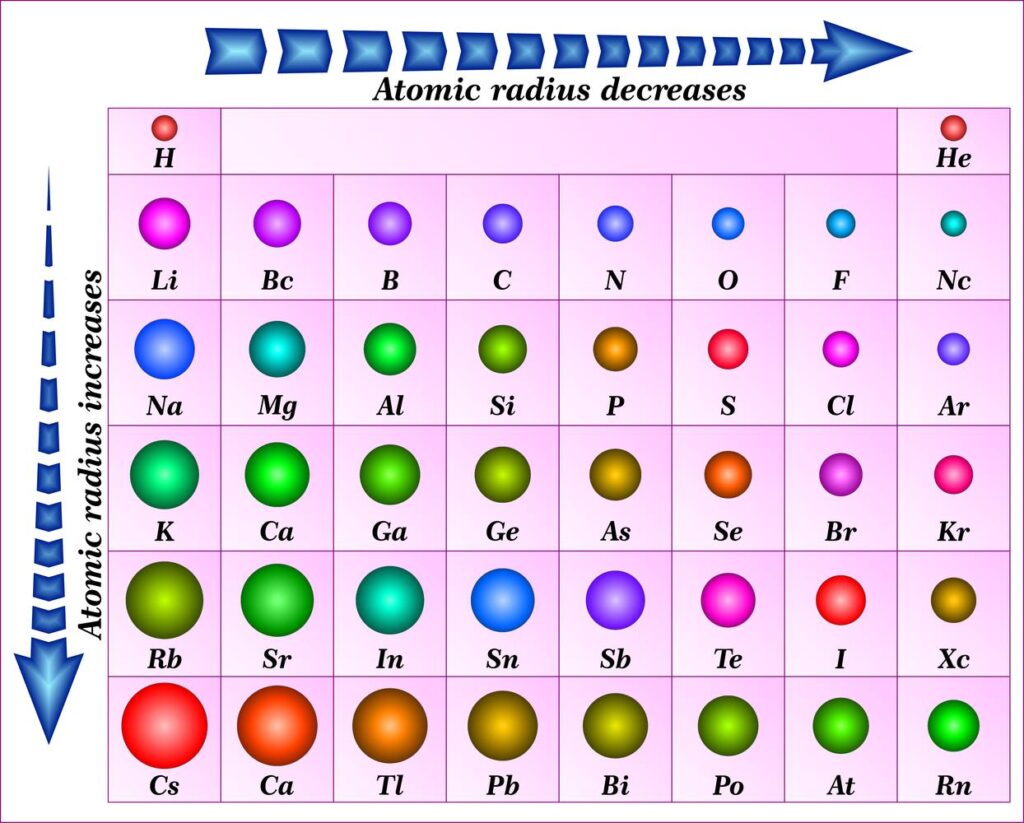
The distance between the nucleus’s core and the valence shell/outermost shell, known as the atomic radius of an element, serves as a benchmark for the size of its atom. The periodic table shows that the atomic size increases as you move down it and decreases as you move from left to right. The reason for this is that as you move down the group, the number of shells increases, the screening effect multiplies, and the force of attraction weakens, causing the atomic radius to increase. Additionally, the nucleus’ protons increase as you move from left to right, drawing electrons in and shrinking the atomic radius in the process.

Basic understanding of Atomic Radius

The atomic radius is typically defined as the total distance from an atom’s nucleus to its outermost electron orbital. It can be expressed more simply as something resembling a circle’s radius, with the nucleus serving as the circle’s centre and the electron’s furthest orbital serving as the circle’s edge.

Periodic Table

What Are the Trends in Atomic Radius? Why Do They Occur?

There are two main trends in atomic radius. One atomic radius trend appears as you move across the periodic table from left to right (doing so within a period), and the other trend appears as you move from the periodic table’s top-down (moving within a group). To help you comprehend and visualise each atomic radius trend, the periodic table below includes arrows that show how atomic radii change.

1. Atomic Radius Trend 1: Atomic Radii Decrease From Left to Right Across a Period

The first atomic radius periodic trend is that as you move from left to right across a period, atomic size decreases. Each additional electron is added to the same shell within a group of elements. A new proton is also added to the nucleus when an electron is added, increasing the nuclear attraction and boosting the positive charge of the nucleus.

In other words, as protons are added, the nucleus gains a stronger positive charge, which in turn attracts the electrons more strongly and draws them in toward the nucleus of the atom. The radius of the atom decreases as the electrons are drawn inward toward the nucleus.

2. Atomic Radius Trend 2: Atomic Radii Increase as You Move Down a Group

Atomic radii rise as you descend in a group in the periodic table, which is the second atomic radius periodic trend. The atom gains an additional electron shell for every group down. The atomic radius grows as each new shell is positioned farther from the atom’s nucleus.

Contrary to popular belief, electron shielding keeps the valence electrons from the nucleus (those in the outermost shell). The electron shielding effect, which occurs when an atom has more than one electron shell, reduces the attraction of the outer electrons to the atom’s nucleus. As a result, electron shielding prevents the valence electrons from getting very close to the atom’s centre, increasing the atom’s radius.

Summary

Atomic radius is characterised by two major trends. The first periodic trend in atomic radii is the increase in atomic radius with decreasing group size. Electron shielding is the cause of this. When a new shell is added, the atomic radius grows as a result of the new electrons’ increased distance from the atom’s nucleus. More protons give an atom a stronger positive charge, which attracts electrons more strongly and pulls them toward the nucleus, shrinking the size of the atom. According to the second atomic radius periodic trend, atomic size decreases from left to right across the period.

Frequently Asked Questions

1. The atomic radius of which of the atoms-Arsenic or Selenium, is the largest?

Ans. Arsenic has a larger atomic radius than Selenium. The reason for this is that the extra protons increase the positive charge in the nucleus, which pulls the electrons closer together, reducing the radius. Arsenic along with Selenium is on the bottom row of the possibilities, but Arsenic is to the left. As a result, its atomic radius is the greatest.

2. What is the atomic radius of F and Ne in Angstrom?

Ans. The atomic radius of F and Ne in Angstrom is 0.72, 1.60. Noble gas elements quoted radii are “van der Waals radii,” which are 40 percent larger than their true atomic radii. As a result, the atomic radius of neon must be substantially larger than that of F. 

3. Is it the size of Ne or \({\bf{N}}{{\bf{a}}^ + }\) that is smaller? Why?

Ans. \(N{a^ + }\) = proton number = 10

Ne = proton number = 10

Both are isoelectronic species, meaning they have the same number of electrons and shells (10 electrons). The size will be determined by the number of protons and nuclear charge. Because the sodium ion has 11 protons, the higher the nuclear charge, the stronger the nucleus’ affinity to valence shell electrons, and the size shrinks. The size of \(N{a^ + }\) is smaller than that of Ne.

Coal Story

Introduction

Coal appears to be a dense carbon-rich substance that is brown/black and formed in layered sedimentary rock. This is one of the most important major fossil fuels. It is said to contain half of the total carbon-containing substance by weight generated by the compression and stiffening of modified plant residues, primarily peat settlements. Because of differences in plant matter, the extent of coalification, and the impurity spectrum, there are many types of coal. French explorers and fur traders discovered North American coal seams near the coast of Grand Lake in southern New Brunswick, Canada, in the 1600s. Coal deposits were discovered wherever rivers flowed deeper into the lake, but they were also excavated by hand from the surface, and caves cut into the rock. Coal is not the most abundant fossil fuel, but it has the longest history.

Breaking coal blocks with hammer

What do you understand by coal?

Coal appears to be a shiny black rock. Coal contains a tremendous amount of energy. When coal is burned, it emits both heat and light energy. The cave dwellers used coal for warmth, but ultimately for cooking. It could have been very simple to burn because it worked better than wood and did not need to be retrieved as frequently. People began using coal to heat their homes in the 1800s. Coal was used as a fuel source for both trains and ships. Nowadays, coal is primarily used to generate electricity. The four primary types or grades of coal are peat, anthracite, lignite, and bituminous coal.

What is the Coal Story?

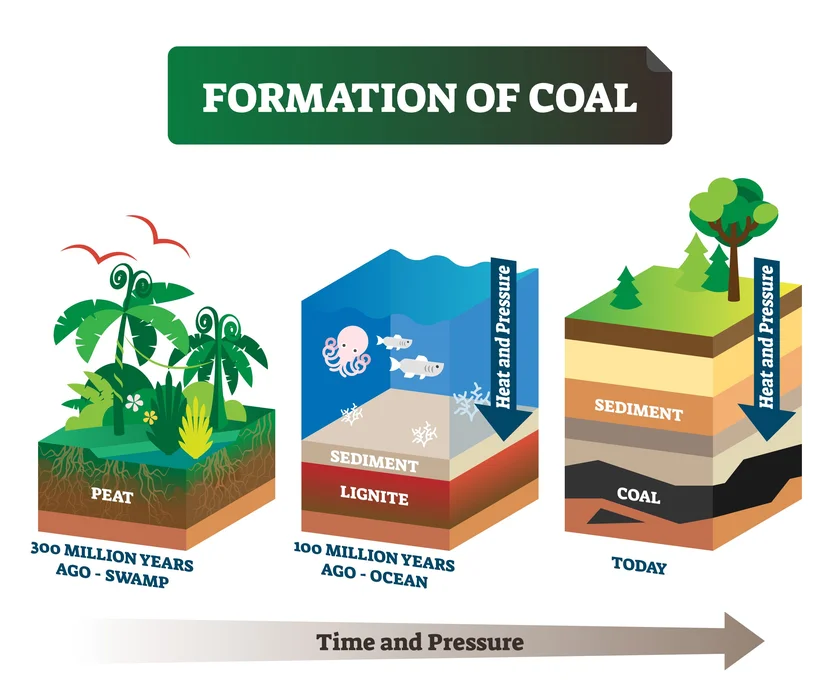
As they died, the plants sank to the bottom of the wetlands. Throughout the years, excessive amounts of vegetation have been coated in dirt and water. They had been compressed by the weight. The heat and pressure eventually converted these plants into coal. Because coal is produced by plants, and plants obtain their energy from the sun, the power in coal is also derived from the sun. Coal, as we know it today, formed over millions of years. We can’t even produce that much in such a short amount of time. This is why coal is considered non-renewable.

Process of formation of coal

How is Coal Obtained

  • This is derived from beneath deposits that are either ores coatings or are large enough to be extracted profitably.
  • Mining could be done in one of two ways: underground or open pit. The type of extraction is determined by the overall depth of such a deposit.
  • Vertical tunnels are used to access resources, whereas surface and open-pit mining remove dirt and rocks on top of mineral reserves.
  • Surface mining costs less than underground mining. As a result, surface mining is much more common.

Also Read: Coal Formation Stages

Uses of Coal

  • Coal is now used not only as a cooking fuel but also as a heat source, particularly in cold climates and developing countries. This provides a much cheaper method of cooking as well as heat production in areas where liquified petroleum gas and Biogas are not available.
  • It is frequently used as a basic component in the production of everyday commodities such as steel and iron. Coal has been used indirectly to produce steel in the steel industry.
  • It is used in a variety of industries to manufacture a wide range of products. Coal is used in a variety of industries, including cement production, paper manufacturing, chemical manufacturing, and pharmaceutical manufacturing. Coal is used by the chemical industry to produce a variety of raw materials such as benzol and sulphate of sodium.
  • Coal is used to make carbon fibre. It is the strongest and lightest element available for making stabilisers, sports equipment, and even mountain motorcycles.
  • It aids in the development of alumina mills.
  • Likewise, it could have been converted into gas or liquid, which could have been used to power vehicles such as automobiles, motorcycles, and ships.
  • Furthermore, it is primarily used as fuel in the combustion process to generate energy. Thermal coal is frequently used to generate energy in power plants.
  • Activated carbon is made from coal. Activated carbon is used in air and water purification filters, as well as renal dialysis technology.
  • Activated charcoal has been used in the production of cosmetics and facial treatments.

Summary

Coal, a carbon-rich substance that is usually black or brown, is found in multilayered rock deposits. This is one of the most important fossil fuels and can be found all over the world. For thousands of years, heat, and pressure on flora accumulated in old swampy wetlands have produced coal. Its volume, thickness, rigidity, and density all vary. It is constantly used as a fuel, an ash source, and a producer of various chemicals used in the synthesis of dyes, lubricants, and pharmaceuticals. Exploration for alternative energy sources has occasionally refocused attention on the processing of coal into liquid fuels; coal liquefaction methods were also recognised in the early twentieth century.

Frequently Asked Questions

1. What is coal’s environmental impact?

Ans. Particulate pollutants, ozone in the earth’s crust, acid rain, and smog are all environmental drawbacks of using coal as a source of energy. Fly ash granules are released into the atmosphere after coal is burned with fuel oil, causing air pollution problems.

2. What exactly is the coal formula?

Ans. The four types of coal are anthracite, bituminous, sub-bituminous, and lignite. The chemical investigation yields an empirical formula for bituminous coal, such as \({C_{137}}{H_{97}}{O_9}NS\), as well as anthracite, \({C_{240}}{H_{90}}{O_4}NS\).

3. What contaminants are present in coal?

Ans. Impurities such as sulphur and nitrogen have been discovered in coal. When coal burns, such pollutants are emitted into the atmosphere.

Forest Conservation and Effects of Deforestation on Environment

Introduction

Forests are essential to human life due to the diverse materials they provide. They produce oxygen, which is required for life on Earth, act as a carbon sink, and store carbon, earning them the moniker “earth lung.” Furthermore, they regulate the hydrological cycle and the global climate; purify water; provide habitat for wildlife, reduce global warming, absorb harmful gases, and perform numerous other functions. More trees are planted, and wooded areas are maintained through forest conservation to ensure their sustainability for future generations. But it has become crucial to protect forests around the world due to rising deforestation operations. Deforestation is the permanent removal or destruction of forests to make way for new agricultural, livestock, or other uses of the land.

Some reasons why forests are essential to our survival.

The sustainable production of wood and timber products, as well as the provision of food, housing, and energy, is one of the most important functions of forests. They provide critical ecosystem services for human well-being, such as-

1. Forests cover one-third of the Earth’s land area. They carry out critical tasks all over the world.

2. The forest absorbs damaging greenhouse gases that lead to climate change.

3. Forests provide clean water for drinking, bathing, and other household needs. They help to maintain the balance of oxygen, carbon dioxide, and humidity in the atmosphere.

4. Forests provide numerous environmental, economic, social, and health benefits.

5. Forest is distributing food and medication. Forests provide safety, employment, and housing for communities that rely on them.

6. Forest cover mitigates floods and other natural disasters.

7. Forests are critical in our efforts to adapt to and mitigate climate change.

8. More than half of the world’s land-based species live in forests. Woods have the most biologically diverse ecosystems on land.

9. Many of the disease-treating medications sold around the world are made directly from plants found in rainforests.

10. Forests produce rubber, lac, organic pigments, gum, resins, and other materials.

Forest conservation

Forest conservation does not imply that users should be denied access, but rather that access should be granted in a way that does not harm the environment or our economy. The following methods might be applied to preserve forests, which would eventually enhance forested areas and ensure the sustainability of the available resources:

1. Afforestation is the practice of planting trees for monetary gain. Instead of removing trees from naturally existing forests, a practice known as “afforestation” is used to establish them and use them as resources.

2. Forest fire suppression: Forest fires are the most common and lethal cause of forest loss. As a result, precautions must be taken in such cases. Making fire lanes, using fire-fighting chemicals, removing dead trees and dry leaves, and so on.

3. Addressing the root causes of deforestation: If we are to effectively expand the role of forests in providing for basic human needs, we must address the root causes of deforestation, such as poverty and the need for food, shelter, and fuel.

4. Verifying forest clearances for urbanization: In an era of rapid urbanization and industrialization, it is common practice to remove forests through encroachment or authorization. As a result, strict regulations should be put in place to prevent the urbanization of forest areas.

5. Examining the forest harvesting procedure: To ensure successful in-situ conservation of biological diversity during forest exploitation, current forest harvesting procedures should be critically evaluated by the provisions of the Convention on Biological Diversity.

girl planting the tree with shovel.

How can we protect wildlife?

Wildlife conservation refers to the process of protecting plant and animal species as well as their habitats. Wildlife conservation is a response to the century’s steadily increasing rate of extinction. Humans are to blame for the current rate of species extinction. However, we remain optimistic that we can save our species by taking a few critical steps. These are

1. Speak up for wildlife: your voice matters! Encourage your state and federal representatives to support wildlife protection legislation in writing.

2. Planting native plants is a great way to make our yards more wildlife-friendly. This provides food, shelter, and a place for wild animals to raise their families.

3. Ecosystem protection: One of the simplest and most effective ways to help wildlife is to preserve the environment in which it lives. The three major environmental conservation methods are to reduce, reuse, and recycle.

4. Be an informed consumer: Avoid using items that endanger wildlife and their habitats, such as non-recycled paper products, gas-guzzling cars, and so on.

5. Preserving endangered species: The Endangered Species Act has proven to be a successful safety net for threatened species, saving more than 98 percent of the animals it has cared for from extinction.

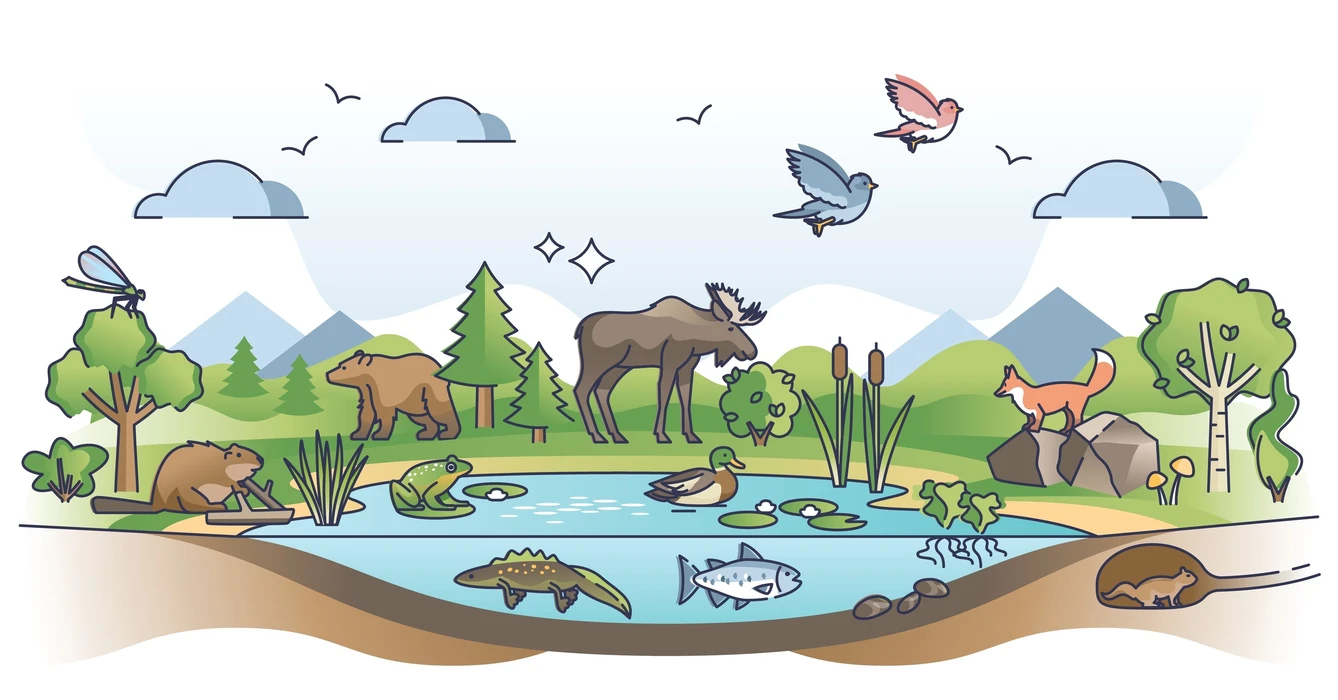
Forest Flora and Fauna image

What if all the forests are destroyed?

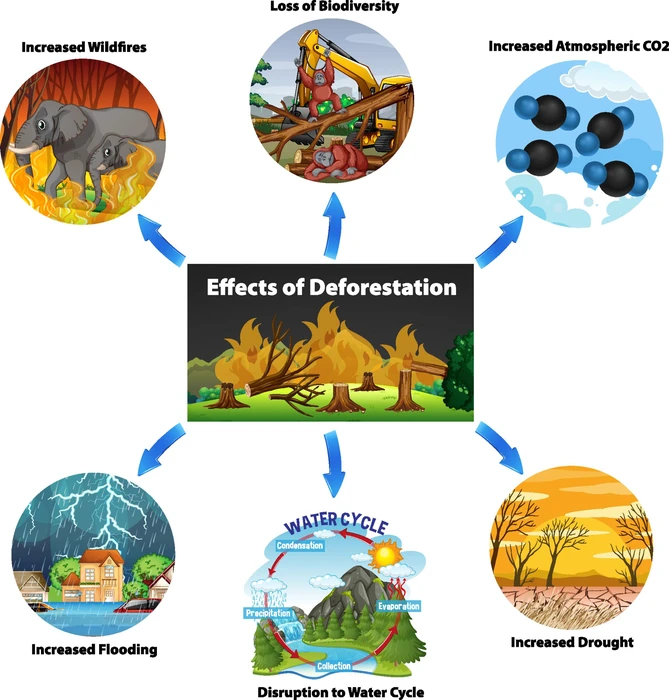
It is impossible to imagine our existence without forests. The following are some consequences of destroying the entire forest:

1. The amount of  in the \(C{O_2}\) atmosphere will increase. As a result, the Earth’s temperature will rise.

2. Many animals and plants are losing their natural habitats. If they cannot find a suitable environment to live in, they may eventually die or become extinct.

3. The soil dries out without trees, and the water cycle is disrupted. Rain will cause flooding because the land cannot hold the water.

4. We will not receive valuable forest products. Tribal members may also lose their source of income.

effects of defforestation with image diagrams

Summary

More trees are planted, and wooded areas are maintained through forest conservation to ensure the sustainability of wooded regions for future generations. We can rely on forests for shelter, work, water, food, and fuel security, among other things. The practice of preserving plant and animal species, as well as their habitats, is known as wildlife conservation. We, humans, have a responsibility to protect our species by taking a few key actions.

Frequently Asked Questions

1. What are the negative consequences of deforestation?

Ans. In addition to harming the environment, society, and especially the climate, biodiversity, and poverty, deforestation has a negative economic impact.

2. What exactly is the Global Forest Carbon Mechanism (GFCM)?

Ans. The Global Forest Carbon Mechanism is a financial structure that would reward developing countries for reducing their emissions.

3. How can we ensure food security while also halting deforestation?

Ans. The increased agricultural output should be achieved without cutting down more trees. Better land design and significant investment are required to increase yields on existing farmland.

Chemical Equation Reactants And Products

Introduction

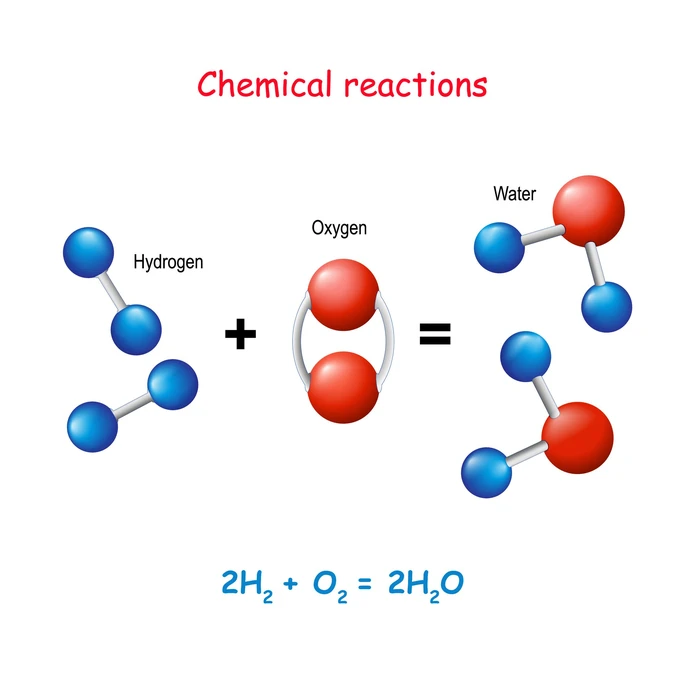
Old chemical bonds are cleaved in a chemical reaction and form new bonds. Any chemical equation should be balanced properly. It means the number of each atom should be the same on both the reactant and product sides. It is based on two rules; the ‘law of conservation of masses’ and the ‘law of constant proportions’. If a reaction is considered to be \(X + Y{\rm{ }} \to {\rm{ }}Z + P\), then X, Y are called reactants, and Z, P are called products of this reaction.

Image of Hydrogen and oxygen combining chemically to form a new molecule

Define the law of conservation of mass.

It is stated in this law: “The mass in an isolated system can neither be created nor be destroyed but can be transformed from one form to another”. So the number of each type of atom in a chemical equation is always the same on both sides of the equation.
Read More: Law of Conservation of Mass with Experimental

Define the law of constant proportions.

The law states that- “In a chemical substance, the elements are always present in definite proportions by mass”. In the \({H_2}O\) molecule, the molar mass of two H atoms is 2 gm/mole and the molar mass of one O atom is 16 gm/mole. So their ratio of mass is 2:16=1:8. This ratio in \({H_2}O\) is always constant.

What is a balanced chemical equation?

According to the two laws of conservation of mass and conservation of definite proportions, a chemical equation must be properly balanced. It means that the number of all the atoms or molecules involved in a chemical reaction must be the same on both the reactant and product side. This is known as a balanced chemical equation. 

Importance of coefficients and subscripts in balancing a chemical equation

Coefficients are numbers that help us to determine the number of each atom present in a balanced chemical equation. It can be changed necessarily.

Subscripts are the numbers that help to determine the chemical formula of any compound. The subscripts are always constant throughout a chemical equation.

\[{N_2} + {\rm{ }}3{\rm{ }}{H_2} \to {\rm{ }}2{\rm{ }}N{H_3}\]

Method of generating a balanced chemical equation- 

Suppose we are trying to balance this unbalanced chemical equation. 

\[C{H_4} + {O_2} \to {\rm{ }}C{O_2} + {H_2}O\]

These are the steps that are followed to make a balanced chemical equation. 

  • At first, the number of each atom on both sides is determined.
Atoms presentNumber of atoms on the reactants sideNumber of atoms on the products side
C11
O23
H42
  • Then coefficients of each atom are balanced properly. For this equation, at first, the coefficients of H are balanced. So now the chemical equation transforms into- 

\[C{H_4} + {O_2} \to {\rm{ }}C{O_2} + 2{\rm{ }}{H_2}O\]

  • Now the coefficient of O is balanced accordingly. So the new chemical equation is:

\[C{H_4} + 2{O_2} \to {\rm{ }}C{O_2} + 2{H_2}O\]

This is the balanced chemical equation: \(C{H_4} + 2{O_2} \to {\rm{ }}C{O_2} + 2{H_2}O\)

Balancing the chemical equation- 

\[{C_3}{H_8} + {O_2} \to {\rm{ }}C{O_2} + {H_2}O\]

  • At first, the number of each atom on both sides is determined.
Atoms presentNumber of atoms on the reactants sideNumber of atoms on the products side
C31
O23
H82
  • Now the coefficient of C is balanced on both sides. So the chemical equation changes to-

\[{C_3}{H_8} + {O_2} \to {\rm{ }}3C{O_2} + {H_2}O\]

After equating the coefficients of H, the new equation is:

\[{C_3}{H_8} + {O_2} \to {\rm{ }}3C{O_2} + 4{H_2}O\]

  • Then the coefficients of O are balanced accordingly to form a balanced chemical equation.

\[{C_3}{H_8} + 5{O_2} \to {\rm{ }}3C{O_2} + 4{H_2}O\]

This is the balanced chemical equation: \({C_3}{H_8} + 5{O_2} \to {\rm{ }}3C{O_2} + 4{H_2}O\)

In this way, any chemical equation can be balanced.

Summary

According to the laws of conservation of mass and conservation of constant proportions, any chemical equation should be balanced properly. This is done by equating the coefficients of each atom involved in a chemical reaction. Balancing a chemical equation is extremely important in the field of chemistry. Based on the coefficients present before the molecules involved in a chemical equation, the yield of the products of that reaction can be determined.                                         

Frequently Asked Questions

1. State the limitations of using chemical equations.

Ans: By any chemical equation we can’t understand the states(solid/liquid/gas) of the compounds involved. Again, the reversibility or irreversibility of any reaction can’t be determined by the chemical equation. 

2. What are the different types of chemical equations?

Ans: Depending on the nature of reactants and products in a reaction, it may be classified into five types. They are combination reaction, single replacement reaction, decomposition reaction, combustion reaction, and double replacement reaction. Some reactions fall under two categories simultaneously. 

3. What is the main reason behind a chemical reaction?

Ans: A chemical reaction can be described as a bond-breaking and bond-making process. It means all the old bonds are cleaved and new bonds are formed. The molecules which react in a chemical reaction are called reactants and the molecules produced in a reaction are called products. 

Bakelite-Structure, Monomers, Preparation, Properties, and Uses

Introduction

Circuit boards, plastic light fixtures, switches, and sockets can all be made of the synthetic material known as Bakelite. The characteristics include non-absorbency and non-conductivity, as well as high-temperature resistance. Because it is utilized in electronic devices, it is referred to as “Bakelite.” A heated mixture of granular phenolic resin, sawdust, and asbestos is used to make Bakelite, which is then poured into a mould. The phenolic resin was the first artificial resin. Plastic materials come in a wide variety. 

lead magnet

Types of plastics

They can be divided into two classes: Thermoplastics and Thermosetting.

Thermoplastics: These are the plastic materials used to make the handles of toothbrushes and bags. Thermoplastics are heated to convert into their different forms.

Thermosetting: After heating, the hardness of this plastic increases. Bakelite is one type of thermosetting plastic.

Bakelite preparation

Bakelite is prepared by following such steps.

  1. 25 ml glacial acetic acid is taken in a beaker. 12.5 ml 40% formaldehyde solution is mixed with it and heated.
  2. After some time, 10-gram phenol is added to it and at the end 12-15 ml of HCl solution is mixed.
  3. It is put in a water bath and heated gently until a solid mass appears.
  4. Then it is passed through the funnel, fitted with filter paper, and Bakelite remains as a solid compound.
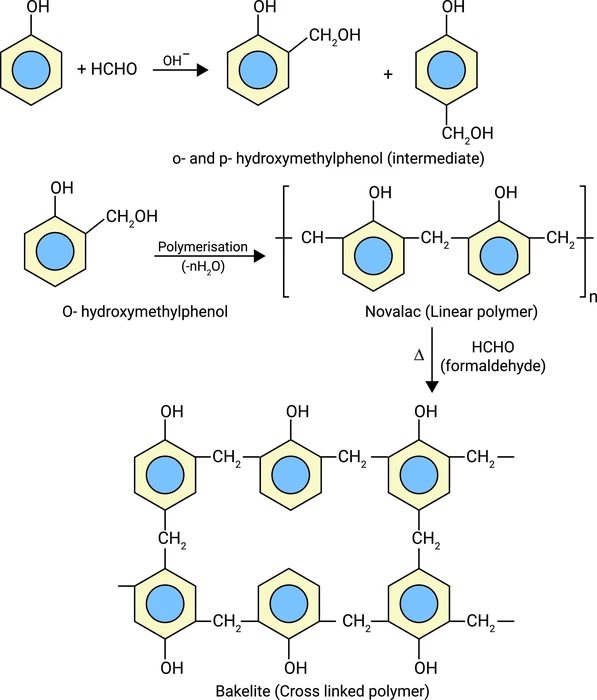
In this image, preparation of Bakelite by Phenol and Formaldehyde is shown.

Structure of Bakelite:

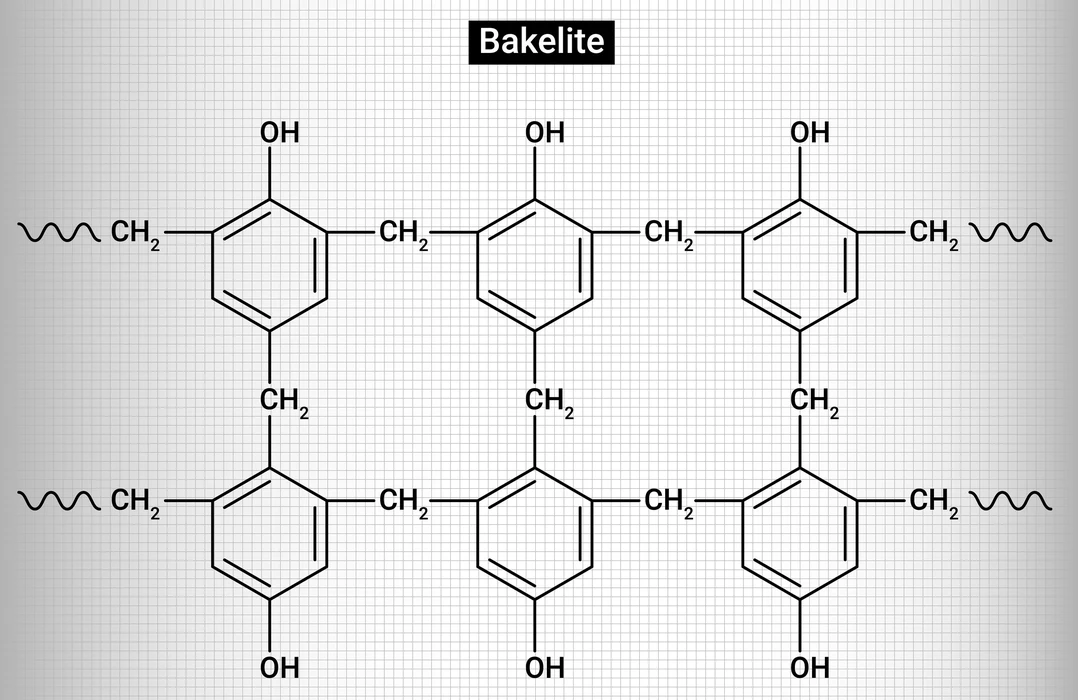
In the Bakelite structure, there is a cross-linking between phenol and formaldehyde. Bakelite can be written chemically as\(\;{({C_6}{H_6}O – C{H_2}OH)_n}\).

Bakelite contains phenolic components in its structure.
lead magnet

Properties of Bakelite

  1. Bakelite can be easily generated, and the mouldings of Bakelite are corrosion and thermal-resistant.
  2. It would be resistive to current flow because of its low conductivity to electricity.
  3. Due to its low electrical properties and high heat resistance, Bakelite has also been used primarily in the production of mechanical and electrical components for electrical devices.
  4. Bakelite contains phenolic components in the structure. For this, it is widely used in bindings.
  5. Bakelite is moulded at a very rapid rate. 
  6. Bakelite enables the production of extremely smooth mould.
  7. Bakelite can endure harmful solvents.
  8. When heated, it melts and solidifies. Then It becomes hard and can be moulded into desired shapes.
  9. The cost of moulding decreases when an inert filler is used.

Improving your Science concepts. Study Science Lesson for classes 6th, 7th, and 8th.

Uses of Bakelite

  1. To offer adequate security, it is used in parts that do not use radios or other electronic parts, such as plugs, buttons, hoods, wire cables, brakes, and so on and due to its shaping capacity, it is frequently used in everyday culture.
  2. Due to its strong tensile strength and thermosetting nature, Bakelite may maintain its shape even after extensive production.
  3. It has the ability to mould itself in various shapes, making this substance too much useful in modern society.
  4. It is extensively used in making the parts of washing machines, cooking utensils, watches, toys, and many more.

Importance of Bakelite

  1. Due to its many important uses as the first synthetic polymer, Bakelite has been appropriately termed “a thousand-use material.” Bakelite is used in the production of many products, including handles of plastic, telephones, ATMs, and so on.
  2. Due to its strong resistance to both heat and electricity, it is used to produce numerous electronic components, sensors, and vehicle parts.
  3. Besides these, the features of Bakelite are improved in various ways for better uses.

     For these reasons, Bakelite is so important in our daily life.

Summary

Being one of the most widely utilized thermoplastic materials in the nation, it is used to produce many other polymers. It’s vital to remember that because of the distinct characteristics of such a polymer, changing the temperature has little impact on the physical and chemical characteristics of that kind of substance. Having phenolic components in its structure, it is widely used in bindings. But it is very dangerous for human health.

lead magnet

Frequently Asked Questions

1. What occurs when Bakelite is heated?

Ans: As a result of heating a Bakelite, a watery condensation compound (Known as Bakelite A) is produced. Bakelite A becomes dissolved in acetone, alcohol, or extra phenol. Additional heating makes the product somewhat soluble, though the heat can still soften it. The consequence of prolonged heating is the formation of “insoluble, hard gum.”

2. Is Bakelite able to resist fire?

Ans: The handles of many kitchen appliances (fry pans, pressure cookers) are made of sturdy and long-lasting plastic known as Bakelite. It is also a bad conductor of electricity and heat, just like Melamine.

3. Is Bakelite resistant to chemicals?

Bakelite is a tough and chemically inert plastic that was created by combining phenol and formaldehyde. These two substances were obtained from coal tar and wood alcohol (methanol) respectively. Bakelite is inert to chemicals.

Law Of Conservation Of Mass

Introduction 

The scientist, Antonio Lavoisier, introduced the law of conservation of mass in the year 1789. According to him, mass can’t be destroyed or generated. But mass can be transformed from one form to another. In our daily life, we also utilize this law. For example, in the burning process of wood, the total masses of the products (gases, ashes, soot) and the masses of the reactants (charcoal and oxygen)remain the same. 

lead magnet

Define “The Law of Conservation Of Mass”:

This law states: “matter cannot be created or destroyed in a chemical reaction”. That means the total masses of reactants or products should be the same after a reaction.

Application of the law of conservation of mass in different reactions:

1. During phase transition: During the transformation of any substance from its solid to liquid and then to vapour, the total mass of the substance remains constant. In the physical change of ice to water and then water to vapour, the mass of water in its three states remains the same.

Ice ⇌ water ⇌ vapour

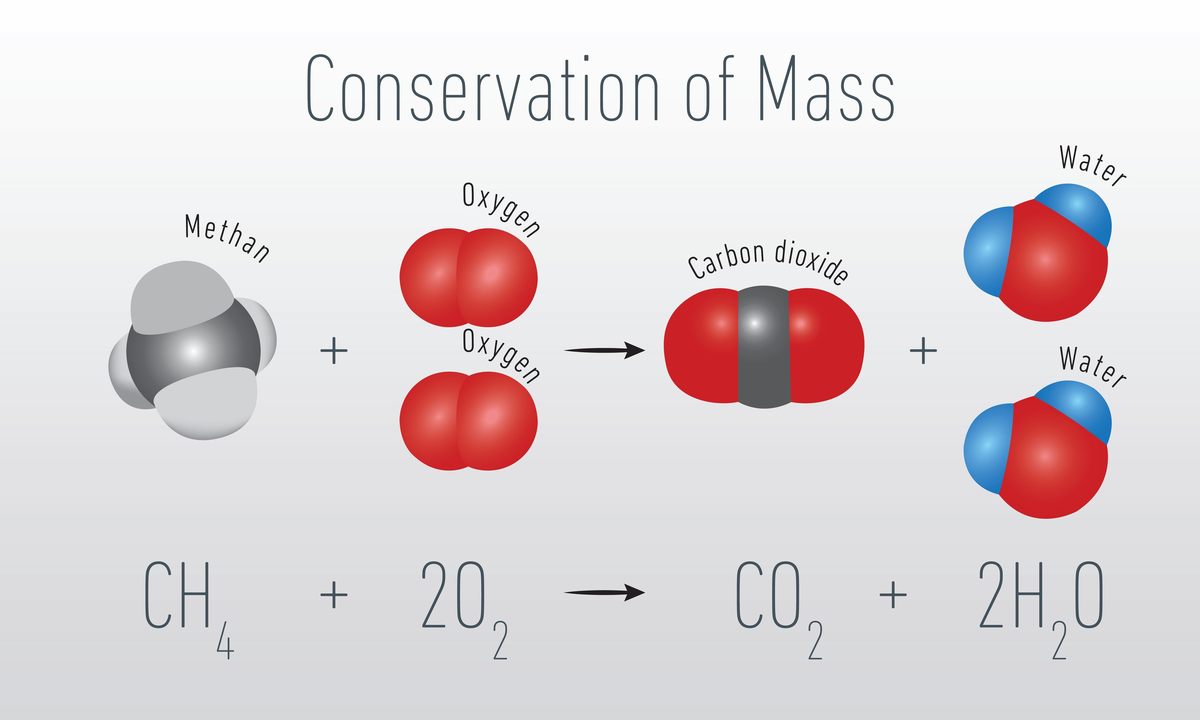
2. During chemical reaction: Total masses of the reactants and the products remain the same after a successful chemical reaction. Like, in the combustion reaction of methane, carbon dioxide \(C{O_2}\) and water \({H_2}O\) are produced. The total masses of reactants (\(C{H_4}\)and \({O_2}\)) remain the same as the masses of products (\(C{O_2}\) and \({H_2}O\)).

\[C{H_4} + 2{O_2} \to C{O_2} + 2{H_2}O\]

3. During rearrangement reaction: Calcium carbonate produces calcium oxide and carbon dioxide on heating. The masses of reactants (calcium carbonate) and the products (calcium oxide and carbon dioxide)remain the same.

\[CaC{O_3} \to {\rm{ }}CaO{\rm{ }} + {\rm{ }}C{O_2}\]

Methods to examine the law of conservation of mass:

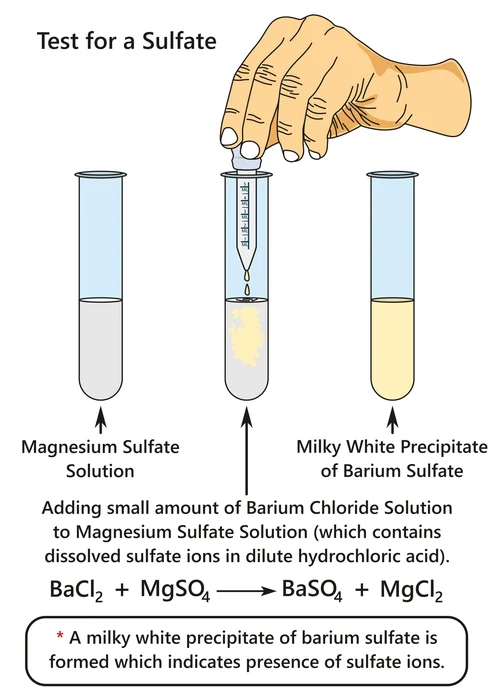
1. In the reaction of Barium chloride and magnesium sulfate: The law of conservation of mass can be proved by the following reaction. For this, some steps need to be followed.

  • First, a particular amount of Barium chloride (\(BaC{l_2}.2{H_2}O\)) is weighed. Then some amount of distilled water is mixed with it. And this mixture is named A.
  • Then some definite amount of magnesium sulfate (\(MgS{O_4}\)) is mixed with the same amount of water as A. This mixture is indicated as B.
  • Then another empty beaker(C) is taken and weighed. The whole solution of A and B is poured into beaker C.
  • A white precipitate of \(BaS{O_4}\) is formed in beaker C. Then the weight of beaker C is taken again.
  • Now the weight of empty beaker C is subtracted from the beaker C, containing products.
  • Comparing the masses of A, B, and C, we get that the total masses of the solutions A and B match with the product formed in beaker C.

In this way, the conservation of mass can be proved.

\[BaC{l_2} + {\rm{ }}MgS{O_4} \to {\rm{ }}BaS{O_4} + {\rm{ }}MgC{l_2}\]

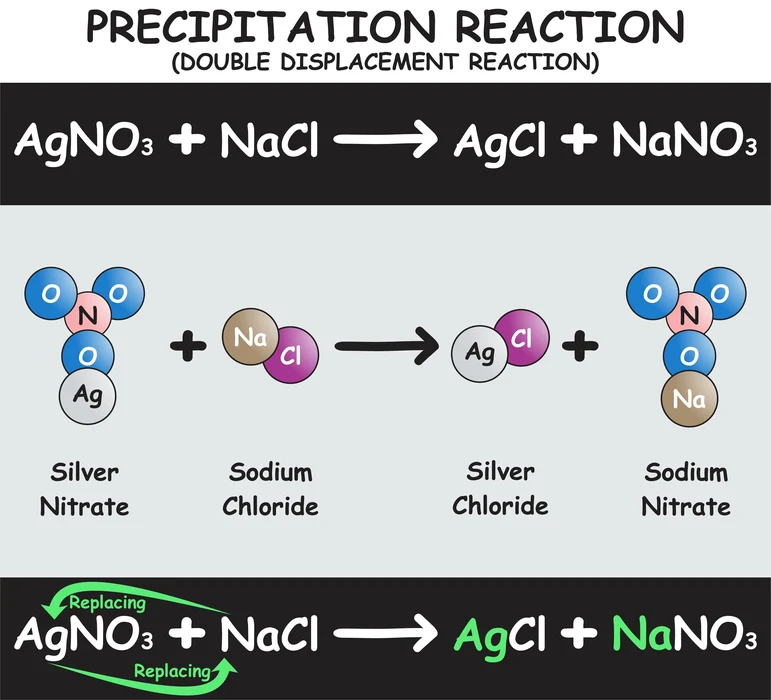
Reaction between two salts displaces each other to form precipitate.

2. In the reaction of silver nitrate and sodium chloride: This law can be proved by the following reaction of silver nitrate and sodium chloride. For this, the following steps need to be followed.

  • Silver nitrate and sodium chloride solutions are made separately. Sodium chloride solution is taken in a conical flask and silver nitrate is taken in an ignition tube.
  • Then the ignition tube is suspended into the flask and the flask is fitted with a cork.
  • Now the mass of the conical flask is recorded, and then the conical flask is tilted for the reaction of silver nitrate and sodium chloride.
  • Now, the product \(AgCl\) is precipitated as a solid. At this stage, the mass of the conical flask is recorded again.
  • It is found that the masses of reactants and products are the same.

\[NaCl{\rm{ }} + {\rm{ }}AgN{O_3} \to {\rm{ }}AgCl{\rm{ }} + {\rm{ }}NaN{O_3}\]

lead magnet
Conservation of mass in precipitate reaction of silver chloride.

Summary

The law of conservation of mass tells us that the mass of reactants and products is always the same after a reaction. That is, the total mass is always conserved in different types of chemical reactions as well as in physical changes. This law can be proved by some reactions in the laboratory. This law is very essential as the unknown mass of any reactant or product can be determined. From this law, any chemical reaction can be balanced easily.

Frequently Asked Questions

1. What are the drawbacks of the law of conservation of mass?

Ans: This law is valid for only chemical reactions and physical changes. But does not apply to nuclear reactions. During a nuclear reaction, heat is produced. That means some mass is converted to heat. So the mass is not conserved in the nuclear reaction.

2. Is there any difference between the conservation of mass and the conservation of energy?

Ans: Conservation of mass and energy were commonly considered to be separate concepts. However, special relativity demonstrates that mass and energy are linked by the formula \(E{\rm{ }} = {\rm{ }}m{c^2}\), and science currently holds the belief that the sum of mass and energy is conserved.

3. Which equation corresponds with the principle of mass conservation?

Ans: The law of mass conservation can be expressed by a balanced chemical equation. In a balanced chemical equation, the number of each element involved in a reaction is always the same on the reactants and products side.

Types of Reactions and Changes

Introduction

Chemical reactions operate on the type of reaction and change principle, which states that when a reactive substance interacts with other chemicals, different reactions will occur. Chemical reactions occur in stable or least reactive compounds as well, albeit under more extreme conditions. When reactants combine to produce a product, heat is released or absorbed, bubbles, gas, and fumes are formed, and the colours of the reactants change, resulting in a chemical change. During a  physical change, there is an interconversion of conditions. There are various types of chemical reactions, such as combination, decomposition, and displacement reactions, and certain changes occur during these reactions.

What is a Combustion Reaction

Combustion reaction of methane in presence of oxygen or air

A combustion reaction is an exothermic chemical reaction that occurs between a fuel (or reductant) and an oxidant and results in the formation of oxidised products. This process occurs at high temperatures. This is a redox reaction because it involves the simultaneous reduction and oxidation of substances. A struck match, for example, generates friction, which raises the temperature (or energy) of the head (more than activation energy), at which the chemicals react and generate more energy in the form of heat, which tends to escape into the atmosphere. A moist matchstick head or the presence of blowing wind prevents the temperature from rising. As a result, the matchstick’s head does not burn. Another common example of combustion is the combustion of fuel in automobiles, which produces smoke.

Examples of Combustion Reaction

Methane combustion

Methane is a natural gas that burns the cleanest of all fossil fuels. The term “cleanest” refers to the absence of harmful toxins. It completely degrades into water and carbon dioxide.

Butane combustion

Lighters use the combustion process to break down butane. Butane is significantly less expensive than other fossil fuels. This is also a clean fuel, but it emits a lot of carbon dioxide into the atmosphere.

Butanol combustion

Butanol combustion occurs during the transportation process. Butanol has a high energy density and a low vapour pressure. As a result, it qualifies as a biofuel. Internal combustion engines, or IC engines, use this combustion process.

What is a Displacement Reaction

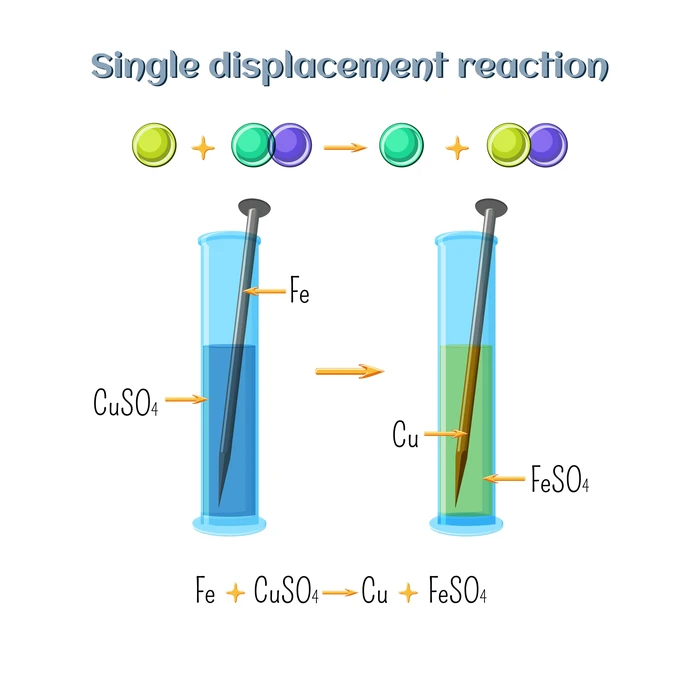
Displacement reactions occur when a portion of one reactant is replaced by another. A replacement reaction is another name for it. As one reactant ion is replaced by another. Single displacement reactions occur when one element removes another from its salt or complex. Single replacement reactions are another name for them. General representations can also be written –

\[A + B – C{\rm{ }} \to {\rm{ }}A – C + B\]

Displacement reaction produce new product

Examples of Displacement Reaction

  • The reaction between Calcium Iodide and Chlorine.

\[Ca{I_2} + C{l_2} \to {\rm{ }}CaC{l_2} + {I_2}\]

  • The reaction of Zinc with Hydrochloric Acid.

\[HCl + Zn{\rm{ }} \to {\rm{ }}ZnC{l_2} + {\rm{ }}{H_2}\]

Decomposition Reactions

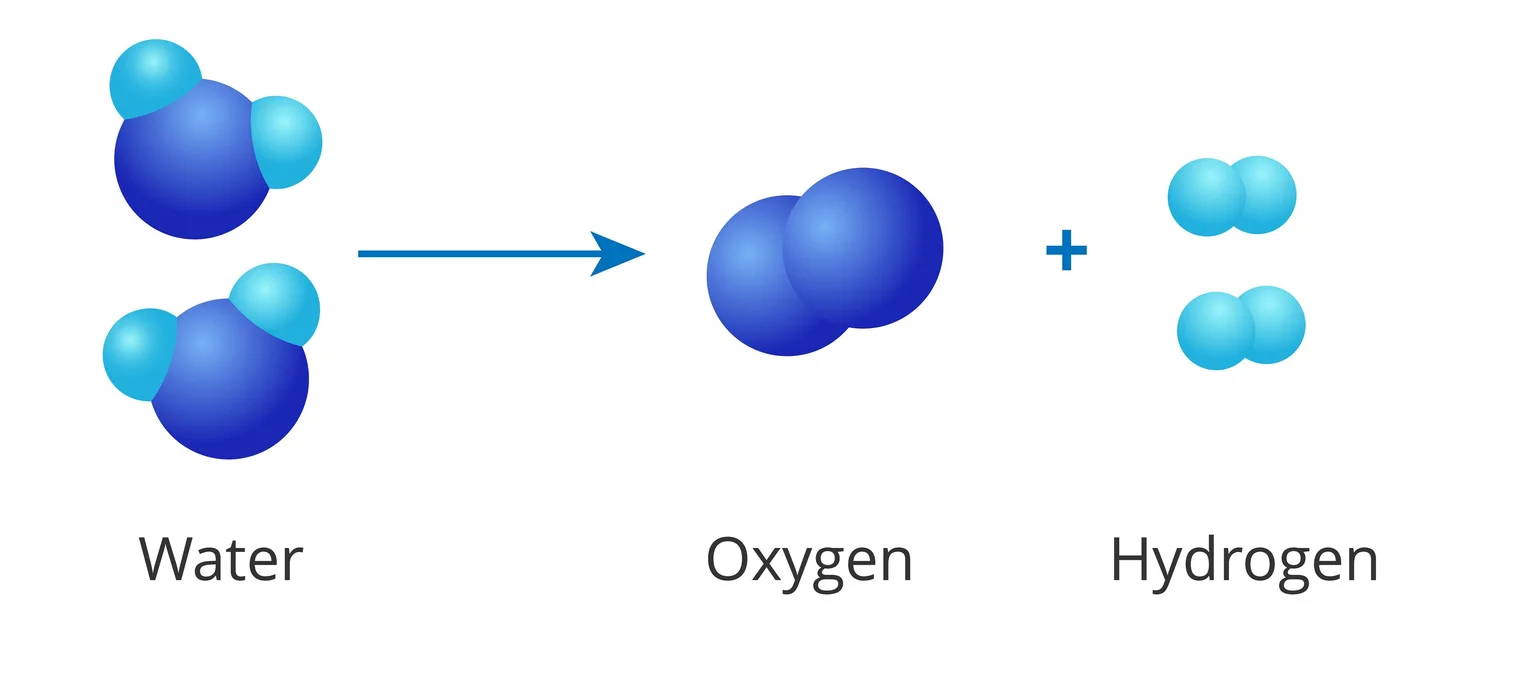
A decomposition reaction is a chemical reaction that occurs when one reactant breaks down into two or more products.

Decomposition reaction of water.

The 2 main categories of these reactions are as follows

  • The reaction of Thermal Decomposition:

It is a decomposition reaction that is triggered by heat energy.

E.g. \(CaC{O_3} \to {\rm{ }}C{O_2} + CaO\)

When heated, calcium carbonate breaks down into calcium oxide and carbon dioxide. Quick lime, a crucial component in several industries, is made using this process.

  • The reaction of Electrolytic Decomposition:

Electrical energy is used to give the activation energy for a breakdown in an electrolytic decomposition process. An electrolytic breakdown reaction, such as water electrolysis, is exemplified by the chemical equation:

E.g. \({H_2}{O_2} \to {\rm{ }}{H_2} + {O_2}\)

Summary

It can be concluded that a displacement reaction occurs when one reactant is partially displaced by another. Displacement reactions are also known as replacement or metathesis reactions. The two types of displacement reactions are double and single displacement reactions. In a process known as double displacement, cations and anions in the reactants exchange partners to generate products: When a single reactant partially replaces another, a single displacement reaction occurs.

Frequently Asked Questions

1. What are combustible substances?

Ans. The substances that are easily flammable and undergo combustion are called combustible substances. For Example – LPG, CNG, wood, paper, clothes, etc.

2. What causes an exothermic displacement reaction?

Ans. When one element in a molecule is replaced by another, a single-displacement reaction takes place. A chemical reaction either releases or absorbs energy. If energy is released during the process, it is exothermic. The bond formation is an exothermic process.

3. Mention two uses of decomposition reaction.

Ans. Two uses of decomposition reaction are-

  • This is used in the formation of cement or calcium oxide.
  • This is also used for welding purposes.

Aufbau Principle

Introduction

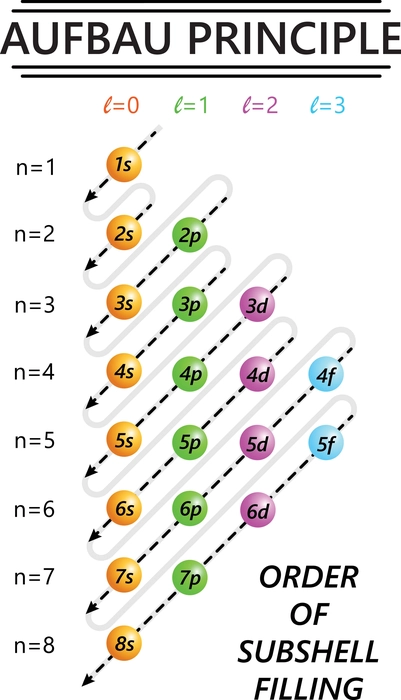
Aufbau is a German word that means “building up.” Like a construction build-up from the ground up. Atoms are also filled with electrons in this manner. An atom has orbitals that are arranged in increasing energy level order. According to the Aufbau principle, electrons are filled in the order of increasing energy of the atomic orbitals. That is from the bottom to the top. This principle aids in the electronic configuration of atoms as well as the placement of electrons in orbitals. In all atoms, the orbital is always the first orbital to be filled with electrons. After filling this orbital, electrons are filled in orbitals further away.

Explain Aufbau Principle

Niels Bohr, a Danish physicist developed the principle. According to this principle, the increasing order of energy levels of atoms causes the filling of electrons in an atom. They are entering a perfect order that corresponds to the energy level of orbitals.  We can predict the electron configurations of atoms or ions by using this rule.

The Madelung rule or rule is also related to this rule. According to this rule, the filling of electrons in an atom occurs as the value of n+l increases. That is, the electrons are filled to a lower-valued orbital. Where n represents the principal quantum number value, and l represents the angular momentum quantum number value. This is known as the Madelung rule or the diagonal rule.

Electrons getting filled up according to Aufbau principle.

Some features of the Aufbau Principle

  1. Electrons are assigned to the subshell with the lowest energetically available energy.
  2. An orbital can only hold two electrons.
  3. If two or more energetically equivalent orbitals (e.g., p, d, etc.) are available, electrons should be spread out before being paired up (Hund’s rule).

Some Exceptions 

Some elements exhibit exceptional behaviour in terms of the Aufbau principle. They are chromium and copper, respectively. According to the Aufbau principle, the electronic configuration of chromium is \(\left[ {Ar} \right]3{d^4}4{s^2}\). However, chromium’s electronic configuration is \(\left[ {Ar} \right]3{d^5}4{s^1}\). And this is because chromium achieves stability by having a half-filled orbital. Elements require a filled state at all times. A fully-filled orbital is always more stable. Even though a half-filled orbital has partial stability.

Copper’s electronic configuration is \(\left[ {Ar} \right]{\rm{ }}3{d^{10}}4{s^1}\) rather than \(\left[ {Ar} \right]{\rm{ }}3{d^9}4{s^2}\). This is due to the presence of a fully-filled d-orbital configuration, which provides additional stability.

Summary

An electronic configuration is present for all elements to locate electrons in orbitals. As a result, the chemical properties of elements can be explained. When combined with other rules, this can result in a proper electronic configuration. According to Aufbau’s principle, the filling of electrons in an atomic orbital occurs in the order of increasing energy of atomic orbitals. The elements chromium and copper are exceptions to this rule. Because they achieve a half-filled and fully-filled atomic orbital, these elements can be more stable.

Frequently Asked Questions

1. Define Hund’s rule of maximum multiplicity

For an orbital of the same sub-shell, the filling of electrons takes place in a way that all the electrons are singly occupied before pairing occurs. The pairing of electrons takes place only when all the subshells are singly occupied.

2. What do you understand by Pauli’s exclusion principle?

All the quantum number values are distinct for each electron present in an atom. This principle states that no two electrons in an atom can have an equal set of all the quantum number values. And thereby we can easily locate all the electrons in an atom.

3. What is the principal quantum number?

The number that deals with the energy and size of orbitals are a principal quantum number. It will explain how far an electron is from the nucleus. For example, the electronic configuration of Helium is \(1{s^2}\) so the principal quantum number is 1.

Active transport

Introduction

Transport is a crucial component of plant physiology and involves moving organic nutrients and water throughout the plant body. Food is produced by photosynthesis in the leaves which is transported to other parts of the plant and water is absorbed from the soil through the roots and then to various aerial regions of the plant. In higher plants, the transport of food and water takes place through specialized structures known as the xylem and phloem. An elaborate root system helps these plants to absorb water from the soil.  However, primitive plants perform the function of absorption of water through simple structures such as pores, or the external body surface.

For more help, you can Refer to our video in Class 7 Science in Lesson no 11. Check out the video Lesson for a better understanding.

Transportation in plants-

The main 3 means of transport in plants are via diffusion, Facilitated diffusion, and Active transport. Vascular bundles assist in the movement of water and carbohydrates throughout the entire plant body.

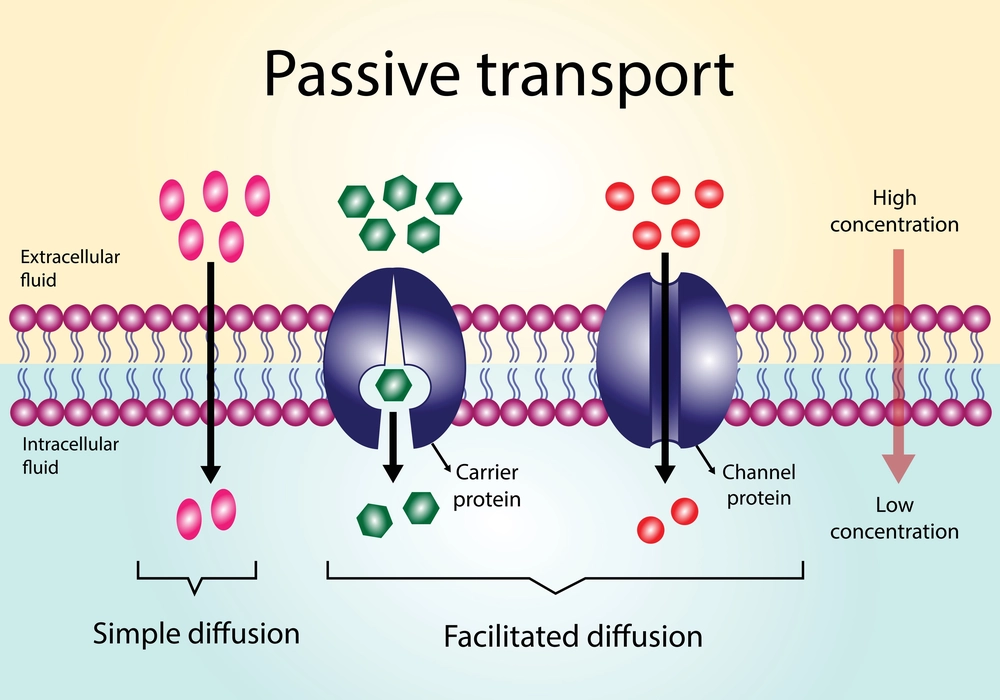
Simple Diffusion- Diffusion is the process of movement of a molecule from a location of higher concentration to a lower concentration i.e. along the concentration gradient. It is a spontaneous process and doesn’t require any energy. Here no special membrane proteins are required and this method only allows the transportation of hydrophobic molecules as the cell membrane is made up of a lipid bilayer.

This diagram shows Passive transportation occurring in Cell Membrane.
  • Facilitated diffusion- Facilitated diffusion is a type of diffusion facilitated by some proteins which assist in the movement of various metabolites through the cell membranes. These are majorly used for the transportation of water, ions, and other hydrophilic molecules which cannot pass through the lipid bilayer. The channel proteins and the carrier proteins are the two different types of membrane transport proteins.
  • Channel proteins- Pores in the plasma membrane are created by channel proteins. These proteins are highly selective and hence allow the transportation of specific molecules only. Eg-Aquaporins only permit water movement and Aquaglyceroporins facilitate only the movement of glycerol and water.
  •  
  • Carrier proteins- These are special types of proteins that undergo conformational changes after binding to a particular solute. Carrier proteins help in the transportation of ions eg- chloride-bicarbonate exchanger, also known as the anion exchange protein, which facilitates the simultaneous transit of HCO3- and Cl. It also helps in the transport of glucose via the glucose transporter(GLUT).
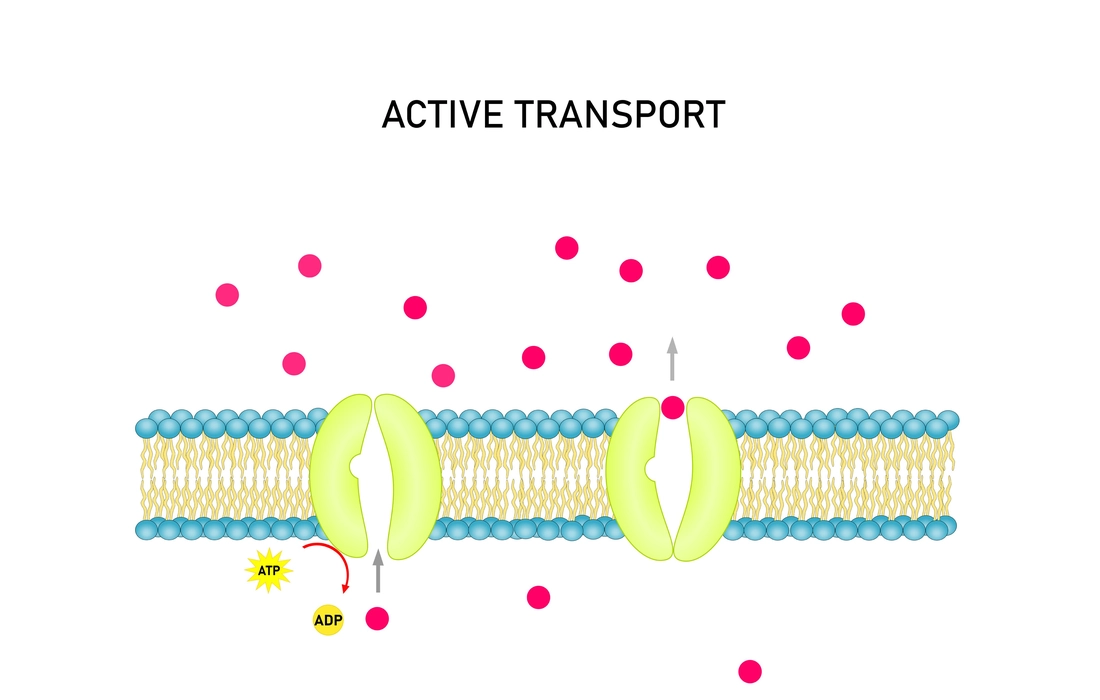
  • Active transport- Active transport facilitates uphill solute movement throughout the cell by functioning against a concentration gradient. Here the molecules move from an area of lower concentration to a higher concentration. Hence, some kind of energy is required. There are two ways to supply energy:
  • The energy produced by ATP hydrolysis is known as primary or direct active transport. For instance, the energy is given through the Na+-K+ ATPase (electrogenic pumps). 
  • The energy supplied through the electrochemical gradient is enabled by the Symport pumps (such as the Na+-Glucose symporter, lactose permeases, etc.) and Antiport pumps (such as the Na+-Ca2+ antiporter) These are often referred to as secondary or indirect active transport.
This diagram shows active transportation occurring in Cell Membrane.

Transport of water from roots

Long-distance transportation of water and nutrients in plants takes place through the xylem and phloem. The soil-plant-atmosphere continuum (SPAC) is a pathway that discusses the movement of water from the soil, its transportation to plant parts, and 

the expulsion of water from the plant. Absorption of water in plants occurs through-Passive absorption- when water is absorbed from a higher water potential (in soil) to a lower water potential (in root cells). Active absorption-which occurs due to transpiration.

Ascent of sap

The term “ascent of sap” refers to the movement of water and minerals from the soil to aerial portions like leaves and stems. The cohesion-tension theory, also known as transpirational pull, explains this (Dixon and Jolly, 1894). According to this idea, water from locations with higher water potential (such as the roots) is drawn up, to areas with lower water potential (the leaves)  due to the tension (negative hydrostatic pressure) which is generated by the leaves. There is low water potential in the leaves because they lose water due to the process of transpiration. The water column is kept from collapsing by the cohesive forces of attraction between the water molecules. As a result, water absorption happens to make up for the transpirational loss.

Summary

Intricate transportation networks are needed by plants to enable the interchange of materials and nutrients. The passive process of moving molecules from higher to lower concentrations is known as diffusion. It could be simple (independent) or facilitated transport. Energy is spent during active transport, which is carried out by membrane proteins called transporters and channel proteins. The transpirational pull/cohesion-adhesion principle is used by the roots to absorb water. 

Frequently Asked Questions

1. What do you understand about water potential?
Ans: The potential energy of water per unit volume is referred to as water potential. It describes the amount of water in the atmosphere, plants, and soil.

It is shown as the sum of Osmotic potential, matrix potential, hydrostatic potential, and gravitational potential. 𝜳w = 𝜳𝛑 (osmotic potential)   + 𝜳m (matrix potential)  +𝜳p (hydrostatic potential)  +  𝜳g (gravitational potential).

2. What is the symplastic pathway of water absorption?
Ans: The continuous network of cell cytoplasms is known as the symplastic route.

Through the plasmodesmata connections present between two cells, this pathway allows absorbed water to flow from cell to cell.

3. Which method of water absorption is quick?
Ans:
The apoplastic pathway will move more quickly since there won’t be as many obstacles in its path as there are in the symplastic pathway, which is obstructed by Casparian strips and must travel through the protoplasm, which slows down movement.