ADH Hormone

Introduction

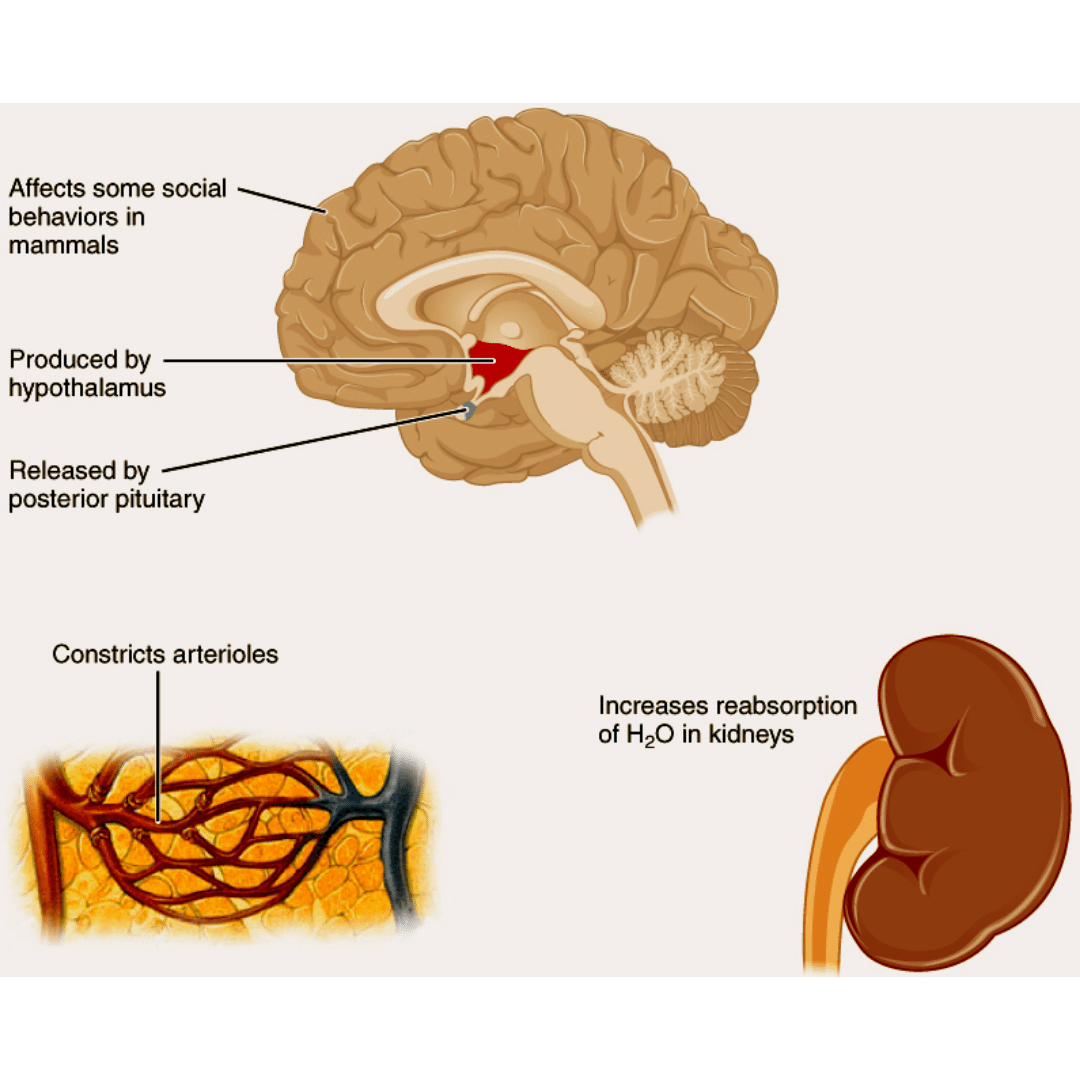
Antidiuretic hormone (ADH), also known as vasopressin or arginine vasopressin, is generated in the brain and stored in the posterior pituitary gland. It primarily regulates fluid output of the body by allowing the kidneys to reabsorb water during the process of  ultrafiltration of blood. It is known as a nonapeptide since it is a peptide hormone made up of nine amino acids. The hypothalamus’s osmoreceptors detect the blood’s high solute concentration (high solute is an indication of low fluid) and indicate the release of ADH hormone.
Functions

The functions of ADH hormone are as follows-

  • Diuretic refers to substances that can increase the water content in the urine. ADH, an antidiuretic hormone, lowers this water content during urine production.
  • ADH action allows the  reabsorption of water from the collecting tubules by increasing their permeability towards water.As a result, it only permits very little urine to leave the body.
  • ADH contributes to maintaining the homeostasis of the body, necessary for healthy cellular activity.
  • ADH causes blood arteries to contract, which raises blood pressure.Blood flows with higher pressure because of constriction of the lumen of the blood arteries.

Regulation

ADH is regulated by the hypothalamus, the master gland.

  • The baroreceptors found in blood vessels close to the heart transmit information to the brain in cases of severe blood loss caused by blood vessel damage that results in a brief state of hypovolemia.
  • During Summertime there is a high solute concentration in the blood. This occurs because of the heavy sweating and extremely high daytime temperatures.
  • This situation is detected by osmoreceptors in the hypothalamus, which alerts the brain to it to maintain a healthy cellular environment.
  • For this, the brain instructs various hormones in the body which will help to prevent water loss.
  • Low fluid and high solute levels cause the posterior pituitary gland to release the ADH hormone. This hormone acts on nephrons in the kidneys specifically,  the collecting ducts and thus allowing water retention. 

Disorders

Hypothermia

  • It develops when the body secretes too much ADH, which causes the kidneys to retain more water while salts continue to be eliminated normally from the body. 
  • This leads to a cellular condition known to have low salt concentration and high fluid content (low sodium in the bloodstream) arises which is also known as hypothermia.
  • This condition  might result from a tumour of some kind that releases excess of ADH in the body.
  • Drug side effects may also cause this disease to develop.

Central Diabetes insipidus-

  • When ADH levels fall below the normal range, water retention is inhibited.
  • This is so, because the collecting ducts become  water-impermeable and as a result, discharged urine which has a high fluid content.
  • Such a condition is known as Central diabetes insipidus.
  • This may occur as a result of infection, inflammation,injury ,surgery or brain trauma,  in the hypothalamus, or the posterior pituitary gland or both of them.

Nephrogenic Diabetes Insipidus-

  • Nephrogenic diabetes insipidus develops when the kidneys become resistant to ADH, either as a result of signal mediator or nephron receptor malfunction.
  • This disease occurs because even though ADH is readily available, it cannot bind to the target site and carry out its metabolic function.

Summary

Through the consumption of meals and liquids, the body receives water continuously. While some water is lost by perspiration through the skin, the majority is excreted as urine. The continuation of life processes depends on the maintenance of the water balance. This water balance in the body is maintained by ADH-Antidiuretic hormone which helps in water retention in the body and maintains the steady state of the body.

Frequently Asked Questions

1. What are edema and dehydration?

Edema is the condition of excessive water retention. Dehydration is excessive water loss or very little water intake. Neither of these states is an indication of a healthy person.

2. What is difference between diabetes Diabetes insipidus and diabetes mellitus?

Low ADH levels cause the polyuria and polydipsia condition known as diabetes insipidus. High blood glucose levels brought on by inadequate pancreatic insulin secretion are known as diabetes mellitus.

3. How can alcohol consumption affect ADH?

The secretion of ADH is inhibited by alcohol intake. This causes an increased urine production and dehydration in the body. It leads to symptom of severe headaches.
Biodegradable and Non-Biodegradable Substances

Introduction

Biodegradable and non-biodegradable substances refer to the materials that make up the products and waste we use and discard in our daily lives. Biodegradable substances are made from organic materials and have a positive impact on the environment when properly managed and disposed of. Non-biodegradable substances, on the other hand, are made from synthetic materials and do not break down in the natural environment. It is important to minimize our use of non-biodegradable substances and properly manage both biodegradable and non-biodegradable waste in order to protect the environment and promote sustainability.

Biodegradable Waste and Biodegradable Material

Biodegradable waste materials are materials made from organic matter, such as starch-based plastics or plant-based fibers, which can be broken down by natural processes into the water, carbon dioxide, and biomass. Unlike traditional plastics, which can persist in the environment for hundreds of years.

Examples of Biodegradable substances

Some common examples of biodegradable substances include:

  • Food waste, such as fruit and vegetable scraps, bread, and meat
  • Yard waste, such as leaves, grass clippings, and tree branches
  • Paper products, such as newspaper, paper towels, and cardboard
  • Textiles made from natural fibers, such as cotton or wool
  • Biodegradable plastics made from renewable materials, such as corn starch or sugarcane
  • Manure and sewage sludge
  • Wood chips and sawdust.

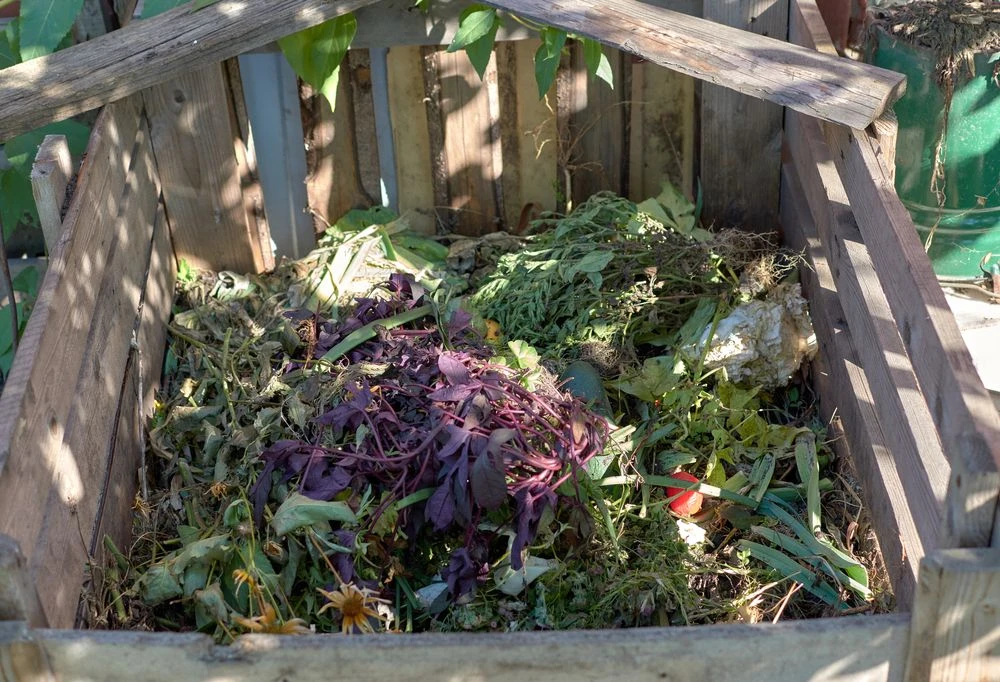
The biodegradable compost bin in the garden

Non-Biodegradable Waste and Non-Biodegradable Material

Non-biodegradable material refer to a material that does not break down into natural substances over time and persist in the environment for long periods. These materials are typically synthetic, made from petrochemicals, and do not decompose in the natural environment.

Non-biodegradable waste refers to discarded items made from non-biodegradable materials that cannot be decomposed by natural processes. Examples of non-biodegradable waste include plastic bags, polystyrene packaging, and aluminum cans. Unlike biodegradable waste, non-biodegradable waste can persist in the environment for hundreds of years and can cause environmental problems if not properly disposed of.

Examples of Non-Biodegradable substances

Some common examples of non-biodegradable substances include:

  • Traditional petroleum-based plastics, such as polyethylene (PE) and polypropylene (PP)
  • Aluminum cans and foil
  • Glass bottles and jars
  • Metal products, such as steel cans and car parts
  • Electronic waste, such as computers, phones, and televisions
  • Synthetic fibers, such as nylon and polyester
  • Certain types of synthetic rubber and paints
  • Fire retardants and flame-retardant materials.

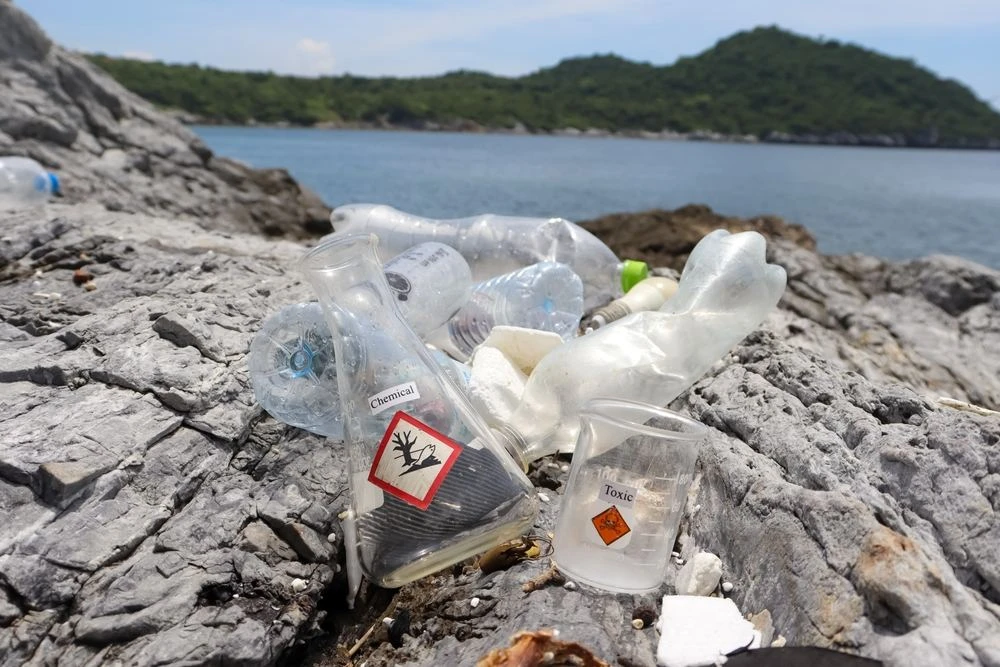
The Hazardous Non-Biodegradable waste near sea

Effect of Biodegradable and Non-Biodegradable Substances on the environment 

The effects of biodegradable and non-biodegradable substances on the environment can vary greatly.

  • Biodegradable substances, such as food waste and yard waste, can have positive impacts on the environment when properly managed. For example, food waste can be composted and added to soil as a natural fertilizer, improving soil health and reducing the need for chemical fertilizers. Yard waste can also be composted, or used as mulch to retain moisture in the soil.
  • On the other hand, non-biodegradable substances can have harmful impacts on the environment. When not properly disposed of, non-biodegradable waste, such as plastic bags and polystyrene packaging, can litter the environment, harm wildlife, and take hundreds of years to break down. Landfills overflowing with non-biodegradable waste can also release toxic substances into the air and water, causing further harm to the environment and human health.
  • In addition, the production of non-biodegradable materials, such as petroleum-based plastics, can contribute to greenhouse gas emissions and other environmental problems associated with the extraction and processing of fossil fuels. 
  • When these wastes build in the soil, they affect the pH and fertility of the soil. Non-biodegradable trash should be reused, reduced, or repurposed rather than dumped into oceans, as this constitutes a significant environmental risk.

Overall, it is important to properly manage both biodegradable and non-biodegradable substances in order to minimize their negative impacts on the environment.

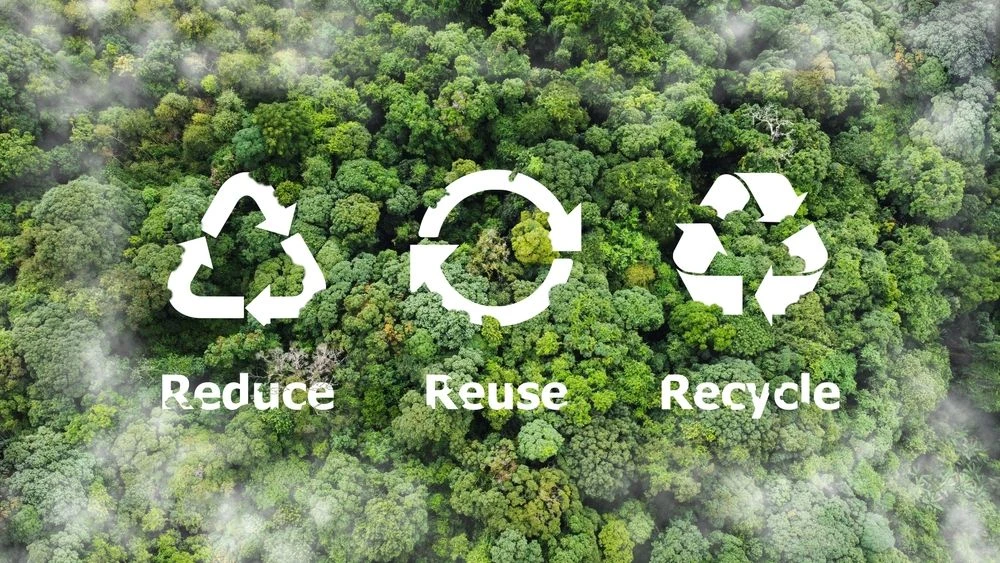
The Reduce, reuse, recycle symbol in the waste management

Differences between biodegradable and non-biodegradable substances:

Conclusion

Biodegradable compounds are those that can be broken down or decomposed by the action of microbes or any form of life, whereas non-biodegradable substances are those that cannot be broken down into little pieces by the action of any kind of life. Organic wastes that degrade quickly are considered biodegradable wastes. Plastics and glassware are examples of non-biodegradable garbage that require thousands of years to disintegrate. All sorts of garbage affect our environment and all types of life on the planet. As a result, waste treatment is critical, which includes recycling, reusing, and decreasing.


Frequently Asked Questions 

1. What is the three R’s stand for?

The “Three R’s” stand for Reduce, Reuse, and Recycle. They are a widely recognized hierarchy of waste management and sustainability that encourages individuals and organizations to minimize waste and promote sustainability by reducing their consumption of resources, reusing products and materials whenever possible, and recycling materials that cannot be reduced or reused.

2. What is a biodegradable polymer?

A biodegradable polymer is a type of plastic that is designed to break down and decompose into natural substances over time through the action of microbes, heat, and other environmental factors. Biodegradable polymers are typically made from renewable resources, such as plant-based materials, and are designed to be more environmentally friendly than traditional petroleum-based plastics.

3. What is biodegradable degradation?

Biodegradable degradation refers to the process of breaking down and decomposing organic material into natural substances through the action of microbes, heat, and other environmental factors. This process is a natural and essential part of the earth’s ecosystem and helps to recycle nutrients and other substances in the environment.

Haploid Vs Diploid Cells

Introduction

Haploid and diploid indicate the set of chromosomes in a cell or organism. Haploid refers to half the number found in the typical diploid cells of the same species and are typically found in gametes (eggs or sperm) or certain single-celled organisms. They contain a single set of genetic information, which can be beneficial for processes such as reproduction and genetic variation. This genetic diversity allows the way for adaptation and evolution.

lead magnet

What is a haploid?

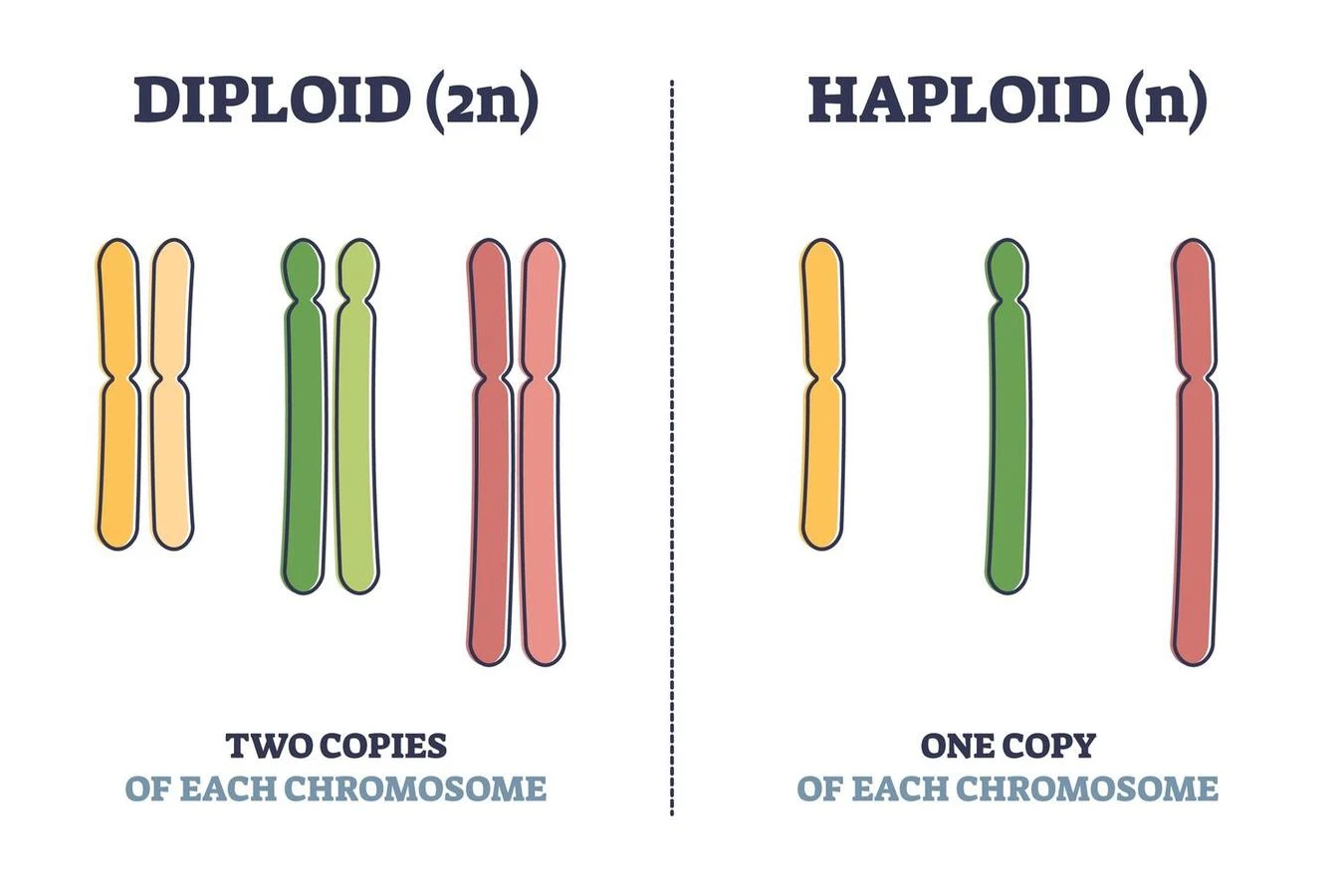
A haploid set of chromosomes refers to the complete set of chromosomes presents in a single gamete or sex cell (sperm or egg). It is a single set of chromosomes that results from the reduction division (meiosis) of a diploid cell (with two sets of chromosomes) into four haploid cells. The haploid number of chromosomes in a species is designated as “n”. 

  • A common example of a haploid set of chromosomes is found in human sperm or eggs, which contain 23 chromosomes each. This results from the reduction division (meiosis) of diploid cells (which contain 46 chromosomes, or two sets of 23 chromosomes each) into haploid cells. 
  • In other species, the haploid number can vary. For example, in fruit flies (Drosophila melanogaster), the haploid number is 8, while in wheat (Triticum aestivum), it is 7.
  • Since haploid cells have a single set of chromosomes, each gene has only one allele. It means that each gamete has just one allele for a given gene, and when two gametes (male and female) fuse, two alleles of the gene combine and express their phenotype based on the dominant recessive interaction.

What is diploid?

Diploid refers to a cell or organism that has two sets of chromosomes. The diploid number of chromosomes is designated as “2n” in a species, where “n” is the haploid number of chromosomes (the number present in a single set). Each chromosome is present in pairs in diploid cells, with one chromosome from each parent. A diploid set of chromosomes is the typical number found in most body cells of an organism, as opposed to the haploid set found in gametes or sex cells (sperm and egg).

Diploid cells have two sets of chromosomes, which provide stability to the genetic material and ensure that each cell has a complete set of chromosomes. This stability is essential for normal cell function and proper cell division.

Haploid and Diploid set of chromosome

Role in Division of cells

  • Mitosis and meiosis are cell division processes that are related to the concept of haploid and diploid cells.
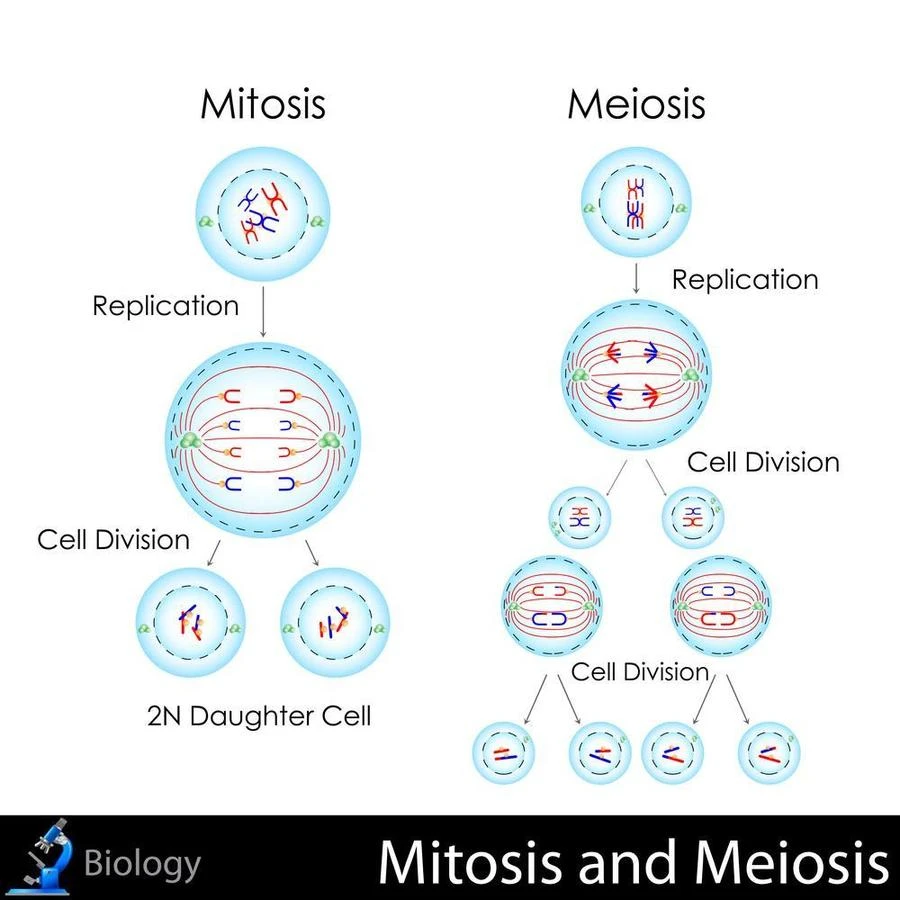
  • In mitosis, a single diploid cell (2n) divides into two identical diploid daughter cells, each with the same number of chromosomes as the parent cell (2n). This type of cell division is used for the growth and repair of tissues in multicellular organisms.
  • In meiosis, a single diploid cell (2n) undergoes two rounds of division, resulting in the formation of four haploid daughter cells (n). Meiosis is involved in the creation of haploid gametes for sexual reproduction. The reduction in chromosome number from 2n to n ensures that when the gametes fuse during fertilization, the resulting zygote has the normal diploid number of chromosomes (2n).
  • As a result, mitosis produces identical diploid cells, whereas meiosis produces genetically heterogeneous haploid cells. These processes are important for the maintenance of chromosome number and genetic diversity in multicellular organisms.
Types of cell divisions
lead magnet

Difference between haploid and diploid

The main differences between the two are:

  1. Chromosome number: Single set of chromosomes can be seen in a Haploid, while two sets of chromosomes are present in a diploid. The haploid number of chromosomes is designated as “n”, while the diploid number is designated as “2n”.
  2. Genetic material: Haploid cells contain half the amount of genetic material as diploid cells. This results in haploid cells having a unique combination of alleles for each gene. On the other hand, diploid cells have two alleles for each gene, one from each parent.
  3. Function: Haploid cells are primarily involved in sexual reproduction, as they provide genetic diversity when two haploid cells combine such as sperm and egg they form a diploid cell resulting in a zygote. Diploid cells are found in most organisms, including the human body, and provide stability to the genetic material.
  4. Cell division: Haploid cells are produced by meiosis, a type of cell division that reduces the chromosome number by half. Diploid cells can be produced by either meiosis or mitosis, a type of cell division that results in the production of two identical daughter cells.

Conclusion

In eukaryotic species, the genetic components are enclosed within the cell nucleus and are known as chromosomes. The ploidy of an organism is defined by the number of chromosomal sets. Haploid cells are those that have a single set of chromosomes and are generated as a result of meiosis. It is widespread among gametes. Diploids have two chromosomal sets and are produced during mitotic cell division. Although haploid and diploid are distinct, each shares important characteristics.

Frequently Asked Questions 

1. What exactly do you mean by karyotype?

A karyotype is a visual representation of the complete set of chromosomes in a cell and is used to diagnose genetic disorders and chromosomal abnormalities.

2. What effect do chemical mutagens have on polyploidy?

Chemical mutagens can induce changes in the DNA of cells and can lead to polyploidy. Polyploidy, which is the presence of extra sets of chromosomes in a cell, can be caused by errors during cell division, such as failures in meiosis, as well as exposure to environmental factors like radiation and certain chemicals, including mutagens.

3. Is a brain cell haploid or diploid?

Human brain cells are somatic cells. All somatic cells in the human body are diploid, which means they have two copies of each chromosome.

Natural Resource Management – A Complete Overview

Introduction

A natural resource is any naturally occurring substance that is used to sustain life and satisfy human needs. A wide range of natural resources that we use on a daily basis, are food, water, non-synthetic clothing, timber, metals, oil, coal, natural gas, sunlight, air, soil etc. One must be aware that not all of these resources are open to endless use. These resources should be used judiciously as they are for essential human growth and sustenance. Hence, natural resource management has now become the need of the hour. Natural resource management (NRM) is the collective term for a range of interdisciplinary and comprehensive approaches developed to manage and maintain the natural resources now in use, both for the benefit of the current generation and for future generations. It emphasises the management of land, water, and forest resources as well as the preservation of flora and fauna. 

Approaches to Management of Natural Resources 

The approaches must include the necessary policies, the sustainability of the rules and practises, and the need to recover resources that have already been depleted or are running out. Following are the strategies for Natural resource management:

  • Top-down approach: 
  • Based on the paternalistic notion that only environment specialists who have practical expertise and sound judgement should plan and implement NRM. Since local input is required for good results in natural resource management, this strategy is frequently unsuitable and unsustainable.
  • Community-based approach:
      • Aggressive farming methods and urbanisation harm people whose livelihoods depend on natural resources, particularly forests.
      • The community-based approach gives local groups a role in developing NRM strategies and conservation projects that directly impact them.
      • Multi-stakeholder partnerships, the creation of powerful local groups, the use of law enforcement to stop unauthorised land invasion, and cooperative management plans are some of the features of the community-based approach.
  • Integrated approach
      • It encompasses a variety of sectors including the public and private organizations.
      • It strives to conserve the environment, provide food security, and decrease poverty.
      • The main goal of this startegy is to make resource management sustainable for all.
  • Adaptive approach
      • This approach addresses the reasons and consequences of using NRM tactics.
      • It incorporates diverse viewpoints, experimentation with social learning, evaluation of progress, testing of policies, detecting knowledge gaps, and improved communication with related people.
      • It ultimately will lead to proper and effective management practices.
  • Environmental economics approach: 
  • This approach incorporates the use of management tools, such as grants, quotas, licences, rights to property, permits, etc., that are successful in the regulation, monitoring, analysis, and assessment of natural resources.


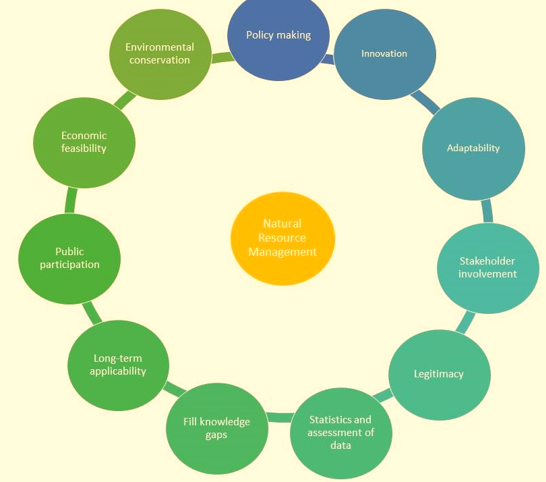
This image shows the basic principles involved in natural resource management.

Sustainable Management

Strategies and practices that combine resource management with sustainable development constitute sustainable management of natural resources. When building long – term sustainable management practises, three factors should be taken into account they are:-

  • Current and future requirements
  • Ecological preservation
  • Financial viability

Effective models and practises that are developed in this way not only conserve resources and maintain sustainability, but also assist in meeting the future needs of these resources.

Methods of Sustainable Management

Agriculture, mining, petroleum, and other industries are all involved in the sustainable management of natural resources.In addition to the five R’s of sustainable management, resource management  includes-

  • Integrated Forest Management (IFM)
  • Integrated Water Management (IWM)
  • Creating sustainable agriculture methods
  • Safeguarding coral reefs and coastal mangrove habitat
  • Programs for recovering resources from “waste materials”
  • Public education and awareness

Summary

  • Natural resource management is an integrated, comprehensive strategy for promoting prudent methods for resource utilisation.
  • The need for implementation NRM technique has arised due environmental pollution, urbanisation, industrialization, and overpopulation.
  • The top-down strategy, community-based approach, adaptive approach, integrated approach, and environmental economics are examples of NRM approaches.
  • Natural resources must be handled sustainably while taking into account current and future requirements, environmental protection, and economic viability.
  • Effective management requires raising public knowledge and participation, as well as utilising adaptive management techniques.


Frequently Asked Questions

1. What is water harvesting?

Water harvesting is the practise of collecting surface runoff or rainwater by building catchments, prevent pollution of the collected water and storing water for later use. In various regions of India, like Rajasthan, Tamil Nadu, etc., it has helped in solving issues such as water scarcity and water shortage.

There are various methods for collecting water:

  • Catching runoff from rooftops
  • Collection of runoff from nearby catchments
  • Seasonal flood water collection
  • Watershed management

2. Which sectors are affected due to delpetion natural resources?

Following sectors are affected by the delpetion natural resources-

  • The agricultural and forestry sector are most severely impacted. This is because of their reliance on the availability of natural resources directly.
  •  Along with ineffective animal husbandry techniques, the depletion of water and soil resources has a direct impact on agricultural output and food availability.
  • The diminishing natural resources has impacted the forest communities as well as they depend on the forest produce for food, shelter and financial income.
  • In addition to endangering their ability to support themselves, it has also increased the frequency of landslides and soil erosion, which has directly endangered their survival.

3. Inlist the 5 R’s of sustainable management.

The 5 Rs of sustainable management are-

  • Reduce
  • Reuse
  • Recycle 
  • Repurpose
  • Refuse


Acclimatization in Human Beings?

Acclimatization: Introduction

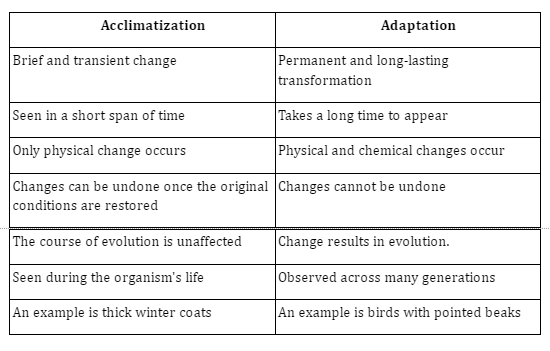
An organism’s capacity to adapt to changes in its environment is crucial to its ability to survive. An organism adapts to its changing environment by either acclimating to it or by adapting to it. Acclimatization occurs quickly and results in temporary physiological changes that guarantee survival. In contrast, adaptation leads to the creation of new characters over time, ensuring the survival of the organism.

In species exposed to novel environmental factors such pH, salinity, light, pressure, chemicals, altitude, and temperature, a physiological process called acclimatisation occurs naturally. Acclimatization results in certain  modifications that  enable the organisms to endure a wide variety of contrasting environmental circumstances.

Acclimatization in Human

Similar to other organisms, the human body adapts to abrupt changes in the environment. This facilitated the long-term survival of the human race and the expansion of the species to areas of the world with diverse climatic conditions. As an illustration, when a person relocates to a very hot region, his body begins to reduce the amount of salt he loses through perspiration, although perspiration increases to keep him cool. In addition, our body’s capacity to acclimate is what allows us to climb tall mountains and descend deep into the ocean. Let’s go deeper into the high altitude adaptation process.

Acclimatization at Higher Altitudes

Higher altitude regions are those that are positioned above 2,400 meters above sea level. Compared to locations close to sea level, these areas have a cooler climate. With rising height, the air pressure falls. Additionally, there is less oxygen in the atmosphere. High-altitude regions include, for example, the Himalayan mountain ranges.

Mechanism of acclimatization to higher altitudes

  • When exposed to shifting climatic circumstances at higher altitudes, humans can experience changes in their personalities as well as cognitive abilities. 
  • The carotid bodies respond to low oxygen levels in the air that are inhaled.
  • The rate and depth of breathing are increased by these arterial chemoreceptors.
  • Erythropoietin is released by the kidneys in response to decreased oxygen pressure in the arteries. This encourages the bone marrow to produce red blood cells.
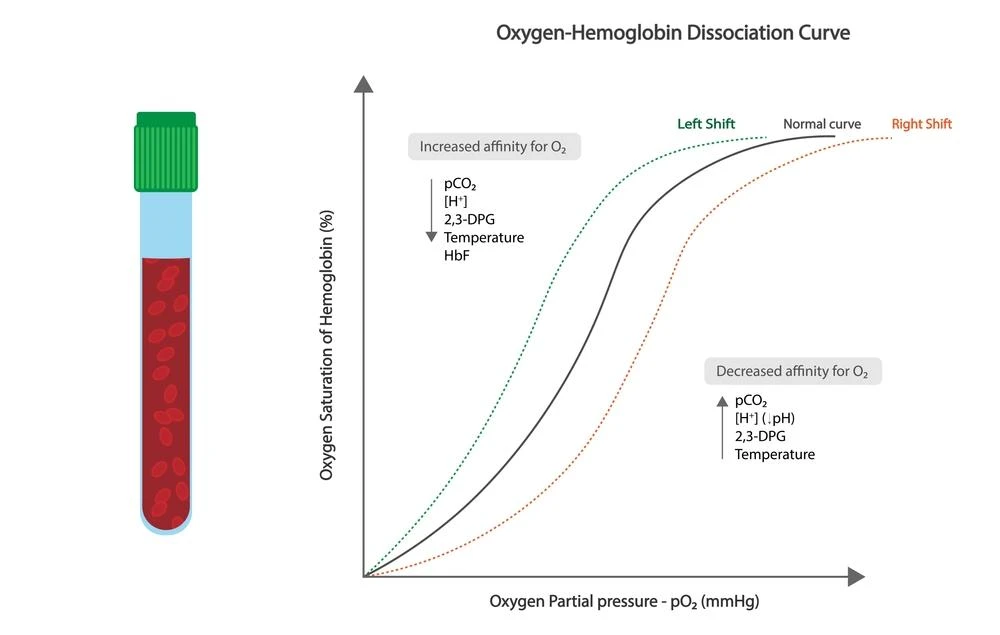
  • People exposed to an increase in altitude experience a variety of alterations, including changes in the composition of oxidative enzymes, a reduction in the distance between capillaries, and changes in the affinity of hemoglobin towards oxygen.

Consequences to exposure to higher altitudes

  • The stroke volume decreases as a result of a higher heart rate, which also reduces non-essential physiological activities like digesting.
  • Respiratory alkalosis, a decrease in lactate synthesis, and an increase in 2,3-bisphosphoglycerate are a few prominent chemical alterations in the body.
  •  In pregnant women, such environmental conditions can restrict intrauterine growth, reduce placental blood flow, and thereby reduce the height of such children born.
  • Mountain sickness, oedema in the lungs and brain, weight gain from fluid retention, increased ventilation, sleeplessness, vomiting, dizziness, and weariness are other symptoms of high altitude.
  • If people rise at a faster rate, the high altitude effects mentioned above take place. The body becomes momentarily accustomed to the changing environment if the necessary amount of time is given for it to do so.

Oxygen level at higher altitudes 

  • Since oxygen is almost insoluble in water, it is mostly carried by the hemoglobin present in erythrocytes (RBCs) instead of blood plasma. 
  • A maximum of four oxygen molecules can attach to one hemoglobin molecule to generate oxyhemoglobin. This reaction is reversible. 
  • The partial pressure of oxygen directly affects how much oxygen binds to hemoglobin. 
  • With the increase in altitudes the partial pressure of oxygen decreases. As a result less oxygen is available for use.
  • Thus, hemoglobin releases more bounded oxygen to the tissues. It can so happen that all the bounded oxygen is released.
  • Since the O2 pressure at higher altitudes is low, more hemoglobin is also produced by the body. This is done so that the maximum amount of oxygen can be absorbed available in the atmosphere. 
  • This is the reason why people living in high-altitude regions have significantly  red-colored cheeks as compared to people living at the sea-level.

Oxygen-dissociation Curves

  • A typical oxygen dissociation curve demonstrates that hemoglobin initially binds to oxygen with difficulty, and that difficulty decreases with subsequent bindings—for example, the first oxygen molecule to deoxyhemoglobin is harder to bind to, than the second one which is comparatively easier to bind, the third one is even more easier to bind to, and so on.
  • The oxygen molecules’ ability to bind to hemoglobin is influenced by a number of parameters.
  • Temperature, pH, carbon dioxide, carbon monoxide, and 2,3-BPG all affect  the binding of oxygen to hemoglobin.

Oxygen dissociation curve

Difference between Acclimatization and Adaptation

Myoglobin

  • Specialized molecules that bind to oxygen are found in skeletal muscles.These molecules are known as
  • Myoglobin which is single polypeptide chains.
  • Since they are made up of a single heme molecule, they can attach to one oxygen molecule at a time.
  • The graph of it displays a logarithmic pattern as opposed to the sigmoidal curve  of hemoglobin molecules .
  • When engaged in vigorous activity, myoglobin exhibits a delayed release and a strong affinity for oxygen.

Summary

The process through which an organism adapts to changes in its environment, including those related to temperature, altitude, humidity, pH, light, salinity, pressure, etc is termed  acclimatization. It is a reversible process. It is a physical change and does not change the genetic composition of an organism. One example of acclimatization in humans is seen when humans travel to a higher altitude. At higher altitudes, oxygen levels and the temperature are low. Thus various internal changes such as increased hemoglobin production, increased rate, and depth  of breathing, changes in the affinity of hahemoglobinowards oxygen, etc are observed. These changes are observed as a response to the change in the environment. It is the body’s way to acclimatize to new environmental conditions.

Frequently Asked Questions

1. How oxygen dissociation curve of a foetus is different from an adult?

Fetal hemoglobin has a slightly different composition than adult hemoglobin, which results in an increase in its affinity for oxygen molecules. In the placenta, where maternal hemoglobin is unloaded, it can load oxygen. The replacement of fetal hemoglobin with adult hemoglobin takes roughly six months after delivery.

2. Under which conditions does the oxygen dissociation curve move towards the right?

A shift towards the right side of the graph is seen under the following conditions-

  • The oxygen partial pressure falls.
  • Carbon dioxide’s partial pressure rises.
  • Concentration of hydrogen ions rises.
  • Decreases in pH or acidity.
  • A rise in body temperature.
  • An excess of 2,3-Diphosphoglycerateb is formed which is a byproduct of glycolysis.

3. What are the three stages of high altitude acclimatization?

The 3 stages of  high altitude acclimatization are-

  • Preparation stage- In this stage the person is prepared for the going to a higher altitude. He/She is given proper training and is exposed to the cold temperatures and low oxygen environment.
  • Ascent stage- This is the stage when people begin to move up the altitude, i.e .they climib the mountain.
  •  Descent stage– This is the stage when people begin to come down.i.e they start climbing down the altitude and start coming to a region where temperature is high and oxygen-levels are also normal.

Asexual Reproduction Plants

Introduction

Plants can reproduce sexually or asexually in nature. The fusing of male and female sex cells, or gametes, is the primary mechanism for sexual reproduction in plants, as it is in all other species.Through the use of specialised structures such modified stems and roots, plants are capable of reproducing asexually. Human action, such as cutting off a plant’s parts and giving the cuttings favourable conditions to encourage the formation of roots, can also lead to asexual reproduction in plants .

Asexual Reproduction

In its most basic form, asexual reproduction  in which the organism is simply divided into two and only single parent is involeved. This type of reproduction is  without the formation of gametes. Here a single parent-cell divides, giving rise two daughter cells. The progenies thus born are genetically and physically identical to the parent cell. Single-celled organisms frequently employ this technique for reproduction

lead magnet

There are two ways:

Natural Asexual Reproduction

Under natural vegetative propagation, plants reproduce through natural asexual processes, which do not require human involvement. Following are natural ways of asexual reproduction in plants-

  • Vegetative propagation:

Plants reproduce in this type of asexual manner without making seeds or spores. The plant instead relies on a few special parts that,under appropriate conditions, grow into new plants.These  plant elements are-

  • Rhizomes:Rhizomes are modified stems that can produce new plants by generating advententious roots and shoot systems at their nodes. Examples include bamboo and ginger.
This image shows ginger rhizomes, which are modified stems.
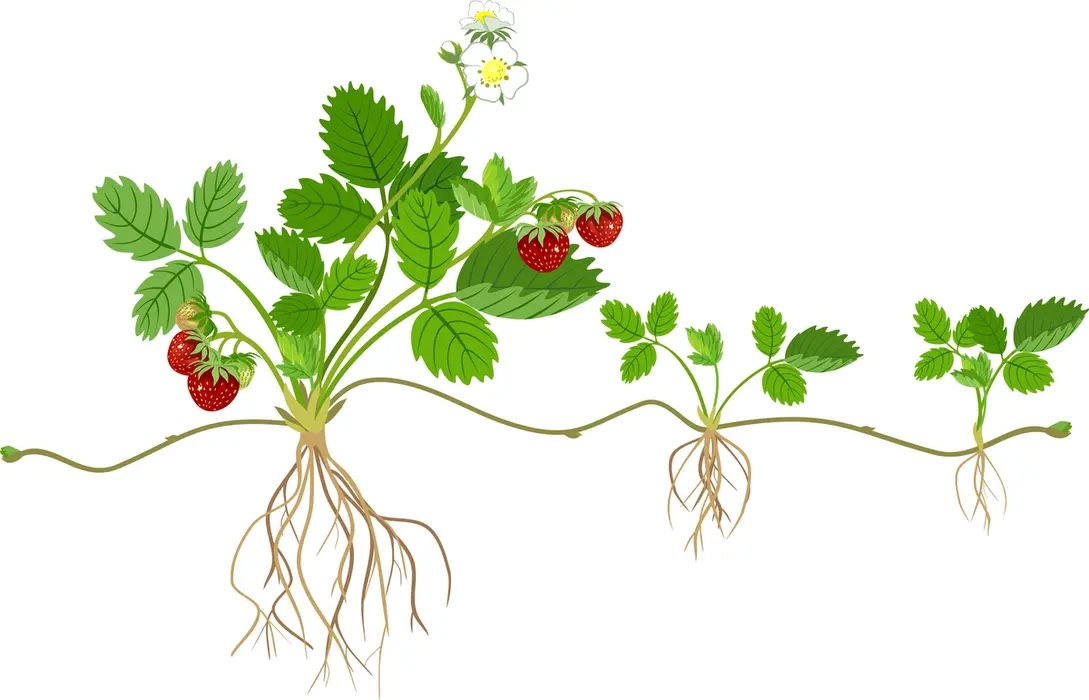
  • Stolons: Stems that extend horizontally from the ground are called runners or stolons. New roots form at the nodes as they spread,thus eventually producing a new plant. Examples include strawberries, mint, etc.This image shows asexual repoduction through a stolon. 
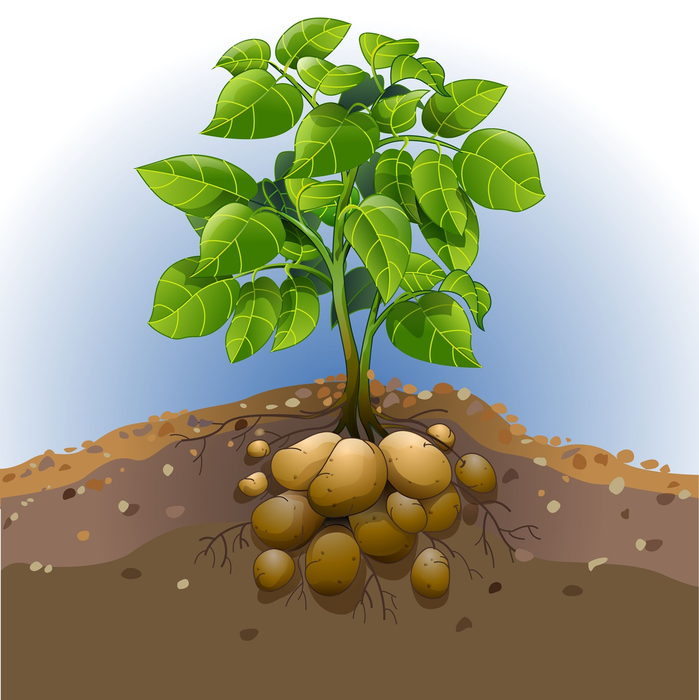
  • Tubers: Known as stem tubers and root tubers, respectively, these are swollen stems or roots. The buds that are present on the surfaces of these modified parts can store enough nutrients to sustain the formation of a new plant. Potato and sweet potato are two examples.
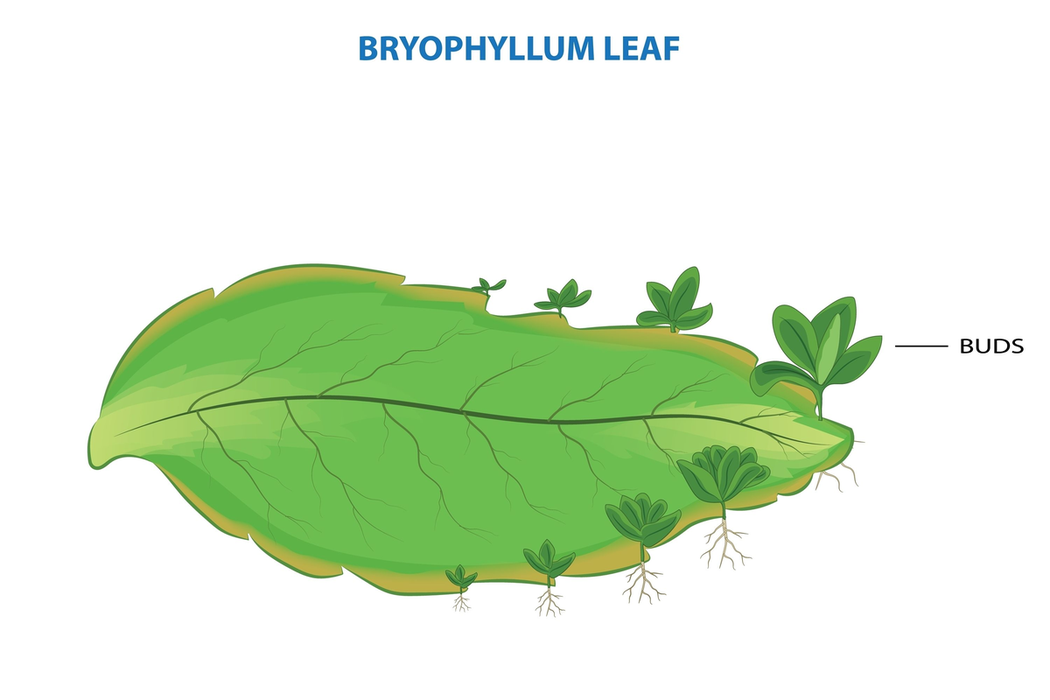
  • Leaves: Some plants, such as Kalanchoe and Begonia, have plantlets on the margins of their leaves. These plantlets eventually grow roots and branches to form new plant systems.This image shows leaves as a modified plant part which assists in asexual reproduction.
  • Apomixis:

Asexual reproduction of flowering plants using seeds is called apomixis, also referred to as agamospermy.  Following types of apomixis are:

  • Nonrecurrent apomixis: In this sort of apomixis, the gametophyte or another haploid egg cell (haploid parthenogenesis) is used to form the embryo
  • Recurrent apomixis: In this case, without fertilisation, the embryo sac develops from the diploid archesporium or a non-archesporial diploid cell of the gametophyte.
  • Nucellar embryony: The embryo develops from cells of the integuments or diploid nucellar tissue. The resulting embryo is therefore also diploid.

Artificial Asexual Reproduction

Artificial asexual reproduction occurs under human intervention. Techniques like cutting, grafting, layering and tissue culture are considered types of artificial asexual reproduction.

  • Cutting: In this method of propagation plant parts like the stem and leaves are cut and placed in the ground.These cut-off portions eventually develop into adventitious roots (from shoot cuttings) or adventitious shoots (from roots cuttings).When using leaf cuttings, adventitious roots and shoots can form. To promote the quick development of new roots in the cuttings, rooting hormones are frequently employed.
  • Grafting:Grafting is removing the stem or other aerial parts of a plant and attaching them to the shoot of an another plant. The plant into which it is attached is known as the stock, and the cut-off portion is known as the scion. The cambial tissues of the two plants will eventually combine and develop into a single unit. For dicot plants that are botanically related, this method shows to be particularly effective. Bud or shoot grafting are two types of grafting.
  • Layering: Layering is the act of bending a branch or stem and putting int into th soil, while it is still connected to its parent plant.The newly planted branch quickly forms adventitious roots and becomes a new plant.

Advantages of Asexual Reproduction

  • The faster rate of offspring development is one of the most obvious benefits of asexual reproduction.
  • Without being restricted to circumstances like gamete creation, gamete fusion, or seed generation, asexual reproduction techniques—whether natural or artificial—produce great outcomes, giving rise to a healthy plant under favourable conditions.
  • Asexual reproduction permits limitless generation of genetically identical offspring. As a result, it is possible to grow a lot of young plants from a parent plant that possesses desired traits.
  • Employing such plants that can develop by asexual ways of reproduction proves to be inexpensive, especially when cultivating plants on a commercial scale.
  • The advantages provided by asexual propagation in the commercial production of plants include shorter times, no need for seeds, a favourable environment for pollination, seed dispersals, etc.

Disadvantages of Asexual Reproduction:

  • Lack of genetic variety in the progeny and parent plants is one of the most important drawbacks of asexual reproduction.
  • Due to this the spread of hereditary illnesses and undesirable traits will also increase.
  • Furthermore, not all individuals are capable of carrying out artificial asexual reproduction procedures.

Summary

  • Plants can reproduce asexually without the development of gametes or gamete fusion.
  • Plants can reproduce asexually spontaneously or through human intervention.
  • Various components, including tubers, bulbs, rhizomes, stolons, and plantlets, are used in natural asexual reproduction.
  • Another form of asexual reproduction that utilises seeds is apomixis. Recurrent apomixis, non-recurrent apomixis, and nucellar embryony are different types of apomixis.
  • Techniques like cutting, grafting, layering, and tissue culture are included under artificial asexual repoduction.
  • Plants can reproduce asexually, which has benefits such not requiring seed formation and costing less time and money.
  • The lack of genetic variation in the plants is the biggest drawback of asexual propagation.

    You can also read our blog about asexual reproduction for more details.

Frequently Asked Questions

1.What is Plant Tissue Culturing?
Ans: This method entails the in vitro propagation of a chosen genotype by cultivating plant cells, tissues, or organs like roots, shoot tips, and leaves, in a synthetic nutritional medium, under precise chemical and physical conditions.Examples of plant tissue culture include callus, cell, protoplast, meristem, embryo and organ cultures. The plants obtained from this technique are called microplants.

2.What are bulbs and how they help in asexual reproduction?
Ans: Blubs are modified stems with concentrically organized fleshy leaves. These bulbs include a new shoot system that develops into an entire new plant. This new shoot system reveives its nutrietion from the surrounding by fleshy, scaly leaves. Onions, garlic, and shallots are a few of the well-known examples of plants that reproduce by developing new bulbs.

3.Enlist 3 hormones used in artificial propagation of plants.
Ans: The hormones used in artificial propagation of plants are-

  • Auxin- Helps in root formation.
  • Gibberllin- Increases height of plant.
  • Cytokinins- Helps in shoot formation.

Difference Between DNA And RNA

Introduction

Different metabolic processes are carried out by organisms in order to ensure their existence and to produce progeny. Naturally occurring macromolecules i.e. nucleic acids hold genetic information.RNA and DNA are both types of nucleic acids. These are nucleotide-based macromolecules. DNA is the genetic substance that contains the genetic instructions for unique traits that are expressed as various characters by organisms.

Some viruses have RNA as their genetic material. Almost all cells contain RNA, which plays a specific role in protein synthesis.

DNA

  • Deoxyribonucleic acid, usually referred to as DNA, is the genetic substance found in many organisms.
  • It is a simple, tightly wound circle in the cytoplasm of prokaryotes.
  • In the cell nucleus of eukaryotes DNA is tightly wound into chromosomes.
  • Despite being long polymers, nucleic acids are tightly wrapped to fit inside the small cell.
  • Even in massive multicellular animals, every cell in the body contains the same copy of DNA.
  • During replication, the tightly wound structures are unwrapped to create copies.
  • Eukaryotes also have mitochondrial DNA, which codes for proteins exclusive to mitochondria, in addition to the nucleus.

 Composition

  • The nucleic acids are long polymeric chains of individual nucleotides.
  • The phosphate group, pentose sugar moiety, and a nitrogenous base are all components of nucleotides.
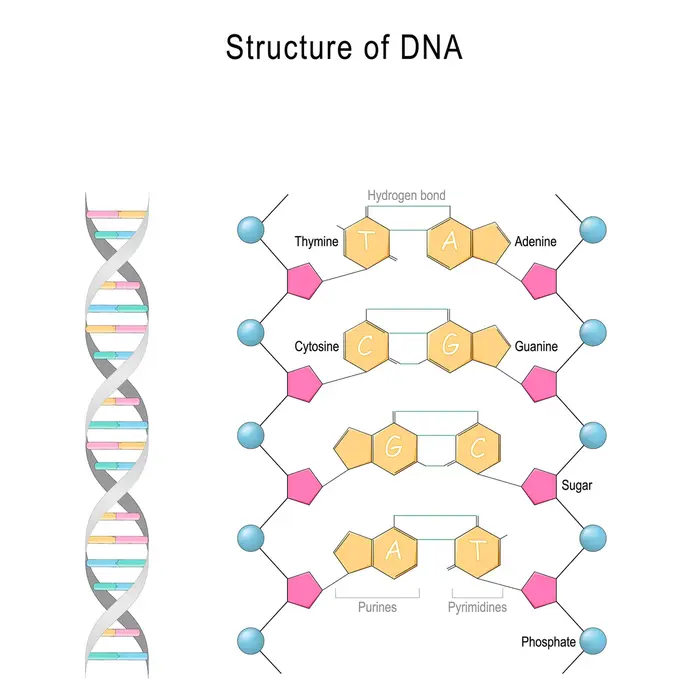
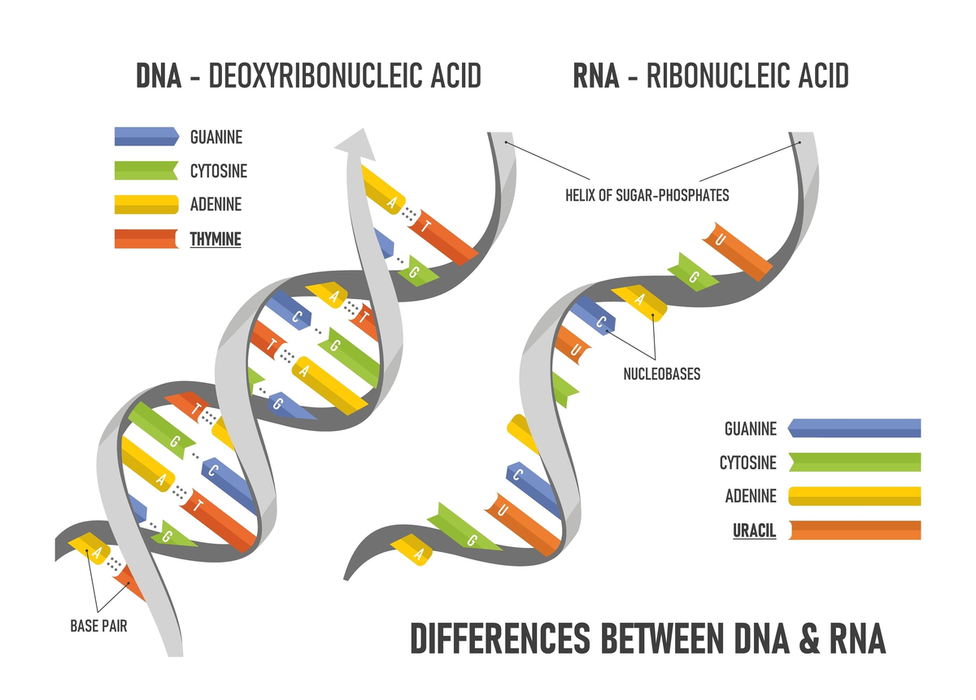
  • There are 4 types of nitrogenous bases found in DNA; adenine and guanine are purines while thymine and cytosine are pyrimidines.
  • Deoxyribonucleic acid, or DNA, is made up of long chains of individual deoxyribonucleotides connected by phosphodiester linkages.
  • The arrangement of nitrogenous bases corresponds to the arrangement of long chains of nucleotides in a  DNA, this sequence encodes the information on DNA and is original to an organism.

Structure

  • DNA forms a right-handed double helix with an antiparallel orientation of the two polynucleotide strands. DNA structure resembles a twisted ladder shape.
  • The sugar and phosphate groups make the vertical stands of the twisted ladder shape and nitrogenous base pairs resemble the rungs of a ladder. 
  • The 3′ carbon of one sugar and the phosphate group linked to the 5′ carbon of the subsequent sugar moiety form a phosphodiester linkage.
  • Because of this, the connection is sometimes known as a 3′–5′ phosphodiester linkage.
  • A glycosidic bond attaches nitrogenous bases to the first carbon of the sugar.
  • Through hydrogen bonding, the nitrogenous bases of opposing strands bind with each other.
  • Three hydrogen bonds link cytosine and guanine, while two hydrogen bonds pair adenine and thymine. This is known as complementary base paring.
  • The double-helical DNA is twisted with 10 base pairs per turn.
  • The deep major grooves and shallow minor grooves are created by these helical turns.
This image shows the structure of DNA with various nuclotides, sugar and phosphate moieties.

Types of DNA 

 There are two types of DNA depending on where they are located in the cell. The two types of DNA are-Nuclear DNA and Mitochondrial DNA 

  • Nuclear DNA- Exists as chromosomes in the nucleus. It is huge and is in response of nearly all the characteristics of an organism.
  • Mitochondrial DNA- DNA found in mitochondria is known as mitochondrial DNA. This DNA  primarily codes for proteins needed for the mitochondrial activity. It originates from the female parent and manifests in the mitochondrial matrix as small circular shapes.

RNA

  • RNA is also known as Ribonucleic acid.
  • Phosphate group, pentose sugar moiety (ribose), and nitrogenous base are all components of ribonucleotides.
  • The ribonucleotides include adenine, guanine, cytosine or uracil.
  • RNA can be found as single or double-stranded.
  • Nearly every cell has RNA, which serves an important role in protein synthesis.
  • RNA serves as the genetic material in several viruses.

Types of RNA 

There are three types of RNA found. They are

mRNA or messenger RNA

  • mRNA is formed from DNA through transcription. The base pairs of m-RNA are complimentary to base sequences on DNA.
  • The nucleotide sequences of mRNA are organized into triplets called codons.
  • While several codons can code a single amino acid, each amino acid has a unique codon.
  • 64 codons encode twenty amino acids.
  • Pre mRNA, a direct byproduct of transcription, undergoes post-transcriptional modifications to become mRNA.
  • A guanine group and poly-A tail are added to the pre-mRNA during post-transcriptional modifications to make it more stable.
  • The mRNA is the main precursor of protein synthesis.
  • It delivers the genetic information from the DNA for protein synthesis. 

rRNA or ribosomal RNA

  • They are found in ribosomal subunits along with proteins and enzymes.
  • The primary component of ribosomes is ribosomal RNA (rRNA).
  • It enables the formation of peptide bonds between two amino acids during protein synthesis. 
  • It also ensures that the mRNA and ribosomes are properly aligned during protein synthesis.

tRNA or transfer RNA

  • tRNA is important for protein synthesis.
  • During translation, amino acids are transferred by the tRNA.
  • Each amino acid has a unique tRNA that transports it to the translation site (ribosome).
  • It is the smallest of all RNA.
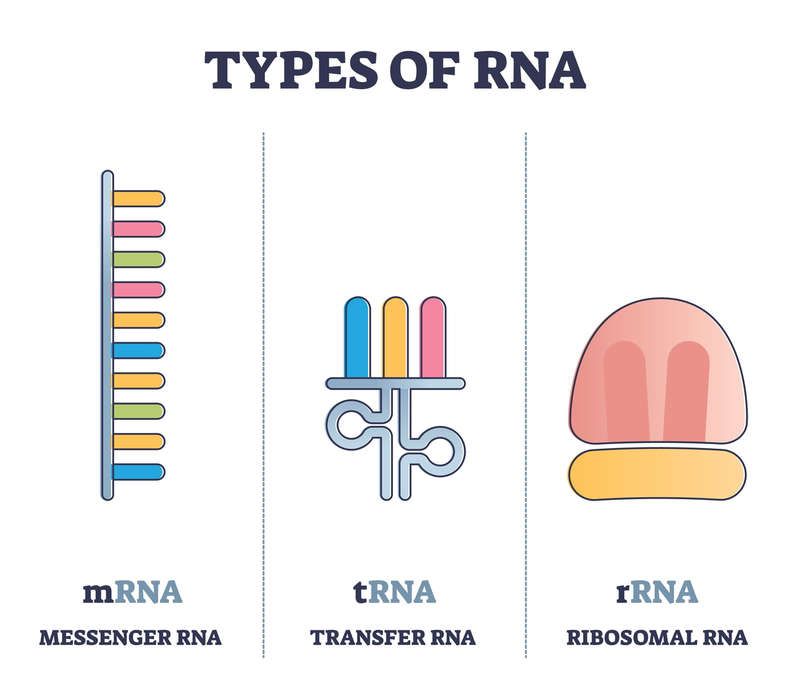
  • tRNA has a structure resembling a clover leaf.This image shows various types of RNA such as rRNA,mRNA and tRNA.

Role in protein synthesis  

  • Translation is also known as protein synthesis and it  occurs in the ribosomes.
  • Proteins are long polypeptide chains that are formed when individual amino acids bind to one another through peptide bonds.
  • Each of the three RNA types plays a distinct role in translation-
  • Single-stranded mRNA contains the instructions needed to make proteins.
  • tRNA interprets the genetic code on the mRNA and the specific amino acids are transported from the amino acid pool to the translation site.
  • The ribosomal RNA (rRNA) carries out translation by creating peptide bonds between different amino acids.

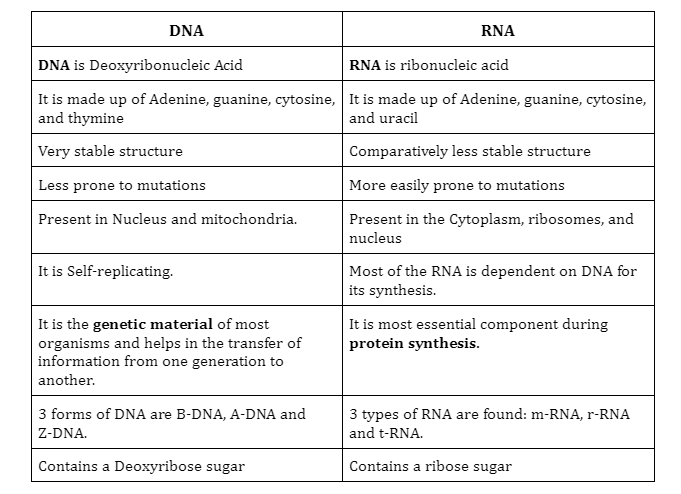
Difference between DNA and RNA

DNA

RNA

DNA is Deoxyribonucleic Acid

RNA is ribonucleic acid

It is made up of Adenine, guanine, cytosine, and thymine

It is made up of Adenine, guanine, cytosine, and uracil

Very stable structure 

Comparatively less stable structure

Less prone to mutations

More easily prone to mutations

Present in Nucleus and mitochondria.

Present in the Cytoplasm, ribosomes, and nucleus

It is Self-replicating. 

Most of the RNA is dependent on DNA for its synthesis.

It is the genetic material of most organisms and helps in the transfer of information from one generation to another.

It is most essential component during protein synthesis.

3 forms of DNA are B-DNA, A-DNA and Z-DNA.

3 types of RNA are found: m-RNA, r-RNA and t-RNA. 

Contains a Deoxyribose sugar

Contains a ribose sugar

Summary

The nucleic acids in living things are DNA and RNA. They are organic polymers that are found in nature.  Long chains are created by linking the individual nucleotides together with phosphodiester linkages. In the majority of species, DNA, which is found in the nucleus of the eukaryotes, is the genetic information carrier. In order for the long polymeric chains to fit into the smallest microscopic cells, they must be folded numerous times. RNA primarily functions in protein synthesis. The existence of nucleic acids results in the continuation of life and the performance of particular tasks.

Frequently Asked Questions

1. Difference between 3 forms of DNA.
Ans:

B-DNAA-DNAZ-DNA
92% relative humidity 75% relative humidityHigh and low salt concentrations
10bp11bp12bp
Right-handedRight-handedLeft-handed
Widest of all Width 2nmNarrowest 
Most common and stable formMetastable form Unstable and has Zig-zag pattern of phosphodiester backbone.

2. What is central dogma?
Ans: The central dogma is a theory of molecular biology that states that genetic information can only move in a single direction i.e  from DNA to RNA to protein. This protein synthesis takes place via three process-

  • Replication- This multiplies the DNA stands.
  • Transcription–This makes mRNA which encodes information of the DNA.
  • Translation- This makes the final proteins that perform various functions in the body.

3.What is a chromosomes?
Ans: The DNA molecule is packed into chromosomes, which are thread-like structures found in the nucleus of every cell. Each chromosome is constructed from DNA that has been tightly wound around proteins called histones which assists in supporting entire chromosome structure.

Asexual Reproduction Animals

Introduction

Through the process of reproduction, an organism gives rise to offspring that are biologically related to the organism.

Reproduction enables and ensures species continuity generation after generation.

There are essentially two types of reproduction:

  • Sexual reproduction
  • Asexual reproduction

Asexual reproduction

The simplest type of reproduction is asexual reproduction, which doesn’t involve gamete creation, meiosis, or fertilization. These types of reproduction only need one parent, and the resulting individuals, or clones, are genetically identical. Asexual reproduction is also referred to as clonal propagation. Animals can reproduce asexually through a variety of mechanisms, including Binary Fusion, Fragmentation, Budding, Parthenogenesis, Gemmules, Regeneration, etc.

Features of asexual reproduction

  • A single parent is involved.
  • Neither fertilization nor gamete formation takes place.
  • This reproduction process happens in a relatively short amount of time.
  • The organisms multiply and grow swiftly.
  • The offsprings are similar genetically.

Types of asexual reproduction

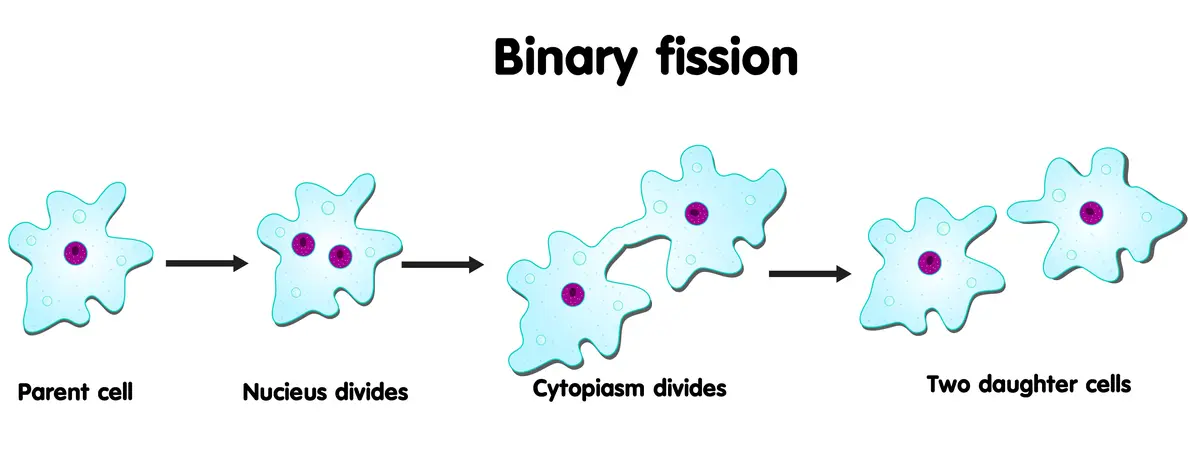
  • Binary Fission
    • Bacteria and amoebas are the two main species that utilize this method of reproduction.
    • This occurs when the DNA of the parent bacteria breaks into two fragments, each of which has its DNA.
    • As a result, the parent cell splits into two identical daughter cells.This image shows binary fission which is a type of asexual reproduction in animals.
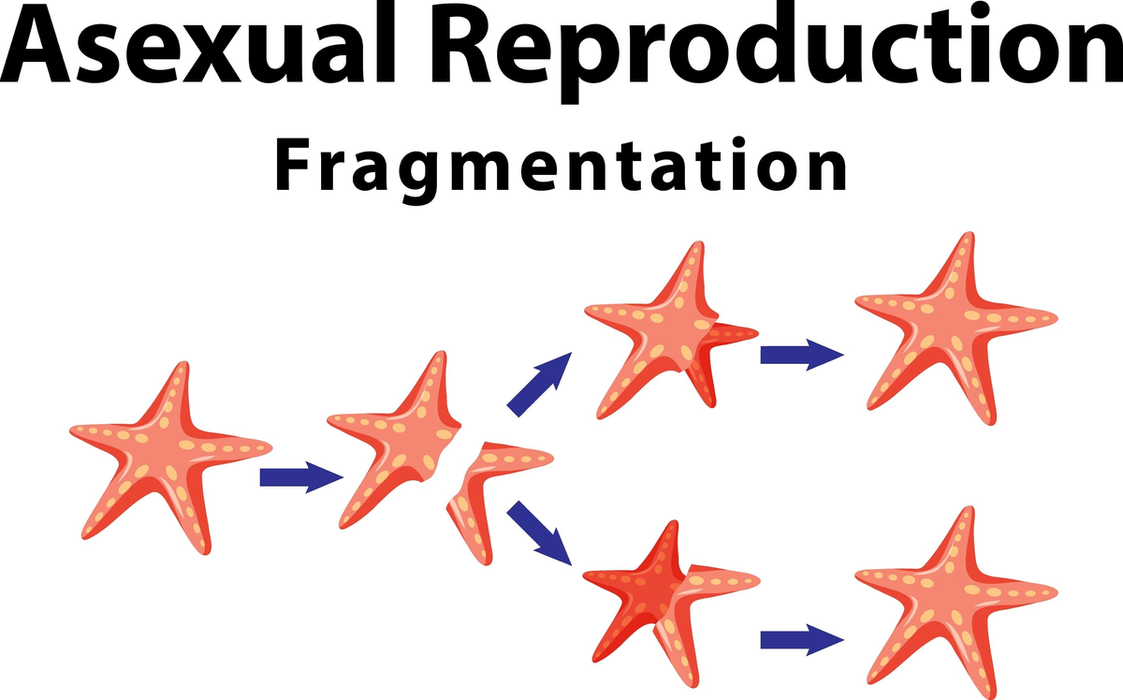
  • Fragmentation:
    • In this method of asexual reproduction, the parent organism is divided into multiple fragments, each of which develops into a new organism.
    • This method of reproduction is mostly seen in starfish. For instance, the arm can give birth to an entirely new organism.This image shows asexual reproduction in animals through fragmentation.
  • Gemmules:
      • In this kind, the parents release a highly developed mass of cells, which eventually give rise to offspring.
      • The development of these gemmules occurs when parents face unfavorable environmental conditions.
  • Parthenogenesis: 
    • In this type of asexual reproduction, the female organism produces eggs without fertilization, These eggs give birth to offspring.
    • Examples are lizards, certain fish, and insects.
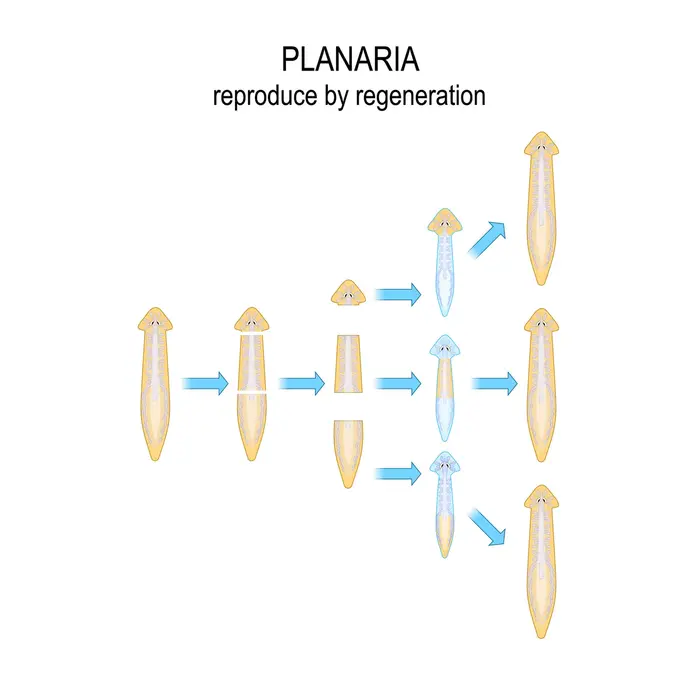
  • Regeneration:
    • Regeneration is the replacement of a missing part or the growth of an organism’s entire body from a small portion (morphallaxis) (epimorphosis).
    • It is primarily found in planaria, sponges, amoebas, and many other organisms.
    • There are 2 types of regeneration-
    • Reparative regeneration: Only some kinds of damaged tissues are capable of regeneration.
    • Restorative regeneration: In this, severed body parts can be restored or grown into a complete body.This image shows asexual reproduction in animals through Regeneration.
  • Budding:
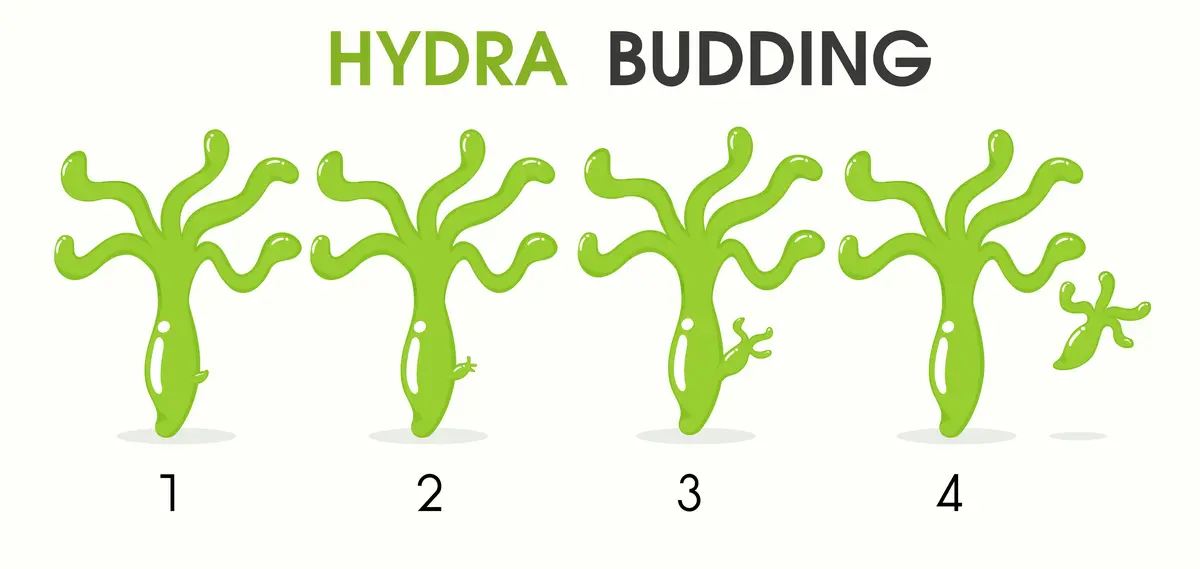
    • In this type of reproduction, the child grows on the parent’s body much like a bud. Echinodermata and Hydra are two well-known examples of this type of asexual reproduction.
    • Here, the bud begins to live independently after separating from the parent plant.
    • There are two types of bidding-
    • Exogenous or External budding: A bud forms on the exterior of the body in this sort of budding. This growing bud learns to live alone after becoming separated from its parent. Newly formed buds have two choices: they can remain attached to their parents or they can detach and create their offspring.
    • Endogenous or internal budding: In a few marine sponges, buds form inside the bodies of the sponge parents (e.g. Spongilla).This image shows asexual reproduction in animals through Budding.

Advantages of asexual reproduction

  • An organism can give birth to a large number of offspring, swiftly increasing that species’ population.
  • There is no need for another parent organism since asexual reproduction involves only one parent.
  • Animals can reproduce asexually without their gametes fusing, thus gamete formation is not required.
  • Because mating is not required, less energy is used.
  • Sexual reproduction is outpaced by the offspring’s rate of asexual reproduction.

Disadvantages of asexual reproduction

  • Population growth is accelerating due to asexual reproduction, therefore difficult to control the population of only one species.
  • They compete with one another since both species rely on the same habitat for survival.
  • The atmosphere must be conducive for both the parent and the offspring.
  • Children are biologically identical to the single-parent organism.
  • Genetic variety does not exist in this type of reproduction.

Summary

In conclusion, asexual reproduction is a sort of reproduction in which an offspring is born from a single parent. Since the newly reproduced organisms are physically and genetically similar, they are genetic clones of their parents. Asexual reproduction is present in multicellular and unicellular animals. During this reproduction,  gamete fusion does not take place. There are various types of asexual reproduction- such as fragmentation, binary fission, regeneration, etc.

Frequently Asked Questions

1. Different types of binary fission.
Ans: There are 4 types of binary fission-

  • Simple binary fission: This fission can occur through any organism’s plane. Eg- Amoeba.
  • Longitude binary fission: It is also referred to as longitudinal binary fission since it takes place along the longitudinal plane. Longitude binary fission is a process that occurs in flagellates like Euglena.
  • Transverse binary fission: The cell division takes through the transverse plane. Prominent examples of this binary fission include Paramecium, Planaria, Diatoms, and bacteria.
  • Oblique binary fission: In this process, the cytoplasm divides obliquely. Oblique binary fission takes place with cerium.

2. What does Hermaphrodite mean?
Ans: Hermaphrodite or bisexual animals are those that have both male and female reproductive systems. Earthworms and snails are a couple of examples.

3. What is strobilation?
Ans: Strobilation is the practice of repeatedly forming similar segments through the budding process. A strobila (also known as a scyphistoma) larva is a segmented portion of the body, while an ephyra larva is a segmented larva (a coelenterate).

Aquatic Ecosystem

Introduction

More than 70% of the surface of the world is made up of water bodies. These water bodies are known to harbor a complex ecosystem of different creatures that interact with one another and the surrounding water body. An ecosystem that is contained within water is known as an aquatic ecosystem. Both biotic and abiotic components make up these ecosystems. Numerous different types of species, including microbes, plants, invertebrates, fish, etc., are supported by these ecosystems.

Types of Aquatic Ecosystems

Aquatic ecosystems are of two types depending on the salinity of the water.  Two types of Aquatic ecosystems are-

  • Freshwater ecosystems: 
    • These ecosystems, which make up only roughly 2% of the earth’s surface. They have a salt concentration of less than 0.1%. Rivers, streams, lakes, etc. are included in this type of ecosystem.
  • Marine ecosystems: Marine waterbodies occupy up to 75% of the earth’s surface. These habitats have a salt concentration of 3% and are the most common type of aquatic ecosystem found throughout the globe. The marine ecosystems consist of oceans, seas, and estuaries.

Features of Aquatic Ecosystem

  • Zonation in aquatic biomes
    • Aquatic systems frequently exhibit both vertical and horizontal stratifications of both physical and chemical components.
    • The types of biodiversity and dominance of organisms in an ecosystem are determined by these zones.
  • Lakes and oceans can be classified into photic and non-photic zones based on the penetration of light:
    • Photic zones are those parts of the surface and subsurface where light- penetration is high. These regions are well-lit and show great biodiversity. The epipelagic zone comes under this category.
    • Aphotic zones are darker regions. Due to higher depth and decreased sunshine penetration, the aphotic zones are dark areas and they include bathypelagic and abyssopelagic zones.
  • The lakes are classified into the littoral zone and the limnetic zone based on their distance from the beaches.
    • Since it is closest to the shore, the littoral zone has strong sunlight penetration.Due to this rooted aquatic plant growth is seen and it  also supports a large number of species.
    • The off-shore, open water area of an aquatic body is known as the limnetic zone. In contrast to the littoral zone, light only reaches the surface and subsurface regions.
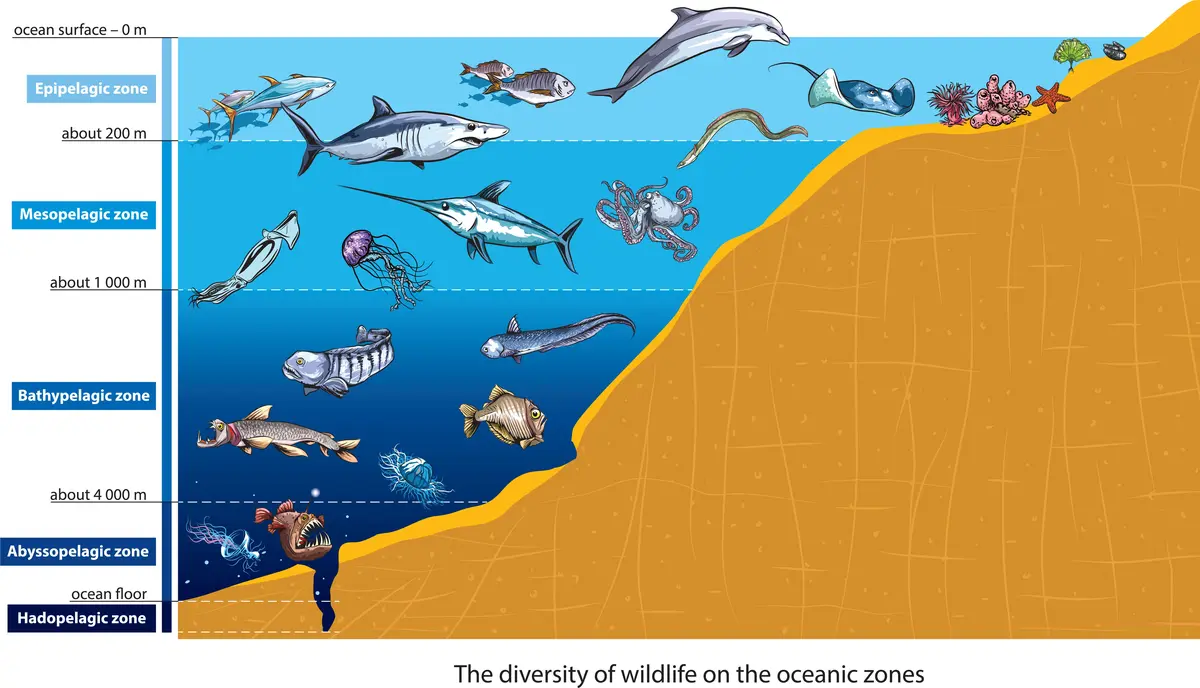
  • The ocean is further classified into three zones: the oceanic zone, the neritic zone, and the intertidal zone depending on the distance from the shore.This image shows various zones in an ocean and the biodiversity found there.


  • Lifeforms
  • Based on their position in the food chain, the lifeforms in aquatic ecosystems can be classified as producers (phytoplankton and plants), consumers (zooplankton, invertebrates, and fish), and decomposers (microorganisms).
  • Based on their habitat within the environment, they can also be classified as periphyton, plankton, neuston, nekton, and benthic.
  • The littoral zone is where rooted and floating plants can be found in freshwater habitats.
  • Planktons, bacteria, fish, and other aquatic lifeforms predominate in the limnetic zone whereas invertebrates live in the benthic zone.
  • Worms, clams, crabs, echinoderms, and other organisms can be found in the ocean’s intertidal zones, whereas phytoplankton and zooplanktons, as well as krill, jellyfish, fish, squids, turtles, and mammals, can be found in the ocean’s pelagic zones. Various plants, giants fishes, microbes, and mammals are found inthe aquatic ecosystem.


  • Thermal stratification 

According to changes in temperature, aquatic habitats frequently have layers. Thermal stratification refers to this change in temperature with depth in an aquatic body.  During summer, the upper layer of water becomes significantly warm and less dense, while the lower layers remain cooler, leading to stratification.Epilimnion, Metalimnion,  and Hypolimnion are the names of the several strata.

  • Seasonal changes in water temperature (Lake turnover)

As a result of shifting temperature profiles, many lakes experience seasonal mixing of their water, which results in a cyclical pattern.

During the spring and fall, this turnover allows oxygen-rich water to reach the lake’s bottom areas while also bringing nutrient-rich water to the surface.

  • Available nutrients

Freshwater habitats can be classified as oligotrophic, mesotrophic, or eutrophic lakes depending on the amount of nutrients that are available to them. Oligotrophic lakes have more nutrients,  mesotrophic lakes have comparatively fewer nutrients and eutrophic lakes hthe ave least nutrients.

  • Dissolved Oxygen(DO)

The water’s temperature affects the oxygen saturation levels. The higher the oxygen levels, the lower the temperature. Fish and other aquatic life are threatened by low amounts of dissolved oxygen. DO determines the richness of aquatic habitat.

Functions of Aquatic Ecosystem

  • The aquatic ecosystem is a vital resource that sustains a wide range of creatures, including mammals, invertebrates, and microbes like bacteria and algae.
  • An essential connection between the hydrosphere, lithosphere, and atmosphere is provided by the water bodies.
  • A significant amount of the planet’s rainfall is caused by water evaporating from the oceans.
  • Photosynthesis is carried out by marine photosynthetic bacteria and algae.
  • 50 percent of the annual photosynthesis is produced by the ocean.
  • Climate change and regional and planetary wind patterns are known to be influenced by oceans and their winds.
  • The microbial decomposers that break down organic materials include bacteria and some types of fungi.
  • The microorganisms that live in aquatic ecosystems ensure that nutrients are continuously cycled.
  • The aquatic systems’ inhabitants, such as fish and other invertebrates, provide food and boost the economy.
  • These aquatic ecosystems serve as water purification systems naturally.
  • They aid in controlling floods and pollution
  • Aquatic environments are used for recreation and transportation.

Summary 

  • An aquatic ecosystem comprises any ecosystem supported by a water body.
  • Aquatic environments can be either freshwater or marine, depending on salinity.
  • Depending on criteria like sunlight penetration, distance from the shore, depth, etc., aquatic habitats are classified into several zones.
  • Additionally, each layer’s biodiversity is determined by zonation.
  • There is thermal stratification in aquatic habitats.
  • Benthic, neuston, nekton, and planktonic creatures are all supported by aquatic ecosystems.
  • Aquatic ecosystems perform a wide range of tasks, such as promoting biodiversity, nutrient cycling, flood attenuation, influencing global climate change, etc.

Frequently Asked Questions

  1. What are the types of freshwater ecosystems?
    Ans: There are two types of freshwater ecosystems, they are-
  • The lotic ecosystem: Moving waterbodies, such as springs, rivers, and canals, are included in this type of freshwater ecosystem.
  • The lentic system: This type of freshwater ecosystem includes stagnant water bodies such as ponds and lakes. These water bodies are home to a variety of organisms.
  1. Describe the Pelagic zone and Benthic zones
    Ans: Pelagic zone- The pelagic zone is the off-shore, open-water region of an aquatic ecosystem. Phytoplankton, zooplankton, and nekton live there. Zooplankton is the main consumers of the oceans and lakes, while phytoplankton makes up the photosynthetic producers. The most common producers here are algae.
    Benthic zone-The lowest biological zone is the benthic zone. The organisms that reside on the bottom of lakes or oceans are called Benthos. These benthic animals and microbes gather food that sediments down from the photic layers, ie., they are filter feeders.
  1. What is a neritic zone?
    Ans: The area of the ocean that is relatively shallow, measuring around 200 metres (660 feet) deep, is known as the neritic zone (or sublittoral zone). Physical oceanography sees it as the location where the oceanic system interacts with the coast, whereas according to marine biology it is a part of the ocean, which forms a stable and illuminated environment for marine life, from plankton up to giant fish and corals to grow and survive.

Aberration Of Lens

Introduction

Various optical systems, including lenses, mirrors, and spherical mirrors, reflect or diverge light to create various kinds of images. Rules of reflection and laws of refraction are the two fundamental laws that govern picture generation. In the creation of images, these laws are crucial. Different-sized pictures are created at various positions when light is reflected by lenses or mirrors. It can vary in size from very little to extremely large to the same size as the thing, and it can also become blurry at times. Consequently, the creation of the hazy image is referred to as an abbreviation. A hazy image is created when light rays diverge after passing through a lens in a particular spot. This is known as an aberration of the lens. 

Lenses and curved mirrors are two objects that can induce optical aberration. This phenomenon causes a deviation in the light rays. Not all of the light’s beams concentrate on the focal point. By virtue of optical aberration, images are essentially blurry.

88guru book a Free demo class small imagelead magnet

Types of Aberration

For a single wavelength light, there are five types of aberration.

  1. Spherical aberration
  2. Coma
  3. Astigmatism
  4. Curvature of field
  5. Distortion

Let our expert guru Mr. Mayur be your guide toward improving your understanding of this chapter better. Watch the related video of this chapter in Class 7th Science lesson no-15

1. Spherical aberration

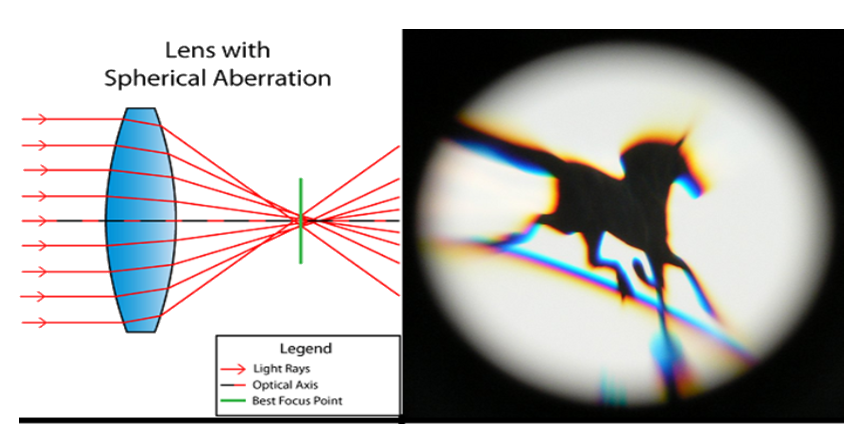
It is a defect of the lens due to which the light beam does not concentrate at a single point, as a result, the exterior part of the image gets blurred. This aberration is caused in lenses or mirrors when light beams fall on the exterior part and concentrate at different points.

A lens showing the Spherical Aberration.
A lens showing the Spherical Aberration and its example in the image of a horse.

Correction of the spherical aberration

  • Spherical aberration can be corrected by using a mirror of different non-spherical shapes. A parabolic mirror or an ellipsoidal mirror can replace a spherical mirror.
  • Spherical aberration can be removed by blocking the marginal rays. A circular annular mask on a lens can remove the marginal rays.
  • By using suitable radii of curvature of the two surfaces of a lens the spherical aberration can be minimised.
  • A combination of concave and convex lenses can also reduce the spherical aberration.

2. Coma

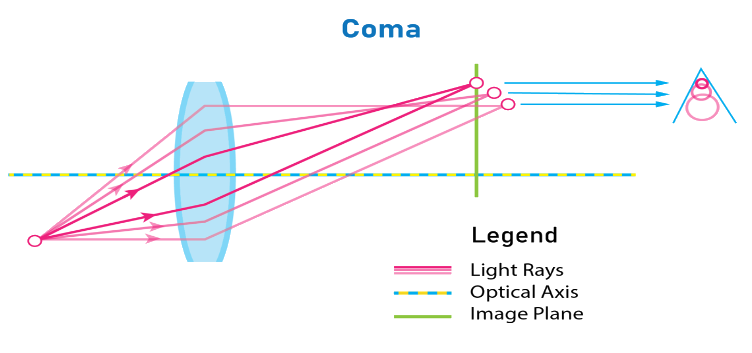
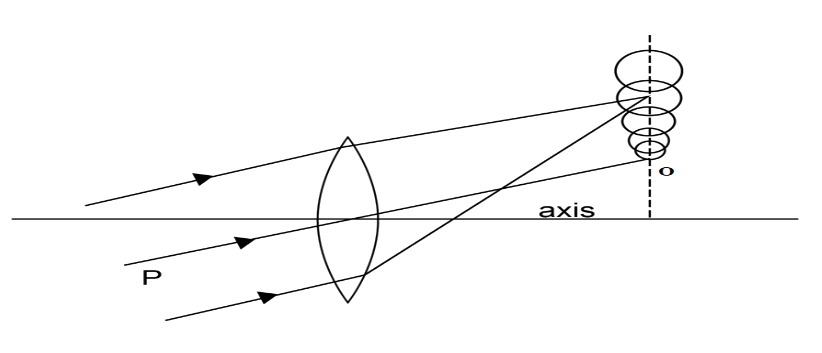
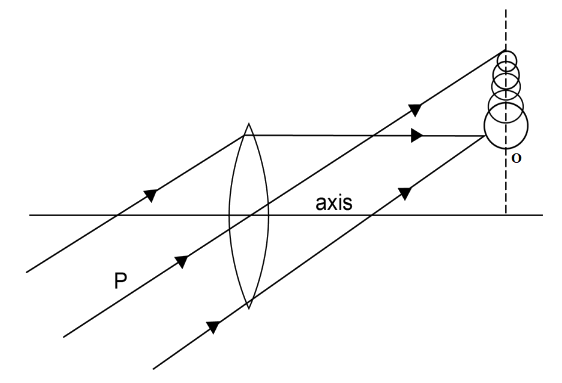
The coma is a type of spherical aberration. It occurs due to the variation in the magnification of the image. The rays that are coming from an off-axial object and the rays pass through different circular zones of the lens. Due to this the image will appear in a comet-like shape. So, this aberration of the lens is known as a coma.

Description of Coma because of Aberration.

Types of coma

The coma varies due to the magnification of different zones of the lens. There are two types of coma

1. Positive coma

When the lateral magnification of the outer zone is greater than the central zone, then the coma is said to be a positive coma.

Description of positive coma.

2. Negative coma

When the lateral magnification of the outer zone is smaller than the central zone, then the coma is said to be a positive coma.

Description of negative coma.

Correction of coma aberration:

  • By bending the lens the coma can be corrected but not completely processed will only work in the case of a single lens.
  • The coma can be corrected by the combination of lenses that are symmetrical and in the application of curvature type of lenses surface
88guru book a Free demo class small imagelead magnet

3. Astigmatism

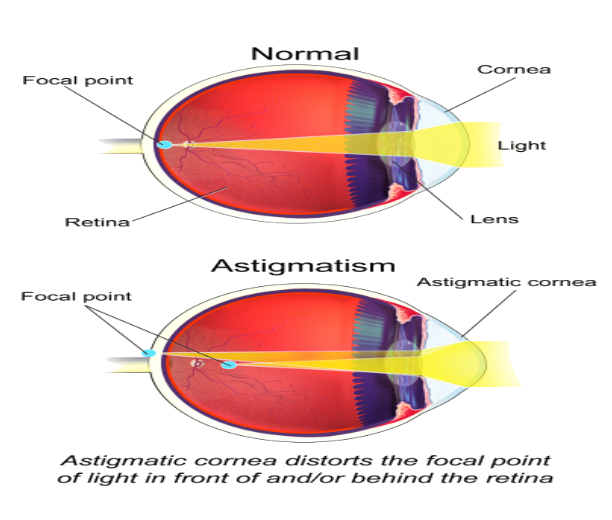
It is the most common defect that occurs in the eyes. In this defect, the front part of the lens or cornea has an irregular curve. So, when the light refracts by the retina it forms a blurry image. Astigmatism is caused when eyelids put pressure on the cornea. mostly these defects passed over generations from their parents.

Astigmatic cornea distorts the focal point of the light in front or behind the Retina

Types of Astigmatism

There are two types of astigmatism. 

1. Positive astigmatism: This is an abbreviation for which a person suffered from a farsightedness defect of the eye. For convergent lenses, the transverse focal is greater than the meridional focal length. This type of astigmatism is known as positive astigmatism.

2. Negative astigmatism: This is an abbreviation for which a person suffered from a near sightedness defect of the eye. For divergent lenses, the sagittal focal is smaller than the meridional focal length. This type of astigmatism is known as negative astigmatism.

Correction for astigmatism aberration:

  • The combination of concave and convex lenses can also reduce astigmatism.
  • Using lenses with different radii of curvature helps to reduce astigmatism.

4. Curvature of Field

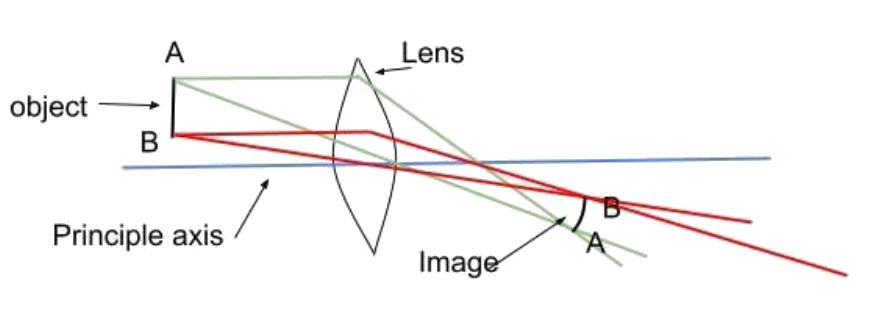
When the central part of the image is flat but the exterior part of the image is curved concerning the object then this type of aberration in the image is called curvature of field. The curvature of the field arises when the paraxial focal length is greater than the marginal focal length.

Description of the curvature of Field
Description of the curvature of Field.

Correction for the curvature of field:

  • The condition for no curvature is known as the Petal condition. When the image of the plane object projects on the Petal surface the aberration gets reduced.

5. Distortion

The type of aberration in which the shape of the image gets distorted in the transverse plane as a whole is known as distortion. It arises due to the variation in the lateral magnification with the lateral distance of an object from the lens distance. 

Types of distortion:

There are two types of distortion

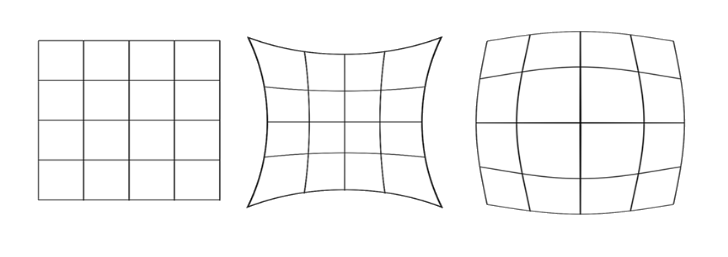
1. Barrel distortion: If magnification decreases with axial distance then the image of a square takes the form resembling a barrel. This type of distortion is known as barrel distortion.

2. Pincushion distortion: If the magnification increases with lateral distance, then a square’s image takes a shape like a pin-cushion. This type of distortion is known as pin-cushion distortion.

Description of the Pincushion Distortion.

Correction of the distortion:

  • A combination of two lenses can help us to avoid distortion.
  • Using both barrel distortion and pincushion distortion combination to cancel out each other’s effect.

6. Chromatic aberration

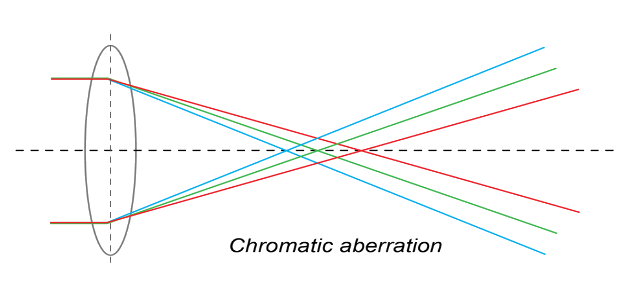
When the images are formed by the refraction of white light, As a result, the image becomes colored. This type of defect in the image is known as chromatic aberration. This phenomenon occurs due to the dispersion of the white light.

Description of the chromatic Aberration.

Types of chromatic aberration:

There are two types of chromatic aberration

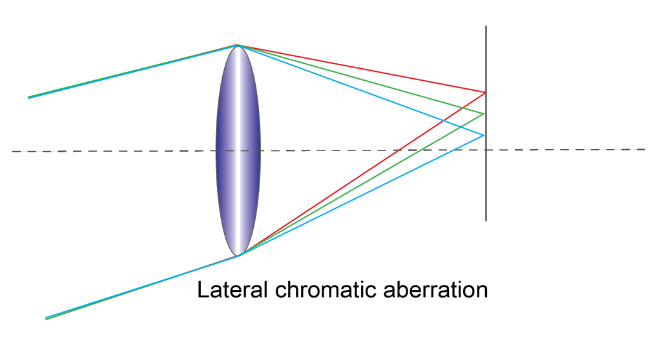
1. Lateral chromatic aberration: In this aberration, all the light rays concentrate at the same plane but different points.

Description of the Lateral chromatic Aberration.

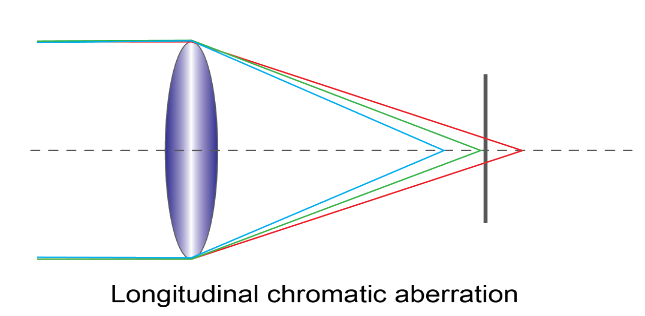
2. Longitudinal chromatic aberration: In this aberration, the light rays of different wavelengths concentrate at different points along the principal axis (horizontal line) of the lens. 

Description of the Longitudinal chromatic Aberration.

 Correction of the chromatic aberration:

  • Lateral chromatic aberration gets reduced when the object is placed at infinity.
  • The combination of two lenses also reduces chromatic aberration.
  • Achromatic lenses can be used to reduce chromatic aberration.

Axial color

Axial color is a phenomenon of aberration in which the position of the image shifts as the light wavelengths differ. Color fringing occurs due to color aberration. This aberration is caused by the light rays having different wavelengths to focus at various points.

Summary 

For non-paraxial rays, the actual image differs from the result of the paraxial approximation. This defect of the image is known as an aberration. For monochromatic light or single-wavelength light, there are five types of aberration. It is impossible to eliminate all kinds of aberrations by using a single lens. We can use different lens combinations to eliminate them.

88guru book a Free demo class small imagelead magnet

Frequently Asked Questions

Q1. What is a spherical aberration?

Ans: The spherical aberration is the defect of the image in which central and peripheral incident rays from images at different points on the axis, are known as spherical aberration.

Q2. How to correct the coma aberration?

Ans: Coma can be corrected by bending the lens. This process will only work in the case of a single lens.

Q3. What is the one difference between chromatic aberration and spherical aberration?

Ans: Chromatic aberration is shown by white-colored light but the spherical aberration is shown by monochromatic lights.

Q4. What is the principal axis?

Ans: The principal axis is the axis that passes through the focus and center of curvature of the lens.

Q5. What is a positive coma?

Ans: When the lateral magnification of the outer zone is greater than the central zone, then the coma is said to be a positive coma.

Q6: White light is the polychromatic source of light. Explain why?

Ans: white light is the polychromatic source of light because it constitutes seven colors and each of them has a different wavelength.