Difference Between Herbivores and Carnivores

Introduction

Herbivores and carnivores are two types of organisms that differ in their dietary habits and adaptations. Herbivores are animals that feed mainly on plants, such as leaves, stems, and roots. Carnivores, on the other hand, are animals that feed mainly on other animals. Together, herbivores and carnivores form a complex and interconnected web of life, with each playing an important role in the balance of ecosystems.

Herbivores 

Herbivores feed on plant-based diets and have adaptations in their digestive systems to process tough plant matter and extract nutrients. Some common examples of herbivores are rabbits, cows, horses, elephants, giraffes, deer, and gorillas.

Some common adaptations of Herbivores are:

  • Large digestive tract: Herbivores have a large and complex digestive tract that helps to break down tough plant fibers and extract nutrients.
  • Mouth structures: Some herbivores have specialized mouth structures, such as flat molars for grinding plant material, or sharp incisors for clipping leaves.
  • Fermentation: Many herbivores have a fermentation chamber in their digestive tract where microbes break down tough plant fibers and release nutrients.
  • Specialized enzymes: Herbivores produce enzymes, such as cellulase and pectinase, to break down plant cell walls and release the nutrients inside.
  • Food storage: Some herbivores have adaptations to store food, such as large cheek pouches, to allow them to gather and process large quantities of plant matter at once.

Types of Herbivores 

Herbivores can be classified based on the type of plants they consume and the adaptations they have developed to obtain nutrients from those plants. Some common classifications are:

  1. Grazers: Herbivores that feed mainly on grasses and other low-lying plants, such as cows, horses, and sheep.
  2. Browse Herbivores that feed on leaves, twigs, and branches of woody plants, such as deer and rabbits.
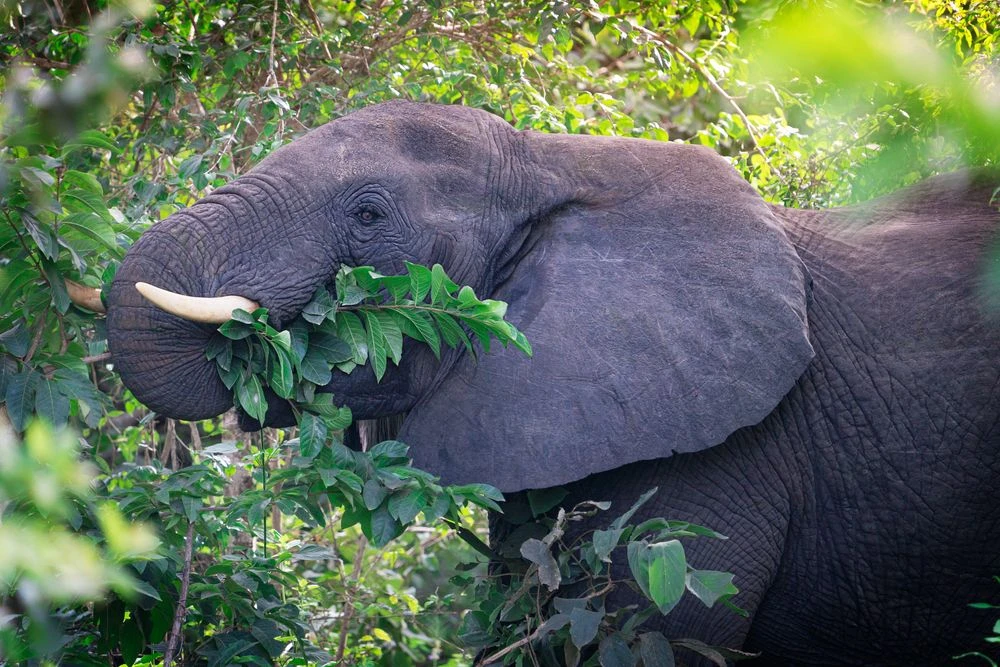
  3. Folivores: Herbivores that feed mainly on leaves, such as elephants and some species of monkeys.
  4. Frugivores: Herbivores that feed mainly on fruits, such as bears and some species of monkeys.
  5. Nectarivores: Herbivores feed mainly on nectar from flowers, such as hummingbirds and bats.
  6. Granivores: Herbivores that feed mainly on seeds, such as squirrels and some species of birds.
Carnivores 

Carnivores are animals that feed mainly on other animals, including both vertebrates and invertebrates. They are characterized by their sharp teeth and strong jaws, which are adaptations for hunting and killing prey. Some common examples of carnivores include lions, tigers, wolves, foxes, and hawks. Carnivores play an important role in maintaining the balance of ecosystems by controlling the populations of their prey species.

They have adaptations in their anatomy and behavior that allow them to hunt and feed on other animals effectively. 

Some common adaptations are:

  • Sharp teeth and strong jaws: Carnivores have sharp teeth and strong jaws that are adapted for cutting, tearing, and chewing meat.
  • Keen senses: Carnivores have highly developed senses, such as vision, hearing, and smell, which they use to locate and track prey.
  • Speed and agility: Many carnivores are fast runners or able to make sudden, powerful movements, which are adaptations for chasing and capturing prey.
  • Camouflage: Some carnivores have fur or feather patterns that help them blend into their surroundings and stalk prey unnoticed.
  • Hunting behavior: Carnivores have evolved behaviors, such as ambush hunting, cooperative hunting, and pack hunting, that allow them to capture prey efficiently.

Types of carnivores

Carnivores can be classified based on their anatomy, behavior, and diet. Some common classifications are:

  1. Feliformia: This group includes carnivores with a cat-like appearance, such as cats, hyenas, and mongooses. They have a short snout, powerful jaw muscles, and retractable claws.
  2. Caniformia: This group includes carnivores with a dog-like appearance, such as dogs, foxes, bears, and weasels. They have a longer snout, large jaw muscles, and partially retractable claws.
  3. Pinnipeds: This group includes marine carnivores, such as seals, sea lions, and walruses. They have adapted to life in the water, with specialized flippers and a thick layer of blubber for insulation.
  4. Birds of prey: This group includes birds that hunt and feed on other animals, such as eagles, hawks, and owls. They have sharp talons, strong beaks, and excellent vision and hearing.

These classifications are based on morphological and behavioral adaptations that reflect the lifestyles and dietary habits of each group of carnivores.

Differences between Herbivores and Carnivores

Herbivores and carnivores are different in several ways, including their anatomy, behavior, and diet.

  1. Diet: Herbivores feed mainly on plants, while carnivores feed mainly on other animals.
  2. Teeth and jaws: Herbivores have flat molars for grinding plant material, while carnivores have sharp teeth and strong jaws for tearing and chewing meat.
  3. Digestive system: Herbivores have longer intestines and complex gut flora to help break down plant material, while carnivores have a shorter intestines and simple gut flora to process animal flesh quickly.
  4. Adaptations for obtaining food: Herbivores have adaptations for obtaining and digesting plants, such as long necks for reaching high branches or large incisors for cutting tough vegetation, while carnivores have adaptations for hunting and killing prey, such as sharp claws and strong jaws.
  5. Role in the ecosystem: Herbivores play an important role in maintaining the balance of ecosystems by consuming plants and spreading their seeds, while carnivores control the populations of other species and maintain the balance of the food chain.

These differences reflect the adaptations that herbivores and carnivores have developed to obtain the nutrients they need from their respective food sources.

Conclusion 

Herbivores and carnivores are two types of organisms that differ in their dietary habits and adaptations. Herbivores are a type of animal that feeds mainly on plants and plant-based materials. Carnivores have adaptations in their anatomy and behavior that allow them to hunt and feed on other animals effectively. These differences reflect the adaptations that herbivores and carnivores have developed to obtain the nutrients they need from their respective food sources.


Frequently Asked Questions 

1. What do you mean by omnivores?

An omnivore is an organism that eats both plant and animal matter, including both organic and inorganic substances. Omnivores have a diverse diet and are able to adapt to a range of food sources

2. What is the relationship between carnivores and herbivores?

Herbivores play a crucial role in the food chain by serving as the primary consumers, converting plant matter into energy and nutrients that can be used by other organisms. They provide a source of food for carnivores and omnivores higher up the food chain and also help to maintain the balance of ecosystems by consuming and spreading the seeds of plants, contributing to their growth and diversity.

3. What do you understand about carnivorous plants?

Carnivorous plants are a group of plants that have evolved to capture and digest insects and other small animals as a source of nitrogen and other nutrients, due to their growth in nutrient-poor soil. Some of the most well-known carnivorous plants include Venus flytrap, pitcher plants, and sundews.

 

Dependance Of Life On Water

Introduction

Water is considered to be the most important material in the daily life of humans. Not only humans but animals and plants also depend on water for survival. Its molecular formula is \({H_2}O\) where two H atoms are covalently bonded with the O atom. The ratio of the number of H and O atoms is 2:1. A major part of the human body is filled up with water. Water is a polar and colorless substance. Due to the polarity of water, any polar substance becomes soluble in water. Looking after the contribution of water on earth, scientists are doing much research on this.

Polarity in water

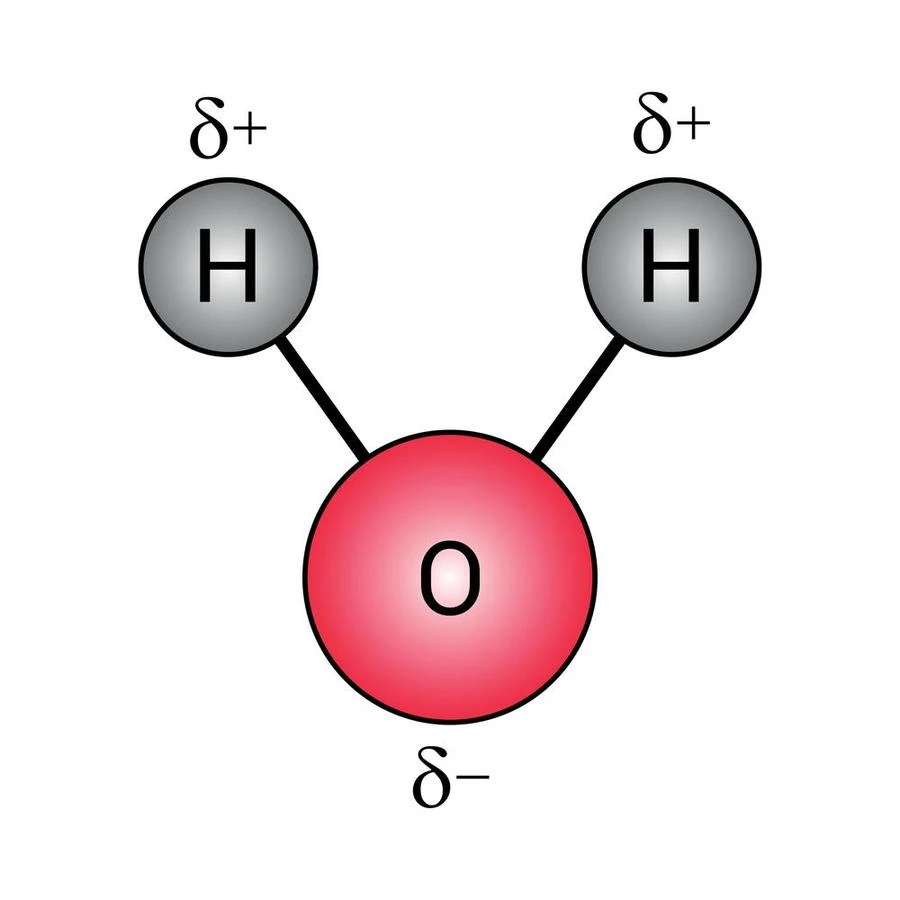
Water can be written by its chemical formula \({H_2}O\). It is composed of two H and one O atom. The electronegativity of O is much higher than H atoms. As a result, A negative charge is generated on the O atom and H atoms become positively charged. Due to this charge separation, water becomes a polar compound.

H2O has one electronegative atom. O carries a partial negative charge and a partial positive charge is generated on the H atom.

Water as ‘Universal Solvent’

Water is a polar liquid. Most of the salts contain both positive and negative charges in their structure. As a result, they are polar in nature. water is also a polar liquid. That is why the salts become soluble in water. Not only salt but many other compounds can also easily be dissolved in water. Due to the universal use of water as a solvent, it is called a ‘Universal Solvent’.

Features of water

  1. Water has very high surface tension and high specific heat.
  2. It easily contains heat.
  3. The conducting power of electricity in water is very low. This conductivity increases when the number of ionic substances in water increases.
  4. Water is a colorless, tasteless and odorless liquid.

Involvement of water in chemical reactions

  1. Redox reaction: Water behaves as both oxidizing and reducing agent. In the reaction of water with any metal, water is reduced to hydrogen. Hence it can behave as an oxidizing agent. Again when any electronegative element reacts with water, water is oxidized to oxygen. Then water becomes a reducing agent.
  1. Reaction with acid and base: Water can react with both the acid and the base. That’s why it is called ‘amphoteric’. The pH of water is always 7 i.e. it is neutral in nature. It can accept protons from acids like H2S and can donate protons to bases like NH3.
  1. Self-ionization of water: Small extent of self-ionization occurs in water. Water ionizes to for

Importance of water in our lives 

  1. Maintain cellular structure: Water can get into various cells and produce pressure so that air can’t be filled in it like a balloon. so the actual cell structure is maintained. Water always helps to maintain the proper molecular form of the cells in plants.
  2. Daily activities: In our daily life, water helps in various activities like cleaning, washing, bathing, cooking, etc.
  3. Farming: Farming is totally based on water. With the changes in the amount of rainwater, the growth of crops is hampered a lot.
  4. Control the pH of the body: Water controls the temperature of our body as well as the pH of our body.
  5. Enhancing body function: consumption of enough water can enhance the function of the brain. It helps in the easy digestion of foods. Water acts as a lubricant and fills the joints of our body with fluids. It can lower the risk of a massive heart attack in the human body. 

Summary

Water is the most vital fluid on the earth. Without water, the survival of humans, animals, and plants will be uncertain. The chemical formula of water is \({H_2}O\). Water is polar in nature. So it can dissolve most of the salts in it. Not only salt, but numerous compounds also become soluble in water. That’s why water is called a “Universal Solvent”. Water can enhance many functions of the human body. About 75 % of the human body is composed of water. Water is amphoteric in nature. For this reason, it is involved in many chemical reactions. Water is also essential for many industrial purposes.  It is also used in several activities of our daily life. Every form of life on the earth will be deeply affected without water.

Frequently Asked Questions

1. How will life be without water?

Ans: Rapid dehydration will result in intense thirst, exhaustion, and, eventually, organ malfunction and death. On the first day without water, one can feel mildly lethargic and thirsty, but by the following day, they might be in organ dysfunction. Everyone is not affected by dehydration in the same manner.

2. What are the consequences if we don’t safeguard our water supplies?

Ans: If water is not conserved, a suitable water source may be lost, which could have catastrophic consequences. This included higher costs, less food supply, health hazards, and civil turmoil. It promotes the survival of our ecology.

3. Why is it so crucial to save water?

Ans: Fuel can be saved by conserving water. Reducing daily water intake also lowers your overall carbon footprint because it requires energy to heat, purify, and draw water into our homes. Utilizing less water not only helps save water but also to protect wetland habitats that are home to fish, herons, water small animals, otters, and other species.

The Evolution of the Periodic Table: From Dobereiner to Moseley and Beyond

Introduction

In the periodic table, all elements are ordered by following their atomic numbers and periodic characteristics. Antoine Lavoisier tried to classify elements as metals or non-metals in 1789. Johann Wolfgang Dobereiner, a German physicist, attempted to assemble atoms in atomic mass-increasing triads later, around 1817, but this method was unsuccessful for all elements. The elements were later connected depending on the atomic masses by scientist John Newland, who was also unsuccessful. After numerous experts, Dimitri Mendeleev, a Russian chemist, begins to classify elements according to their atomic weights and other physical and chemical characteristics. His periodic chart contained 63 elements in all. Later, his hypothesis was unable to organize every element. Henry Moseley, a scientist, revised the law of the periodic table in 1913 and organized the elements depending on their atomic numbers.

Dobereiner’s law of triads 

The “Triad” is a set of three elements that Dobereiner developed by grouping together elements with comparable qualities. By following their atomic masses, he organized three elements so that the mean of these elements’ atomic masses is the same as the mass of the middle elements. For instance, he placed elements with atomic weights of 6.9, 23, and 39 together, including lithium (Li), sodium (Na), and potassium (K). Their average atomic mass, which is 23, is the same as that of sodium. However, he only could put together three of these groups using the known elements, for which his theory of triads was inaccurate.

Newland’s law of octaves

On his table, he arranged about 56 recognized elements.  He discovered that each eighth element had a property in common with the first element. He, therefore, equated the elements to musical octaves. Newland’s law of octaves is the name given to his hypothesis because of this.

The eighth element after sodium is potassium, which shares several characteristics with sodium. As a result, they are organized in a single column. He placed several elements in the same category like nickel and cobalt, as well as chlorine and bromine, which do not match any qualities with nickel and cobalt.

Mendeleev’s periodic law

The atomic mass influences the properties, according to Mendeleev’s periodic law. This suggests that when the elements are organized in the sequence of their atomic weights, the physical and chemical characteristics of the elements repeat periodically. The periodic table refers to Mendeleev’s arrangement of the previously known elements in a sequence of increasing atomic masses. Columns are rows, placed vertically that include elements of the same features. Periods was the term used for the rows, placed horizontally.

The modified version of the periodic table

Mendeleev’s periodic law was revised by Henry Moseley in 1913 with the help of atomic numbers of different elements. He claimed that an element’s atomic number has a significant impact on how other elements are organized.

According to him, an element’s characteristics are periodic factors of its atomic number instead of its atomic mass. Moving from one element to the next increases the atomic number of molecules. So, using their rising order of atomic numbers as a guide, he organized the elements.

His hypothesis produced the Modern Periodic table by addressing the flaws in Mendeleev’s Periodic Table. In 7 horizontal and 18 vertical columns, he organized the elements into periods and groups accordingly.

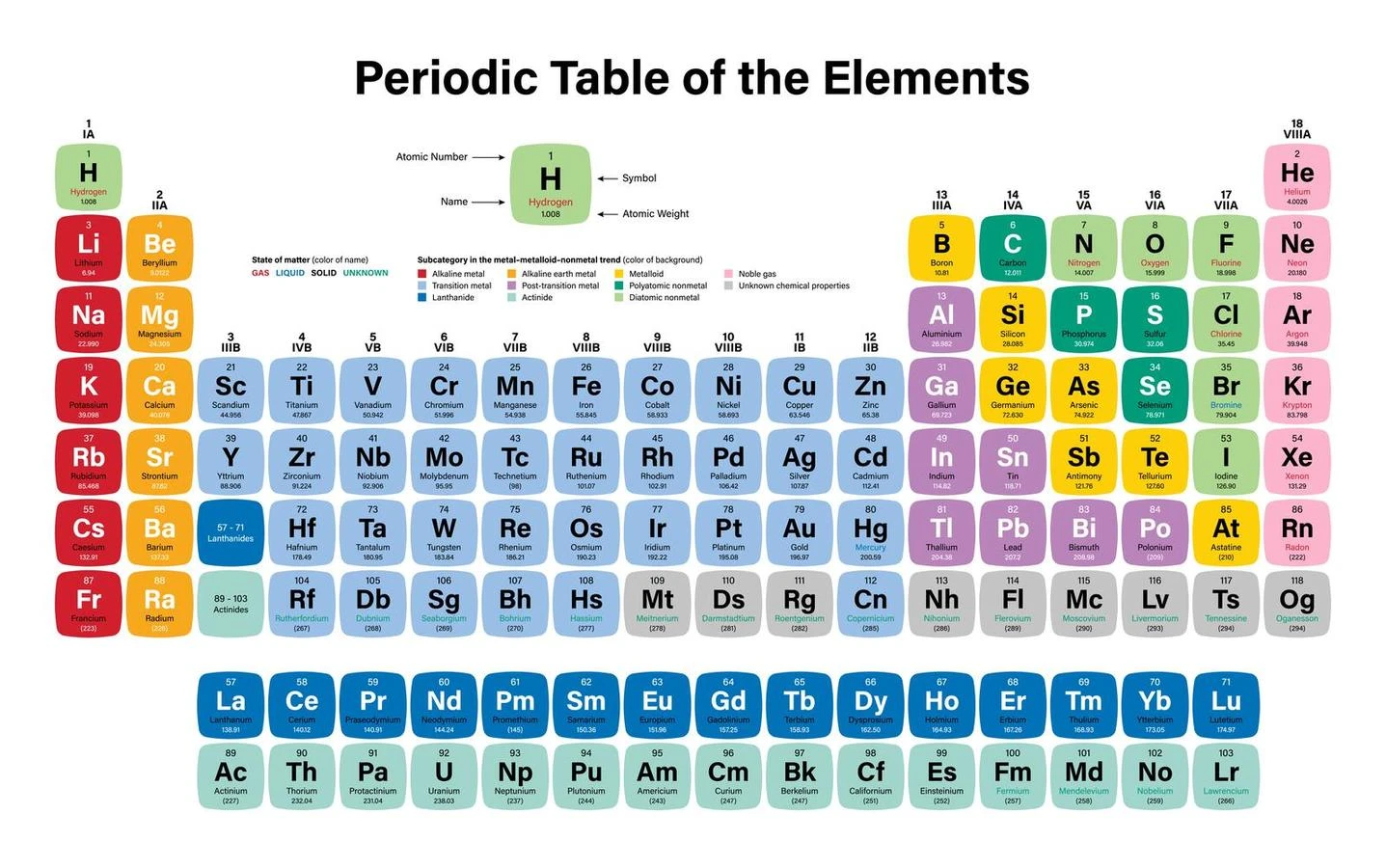
Now that you’ve explored the fascinating history of the periodic table and the remarkable contributions of Dmitri Mendeleev and Henry Moseley, we invite you to deepen your understanding and appreciation of all 118 elements and their symbols, you won’t want to miss this comprehensive guide!

This is a modern periodic table, all the elements are listed based on their atomic numbers.

Drawbacks of modern periodic laws

  1. Doubts remain about the location of hydrogen, specifically whether it belongs to the IA group or the VIIA group. Elements’ isotopes have no location in the modern periodic table.
  2. Actinides and Lanthanides are not listed in the Current Periodic Table and are preserved discreetly under the table.
  3. The basis of the law of the periodic table, or the isolation of related elements, was not addressed by the current periodic table. Some unrelated elements have been combined.

Summary

The History and development of the modern periodic table are described here. Numerous scientists like Dobereiner, Newland, and Mendeleev did much research on the periodic table but they faced failure. But later Mendeleev’s periodic table was modified and it went with all the scientific logic. According to this modern periodic table, all the elements are listed in increasing order of their atomic numbers. There are 7 horizontal columns termed as periods and 18 vertical columns depicted as groups. From the modern periodic table, we get an idea about the chemical and physical characteristics of all the elements. Depending on this, the order of size, ionization energy, enthalpy, electron affinity, etc. can be determined properly.

Frequently Asked Questions

1. What element is the least popular?

Ans: Although astatine (At), a member of the halogen family that also comprises fluorine (F), chlorine (Cl), bromine (Br), iodine (I), astatine (At), may serve as the least common naturally occurring element in the Earth. It is assumed that it exhibits similar features to other Group 17 elements.

2. What does modern periodic law state? 

Ans: “The chemical and physical characteristics of the elements are periodic effects of their atomic numbers,” is how the current Periodic law is best represented. The proton number or electron number is the same as their atomic number in the case of neutral atoms. 

3. Who designed the modern periodic table?

Ans: To create the current periodic table Neils Bohr, took the idea of the current periodic law that states “the properties of the elements are periodic functions of their atomic numbers,”. It is often referred to as a lengthy periodic table. The current periodic law served as the foundation for its creation. Henry Moseley proposed this periodic law.

Depletion of Ozone Layer and its Adverse Effects on Earth and Mankind

Introduction

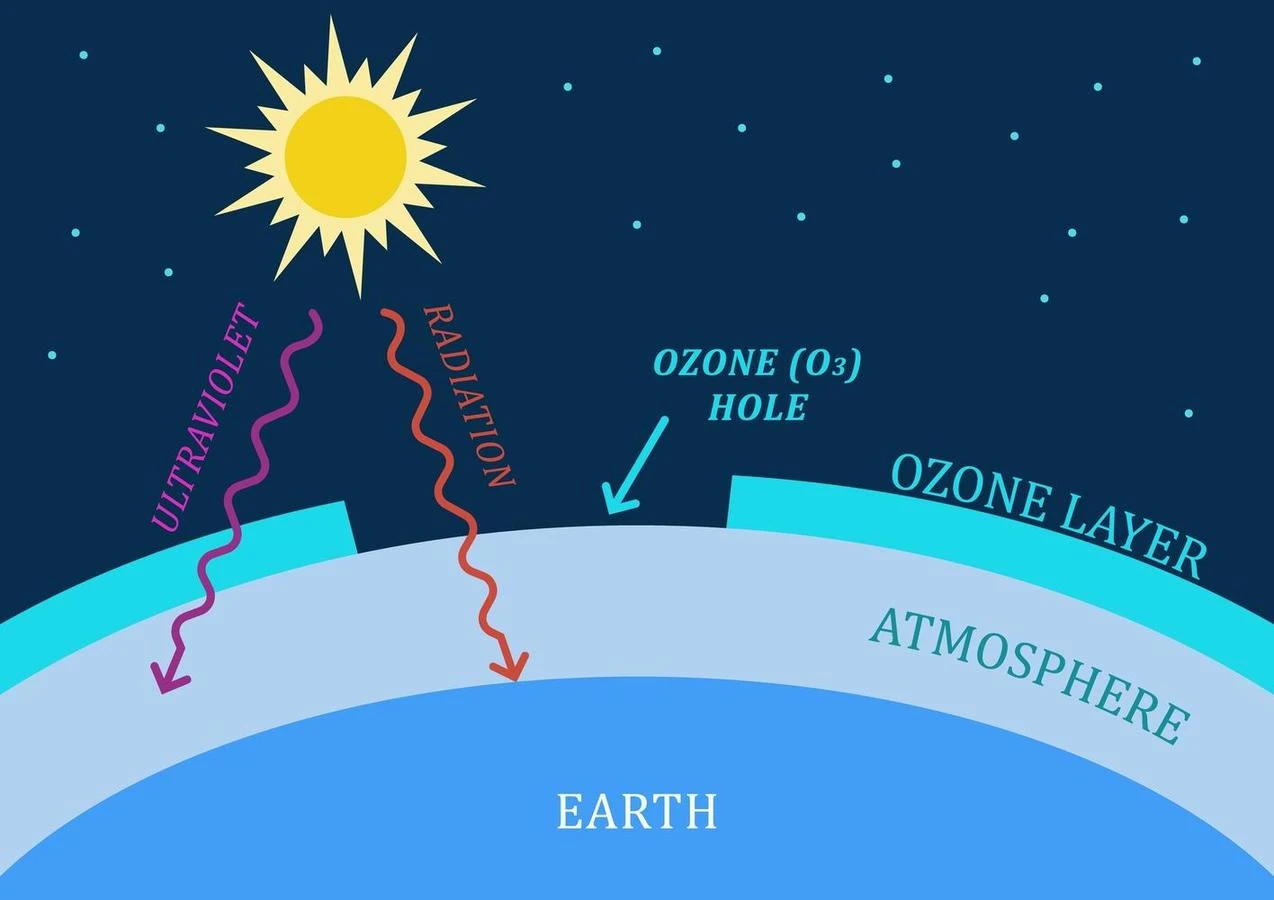
The ozone layer is like a savior for earth and mankind. It acts as a protective covering around the surface of the earth. It makes us safe from the ultraviolet (UV) radiation coming from the sun which directly hits the earth’s surface. The Ozone layer is situated at the end of the second layer of our earth’s atmosphere i.e. in the stratosphere. It gets damaged by various free radicals around us i.e. nitric oxide (NO), atomic bromine (Br), atomic chlorine (Cl), a hydroxyl group (OH), etc. These radical catalysts boost the depletion rate by many folds. Continuous damage to the ozone layer is causing serious health effects on the whole earth. As a result, UV radiation absorbing capacity is decreasing rapidly. 

Define Ozone layer 

It is a layer of protective covering formed by a molecule O3 around our earth’s atmosphere ranging from 15-30 km. This saves us from life-threatening harmful ultraviolet (UV) radiation emitted by the sun. The ozone (O3) can absorb that radiation and give us a safe surrounding to live in. Among several layers of the earth, the second layer i.e. stratosphere contains the maximum density of this ozone layer as compared to any other atmospheric layer of the earth. This discovery of this ozone layer was in the year of 1913 by two French physicists Charles Fabry and Henri Buisson. It is assumed to absorb 95-97 % of the medium and little high-frequency radiation coming from the sun. 

Degradation of the ozone layer allows hazardous UV rays to enter in earth’s surface

What is the depletion of the ozone layer? 

Depletion of the ozone layer means degrading the layer formed by the ozone(O3) molecule around our atmosphere. This restricts the amount of harmful cosmic rays and radiation from the sun. Day by day the thickness of this layer is getting reduced and also holes are forming at many places due to the heavy damage of ozone molecules. It is more observed at both poles of the earth. Due to the irresponsible behavior of mankind, various chlorine (Cl) containing substances get released into the earth. They rise above and react with O3 and degrade it. It is also thought that one Cl atom can degrade around a lakhs of ozone (O3) molecules. Substances like chlorofluorocarbons (CFC) from refrigerators, carbon tetrachloride, hydrochlorofluorocarbons, etc. are highly responsible for such heavy damage. 

Factors responsible for the depletion of the ozone layer

  • Nitric oxide (NO), nitrous oxide (N2O), and nitrogen dioxide (NO2) are among the nitrogenous chemicals that have a significant impact on the ozone layer’s depletion or breakdown.
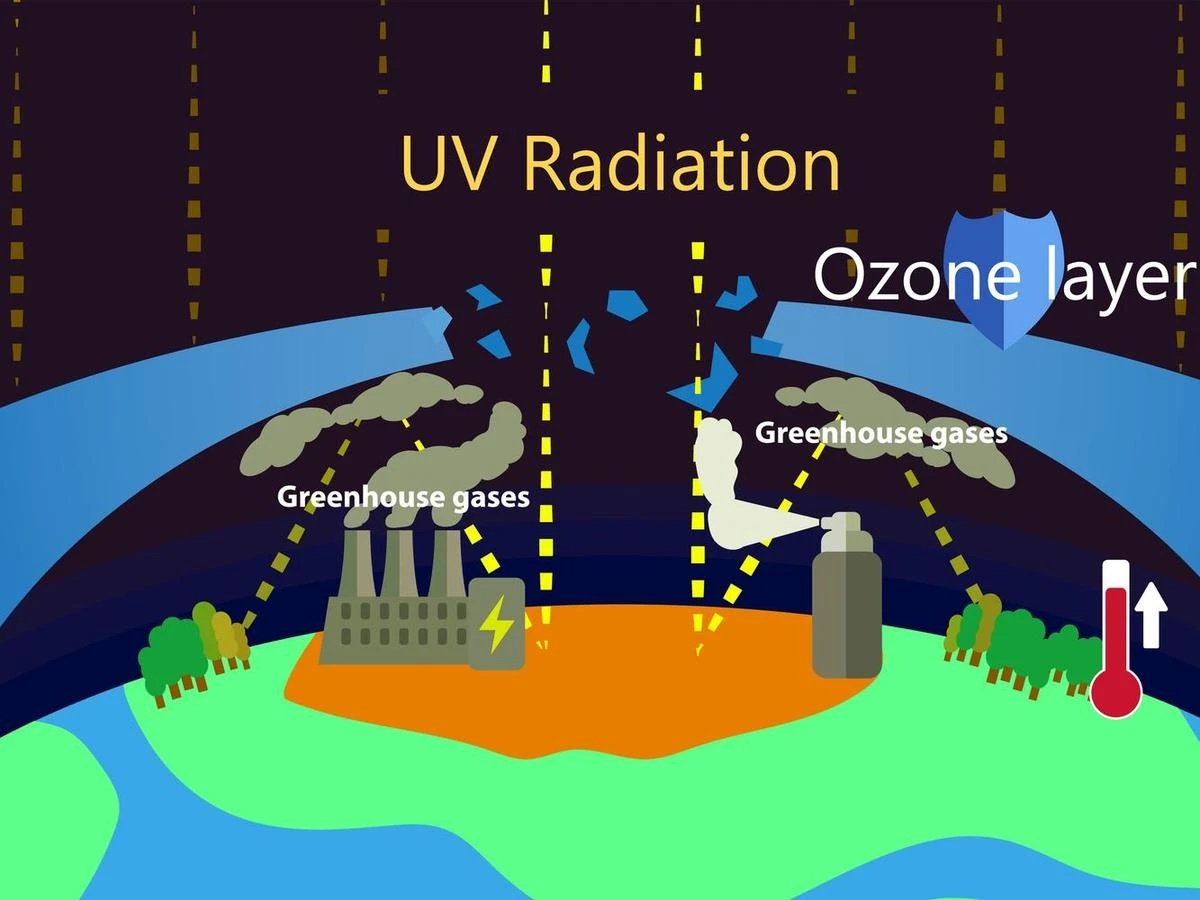
  • Solvents, freezers, spray aerosols, air conditioners (A.C.), and other devices emit chlorofluorocarbons, which is one of the leading reasons for the ozone layer depletion represented by CFCs. Ultraviolet (UV) radiation in the stratosphere decomposes chlorofluorocarbon molecules, releasing chlorine (Cl) atoms in the process.
  • The ozone layer molecules are also severely harmed by irregular or unmanaged rocket launches; in fact, these activities contribute more to the ozone layer’s destruction or depletion than CFCs do.
Factors responsible for ozone layer depletion

Effects of ozone layer depletion 

The environment and all life forms that exist on the surface of the earth are seriously impacted by the breakdown of the ozone layer which increases the amount of radiation reaching the earth’s surface. Eye failure, various forms of skin cancer, and the body’s immune disorders are some of these adverse effects. Both aquatic ecosystem and terrestrial ecosystem also impacted by harmful UV radiation.

Effects of ozone layer depletion on mankind

Humans are adversely affected by the breakdown of the ozone layer, including the following effects:

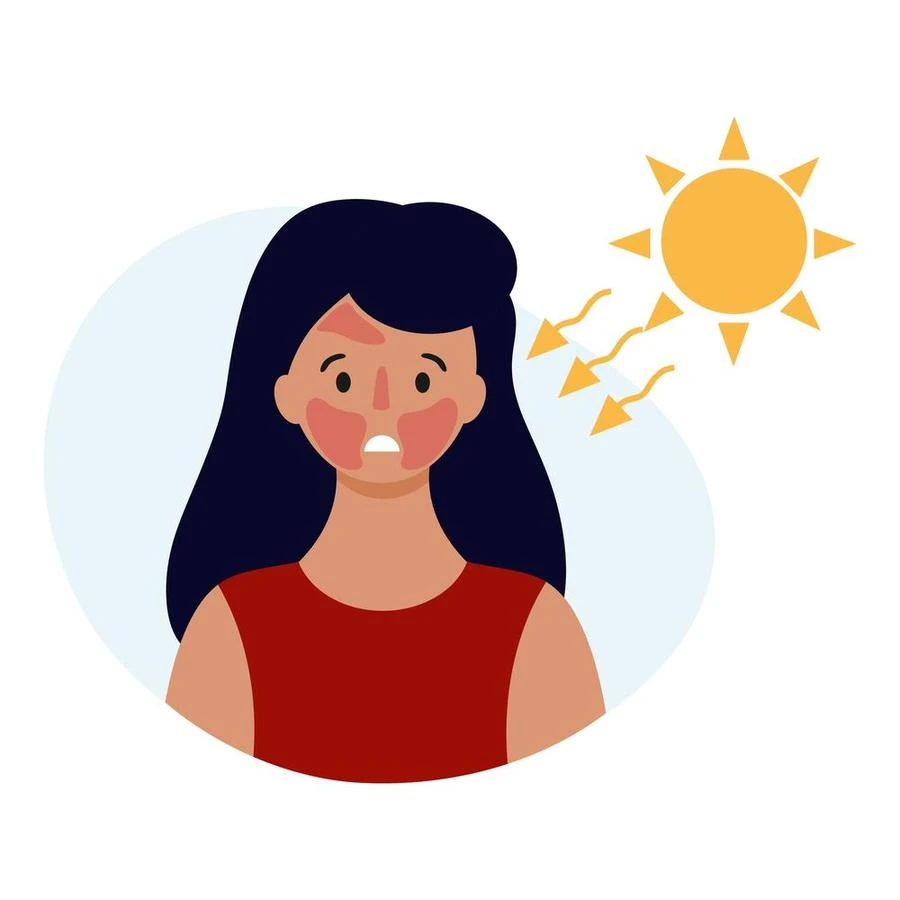
  • It is well understood, the loss of the ozone layer can result in more ultraviolet (UV) radiation reaching the earth’s surface, which enhances the danger of skin cancer and may also cause eye cataracts and immune system damage.
  • Melanoma, the most fatal form of skin cancer, can increase as a result of excessive UV light exposure.
Many fatal skin diseases are caused by UV rays from the sun

Effect of the damaged ozone layer on animals

A few harmful effects on animals are as follows:

  • Fish, frogs, and other marine species’ early or beginning embryonic phases have been known to be harmed by ozone layer loss.
  • Animals’ capability to breed slows down as ozone layer depletion occurs.
  • Small fish or marine species may experience colony declines even with a slight increase in UV exposure.

Effects of ozone depletion on plants

  • Plant developmental and physiological functions are strongly impacted by ultraviolet light.
  • The growth, adaptability, and repair of flora are impacted by these dangerous radiations.
  • These damaging radiations can inhibit the nutrient cycle and lead to plant diseases.

Summary 

The area known as the earth’s stratosphere contains the ozone layer, also called the ozone screen. The majority or all of the ultraviolet (UV) rays from the sun are absorbed by this layer.   Free radical catalysts can damage the ozone layer. In recent decades, there has been a marked rise in the emission of greater quantities of chlorine (Cl) and bromine (Br) into the atmosphere. This is due to the reckless discharge of vast amounts of chlorofluorocarbons (CFCs) and bromofluorocarbons by irresponsible human activities. All these are affecting human and animal life in a very adverse manner. 

Frequently Asked Questions

1. How can the ozone layer be preserved?

Ans: Purchasing an air conditioner and refrigerator which doesn’t use HCFCs as a coolant. Also using perfumery products having no CFCs and HCFCs. It is mandatory to regularly check for any leakage in refrigerators and air conditioners.

2. Can humans survive in a world without ozone?

Ans: The shielding ozone, often known as the “ozone layer,” is essential to life. Radiation from the sun includes heat, light, and many other kinds of radiation. UV (ultraviolet) radiation exposure too much can injure both plants and animals as well as induce cataracts and skin cancer.

3. Where does ozone become hazardous to humans? 

Ans: Ozone is a colorless substance that, depending on its location, may be beneficial or harmful. Because it protects the planet from the sun’s UV radiation, the ozone found in the stratosphere is beneficial. Because it could be harmful to human health at the surface level, where we inhale. 

Radioactive Pollution

Introduction

The radioactive materials that exist in the environment cause radioactive pollution. Various environmental conditions that are dangerous to life, are generated by the improper handling of radioactive materials. It has numerous adverse effects on both people and animals as well as the environment. The government should adopt a variety of policies to decrease the effect of radioactive materials. The Chernobyl incident was among the most notable instances of radioactive pollution.

Define radioactive pollution

When radioactive compounds are released into the atmosphere during nuclear explosions, nuclear weapon testing, and nuclear weapon development, it causes real damage to living things and their surroundings. This is known as radioactive pollution.

Sources of radioactive pollution and their examples

  1. Though rocks constitute the majority of background radiation, just a minor portion of it is produced by man-made items. Background radiation through naturally available radioactive minerals can be found in the soil, earth, and water. 
  2. A number of these naturally occurring radioactive elements can be found in small amounts in the human body. 
  3. And some examples of radioactive pollutants are radionuclides. They are the primary causes of emissions that result in the formation of beta particles, radioactive substances, gamma radiation, etc.

 Reasons for Radioactive pollution

  1. The majority of human-caused radiation pollution was likely produced in the middle of the 20th century and it happened due to numerous research or operational nuclear explosions.
  2. Low to medium radiation may be produced during the treatment and removal of nuclear materials over a long duration of time. The primary problem with hazardous materials is that they cannot be biologically or chemically decomposed or handled.
Radioactive pollution

Application of Radioisotopes

There are two main applications of radioisotopes.

  • Radioactive Materials Leakages:

Ships have occasionally run straight into the ground on coral reefs or glaciers, discharging contaminants into nearby rivers and the surroundings. Among the numerous of these substances, petroleum products have a high radiation concentration and can be harmful to the environment.

  • Smoke-detecting equipment:

Smoke detectors of ionization type contain very small amounts of americium-241, which has a half-life of 458 years.

  • Establishment of  Defensive Weapons:

Many deadly weapons are constructed of nuclear materials which cause radiation. Due to these, a serious health risk may occur.

Adverse effects of radioactive pollution

  • Diseases caused by exposure to Radioactive Pollution:

The most common illness that appears in people who are exposed to radioactive pollution is cancer. Among the worst ailments caused by radioactive pollution are leukemia, anemia, and cardiovascular disorders.

  • Cell damage and nuclear poisons:

Cell development may be influenced in several ways by radioactive exposure. Living creatures have different bodies made up of millions of cells, every of which performs a specialized function. It has been shown that radioactive pollution can alter pre-existing cells and harm tissues and organs permanently. Situations of high radiation exposure usually result in fatalities and chronic illnesses.

  • Burns:

Although radiation is uncomfortable to endure, you can easily tell whether it has had an impact on you. The sudden appearance of blisters and burns serves as evidence. This leads to skin cancer, which can complicate the condition.

  • Ruins plant growths: 

The land can be significantly contaminated by improper disposal of radioactive materials. This type of waste is radioactive, and when it interacts with soil components, it can turn the soil exceedingly hazardous and unusable.

🌍 Discover powerful strategies to combat air pollution in our latest article on “Air Pollution Control.”

Prevention of Radioactive pollution

  1. Radioactive substances can’t be decomposed easily by any means of chemical or biological process. So during research on plants, chemical or biological products and radioactive substances are separated properly.
  2. Radiation waste confinement is done in far-off places, such as distant caves or deserted mines, which also require the deployment of barriers of some sort.
  3. Non-radioactive methodologies can be applied to carry out several frequently utilized tests in the biomedical discipline.

Summary

Every animal on this planet and the ecosystem is severely harmed by radioactive particles. Radioactive pollution is caused due to the contamination of air or water with radioactive elements such as uranium, potassium, radium, and many more. These pollutants endanger people and their lives. The extent of radioactive contamination is based on the number of radioactive waste produced. Strong radioactive materials are the most potent type of waste and can be generated by substances like uranium, which again is consumed in nuclear reactors.

Frequently Asked Questions

1. How does the human body react to radiation?

Ans: The DNA in human cells can be harmed by radiation. Acute Radiation Syndrome (ARS) can be caused due to high exposure to radiation. High levels of radiation exposure may potentially cause cancer.

2. What is the amount of radiation present in bananas?

Ans: Radiation of.01 millirem (0.1 microsieverts) can be generated by one banana. There is incredibly little radiation present here. So one would have to consume around 100 bananas to be exposed to the equivalent level of radiation that an American would experience daily from atmospheric radiation.

3. Which radiation is the most dangerous?

Ans: The most dangerous radiation kinds include those that damage DNA, such as gamma and x-rays. Despite the presence of clothing, X-rays and gamma rays can totally penetrate the body and harm DNA or cells. Compared to X-rays, gamma rays are substantially more dangerous.

Classification of Organic Compounds

Introduction

The compounds are classified according to their structures.

Organic compounds are those in which one or more than one carbon atom is connected with other elements like hydrogen, oxygen, or nitrogen via covalent bonds. These organic molecules can be divided based on their structure and the presence of different functional groups. Methane is the smallest organic compound. 

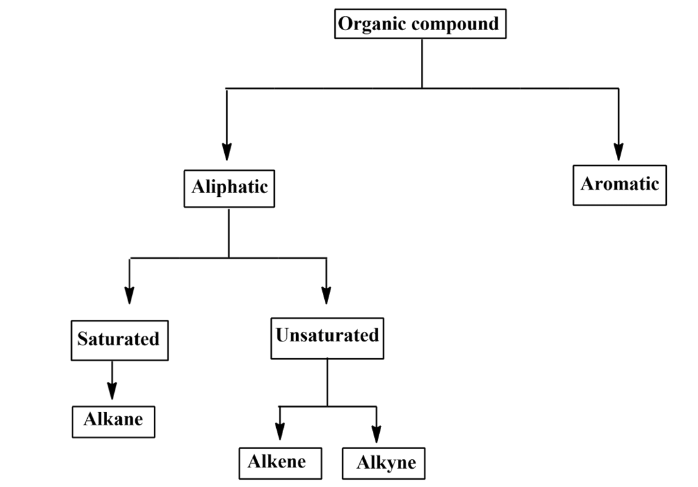
Classification of organic compounds

 Organic compounds, mainly hydrocarbons can be divided into two parts: 

  1. Aliphatic hydrocarbons 
  2. Aromatic hydrocarbons.
  • Aliphatic hydrocarbons: These are the compounds, drawn in an open-chain format. They never form any ring as they form linear structures. They can be classified into two types:
  • Saturated compounds. 
  • Unsaturated compounds. 
  • Saturated compounds: Saturated compounds are those in which two carbon atoms are linked together only via a single bond. Alkane falls under this category. 
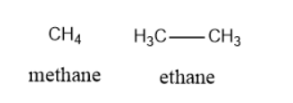
  1. Alkane: In this type of structure, C atoms form single bonds with the H atoms. For example Methane, Ethane, Propane, Butane, etc.

\[\begin{array}{l}Methane:C{H_4}\\Ethane:{\rm{ }}{C_2}{H_6}\\Propane:{\rm{ }}{C_3}{H_8}\\Butane:{\rm{ }}{C_4}{H_{10}}\end{array}\]

One and two carbon-containing alkanes are methane and ethane respectively.


Physical characteristics of Alkane:

  1. Alkanes are colorless and the density of alkanes is very low.
  2. The alkanes, containing a lower number of carbon atoms, have lesser boiling and melting point. But with an increase in the number of carbon atoms in hydrocarbons, melting and boiling point increases.
  3. Alkanes are non polar. So they always tend to be dissolved in nonpolar solvents.

Chemical properties of Alkane:

  1. The reactivity of alkanes is very low.
  2. Alkane doesn’t react with any kind of strong acids or bases. It is also unreactive toward any reducing or oxidizing agent.
  3. Alkanes are combustible and produce heat.
  4. Alkanes can undergo reactions with halogens only in presence of UV light.

Unsaturated compounds: In unsaturated compounds, two adjacent carbon atoms are joined together by a double bond or a triple bond. The addition of hydrogens to unsaturated hydrocarbons leads to the formation of saturated hydrocarbons. They are classified into two groups:  

  1. Alkene 
  2. Alkyne

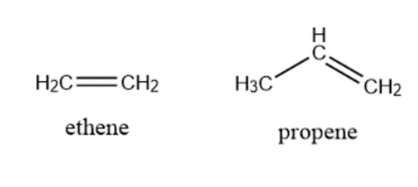
Alkene: Compounds that hold one or more double bonds between two carbon atoms are called alkenes. For Example Ethylene, Propyne, etc.

\[\begin{array}{*{20}{l}}{Ethylene:{\rm{ }}{C_2}{H_4}}\\{Propene:{\rm{ }}{C_3}{H_6}\;\;}\end{array}\] 

Ethene is two carbon-containing alkenes and propene contains three carbon atoms.


Physical characteristics of alkene

  1. The first three alkene group members are gaseous, the following fourteen are liquids, and the final three alkenes are solids. 
  2. Like alkanes, alkenes are nonpolar and dissolve in highly non-polar solvents like benzene, 
  3. With an increase in the number of carbon atoms in alkenes, the boiling point increases.  Similar to alkanes, straight-chain alkenes have a higher point of boiling than branched-chain alkenes.
  4. The arrangement of the molecules impacts the melting points of alkenes. However, the melting point of the trans isomer is higher than cis.  

Chemical features of alkenes

  1. Alkenes undergo addition reactions with hydrogen molecules, halogens, and water molecules.
  2. Alkenes are more reactive than alkanes. Alkenes burn at a much faster rate with oxygen.

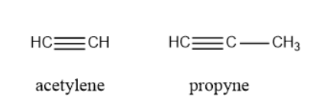
Alkyne: The compounds that contain one or more than one triple bond are called alkyne systems. For example Acetylene, Propyne, etc.

Acetylene is two carbons containing alkyne and propyne has three carbon atoms.

Physical properties of alkyne

  1. Alkynes are unsaturated, nonpolar hydrocarbons with characteristics that are identical to those of alkanes and ketones.
  2. Alkynes are insoluble in water, weakly soluble in polar solvents, and soluble in organic solvents.
  3. Alkynes have a somewhat larger boiling point than alkanes and alkenes.
  4. Due to the linear structures of alkynes, the molecules are very closely arranged. So their melting point and boiling point are higher than alkane and alkyne.

Chemical properties of alkynes

  1. It can undergo addition reactions with electrophilic substances like HCl or HBr and Br2, I2, etc.
  2. The additional pi bonds in alkynes, then alkenes, make them the most reactive. towards chemical reactions.
  3. Due to the linear structures of alkynes, the molecules are very closely arranged. 

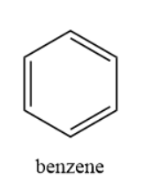
Aromatic hydrocarbons: These hydrocarbons contain sigma bonds along with the delocalization of pi electrons in a cyclic rearrangement. It is another kind of unsaturated compound. For example Benzene.

Benzene is an aromatic compound with three conjugated double bonds.

Characteristics of Aromatic compounds:

  1. These are cyclic and planar in structure.
  2. They consist of only carbon and hydrogen atoms. The double bonds are conjugated in these structures.
  3. These compounds possess a unique odor or aroma. So they are called aromatic.
  4. They are nonpolar and due to their un reactivity, they are used as a solvent for dissolving non-polar compounds.
  5. They are more volatile than aliphatic compounds.

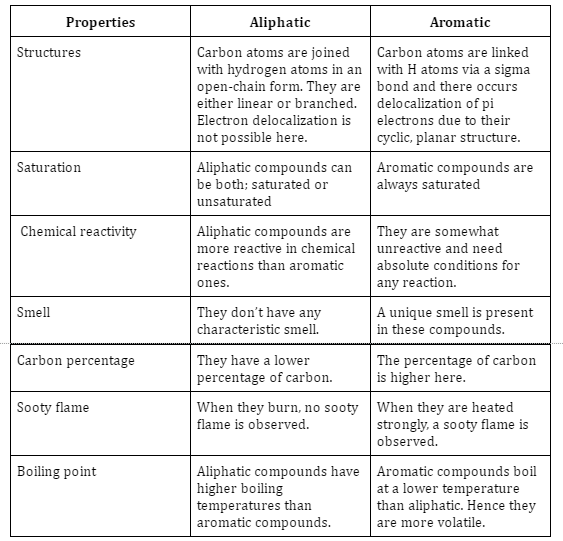
Difference between aliphatic and aromatic hydrocarbons

Summary

Organic compounds mainly hydrocarbons can be classified into two groups; Aliphatic and Aromatic. Aliphatic compounds are of two types; saturated and unsaturated. Alanes fall under the category of saturated hydrocarbons whereas alkenes and alkynes are part of unsaturated hydrocarbons. There is a large difference between aliphatic and aromatic compounds based on their chemical and physical characteristics. Classification of organic compounds is really important. As different types of organic compounds have different chemical properties, hence they can participate in the reaction with the same chemicals but follow different mechanistic steps. So to determine the mechanism of any reaction, we need to know about different kinds of organic molecules. That is why the classification of organic compounds is one of the most important topics for chemists.

Frequently Asked Questions

1. What is the drawback of the classification of organic compounds?

Ans: Carbonate and cyanide salts are also carbon-containing compounds. But the compounds like hydrogen cyanide and carbon dioxide are not considered to be organic molecules. This is the drawback of the classification of organic compounds.

2. What are the necessary features of an organic compound?

Ans: The compounds in which carbon atoms are covalently linked with hydrogen, nitrogen, and oxygen atoms are called organic compounds. In hydrocarbons, carbon atoms are linked with hydrogen atoms only.

3. Which organic molecule provides energy?

Ans: Carbohydrate compounds can provide energy. For example, a monosaccharide like Glucose can provide energy very fast as it can be digested quickly.

Difference Between Diffusion And Osmosis

Introduction

The fundamental building block of life, a cell is capable of carrying out every metabolic task required to maintain life. A cell must be able to permit the passage of various substances into and out of its boundaries in order to be able to perform the metabolism of various substances. A cell can take in and release substances out of the cell, through the process of diffusion and osmosis. This exchange is essential for the cell’s survival. The processes of molecules moving down a concentration gradient are diffusion and osmosis. Although they both aid in the movement of substances through the cell membrane, they differ slightly from one another.

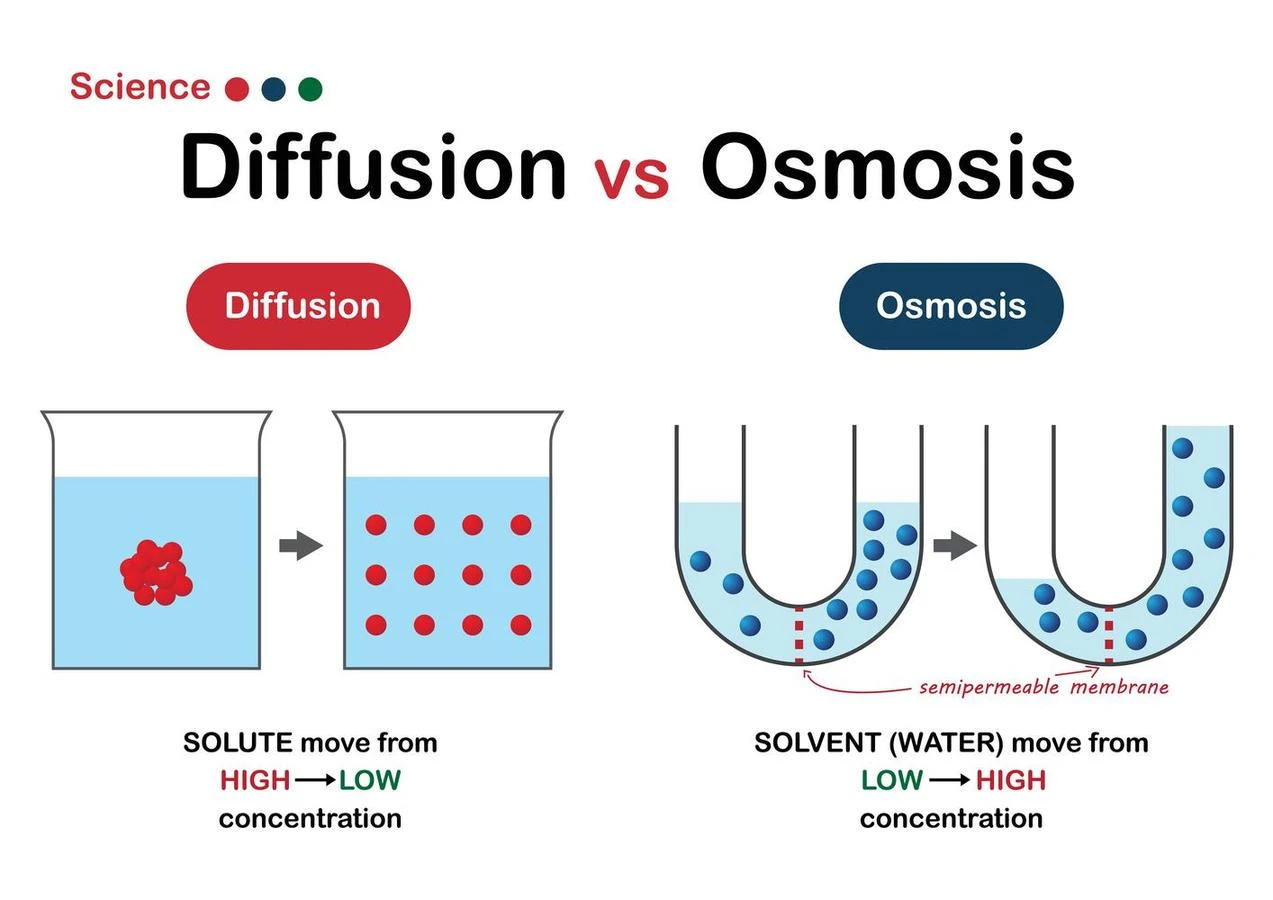
This image shows the process of diffusion and osmosis.

Diffusion

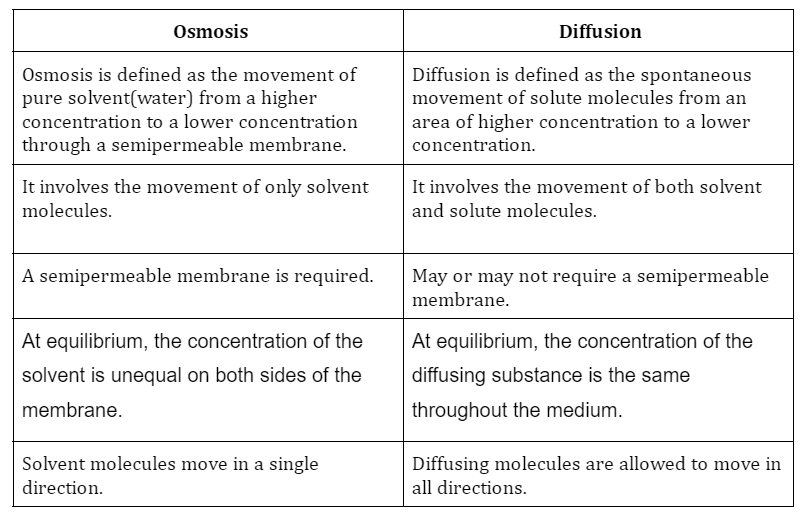
  • The spontaneous movement of a molecule down a concentration gradient is called diffusion. For example- diffusion is the spreading of a dye in water.
  • It is referred to as a passive process because it doesn’t require any energy input.
  • Concentration gradients and the random dynamic movement of the solute molecules are the only factors that influence diffusion.
  • Diffusion keeps going until there is equilibrium i.e until there is an equal concentration of the solute on both sides.
  • Diffusion happens through a plasma membrane in biological systems.

Types of diffusion

There are two types of diffusions which are explained below

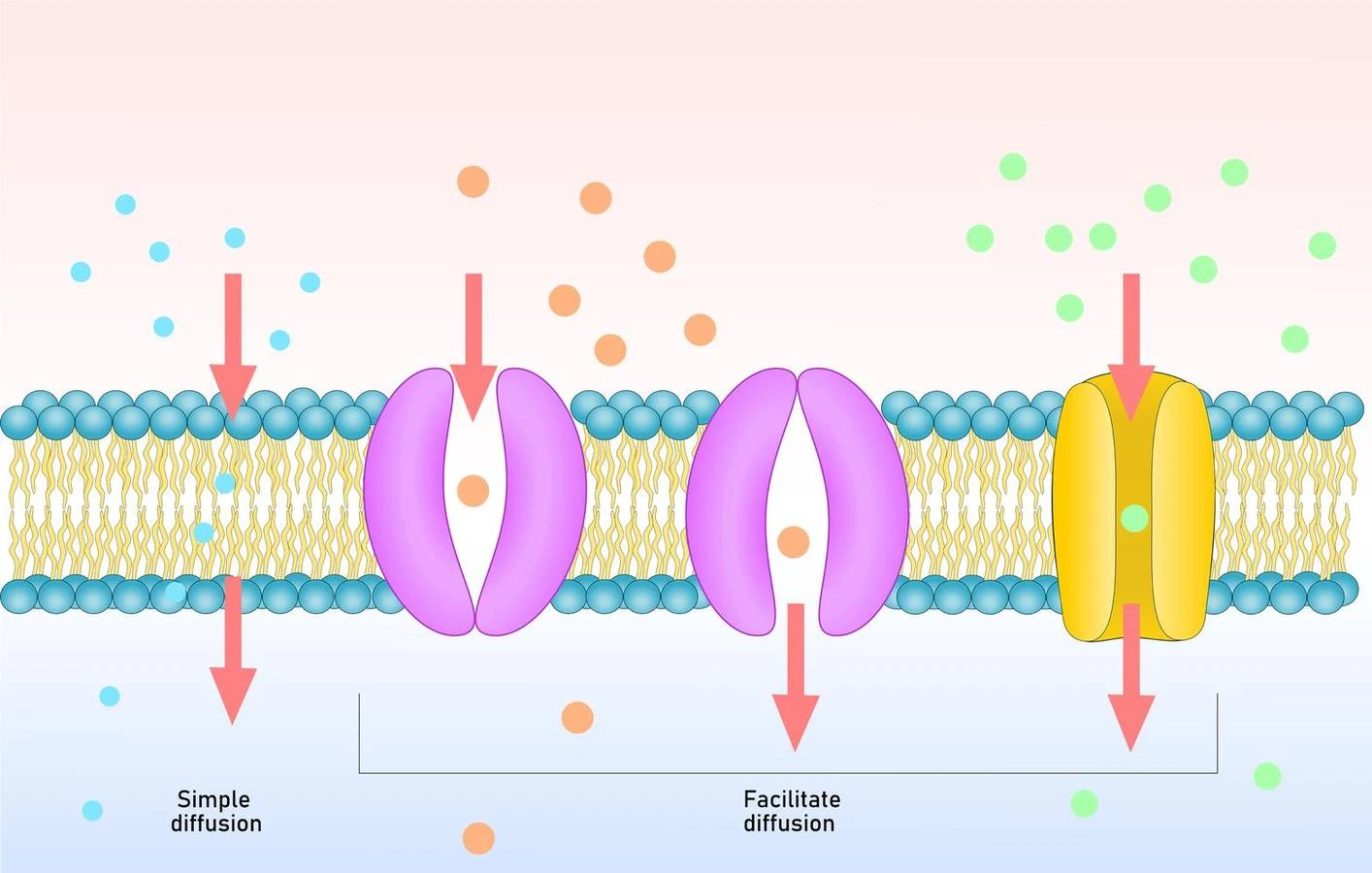
  • Simple Diffusion-
    • Simple Diffusion is also known as Independent Diffusion. 
    • This type diiffusion does not require the involvement of membrane proteins.
    • The relative concentration of the molecules inside the cell as compared to outside the cell determines the direction of the flow of the molecules.
    • Simple diffusion is non-selective and permits the passage of all non-polar molecules across a lipid bilayer.
  • Facilitated Diffusion
    • Some molecules cannot move across the cell membrane due tu their hydrophilicity.
    • Thus, the movement of such molecules and charged ions is mediated by certain membrane proteins. This process is termed facilitated diffusion.
    • The channel proteins and the carrier proteins are the two different types of membrane transport proteins.
    • Polar and charged molecules can cross the cell membrane through the process of facilitated diffusion.

This diagram shows process of simple diffusion of various molecules through the cell membrane. It also shows carrier proteins that are assisting in facilitated diffusion.

Factors affecting rate of diffusion

  • Partition Coefficient-It represents the ratio of a solute’s concentration in two phases when both the phases are in equilibrium with one another. The greater the solubility of a solute, the greater will be its partition coefficient.  A substance can pass a biological membrane more readily if its partition coefficient is larger.
  • The concentration of the solutes-Fast diffusion occurs when the concentration gradient is higher.
  • Temperature- The molecules’ kinetic energy is increased by an increase in temperature, which causes them to travel more quickly across the membrane.
  • Mass-Heavier solutes diffuse slowly as compared to lighter solutes.
  • The density of the solvent- As solvent density rises, the rate of diffusion declines.
  • Nature of the solutes- Lipophilic and non-polar compounds can easily cross the plasma membrane as compared to hydrophilic and polar compounds.

Osmosis 

  • Osmosis is the process by which solvent molecules move down a concentration gradient and across a semipermeable membrane (i.e., higher to lower concentration). 
  • It is the net movement of solvent molecules from a high water potential region to a low water potential region. 
  • Osmosis results in equal solute concentrations on both sides of the membrane.
  • The transfer of water from locations with high water potential to those with low water potential is also termed osmosis.

Tonicity

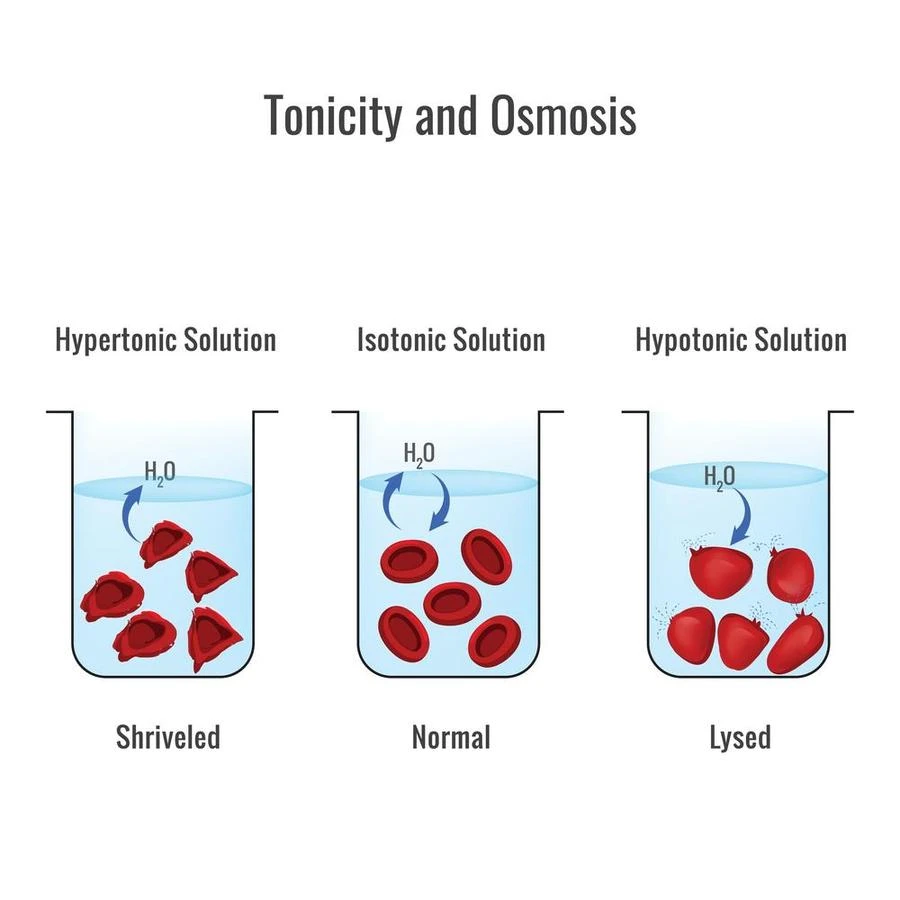
Pertaining to the proportional solute concentrations of a cell and its surroundings there are three different tonicities, they are-

  • If a cell is placed in a hypertonic environment, that is, an environment in which the solute is present at a higher concentration than within the cell, the water travels out of the cell and into the surrounding environment.  This causes the cell to lose volume and become flaccid. Plasmolysis, a severe condition in which the cell membrane separates from the cell wall and ruptures.
  • Water moves into the cell and causes it to swell if the external environment is hypotonic, that is, if the environment has a lower concentration of solute than the cell. Here, the cell gets turgid.
  • There is no net change in the volume of the cell if the external environment is isotonic, or if it contains the same number of solutes per litre of solution as the interior of the cell.

This diagram shows the effect of hypertonic solution, hypotonic solution, and isotonic solution over cells.

Osmolarity 

  • The number of solute molecules per litre of the solvent is referred to as osmolarity.
  • Simply said, osmolarity is a measurement of the amount of solute in the solution.
  • As a result, referring to a solution as having low osmolarity suggests that its solute concentration per liter of solution is lower. 
  • In biology, a cell’s osmolarity is crucial in determining how easily water can move through a bilayer.
  • If a semipermeable membrane is used to separate two solutions with differing osmolarities, water from the solution with the lower osmolarity will pass through the membrane and into the solution with the greater osmolarity.

Difference between Osmosis and Diffusion  

Summary 

  • The spontaneous movement of molecules along a concentration gradient is known as diffusion.
  • In biological systems, diffusion across the cell may be independent or facilitated by membrane proteins
  • Osmosis is the transfer of solvent molecules across a semi-permeable membrane along a concentration gradient.
  • Osmosis and diffusion vary primarily in that the former takes place through a semi-permeable membrane while the latter can happen in any medium.


Frequently Asked Questions

1. What is Osmotic Pressure?

Ans: Osmotic pressure is the amount of force required to stop solvent molecules from passing through a semipermeable membrane into a solution. Temperature and concentration both have an impact on osmotic pressure. Osmotic pressure rises as concentrations and temperatures rise.

2. What are channel proteins?

Ans: A channel protein is a type of transport protein that functions as a pore in the cell membrane to allow water molecules or small ions to pass through. Aquaporins, which are water channel proteins, enable rapid water diffusion across the membrane. Ions can diffuse across the membrane through ion channel proteins.

3. Give two examples of osmosis and diffusion each.

Ans: Red blood cells’ enlargement when exposed to freshwater, and absorption of water by plant root hairs are examples of osmosis

The fragrance of perfume spreading throughout a room and the passage of tiny molecules across a cell membrane are both examples of diffusion.

Arteries and Veins

Introduction

The closed circulatory system of higher animals,  such is made up of various blood vessels. The blood vessels make sure that every cell throughout the body receives an uninterrupted flow of oxygen-rich blood from the heart. The blood vessels have been specifically designed to carry one of the two types of blood-i.e oxygenated or deoxygenated blood to prevent their mixing. Deoxygenated blood is carried by the veins and venules, whereas oxygenated blood is carried by the arteries and arterioles. The third type of blood vessel, capillaries, are the smallest divisions and enable exchange between the blood and tissues.  The blood vascular system is separated into two circuits: the systemic circuit, which provides healthy blood to the entire body, and sends impure blood to the heart, and the pulmonary circuit, which works between the heart and the lungs.

Arteries

  • Blood is pumped from the heart through arteries and then into the body.
  • The systemic arteries follow a path that starts in the left ventricle and travels through smaller distributions to every portion of the body.
  • As a result, arteries play a crucial role in supplying the organs with blood and nutrients.
  • Up to 10% of the blood in the body is stored in arteries at any given moment.
  • Only one artery in the body, the pulmonary artery of the pulmonary circuit, transports deoxygenated blood from the heart’s right ventricle to the lungs.
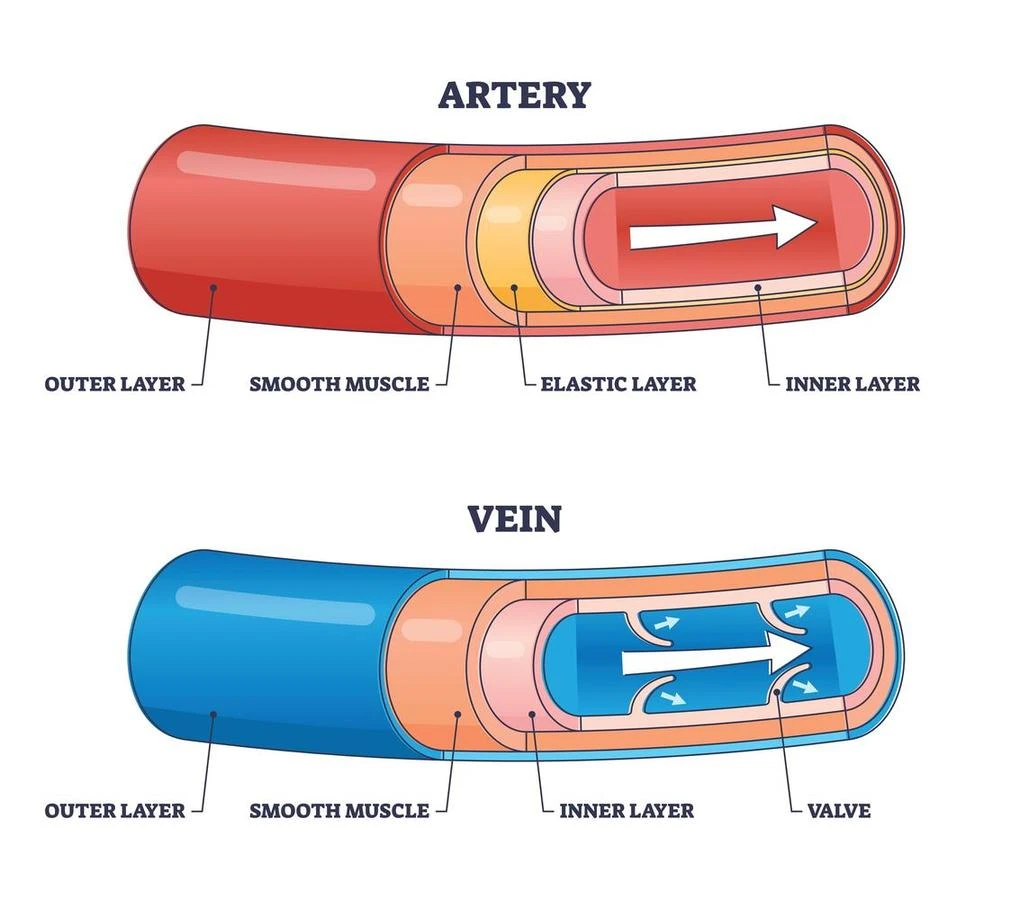
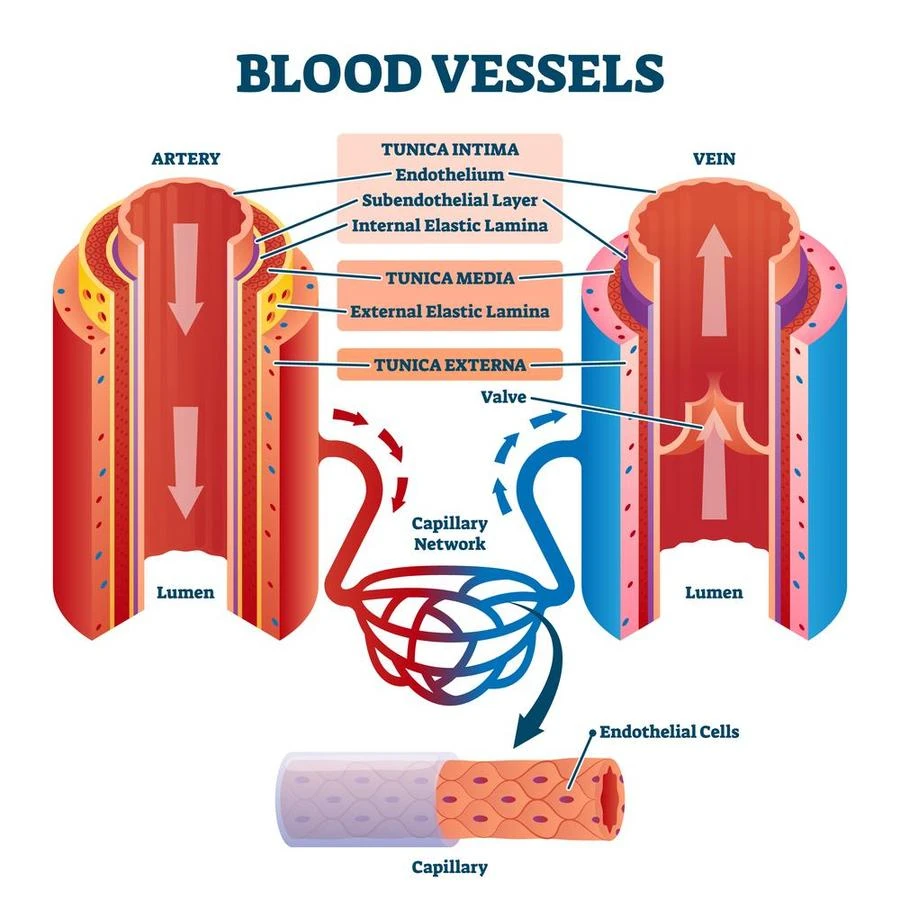
  • The three layers of tissue that make up an arterial vessel—the tunica interna, tunica media, and the tunica externa/tunica adventitia—can vary in composition depending on the particular artery.
  • The middle layer of the arterial wall, known as the tunica media, is the thickest layer and controls blood pressure by adjusting the vessel’s diameter.
  • The type of vessel and the tasks it performs have a significant impact on the tunica media’s internal composition.

Types of Arteries and their Functions 

There are three types of arteries. They are as follows-

  • The Elastic Arteries
    • They are the biggest and the closest to the heart; they are also referred to as conduit arteries. Examples include the aorta and the pulmonary arteries.
    • The tunica media is strengthened by a lot of collagen and elastin to accommodate the blood surge since they get blood directly from the heart.
    • As the heart beats, the artery walls can easily stretch because of elastin.
    • Elastin also aids in keeping the pressure in the arteries constant.
    • The elastic arteries buffer the cyclic changes that occur in the arterial blood pressure.
    • The collagen fibers of the arterial wall bear the mechanical load at higher stresses, while the elastin fibers handle the low-pressure wall stretches.
  • The Muscular Arteries
    • The larger elastic arteries give rise to these medium-sized blood vessels.

More amount of smooth muscles and a reduced amount of elastin fibers are present in the tunica media of muscular arteries.

  • These arteries are distributing arteries, which means they transport blood from the elastic arteries to the body’s organs and other regions.
  • Actomyosin-mediated contractions and relaxations cause the smooth muscles in the tunica media to contract or relax as necessary. This helps in narrowing or expanding the arterial lumen to control blood pressure.
  • Examples include the femoral artery, brachial artery, and radial artery.
  • Arterioles
    • These are the smallest of the arterial blood vessels, with an average internal diameter of only 30 𝝁m.
    • Typically, there are only 1-2 layers of smooth muscles in the walls of these arterioles. 
    • Their primary duty is to transport blood to the capillaries from the major arteries.
    • Due to its reduced diameter, which resists blood flow, arterioles serve as vascular resistors and control blood flow and blood pressure.
    • They are also referred to as resistance vessels.

Veins

  • The blood vessels known as veins are responsible for transporting tissues’ deoxygenated blood back to the heart for the purpose of reoxygenation.
  • In the venous system, blood enters the venules from the capillaries, moves through the major veins, and eventually arrives at the heart. This is in contrast to blood flow occurring in the arteries.
  • Up to 70% of the blood in the body is stored in the veins at any given time.
  • The pulmonary veins bring oxygen-rich blood from the lungs to the heart, whereas the systemic veins transfer deoxygenated blood to the right atrium.
  • The three layers of tissue that make up an veins are the tunica interna, tunica media, and the tunica externa/tunica adventitia.
  • However, due to the decreased blood pressure, the diameter and number of smooth muscles in the veins are fewer.
  • Due to the lower blood pressure that is flowing through them, the diameter and number of smooth muscles have decreased.
  • Vein have valves that ensure blood flow in a forward direction only.

Types of Veins

  • Systemic veins
    • These veins transport blood from the bodily tissues to the right atrium since they are a part of the systemic circuit. 
    • The largest vein in the body, the vena cava, drains blood to the right atrium from both the lower and upper parts of the body.
  • Pulmonary veins 
    • These veins are connected to the pulmonary circuit, which connects the heart and lungs.
    • They deliver oxygenated blood from the lungs to the left atrium of the heart.
    • Two pulmonary veins come from each lung, hence there are a total of 4 pulmonary veins.
  • Superficial Veins
    • These veins are numerous and located close to the skin’s surface.
    • Examples: Saphenous veins, cephalic veins, basilic veins, etc.
  • Deep Veins
    • These veins are located deep inside the muscular tissues, and a systemic artery is present adjacent to them. For instance, the brachial vein lies next to the brachial artery, while the femoral vein lies next to the femoral artery.
  • Venules
    • These are the body’s tiniest veins, and they are responsible for transporting deoxygenated blood from capillaries to the major veins.

This image shows the layers of arteries and veins.

Blood vessels.

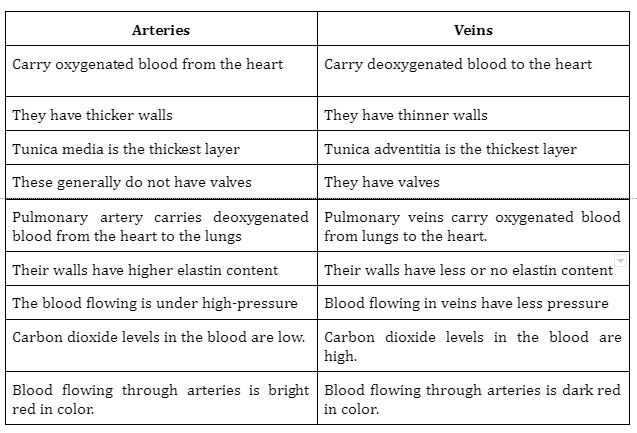
Difference between Arteries and Veins

Summary

  • The cardiovascular system consists of an effective network of three different types of blood vessels, each with distinct purposes.
  • The arteries transport blood rich in oxygen from the heart to the rest of the body.
  • There are three different types of arteries: elastic arteries, muscular arteries, and arterioles.
  • Veins can be deep-seated or superficial, and they return deoxygenated blood from the body to the heart.
  • For every artery that supplies blood to an area, there is a corresponding vein that carries blood away.

Frequently Asked Questions

1. What color of blood is present in veins?

Ans: Blood present in the body is red in color. It is bright red when it has received oxygen i.e. while flowing through the arteries and dark red when it has lost oxygen i.e while flowing through the veins.

2. What are the 4 main arteries of the heart?

Ans: The four main arteries of the heart are- 

  • The right coronary artery
  • The left main coronary
  • The left anterior descending
  • The left circumflex artery

3. What are the components of tunica adventitia?

Ans: The outermost tunica (layer) of a blood vessel, encircling the tunica media, is called the tunica externa , also referred to as the tunica adventitia. It is mainly made up of collagen.In arteries, it is supported by external elastic lamina.

What are Alleles?

Introduction

An allele is a variation of a certain gene. It is an alternative form of a gene. William Bateson and Edith R. Saunders  coined the word “allele“. Alleles were originally known as “allelomorphs”. These paired copies of the same gene convey information for the expression of the same characteristics, yet they have distinct effects on people within a population. Alleles are always located at the same location on a chromosome. On homologous chromosomes, alleles of a gene occupy corresponding locations. Alleles are part of DNA and hence they are made up of a deoxyribose sugar, a nitrogen base and phosphate group.

Types of alleles

There are two types of allele found, they are as follows-

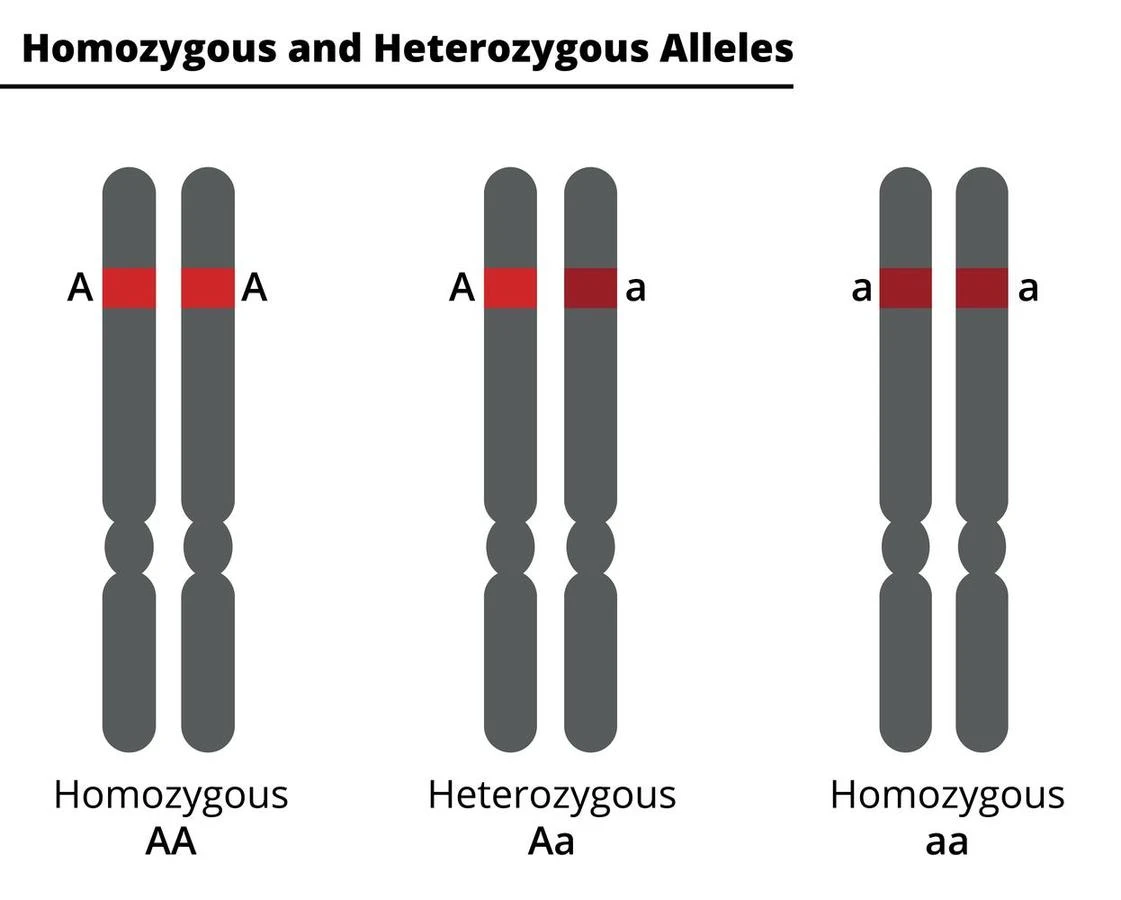
Homozygous alleles- These are identical alleles on a diploid organism’s chromosome. The organism is referred to as homozygous recessive for that particular trait if both alleles are recessive (aa). In contrast, a person could be homozygous dominant, if  they have both dominant alleles.

Heterozygous allele– These refer to an organism that has two distinct alleles at a same locus on a chromosome. In this case one allele establishes dominance (known as the dominant allele) and is expressed while the other allele (known as the recessive allele) is not expressed.

Homozygous recessive (aa), homozygous dominant(AA) and heterozygous (Aa) conditions are shown in this diagram.

Functions of  alleles

Following are the function of a allele

  • The various alleles define the various “traits” of a particular character.
  • The external phenotype of an organism is determined by the inherited alleles.
  • The observable traits are determined by interactions between alleles.
  • Alleles encode for improtant proteins, that are necessary for the survival of an organisms.
  • Mutations in alleles can be fatal or can lead to conditions such as CFTR, Achondroplasia, Sickle Cell Anaemia, etc.

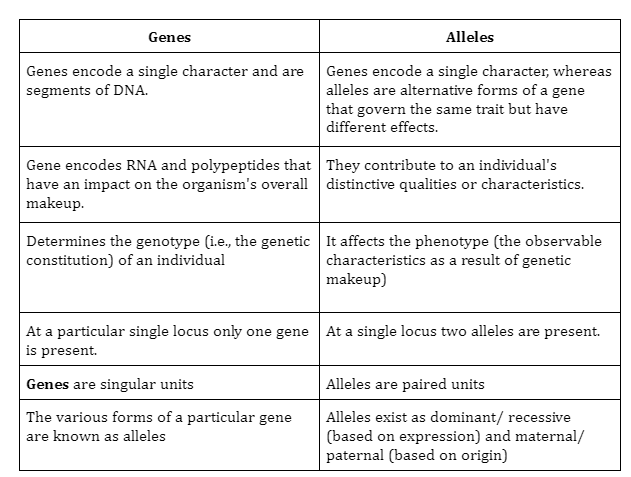
Difference between gene and allele

Summary 

An organism’s genetic makeup determines all of its traits, including its physical and metabolic properties. An allele is a gene’s alternate form with minute sequence variations. On homologous chromosomes, the allele(s) for a particular gene are always found at the same locus. A gene’s allelic variants enable more diverse detectable phenotypes among organisms. This leads to more genetic diversity in various species. Different hair colour, eye colour, skin pigmentations, etc seen in the population is due to the alleles for these respective traits. Genetic illnesses like Cystic fibrosis, Huntington’s disease, Sickle cell anaemia, thalassemia, etc. can be caused due to  mutations present in various alleles.


Frequently Asked Questions

1. What is a gene?

Ans: Genes are the functional unit of heredity that determine an organism’s unique features and are transmitted from parents to offspring or daughter cells.The term gene was coined by Wilhelm Johannsen in 1905.It encodes RNA and polypeptides that have an impact on the organism’s overall makeup.Any organism’s appearance, behaviour, and metabolism are critically impacted by gene expression.

2. What are multiple alleles?

Ans: In a group of organisms or species, there may be more than two distinct gene forms, which are referred to as multiple alleles. Although the genotype of the population’s members still only contains two alleles, each person may have a different set of alleles.

3. How many alleles per gene are there in humans?

Ans: Since humans are diploid organisms, each genetic locus contains two alleles for each gene. During  gametogenesis these alleles divides into different chromosomes. Following fertilisation, the zygote obtains two copies of every gene, one from each parent. These copies may or may not be similar.

Adrenocorticotropic Hormone (ACTH)

Introduction

Hormones are chemical substances that are released by ductless glands directly into the bloodstream. Although they are immediately released into the blood, only their intended target organs are affected. There are various hormones present in the body and all of them are controlled by the hypothalamus and hence it is known as the master gland. Adrenocorticotropic hormone, or ACTH, also known as corticotropin is synthesized  and secreted by the anterior pituitary gland and its targets are the adrenocortical   cells in the adrenal gland. It is responsible for the release of  glucocorticoid hormones, some sex hormones, and various other cellular pathways.

Synthesis

Synthesis of the ACTH hormone takes place in the basophilic cells of the anterior pituitary gland. It is generated from a molecule known as Pre-proopiomelanocortin or pre-POMC. This molecule signals the formation of a 241-amino-acid polypeptide POMC. This POMC undergoes various translational modifications and is ultimately cleaved by endopeptidases which yield a variety of polypeptide fragments including ACTH hormone.

Control mechanism

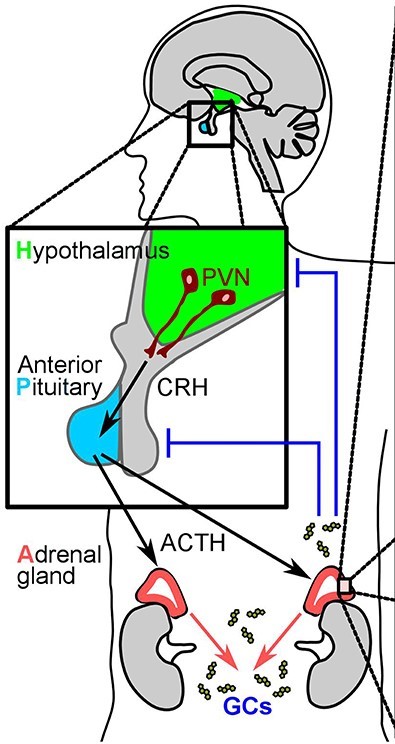
  • The hypothalamus, the adrenal gland, and the pituitary gland are collectively known as the  hypothalamic-Pituitary-Adrenal axis and are responsible for the secretion of ACTH in the body.
  • Low levels of cortisol in blood– When the level of blood cortisols are lower than normal, then the hypothalamus is triggered and it secretes corticotropin releasing hormone which in turn signals the pituitary gland to release ACTH in blood.
  • High levels of cortisol in blood- The elevated levels of cortisols in the blood is detected by adrenal gland receptors. This increased level of hormone inhibits the secretion of corticotropin releasing hormone, which in turn reduces the secretion of ACTH from the pituitary gland. This process is known as the negative feedback mechanism and is responsible for maintaining the blood cortisol levels in the body.

This image shows the process of release of ACTH and its effects on the adrenal glands.

Functions

ACTH in the body has various important functions such as-

  • ACTH  stimulates  the adrenal cortex for production hormones, particularly glucocorticoids.
  • It helps in the uptake of lipoproteins which in turn increases the availability of cholesterol in the adrenal cortex cells.
  • It helps in the regulation of metabolism, bone reabsorption, protein catabolism, hyperglycemia and lipolysis.
  • It also stimulates the secretion of other hormones for the synthesis of androgens which aids in spermatogenesis.
  • ACTH release activates the  adenylyl cyclase enzyme in the cell membranes which produces cAMP, this cAMP is used in various cellular pathways.

ACTH Disorders

ACTH disorders occur due the presence of tumours near the pituitary glands, malfunctioning of the adrenal gland, congenital diseases, hypopituitarism, genetic or hereditary disorders etc.

Excess of ACTH causes- 

  • Obesity in the upper body. 
  • Accumulation of fat near throat region
  • Stretch marks, in abdomen, thigh etc.
  • Men’s diminished libido and women’s irregular menstrual cycles.

Low level of ACTH cause-

  • Anorexia, or a loss of appetite.
  • In the affected people, low blood sugar and potassium levels may be seen.
  • Females may notice less hair growth in the pubic and armpit areas.
  • Different emotional reactions such as depression and psychosis are observed.

Summary

From the above article, we learn about the synthesis of ACTH, its functions, and the diseases brought on by the body’s inappropriate amounts of this hormone. The aforementioned parts teach us about the importance of the ACTH hormone. It is a crucial hormone that triggers the release of other essential adreno-cortical steroid hormones, such as cortisol, which is in charge of the body’s metabolism and particularly the body’s reaction to stress.

Frequently Asked Questions

1. Define catabolism and anabolism.

Ans: The process of converting complex molecules into simpler ones is referred to as catabolism. Energy is eventually released from the process. On the other hand, anabolism entails the joining of smaller molecules to create a larger and more complicated molecule. Energy is required for this procedure.

2. Give the two main types of hormones found in the human body?

Ans: In general, there are two sorts of hormones.Peptide hormones -they are made of amino acids and are soluble in water. For eg-Insulin.Steroid hormones that are fat soluble are the second category. Examples include sex hormones.

3. What is produced by the medulla of the adrenal gland?

Ans: Adrenaline and noradrenaline, are the main hormones secreted by the medulla area of the adrenal gland,and which are involved in the body’s flight or fight response.