Blog

Effects of Change of Temperature

Introduction

The measurement of a system or substance’s heat is called its temperature. The pace of an enzyme-catalyzed reaction typically increases as the temperature rises in most chemical processes. Temperature is the internal energy contained within a particular system. Temperature can be measured by a thermometer. Temperature is measured in degrees Celsius, which is written as °C, and can be also measured in Kelvin (K) and Fahrenheit (°F). Temperature alters the states of matter by reducing or increasing the interatomic distances. 

Temperature Effect/Effect of Temperature

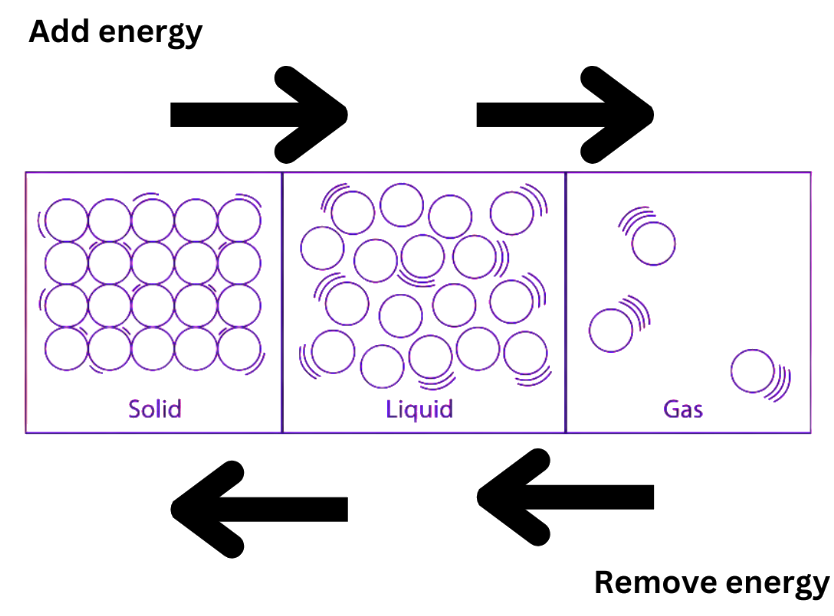
In several ways, the temperature has an impact on substances, processes, and enzymes. A substance’s state can be altered by varying its temperature. As the temperature rises, a solid can turn into a liquid, and as the temperature rises more, a liquid can turn into a gas. At high temperatures, a solid can be directly converted into a gas and this process is known as sublimation. Similar to the process where liquids may turn into solids at low temperatures, gases can become liquids by raising pressure while lowering the temperature. The rate of response of the transformation between the different states of matter is also positively or negatively impacted by temperature.

Learn More about Temperature and Heat. Check out more videos in 7th Class Science Lesson no 4.

The Effect of Change of Temperature on Solid State

As the temperature rises, the particles’ kinetic energy rises as well. As a result of the increase in kinetic energy, particles move faster and begin vibrating more quickly. The forces of attraction between the particles are weakened or eliminated by the heat energy. The particles start to travel more freely after leaving their fixed places. At some point, the solid melts and becomes a liquid. The melting point of a solid is the temperature at which it begins to dissolve into a liquid. When two distinct solid objects formed of the same substance are melted, they might combine to form a new one, a process known as fusion.

Effect of Change of Temperature on States of Matter

Heating and cooling are the two primary methods for converting states of matter. By applying heat, a solid can be transformed into a liquid. Similar to how a liquid may become a gas by heating. The opposite is also true; when a gas loses any of its thermal energy, it turns into a liquid. Further, removing a liquid causes its heat energy to solidify. The rising temperature causes a rise in the kinetic energy of the particles and the interspace between them. The force of attraction between particles is reduced by the increase in kinetic energy. 

Effect of Temperature on Pressure

A physical force that is applied to an item by anything in touch with it is called pressure. The pressure can be estimated by the force per unit area. Three variables which affect how much pressure a gas exerts on the walls of the chamber of a container in which it is contained and surrounded by a vacuum. These factors are the quantity of gas within the chamber, the chamber’s size, and the gas’s temperature. The link between the pressure and temperature of gases can be explained, according to the gas law, which states that the pressure of a given volume of a specific gas is precisely proportional to its temperature at a constant volume. This relationship between pressure and temperature is what is meant by the term “pressure-temperature relationship.” It can be modelled as:

  P∝T

A system’s temperature changes cause the molecules in the gas to move more quickly, increasing the pressure on the gas container’s wall. The system’s pressure rises as a result. The pressure likewise lowers when the system’s temperature rises. As a result, for constant volume, the pressure of a given gas is exactly proportional to the temperature.

The gas expands in volume at constant pressure as the temperature rises. The volume of the gas grows because it requires more space to move since the kinetic energy of the molecules increases as the temperature rises.
Effect of Temperature on Pressure

Effect of Temperature-Examples

The usage of light sticks or glow sticks is one illustration of how temperature affects the speed of chemical reactions. Chemiluminescence, a chemical process, occurs on the light stick. But neither is needed for nor produced by this reaction. The temperature has an impact on its pace. Precipitation reaction, activation energy, etc. are further examples.

Summary

The many states of matter are significantly impacted by temperature. The impact of temperature varies depending on the condition of matter. The kinetic energy of the state increases with temperature, yet the force of attraction varies depending on the state. The various states of matter are also impacted under constant pressure and volume. The pressure of the gas drops while the volume remains constant. The volume of the gas grows with constant pressure.

Frequently asked questions

1. What is the Liquid State of Matter?

Ans: Between the solid and gaseous forms of matter is the liquid state. Ice (solid), liquid as water, and gas as vapor are the three states of water. Although liquids do not have particular shapes, they do have specific volumes. The force of attraction in the liquid state is stronger than that in the gaseous state and weaker than that in the solid state. Atoms in this state have kinetic energies that are higher than those in solids, but lower than those in gases.

2. What Happens when the Temperature of a Gas Increases at Constant Pressure?

Ans. The temperature of a given system or gas container rises as the pressure in that system or container rises. While the pressure remains constant, the temperature rises, the velocity of the gas molecules increases, and the volume of the gas rise. As the gas’ temperature rises, the gas ascends into the atmosphere.

3. What is the Relationship between Pressure and Volume in Boyle’s Law?

Ans: When the temperature is maintained constant, Boyle’s Law states that the pressure exerted by a certain quantity of gas (the number of moles) is inversely proportional to the volume. The volume of the gas reduces with increasing pressure, and vice versa. The molecule tends to approach.
A Study on Various Modes of Excretion

Introduction

Every living thing engages in metabolic processes that produce compounds that, if allowed to build up in the body, could be poisonous. These materials are regarded as excretory wastes. Depending on several internal or external conditions, each organism uses a different technique to remove these wastes. We shall learn more about these excretory processes in this article, including the types of excretory products that each one eliminates.

Excretion and Excretory Wastes

The process of eliminating harmful or non-toxic wastes from the body is known as excretion. Each organism produces various excretory products. For instance, the primary excretory substance in fish is ammonia, whereas the primary excretory substance in humans is urea. These wastes are removed from the body via excretory organs.  Every living organism has a unique excretory system in its body.

For more help, you can refer to Science Class 7 Lesson No 11. Check out the video Lesson for a better understanding.

Methods of Excretion

Nitrogenous wastes produced during protein metabolism are the main excretory products produced by an organism. The conversion of the main nitrogenous waste ammonia results in the final excretory products of an organism. The final excretory products that are eliminated using a particular procedure are used to categorize the various excretion processes.

Ammoniotelic: Ammonia is released as a waste product during ammoniotelic. Because ammonia removal needs a significant amount of water, aquatic creatures like fish, poriferans, protozoans, etc. exhibit ammoniotelic. These creatures are referred to as ammoniotelic organisms.

Ureotelism: Ureotelism is the process of discharging urea as the final excretory waste. In terrestrial species like humans, it is common. A moderate amount of water is necessary for the body to remove urea from it. Ammonia is changed into urea in the livers of ureotelic organisms.

Uricotelism: Uricotelism is the elimination of uric acid, which is the ultimate excretory product. Because uric acid does not dissolve in water, the waste produced by uricotelic organisms is expelled as paste or pellets. Animals, including birds, reptiles, and some insects, exhibit uricotelism.

Guanotelism: Guanine is released as the body’s ultimate excretory product during Guanotelism. Guanine cannot be removed with water since it is an insoluble substance. Guanotelism has been observed in various spider species, as well as some types of earthworms and reptiles.

Aminotelism: The elimination of final waste products in the form of amino acids is known as aminonotelism. Mollusks and echinoderms both use this technique of excretion.

Urinary excretion

Excretion in Humans

The human body produces urea, uric acid, ammonia, and carbon dioxide as excretory products. Three of these are nitrogenous metabolic wastes that are eliminated in the urine or sweat, but carbon dioxide is a non-nitrogenous metabolic waste that is eliminated in the expired air. Let’s talk in detail about these excretory processes in humans.

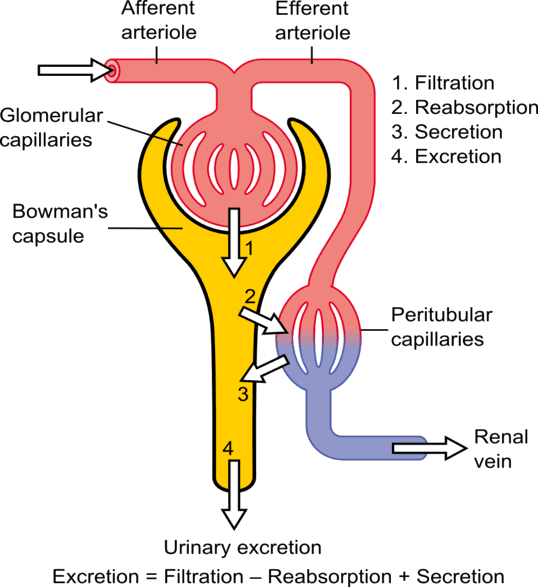
Urination: The kidneys and other related organs perform several procedures to remove nitrogenous waste from the body. Urine, the last byproduct of this process, is excreted from the body by micturition. Urine formation happens in three stages. The nephron, which is the kidneys’ functional unit, performs each of these processes.

Glomerular filtration: The renal capsule, a nephron-like structure containing a cluster of blood capillaries, is where the first stage of urine production takes place. In this step, the blood is ultrafiltered, and the majority of the plasma as well as a few other molecules, including wastes, are taken out of it in the form of glomerular filtrate. This glomerular filtrate travels into the nephron’s long renal tubule, where it is absorbable.

Tubular reabsorption: The nephron is a structure that filters blood into a fluid called filtrate, much of which is then reabsorbed into the body. Resorption is a carefully regulated process that is modified to keep blood volume, pressure, plasma osmolarity, and pH in a stable state. Through the peritubular capillaries, reabsorbed liquids, ions, and molecules are restored to the bloodstream instead of being eliminated as urine.

Secretion: In this stage, chemicals like creatinine, hydrogen ions, and drugs are released from the renal tubule walls and transferred to the urine. Each nephron produces urine, which the collecting duct gathers and then excretes through the ureters into the urinary bladder. The urethra is the passageway through which urine exits the body once the urinary bladder has become bloated.

Expiration: Humans expel carbon dioxide through breathing, which is the metabolic waste product created during respiration. During this phase of breathing, the air is expelled through the nostrils.

Sweating: Sweating eliminates extra water, salt, and some urea from the body. This is brought on by the sweat glands in the skin producing sweat.

Examples of Excretion

The human body’s different organs that are responsible for excretion include the kidneys, lungs, large intestine, liver, and skin. A few examples of excretion include the release of bile by the liver, which travels to the small intestine before exiting the body via the large intestine. The large intestine is one organ in the body that excretes solid wastes.

Importance of Excretion in Living Organisms

  • The removal of wastes from the body is crucial because if they are left there for an extended period, they can seriously harm the organ systems. 
  • For instance, if urea builds up in the body, it can be extremely poisonous and cause uremia. 
  • Too much carbon dioxide in the blood will cause carboxyhemoglobin to form and cause the blood to become acidic, which will reduce its ability to carry oxygen. 
  • If faecal matter forms in the alimentary canal after the conclusion of absorption is not cleared, it could lead to the accumulation of hazardous bacteria and fermentation products, which could injure or impair the gut’s normal function.

Summary

The process of eliminating harmful or non-toxic wastes from the body is known as excretion. The final excretory products that are eliminated using a particular procedure are used to categorize the various excretion processes. The body produces urea, uric acid, ammonia, and carbon dioxide as excretory products. The human body’s different organs that are responsible for excretion include the kidneys, lungs, large intestine, liver, and skin. The removal of wastes from the body is crucial because if they are left there for an extended period, they can seriously harm the organ systems. 

Frequently Asked Questions  

1. What is Renal Ultrafiltration? When does it Occur?
Ans. One of the kidney processes that dialysis treatment substitutes are the process of ultrafiltration, which involves draining fluid from a patient. When a driving pressure causes fluid to cross a semipermeable barrier, ultrafiltration occurs.

2. Nephrons are made up of different Parts, what are They?
Ans. Each nephron is made up of a proximal tubule, which is a convoluted and straight component, a renal corpuscle (glomerulus inside Bowman’s capsule), an intermediate tubule, a connecting tubule, a distal convoluted tubule, an outer, cortical, and inner medullary collecting ducts, among other structures.

3. Give an example of a Disease that can Develop as a Result of the Buildup of Nitrogenous Waste in the Body.
Ans. A medical disease known as uremia is brought on by the harmful consequences of unusually high levels of nitrogenous chemicals in the blood as a result of the kidneys’ inability to eliminate waste products through the urine.

4. What Happens if Excess Carbon Dioxide Accumulates in the Blood?
Ans. Too much carbon dioxide in the blood will cause carboxyhemoglobin to form and cause the blood to become acidic, which will reduce its ability to carry oxygen. 

Six Schools of Indian Philosophy

Introduction 

Indian philosophy encompasses the countless, unending intellectual traditions that developed on the Indian subcontinent across various epochs. Its origins cannot be pinpointed to a specific time period, but rather date back to endless antiquity. Origin of philosophies takes place, from these three stages- Pre-logic, Logic, and Ultra-Logic.

  • The pre-logic spans both the pre-and post-Mauryan eras.
  • The logic period begins from the Kushans to the Gupta period.
  • The dawn of the ultra-logic span began in India when India coincided with the advent of imperialism and the western philosophies of utilitarianism, idealism, and empiricism.

Indian Philosophy 

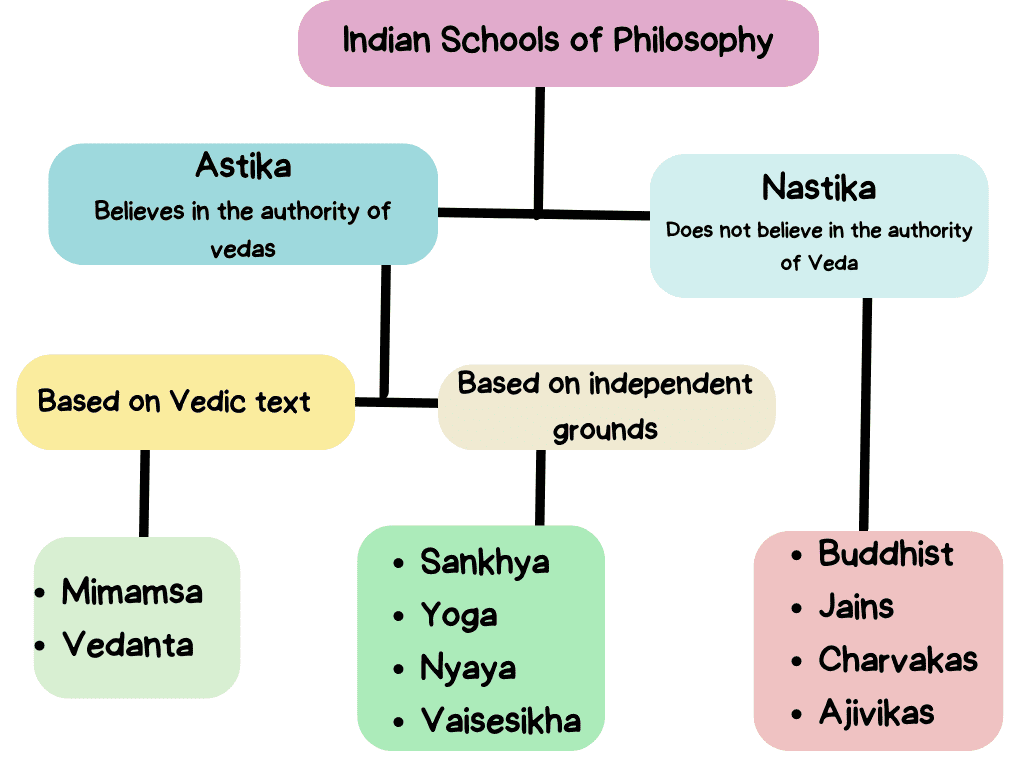
Hindu philosophy, also known as Indian philosophy,  looks for the way to salvation and the meaning of life. The concepts of Karma and moksha, or freedom from the cycle of birth and rebirth, were central to all Indian philosophy. There were two groups of philosophers here- 

  • Ashthika– which follows conventional philosophical ideas and regards the Vedas as the main source of knowledge. It has two primary branches, Atheistic (which denies the existence of a God) and Theistic (which believes in the existence of a God). Six Indian philosophical schools made up the Ashthika school of thought. They were Samkhya, Yoga, Nyaya, Vaisheshika, Purva Mimamsa, Uttara Mimamsa, or Vedanta.
  • Nastika– Disregarded the authority of the Vedas as the fundamental source of knowledge. The three branches of the Nashthika school of philosophy are Charvaka, Jainism, and Buddhism (the school of materialism).

Indian Philosophy

Schools of Philosophy 

The schools of philosophy which made up the Ashthika school of thought comprise 6 schools. They are as follows- 

  • Samkhya

It is one of the oldest philosophical traditions and was given by Kapila Muni. It holds that two components, Purusha (consciousness or soul) and Prakriti (nature and matter) are the sources of all things in the universe. Despite being the earliest school of thinking, it was formed on logical and scientific principles. These thinkers held that nature, instead of the soul or Purusha, was responsible for the world’s creation; but, by the fourth century A.D., they started giving equal importance to the Purusha in the creation of the universe. Because Samkhya combined both the materialism and spiritualistic aspects in the creation of the world, it was also known as dualistic philosophy. The Samkhya philosophy serves as the theoretical foundation for the Yoga school of thinking.

  • Yoga

Yoga is the application of the Samkhya theory. This school of thought was established by the sage Patanjali. According to this theory, nirvana can be attained by mastering the body, mind, and sense organs. Ashtanga yoga, which consists of various asanas and breathing exercises, can help one achieve this nirvana. In this instance, God is viewed as a mentor or teacher rather than a creator.

  • Nyaya

The Nyaya, whose literal meaning is “justice,” was another logical, scientific school of philosophy. This idea was put forth by Gautam Muni. This philosophy is based on parmana or pratyaksha pramana, or proof. It emphasizes that anything should be accepted based on logic and personal experience. Nyaya states that accurate knowledge can be obtained through inference, comparison, perception, and testimony.

  • Vaisheshika

The Vaisheshik philosophy is founded on metaphysical theory, which emphasizes that everything in the universe may be broken down into atoms, or parmanu.

It was put forth by the wise Kanada. It recognized just two paths to accurate knowledge: pratyakṣa (perception) and anumāṇa (inference). It resembles a naturalistic and objective philosophy of the cosmos in which each atom in the universe is given significance.

  • Purva Mimamsa

The wise man Jaimini founded this school of thought. It discusses the significance of mantras and yajnas in maintaining the cosmos. In a sense, it acknowledged the Vedas’ supreme authority, where adherence to their teachings can lead to the route to nirvana. It also says that studying the Vedas is a reliable way to learn and gain knowledge.

  • Uttara Mimamsa or Vedanta

The founder of this philosophical system was Badarayana. The Upanishadic section of the Vedas serves as the foundation for Vedanta philosophy, which places a strong emphasis on the Brahma Gyan. Advaita by Adi Shankara, Visishtadvaita by Ramanuja, Dvaita by Madhvacharya, Dvaitadvaita by Nimbarka, Shuddhadvaita by Vallabhacharya, and Achintya Bheda Abheda by Chaitanya Mahaprabhu are the six divisions of the Vedanta philosophy.

Effects of Indian Philosophy on Society 

Indian philosophy had a great impact on society.

  • They provided a variety of perspectives regarding the world or the universe.
  • Although these six schools of philosophy had different roads, they all pointed toward the same direction of nirvana or liberation.
  • These philosophies were founded on the ideas of metaphysics, religion, logic, and epistemology.
  • Indian philosophy gave the people the ability to think rationally, because people now began seeking the logic or justification for everything rather than just accepting it, based on blind faith.
  • To be liberated from the afflictions of the world, these ideologies stressed the significance of self-realization and made society more logical.

Summary 

Indian philosophical systems have developed millions of years ago and since then were responsible for shaping the community. The Hindu philosophy gave maximum importance to obtaining nirvana, or ultimate salvation. This can be obtained through various paths, which they named schools of philosophy. The 6 schools of philosophy were Samkhya, Yoga, Nyaya, Vaisheshika, Purva Mimamsa, Uttara Mimamsa, or Vedanta. All these Indian philosophical systems had the same goal: to make society and the people dwelling in it stronger

Frequently Asked Questions

1. Describe Charvaka.
Ans: Chravaka belonged to the Nashthika philosophical tradition. It stressed that there is no other world and that death marks the end of human life. In addition to this, they also believe in materialism.

2. What are the various yoga Techniques under Ashtanga Yoga?
Ans: Ashtanga yoga includes- Yama, niyama, asana, pranayama, pratyahara, dharna, dhyana, and Samadhi. These yoga techniques help in keeping command over the mind, body, and sense organs.

3. Jainism is considered a Nastika Philosophy. Explain.
Ans: Nastika is primarily a philosophy that rejects the notion of a deity.

Similar to this, Jainism rejected the significance of god, placing ‘Jina’ higher than god. This philosophy was primarily founded on the following three ideas: correct belief, proper knowledge, and right behaviour.

4. What was Buddhist Philosophy?
Ans: Between the severe ritualism of Hinduism and the extreme asceticism of Jainism, Buddhism offers a middle way. This philosophy also gives importance to logical thinking and reasons instead of blind faith.

Vajji

Introduction 

A significant Mahajanapada that existed between the 6th and 4th centuries BCE was Vajji. Its political system, in which kings were chosen by the populace rather than by hereditary succession, is what makes it special. The Vajjis had a republican system of governance at that time when the majority of the kingdoms were run by autocrats. There were eight distinct clans in the confederation. The Videhas, Lichhavis, Jantrikas, and Kshatrikas were the most popular of them. And the Gana-sanghas was the name of the political party in Vajji. One of the strong rulers of Magadha, Ajatshatru, later conquered the capital of this Mahajanapada.

Capital of Vajji

Among the sixteen Mahajanapadas, the Vajji occupied an important position due to its social and political arrangements. Some of these arrangements are as follows: 

  • There was a democratic type of government system at that time in the Vajji K, which was a significant Mahajanapada then.
  • By rejecting the Vedic philosophy of the Varna system, the kingdom was able to achieve greater unity and equality among the people. 
  • As opposed to Magadha, the republican society was stratified into two parts: royalty (Kshatriyas) and slaves (Dasa-Karmakar’s).
  • The capital of Vajji, Vaishali, was surrounded by strong fortifications, protecting it against enemy attacks.

Peculiarities of Vajji

  • The most significant feature about Vajji is that it was the first republican state in history to be located in India. 
  • Its political system was based on the “Gana-Sanghas” system. A group of rulers chosen by the entire populace made up the Gana-sangha. 
  • The sangha’s members were each given the title of king. Together, they carried out all rites and participated in assemblies to discuss and vote on issues affecting the welfare of the state.
  • These assemblies were closed off to women and slaves. 
  • Vajji’s status as a Gana-Sanghas persisted for a long time before the Gupta emperors conquered the state. 
  • This Mahajanapada included both Mahavira and Gautama Buddha. Even in Buddhist scriptures, we can find data concerning the operation of Gana sanghas.

For more help, you can refer to Social Studies Tuition. Check out the video Lesson for a better understanding.

Gautama Buddha and the Magadha-Vajji War

Gautama Buddha and the Magadha-Vajji War

The influence of Gautam Buddha in the Magadha-Vajji battle is a topic of debate. Even though Buddha often shied away from social and political matters, it is thought that King Ajatshatru dispatched his minister to consult with Buddha. Buddha explained to him the seven noble truths, which made Vajj a powerful kingdom that was challenging to subdue. Buddha intended to avert the conflict between Vajjia and Magadha in this manner. However, Ajarshatru utilized the Buddha’s guidance and discovered a strategy to overthrow the Vajji empire.

Magadha – Vajji War and the Consequences 

Between 484 and 468 BCE, a conflict between the Magadha and Vajji kingdoms erupted. This conflict pitted the Licchavis confederation of Vajji against the Haryanka dynasty of Magadha. It was rumoured that a town close to the Ganges river was home to a diamond mine. The Licchavis of Vajji and the ruler Ajatashatru were about to split that equally. However, Ajatashatru fell short of the goal, and the Vajjian people assumed full responsibility. As Ajatashatru grew restless, he reasoned that it would be impossible to battle the entire Vaishali at once. He, therefore, decided to act first by dissolving the unity of the Vajji kingdom’s Gana-sanghas.

To learn how to vanquish the Vaishali, he sent his minister to the Buddha. The seven secrets of the Vaishali city and the Vajjis were revealed by Buddha. He claimed that residents of the city of Vaishali were extremely timely, respectful to their elders, and considerate of women in their community. The Vaishali city’s daughters were very strong. Ajatashatru sent his prime minister to join the alliance of the Vajji city after learning about its secrets. He was able to divide the Mahajanapada in a short amount of time, and after a protracted conflict that lasted 16 years, he eventually annexed this state.

The Vajjians made every attempt to battle Magadha, even though they were ultimately vanquished during this conflict. They shut the main gate and surrounded themselves with the city’s defences. Vaishali was surrounded by high, sturdy walls. As a result, Ajatashatru was unable to knock down the wall. Finally, the Magdhan army was able to breach Vaishali’s defences and invade the city. When the Magadhan people defeated the Vajji, the fight was finally over. The Magadha empire subsequently annexed the Vajji Kingdom.

Summary 

A significant Mahajanapada that existed between the 6th and 4th centuries BCE was the Vajji. There was a democratic type of government system at that time in the Vajji Kingdom. Its political system was based on the “Gana-Sanghas” system. The capital of Vajji, Vaishali, was surrounded by strong fortifications, protecting it against enemy attacks. Between 484 and 468 BCE, a conflict between the Magadha and Vajji kingdoms erupted. The Vajjians made every attempt to battle Magadha, even though they were ultimately vanquished during this conflict. The Magadha empire subsequently annexed the Vajji Kingdom.

Frequently Asked Questions

1. What do you understand about Mahajanapada? Give an Example.
Ans. The places where the Indo-Aryan tribes resided during the later Vedic period came to be known as Mahajanapadas, or “great and powerful kingdoms.” An example of Mahajanapada is Vajji.

2. List Sixteen Sixth-Century BCE Mahajanapadas.
Ans. Gandahar, Kamboja, Magadha, Vajji, Matsya, Kuru, Chedi, Malla, Kosala, Shurasena, Ashmaka, Anga, Kashi, Avanti, Vatsa, and Panchala are the sixteen sixth century BCE Mahajanpadas.

3. Who was Ajatshatru?
Ans. The second strong monarch of Magadha was Ajatshatru, the son of Bimbisara. He had a reputation for winning wars. Among the kingdoms he overthrew were Vaishali, Kasi, and Kosala. Magadha rose to prominence under him as the most powerful kingdom in northern India.

4. What is a Republic? Name a few Historic Indian Republics called Mahajanapadas.
Ans. Republic is a form of governance in which the ruling class is chosen by the populace rather than by hereditary descent. Malla, Vajji, Kuru, and Kamboja were a few of the republic’s mahajanapadas in history.

A Guide To Composition And Function Of Lymph

Introduction

The human body is a complex structure made up of several organs that are arranged into different systems and are designed to perform specific functions during various life events. To stay healthy, each of these systems needs a constant supply of oxygen and nutrients. The metabolic wastes produced by each of these systems must also be transported to the excretory organs to get expelled from the body. The body’s fluids, which are constantly circulated throughout the body, carry out all of this transportation. These fluids are lymph and blood. This article will go into further detail about lymph.

What is Lymph?

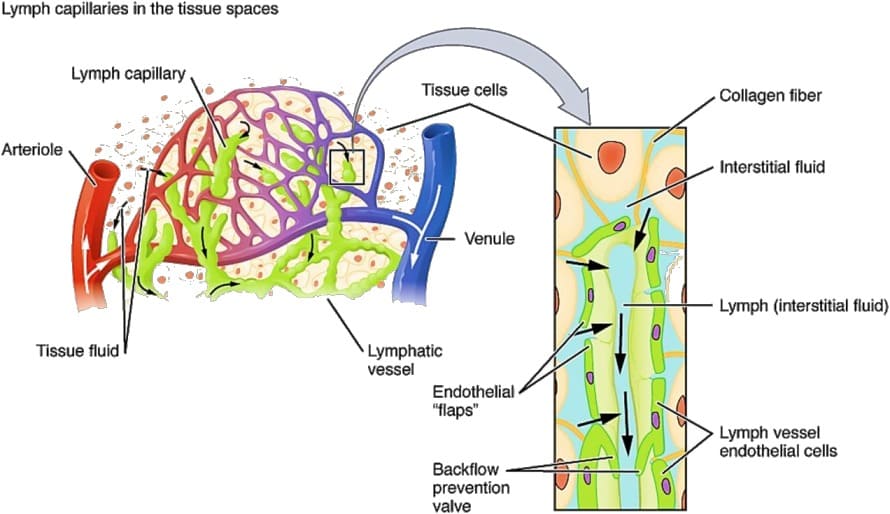
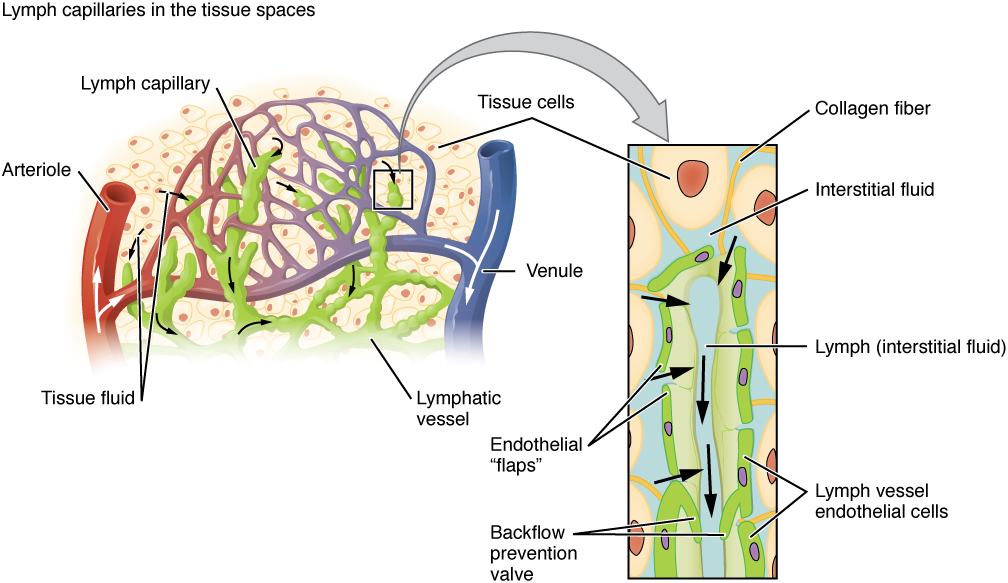
An alkaline translucent fluid called lymph fills the gaps between the lymphatic tissue and travels via the lymph vessels. It is a vascular fluid connective tissue that aids the immune system in performing its duties by transporting chemicals throughout the body. It is the primary component of the lymphatic system.

 Image source

Composition of Lymph

Plasma and lymphocytes are the two components that make up the lymph.

Plasma: The lymph’s fluid component and its matrix are known as plasma. It is produced as a result of the ultrafiltration of blood plasma through the capillary walls. Its composition is essentially similar to that of blood plasma, with the exception that it has a higher concentration of glucose and a lower proportion of proteins, calcium, or phosphorus.

Leucocytes: Unlike blood, the lymph’s cellular makeup only consists of amoeboid WBCs, also known as leucocytes. Lymphocytes are the main form of WBC that are present in the lymph. These WBCs are agranular, and their main job is to help the body’s defence system by assisting in the production of antibodies. So we can say that lymph is the blood that has been stripped of its red blood cells, platelets, and some proteins.

Lymph vs Blood

The two fluid connective tissues in the body are blood and lymph. However, there is a big difference in the way they are made and how they circulate. The distinctions between lymph and blood are outlined in the table below.

LymphBlood
Lymph is a colourless fluid in connective tissue. Blood is a red-coloured fluid. 
The lymphatic system carries lymph through it. The cardiovascular system carries blood through it. 
Leucocytes and plasma make up the lymph. Plasma, leucocytes, erythrocytes, and thrombocytes make up blood. 
Proteins, calcium, and phosphate are present in lymphatic plasma in comparably lower amounts. Higher amounts of calcium, phosphorus, and proteins are present in the blood plasma.

Lymph, Lymphatic Vessels, and Lymphoid Organs

  • The lymphatic system is made up of lymph, lymphatic veins, and lymphoid organs. The interstitial fluid that is lost from the circulatory system as a result of the filtration of blood through capillary walls is restored to it via this supplementary pathway. 
  • The lymphatic system is made up of several soft, fragile lymph nodes, which are bean- or sphere-shaped structures. 
  • Lymph nodes are typically invisible and are hard to find. They can be seen in the armpit, groin, neck, and region between the chest and abdomen. These nodes may swell as a result of an infection within the body, which may be a sign that the body is fighting against the illness.
  • In the lymphatic system, the lymph passes through the lymph vessels. The main lymphatic vessel is the thoracic duct, which enters near the base of the spine and receives lymph from the lower chest, pelvis, and abdomen. 
  • Primary lymphoid organs and secondary lymphoid organs are the two categories of lymphoid organs. The bone marrow and thymus are prominent examples, but the spleen, tonsils, and several other mucus membrane tissues are secondary examples. 
  • The lymphoid organs are linked to the development of immune cells and play a crucial part in the body’s immunological response.

The Function of the Lymph

The lymph has two main roles: supporting the circulatory system and boosting the immune system. The lymphatic system serves the following functions.

  • Immune response: White blood cells, which are a vital component of the body’s defense system, are found in the lymph. Lymphocytes in the lymph secrete antibodies that defend the body against foreign invaders.
  • Fat absorption from the digestive tract: Blood cannot carry fats. They circulate throughout the body after being absorbed by the lymph.
  • Acts as a middle man: Lymph serves as a conduit for the exchange of substances between the blood and the tissues. so serves as a bridge between the blood and tissue cells.
  • Waste material transportation: Waste products leave the tissues and are carried by lymph, which then excretes them into the blood for them to be transported to the excretory organs for removal from the body.

Summary

An alkaline, translucent fluid called lymph fills the gaps between the lymphatic tissue and travels via the lymph vessels. Plasma and lymphocytes are the two components that make up the lymph. The lymphatic system is made up of lymph, lymphatic veins, and lymphoid organs. The lymph has two main roles: supporting the circulatory system and boosting the immune system.

Frequently Asked Questions  

1.Why is Lymph Regarded as Blood without Some Proteins, Red Blood Cells, or Platelets?
Ans. White blood cells and plasma make up the lymph. Although the composition of lymphatic plasma is essentially identical to that of blood plasma, it lacks certain proteins, and coagulating agents, and has significantly less calcium and phosphorus. Lymph can therefore be compared to blood, which lacks some proteins, red blood cells, and platelets.

2.How does Swelling of Lymph Nodes Occur?
Ans. Any type of infection in the body can cause swelling in the lymph nodes. It is a sign that the body’s immune system is working to fight off an infection of some kind.

3.How does the Lymphatic System Function?
Ans. By supporting the immune system and guarding the body against external intruders, the lymphatic system serves a crucial role in the body. Additionally, it controls blood volume by replenishing the interstitial fluid that drains from blood as it flows through blood capillaries.

4.Define Lymphedema.
Ans. Lymphedema is a condition in which the body’s lymphatic system accumulates protein-rich fluid, which causes swelling in tissues. Typically, it affects the hands or legs, but it may also develop on the chest walls, abdomens, necks, and genital areas.

5.What is Lymphatic Cancer?
Ans. Lymphoma is s cancer that affects the body’s immune system, which fights germs. There are lymph nodes (lymph glands), spleens, thymus glands, and bone marrow in the lymphatic system. All of these areas, as well as other body organs, can be affected by lymphoma.

A Brief on Prehistoric Earth

Introduction

The widely recognized nebular theory postulated that a massive cloud of dust including hydrogen and other gases created the solar system, including the planet earth. Small earthly particles like iron and nickel were created as a result of the earth’s contraction, rotation, and lowering of temperatures. The planet was created approximately 4.5 billion years ago after millions of years of precipitation and accumulation. Since then, the earth’s temperature has decreased, causing the crust to become more fragile. However, the earth’s interior core is still hot and igneous.

A short note on Prehistoric Earth’s Origin of Life

There were numerous theories about the origins of life on Earth. 

  • According to the Panspermia theory, some scientists thought life originated from spores that came from outer space, while others hypothesized that it originated from decomposing materials like dirt, straw, etc (Spontaneous generation theory). Different experiments were carried out by various scientists, and they all disproved the hypothesis of spontaneous generation. 
  • Later in 1953, Oparin and Haldane advanced the theory that life emerged from pre-existing non-living organic molecules like RNA, DNA, and other similar molecules because of abiotic chemical reactions.
  • Numerous studies have suggested that RNA came before DNA, even though it is still unclear what replicating molecule was the earliest. Because RNA molecules can self-replicate and are simpler than DNA, they are considered autocatalytic.

Precambrian Life

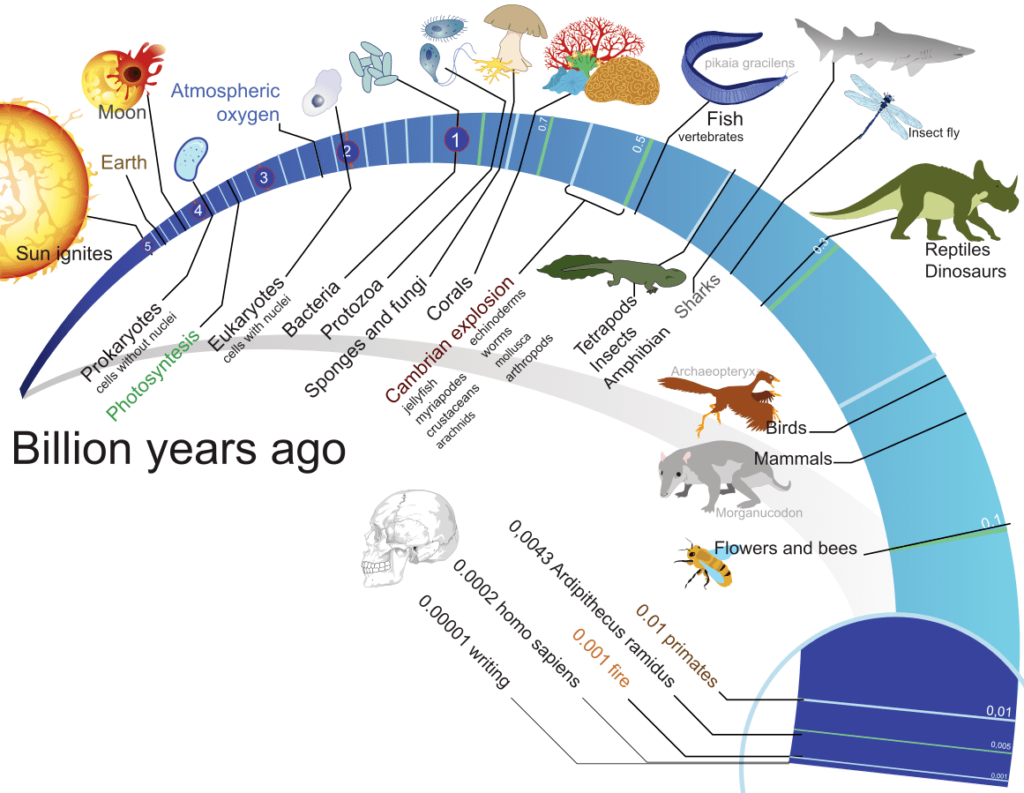
The Precambrian period includes the Archean and the Proterozoic eons from 4.6 billion years to 542 million years. Most of the life that existed during the Precambrian period were prokaryotic organisms. Microfossils that looked like stromatolites and cyanobacteria from the Precambrian epoch first revealed the presence of life about 3.8 billion years ago (layered mounds). Additionally, the absence of oxygen in the early atmosphere rendered primitive organisms anaerobic. However, when cyanobacteria developed photosynthesis, it added oxygen to the atmosphere.

Eukaryotes, which have a nucleus, cytoskeleton, organelles, and mitotic spindle, first evolved around two billion years ago. It was once thought that endosymbionts like mitochondria and chloroplasts descended from bacteria. The evolution of eukaryotes benefited greatly from these endosymbiotic relationships.

Image Source: https://commons.wikimedia.org/wiki/File:Timeline_evolution_of_life.svg

Cambrian Explosion- Origin of Animal Diversity

The surge in the diversity of multicellular organisms during the early Cambrian epoch, which began 540 million years ago, is known as the Cambrian explosion. Tens of millions of years before the early Cambrian epoch, the first multicellular living forms began to appear as fossils. These ancient animals have diverse body designs from those of living creatures today. They vanished and were replaced by modern-day animal body types in the Cambrian fauna.

Evolution of Land Plants

The evolution of land plants from a green algal ancestor is a significant event in the history of life since it caused profound changes in the earth’s environment and the formation of the entire terrestrial ecosystem. The formation of land plants and the divergence of the four main surviving clades (liverworts, hornworts, mosses, and vascular plants) may have taken place during the late Ordovician and Silurian periods, according to evidence from fossil spores found in the mid-Ordovician.

Formation 

The majority of researchers concluded that the earliest life form and subsequent other life forms on earth appeared as a result of chemical evolution, or the production of molecules. The Nebular theory, developed by Immanuel Kant and Pierre Laplace, postulates that planets are formed by a cloud of hydrogen and helium. Clouds were created by tiny particle collisions, and the planet itself was created through accretion.

Evolutionary Milestones

  • Life’s history is represented by several milestones. For instance, unicellular organisms first appeared on Earth, and ever since then, diversification has led to the emergence of complex living forms. These living forms will eventually go extinct and be replaced by other creatures. 
  • Complex living forms evolve as a result of this evolution. According to some fossil research, numerous species began to independently become multicellular around 1 billion years ago, and animals started to grow hard portions in their bodies to survive on the earth. 
  • Dinosaurs were the most prevalent class of creatures on the planet for millions of years. For a considerable amount of time, they dominated the prehistoric landscape before a disaster led to the extinction of dinosaurs.
  • The Great Apes, from which humans emerged, was the next significant event. Human evolution is still clearly visible, although it has not yet reached its conclusion.

Presence of Humans

  • The most well-known species, Homo sapiens, is a descendant of hominids, the first creatures that resembled humans. 
  • According to several fossil records, archaeological findings, and embryological research hominids are thought to have diverged from other primate species in the southern and eastern African areas 2.5–4 million years ago. 
  • As a result, they have bipedalism in common (the ability to walk on two legs).
  • Additionally, as hominids evolved and adapted to their habitats, their brain sizes grew. Around 2.3 million years ago, Homo habilis, the earliest human-like hominid, had a brain size of 650–800 cc and started using stone tools.
  • Fossils discovered in Java in 1891 revealed the existence of Homo erectus, the next stage of human evolution, some 1.5 million years ago. They have a 900cc larger brain due to evolution. Then they began to migrate from Africa to Eurasia, where they started to learn how to make fire and develop defenses.

Summary

The widely recognized Nebular Theory postulated that a massive cloud of dust, including hydrogen and other gases, created the solar system, including the planet Earth. The majority of scholars concluded that the earliest life form and subsequent other life forms on earth appeared as a result of chemical evolution, or the production of molecules. Dinosaurs were the most prevalent class of creatures on the planet for millions of years. The most well-known species, Homo sapiens, is a descendant of hominids, the first creatures that resembled humans.

Frequently Asked Questions  

1.What is Coal’s Formation Process? List the Types of Coal.
Ans. The layers of dead plants and animals underwent physical and chemical changes as a result of pressure and heat. Deposits rich in carbon were created as a result of this. Different forms of coal include lignite, bituminous coal, and anthracite.

2.Explain Index Fossils?

Ans. Index fossils are fossils that are used to identify geologic formations with broad regional distributions and short time scales. These fossils are numerous, dispersed, limited in geological time, and unique.

3.What Factors led to the Earth’s Changes?
Ans. Physical changes such as mountain development, tectonic movements, volcanic eruptions, climate changes, and biological changes on the planet resulted from the evolution of new life forms.

4.What are the Necessary conditions for Life to Sustain on Earth?
Ans. The necessary conditions for life to sustain on earth are as follows,

  • Proper distance from the sun
  • Presence of water and the atmosphere
  • Existence of the lithosphere and biosphere
  • Ideal temperature ranges (around 17 degrees Celsius).

Agricultural Soil

Introduction

The topmost layer of the earth is called soil, and it is made up of several elements. Environmental elements like water, wind, temperature, and even living things usually have an impact on them. One type of soil may not have the same physical or chemical properties as another. The soil is now inhabited by microorganisms like bacteria, algae, fungi, and actinomycetes that fix nitrogen, decompose organic matter, transport vital nutrients, and improve the texture of the soil. High-yielding crops in agriculture depend on the texture, composition, and environmental tolerance of the soil. Consequently, the soil is first prepped before being used for improved harvesting.

What is Soil?

A complex material called soil develops on the earth’s surface. It emerged through the disintegration of rocks. By their porosity, aeration, and water-retention ability, they act as a medium for the growth of plants.

Let our expert Guru be your guide toward improving your grades and reaching your highest potential.l. Delve into Science lessons for class 7th by 88Guru.

Types of Soil

Based on its texture and composition, the soil is divided into different categories.

Clay soil:

  • Compared to other soil types with a composition of very small particles, clay soil stands out for having particular qualities. 
  • It is referred to as heavy soil because the soil particles are firmly packed and there are few or no air spaces between them. 
  • It has trouble allowing air and humidity to enter the soil yet is effective at holding a lot of water. 
  • Although clay is sticky when wet, it dries out when water vapour escapes from the ground.

Sandy soil:

  • Sandy soil is hot and dry because it has a large proportion of sand and little clay. 
  • It can be created through the fracturing of rocks. 
  • When it rains heavily, the earth can quickly absorb water, which benefits the drainage system. 
  • The lack of proper water retention and poor nutrient availability make the soil unsuitable for plant growth.

Loamy soil:

  • Silt, clay, sand, and organic matter that has already decomposed make up loamy soil, which has a dark colour. 
  • Because the soil’s particles are dispersed, air can easily penetrate it. 
  • It works well for plant growth since clay and sand both have beneficial properties.

Silt:

  • The particle size of such soil is medium. 
  • Although the soil is fertile and smooth, it has few nutrients. 
  • It is utilized for drainage since it effectively traps water.

Which Soil is Suitable for Agriculture?

Crops can only be grown in a particular soil if it meets certain criteria, including aeration, fertility, and crop type. Generally speaking, it differs amongst crops. To provide appropriate nutrients and maintain the water, the loam soil is made up of sand, silt, and clay. In this way, it is regarded as appropriate soil for farming.

Components of Soil

  • From one place to another, the soil’s precise makeup varies. Minerals, water, and organic and inorganic substances make up the major volume of the soil. 
  • Generally speaking, the abiotic (non-living) components are made up of about 45% air, 25% water, 25% minerals, and 5% organic stuff.

Preparation of Soil

Before planting, the soil is prepared to ensure that the region is suitable for farming. The proper growth of crops might benefit from soil preparation. The soil preparation process involves a variety of tools.

Tools Involved in Soil Preparation

Plough:

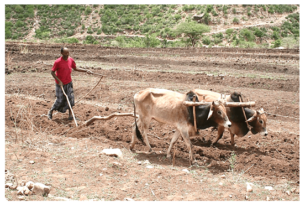
        Plough is dragged by two bullocks and is composed of wood or iron. The pieces are as follows: 

  • Shovel shaft (a long batten of wood). 
  • Ploughshare (heavy triangular metal item linked to one pole of shaft) (heavy triangular metal piece connected to one pole of shaft). 
  • Beam (the other pole of the shaft is connected to the stand on the necks of bulls).
Plough is dragged by two bullocks and is composed of wood or iron.

Hoe: 

  • Hoe is used to break up the soil and remove overgrowth. 
  • Bulls drag a long wooden pole with heavy metal attached to it to loosen the dirt.

Cultivator:

  • Both labourers and cultivators plough the ground. 
  • The main ways that tractors are beneficial are by eliminating physical labour and saving time.

Different Steps Involved in the Preparation of Soil

The process of preparing soil involves these three steps: 

Ploughing: 

  • It is the process of agitating and moving the soil to bring nutrient-rich soil to the surface. 
  • It is an essential phase in agriculture, and iron or wood has been used to apply it. 
  • Bullocks or driven cultivators pull the plough. 

Leveling: 

  • Due to the numerous huge lumps in the region that was ploughed, it is crucial to level the ground before beginning cultivation. 
  • A leveler is a tool with a board made of metal or wood that is used to level the soil.

Manuring:

  • Manure is decomposed organic matter that is used as fertilizer to improve the quality and growth of crops. 
  • Manure is utilized to replenish the soil with nutrients necessary for the successful growth of crops.

Importance of Preparation of Soil

  • By preparing the soil in a way that safeguards the crops from irritants and weeds, it is possible to meet the needs of crops, including those for sufficient water, minerals, oxygen, nutrients, and solar exposure. 
  • Ploughing helps cultivators get nutrient-rich soil on the top, promote soil aeration, and get rid of unwelcome weed development. 
  • Crops must be properly mowed to ensure a superior harvest.

For more help, you can Refer to Lesson 9 – Story of soil in Science Class 7. Checkout the video Lesson for a better understanding.

Summary

A complex material called soil develops on the earth’s surface. It emerged through the disintegration of rocks. Based on its texture and composition, the soil is divided into different categories, such as clay, sandy, silty, and loamy soil. Crops can only be grown in a particular soil if it meets certain criteria, including aeration, fertility, and crop type. Ploughing helps cultivators get nutrient-rich soil on top, promote soil aeration, and get rid of unwelcome weed development.

Frequently Asked Questions

1. What characteristics of Soil make it Appropriate for Farming?

Ans. A good supply of nutrients and oxygen, the ability to hold onto water, and weather tolerance are all characteristics of soil that make it suited for agricultural use.

2. What makes up Soil?

Ans. 45% of air, 25% of water, 25% of minerals, and 5% of organic matter make up soil. Organic matter is the byproduct of plants and animals that have decomposed.

3. What is Clay Soil?

Ans. Compared to other soil types with a composition of very small particles, clay soil stands out for having particular qualities. It is referred to as “heavy soil” because the soil particles are firmly packed and there are few or no air spaces between them.

4. Define Ploughing and what are the Components of the Plough.

Ans. Loosening and turning the soil is done through ploughing. A plough is a farming implement made up of a beam, ploughshare, and shaft.

5. What kind of Soil can hold a Significant Amount of Water, and Why?

Ans. Clay soil can store a huge quantity of water. It is referred to as “heavy soil” because the soil particles are firmly packed and there are few or no air spaces between them. It has trouble allowing air and humidity to enter the soil yet is effective at holding a lot of water.

Agricultural Practices: Selection and Sowing of Seeds

Introduction

Agriculture is the practice of raising animals and cultivating crops. To meet the growing need of the population, the seed is crucial in the development of palatable foods. It is a fertilized ovule that germinates to give rise to new plants. The crucial phase in agriculture is choosing good quality seeds because they can reduce replanting, improve uniformity, and encourage the early growth of crops. Proper agricultural practices increase the yield and quality of crops produced.

Selection of Seeds

In general, seed quality affects plant development. Selecting effective seeds, and seed selection can boost agricultural yield. Getting seeds from healthy plants is crucial for agriculture since many different plant diseases can be spread through them. Spreading out chosen seeds over the initially prepared soil is the act of sowing. When choosing seeds for sowing, the following characteristics of the seeds are essential:

  • Infections shouldn’t be present in the seeds. 
  • They ought to have a strong ability to germinate. 
  • A specific seed shouldn’t be combined with weeds or other seeds. 
  • They ought to produce the desired amount of crops. 
  • Avoid using seeds that have been damaged or crushed. 
  • They ought to be immune to illness. 
  • They ought to be able to endure challenging circumstances.

Steps to Ensure Proper Growth of Seeds

Agricultural practices are a set of rules used in the agricultural sector to make farming easier and produce better agricultural goods.

Agricultural practices are a set of rules used in the agricultural sector to make farming easier and produce better agricultural goods.

Preparation of Proper Soil

The agricultural area must be prepared for crop production through soil preparation. For seeds to germinate and help with efficient agricultural cultivation, it is necessary. The process of preparing soil involves these three steps:

  • Tilling/Ploughing: ploughing is the process of liquifying and moving the soil to improve adequate aeration and bring the nutrient-rich soil to the surface of the land. It is done with a cultivator, hoe, or plough.
  • Levelling: Because the earth is lumpy and irregularly dispersed, the levelling procedure distributes the soil evenly and levels it out. Additionally, it guards against soil erosion.
  • Manuring: To grow and produce fruits and seeds, plants need the right nutrition. Applying manure to agricultural land is known as manuring. Manure is an organic material that has decomposed and is used to enrich the soil by delivering nutrients for crop growth.

Sowing of Seeds or Planting  

Sowing refers to the act of distributing or planting seeds. The right depth and quantity of water must be used while planting seeds. To achieve a desirable culture, the right seeding distance and interval are crucial. The following are some seeding techniques:

  • Traditional method: For sowing, a funnel is employed that is filled with seeds that are travelling via pipes with sharp edges. The seeds are dispersed as the pipe’s edge penetrates the ground.
  • Broadcasting: By distributing seeds throughout the ground, seeds are sown by the manual or mechanical method called broadcasting. However, owing to the uneven seed dissemination, this strategy is not advised for the growth of high-yielding crops.
  • Dibbling: The act of “dibbling” involves evenly spacing the seeds in the seedbed before covering them with dirt. A long, pointed tool called a “dibbler” is used to make holes in the earth before sowing.
  • Seed drill: Typically, tractors are utilized to assist in the sowing of seeds using a seed drill. The seeds can be sown at the proper depth and distance, and it is crucial to make sure the soil is covered after sowing.
  • Transplantation: The seedlings are moved to the cultivable land after the seeds have initially been sown in a small garden. As a result, this procedure takes a long time.

Proper and Timely Irrigation

Agriculture requires proper irrigation since excessive watering can harm the soil by causing water logging, which hinders the soil’s ability to absorb nutrients and minerals. Because the farmer needs to supply enough water, successive irrigation necessitates breaks.

Supply of Proper Manure and Fertilizers

To provide the nutrients needed for plant growth, manure and fertilizers are added. Manure is made from decomposed animal and plant wastes, making it an environmentally benign substance that also improves soil fertility. Inorganic fertilizers like ammonium sulfate, ammonium phosphate, and NPK are produced commercially, and too much fertilizer can impair the soil’s ability to support plant growth.

Protection of Crops/Plants From Weeds

Unwanted plants, known as weeds, can harm farmed plants by growing near desirable ones. Crop yields are reduced, and pests and diseases use it as a host plant. These are eliminated by hand or using weed killers like naphthalene, acetic acid, etc.

Summary

The crucial phase in agriculture is choosing good quality seeds because they can reduce replanting, improve uniformity, and encourage the early growth of crops. Selecting effective seeds, and seed selection can boost agricultural yield. Agricultural practices are a set of rules used in the agricultural sector to make farming easier and produce better agricultural goods. The right depth and quantity of water must be used while planting seeds. 

Frequently Asked Questions

1. What makes Manure and Fertilizer different from one Another?
Ans. Fertilizers like ammonium sulfate are inorganic, whereas manure is an organic chemical made from the breakdown of plant and animal waste.

2. Write a note on Agricultural Practices.
Ans. Agriculture practices are a collection of rules that make farming easier. It entails the following: preparing the soil, choosing the right seeds, sowing, applying manure, fertilizers, and weedicides, as well as ensuring correct watering, harvesting, and storing.

3. Define Winnowing and Threshing.
Ans. Winnowing is the technique of separating grains utilizing the wind, whereas threshing is the act of freeing harvested grains by hand-battering or mechanical means.

4. What role does Seed Selection Play in Agriculture?
Ans. For the development of new individual plants, seeds are necessary. The development of desirable crops that decrease replanting and increase crop production can be achieved by choosing high-quality seeds.

Adrenal Gland

Introduction

A system of ductless glands that secrete hormones is known as an endocrine gland system. In the blood, hormones are carried directly to their target organs as chemical messengers. As hormones are synthesized in certain tissues, they trigger a cascade of events that allow for certain cellular responses. Adrenal glands are located above the kidney. They are divided into regions cortex and medulla. Both regions produce hormones that regulate electrolyte balance.

What are Adrenal Glands?

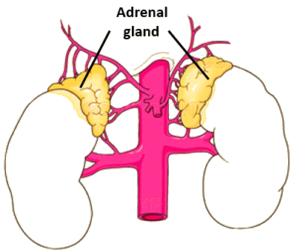
The body contains two adrenal glands. These are located above each kidney. They are a part of our endocrine system. Despite their small size, the adrenal glands are quite important for your body’s hormone-related functions. As a result, elements that affect your adrenal glands may have a big impact on your general health. If you believe you might have an adrenal problem, see a doctor.

Want to get an “A” on your Science exams? Let our expert teachers be your guide towards improving your grades and reaching your highest potential. Watch the related video of this chapter in Class 8 Science lesson no 10.

Location of Gland

The adrenal glands are endocrine glands that are located over the lateral surface of each kidney’s upper poles. The adrenal glands are located at the back of the abdomen, between the kidney and the ribs. They are triangular, and the parietal peritoneum only covers the front of them. The right gland is pyramid-shaped, while the left gland is moderately-lunar.

Location of adrenal gland


Hormones Secreted by Adrenal Gland 

  • The gland’s outer layer is called the cortex. It generates both cortisol and aldosterone. The medulla is the gland’s most interior area. It generates both adrenaline and noradrenaline.
  • Epinephrine, also referred to as adrenaline, is a hormone that responds swiftly to anxiety by quickening the heartbeat and raising blood sugar levels in the body. 
  • Corticosterone controls the immune system and reduces inflammation in conjunction with hydrocortisone. 
  • Cortisol: With the help of cortisol, the body controls and utilizes fats, protein, and carbohydrates. In addition, it weakens the immune system and affects physiology, which the body uses to help it cope with worry. 
  • Aldosterone: helps the kidneys keep the blood and tissues of the body’s healthy salt chloride level. 
  • Norepinephrine, also referred to as noradrenaline, works in conjunction with epinephrine to respond to anxiety. Its primary function is to prepare the body and mind for combat.

Function

  • The adrenal glands are responsible for producing several hormones that help control blood pressure, produce several reproductive hormones, and maintain the proper level of salt in our blood and cells. 
  • The adrenal glands’ release of stress-inducing hormones causes one of the most well-known reactions, the “conflict of the panic response.” 
  • When and how rapidly an adolescent develops their reproductive system, helping during birth 
  • Our endocrine system’s pituitary gland, also known as the “master gland,” controls our adrenal glands. The main controller of your endocrine glands is the pituitary gland, which is located inside your skull. Abnormal signals may interfere with the number of hormones your pituitary gland advises your adrenal glands to generate.

Disease-related to the Adrenal Gland

Adrenal gland dysfunction might manifest when 

  • When your master gland is unable to efficiently regulate your hormone production, the adrenal glands may form benign or non-malignant tumours or harmful or cancerous tumours. 
  • Can suffer from disorders of the adrenal glands. 
  • People are born with particular gene diseases.

Cushing’s Disease

People with Cushing’s syndrome have excessive cortisol production from their adrenal glands. The most common cause of this is prolonged use of high dosages of corticosteroids. Lupus, arthritis, and pneumonia are just a few of the disorders that are treated with corticosteroids. They have cortisol-like effects throughout the body. 

Symptoms:

  • The round face, the fat accumulation at the base of the neck, and the fat bulge between the arms.
  • Skinny arms and thighs
  • Gaining weight unnecessarily
  • Prone to scarring skin
  • On the hips, chest, and stomach, there are wide, violet stretch marks.

Addison Disease

A rare autoimmune ailment called Addison’s disease may develop when your adrenal glands don’t produce enough cortisol or aldosterone. This self-harm sickness may cause your immune cells to attack the tissues of your adrenal glands. 

Symptoms: 

  • Arterial pressure is high despite the weight 
  • Loss or gain without cause. 
  • Hyperglycemia or intolerance to glucose 
  • low amounts of potassium 
  • Discomfort, stress, or panic episodes

Congenital Adrenal Hyperplasia (CAH)

Extremely little cortisol is synthesized in congenital adrenal hyperplasia (CAH), a genetic disease. Furthermore, persons who have this condition may also have additional hormonal issues in which their bodies create too much testosterone but not enough aldosterone.

Symptoms: 

  • Early acne, body hair, beards, or loud voices (women)
  • Rapid growth in children
  • Sterility due to underarm hair

Adrenocortical Carcinoma

Adrenocortical carcinoma is a malignant tumour that often develops on the exterior of the adrenal gland. Oftentimes, this type of tumour is only found after it has spread to the body’s other systems over generations.

Summary

The adrenal glands are located above the kidney. Despite their small size, the adrenal glands are quite important for your body’s hormone-related functions. The gland’s outer layer is called the cortex. It generates both cortisol and aldosterone. The adrenal glands’ release of stress-inducing hormones causes one of the most well-known reactions, the “conflict of the panic response.” When your master gland is unable to efficiently regulate your hormone production, the adrenal glands may form benign or non-malignant tumours or harmful or cancerous tumours.

Frequently Asked Questions

1. Is it necessary to have both Adrenal Glands to Survive?
Ans. Since the adrenal glands are necessary for human survival, removing both of them (which is quite unusual) forces the patient to take medications and hormone replacements.

2. Is it Possible to live with just one Adrenal Gland?
Ans. Your doctor will administer painkillers to you. Your body can function regularly if your adrenal gland is working properly. If both of your adrenal glands were lost or if your remaining adrenal gland isn’t functioning properly, you might take medication every day to restore the hormones they were making.

3. Do the Adrenal Glands play a role in Digestion?
Ans. The adrenal glands release the stress hormone cortisone to inhibit bodily processes like the immune response and digestion that are not necessary for immediate survival.

4. What are Hormones that make us Drained?
Ans. The adrenal glands also create the hormone aldosterone, which is problematic since it helps regulate your body’s normal fluid and electrolyte balances. As adrenal depletion increases, it makes your body generate less aldosterone, which results in dryness and electrolyte imbalances.

Adolescence Teenage Characters

Introduction

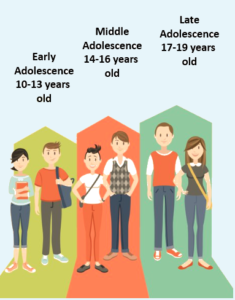
Humans are sexually dimorphic i.e., they have two distinct sexes- male and female. This dimorphism is seen in humans in favour of sexual reproduction which is the main reason for the diversity among humans. Humans progress through a transitional stage known as adolescence as they develop from childhood to adulthood and reach reproductive maturity. Beginning at age 10, adolescence lasts until age 19, after which a person is regarded as an adult. Hormonal changes are the main cause that affects physical appearance and aid in the development of reproductive characteristics.

Secondary Sexual Characteristics

A group of physical traits that separate individuals of one sex from those of the other sex within the same species is known as secondary sexual characteristics. They are necessary for sexual presentation but not directly engaged in reproduction. Males typically attract females for sex, and most of the time, females bear children. Some secondary sexual traits in people include males with facial hair and voice alterations, as well as females with huge breasts and rounded hips. Through adolescence, these characteristics start to emerge.

For more help, you can Refer to our video in Class 8 Science in Lesson no 10. Check out the video Lesson for a better understanding.

Stages of Adolescence

There are 3 stages of adolescence they are-

        • Early puberty (ages 10 to 13): At this time, the majority of people experience weight gain and height growth. In females, the hips and breasts develop. Males develop a deeper voice as well as larger Penis and Testicles.
        • Middle puberty (ages 14 to 17): During this time girls stop growing physically in terms of weight and height while males continue to grow in height and weight. Females’ menstrual cycle becomes regular and facial acne affects both sexes equally.
        •  Late puberty (ages 18 to 21): During this stage, the majority of people suffer decreased physical growth. They were already tall, and they are emotionally more stable than middle adolescence teenagers


Humans are sexually dimorphic i.e. they have two distinct sexes- male and female. This dimorphism is seen in humans as favour of sexual reproduction which is the main reason for the diversity among humans.

Human males and females show different sexual characteristics as given below-

Secondary Sexual Characteristics of Females

Estrogen‘s effects on females lead to secondary sexual traits. The following are secondary sexual characteristics seen in women:

  • Breast enlargement
  • rounded Hips
  • A leaner upper torso
  • A pitched high voice
  • Hair in pubic and underarm regions

Secondary Sexual Characteristics of Males

Secondary sexual traits in men are caused by testosterone produced in the testes. The hypothalamus and the secretions of the pituitary gland regulate testosterone in turn. Males’ secondary sexual traits include

  • the presence of body hair (arms, chest, and pubic hair)
  • facial hair, such as a beard and moustache
  • the deep voice brought on by laryngeal expansion,
  • a body having enlarged upper body muscles (chest)
  • The growth of Adam’s apple.

Summary

The physical attraction between the opposing sexes is the primary goal of sexual dimorphism. Some examples of sexually dimorphic traits in the animal kingdom are the colourful plumage of many bird species and the antlers of reindeer. Human life goes through various growth stages, and a variety of hormones work together to help us reach reproductive maturity. Even while male and female reproductive organs (testes and uterus) are present from birth in humans, reproduction is not feasible until the person reaches adulthood. The period between childhood and adulthood known as adolescence is marked by a range of physiological, physical, behavioural, and psychological changes in a person which gives them the capability to generate the next generation.

Frequently Asked Questions

1. Differentiate between Puberty and Adolescence
Ans: Puberty- Puberty is a condition where an individual reaches reproductive maturity. It is a result of hormones and is more focused on sexual characteristics.

Adolescence- The interval between childhood and adulthood is known as adolescence. Physical, behavioural, and cognitive thinking all undergo a transition. Adolescence deals with both secondary sexual traits as well as the emotional well-being of individuals.

2. What Hormones Regulate Secondary Sexual Traits?
Ans: Following are the hormones with regulating sexual traits in humans

  • Male sex hormone testosterone, secreted by the testicular Leydig cells, gives men their secondary sexual traits.
  • Secondary sexual traits in women are brought by the female sex hormone estrogen, released from the ovaries.
  • Follicle-stimulating hormone (FSH) and luteinizing hormone (LH) from the pituitary gland, which is regulated by gonadotrophin-releasing hormone (GnRH) of the hypothalamus, control the secretion of estrogen and testosterone.

3. What Causes Face Acne to Appear in Adolescence?
Ans: As a result of hormonal changes, adolescents’ have overactive oil glands. These oil glands release sebum which clogs the skin pores and hence creates face acne or pimples.