Formula Unit Mass

Introduction

The mass of the molecule that may be calculated from the molecular formula is the molecular mass unit. The chemical formula of the molecule’s mass, which indicates the number of atoms in the molecule, is known as the formula unit mass. The formula mass of the chemical formula is calculated using the atomic mass of the element. The formula mass unit is typically used to formulate the mass of ionic compounds, which are compounds made up of ions. It can be challenging to weigh small objects like atoms and molecules that are undetectable to the human eye. However, we have since created mass spectroscopy, which is used to determine the mass of atoms and molecules.

lead magnet

Definition of formula mass

The mass of the chemical compound present is measured in terms of its formula mass unit. The number of moles of the atom present in the compound can be added to determine the formula mass unit. A unit of amu similar to the molecular mass unit exists in the formula mass unit. The molecular mass unit’s calculated mass can be the same as or different from the formula mass unit’s calculated mass. The attraction between molecules has no impact on the mass unit in the formula mass. The empirical formula of the compound determines the formula mass unit.

Unit of formula mass

The Atomic mass unit (amu) or um is the unit used in the formula mass unit (unified mass). The atomic mass unit can be defined as the mass of the twelfth part of the Carbon having atomic mass 12. 

Since hydrogen has an atomic mass of one, it was once used as a standard to determine the mass of other multielectron atoms. Due to the abundance of carbon atoms in the environment, however, the carbon atom with atomic mass 12 is usually used to refer to atomic mass.

Formula mass unit of ionic compounds

Formula mass units can be formulated by the addition of the mass of the number of moles of the atom present in the compound. The formula mass unit is based upon the empirical formula of the compound. By adding the mass of the number of moles of the atom present in the compound, formula mass units can be calculated. By adding the mass of the number of moles of the atom present in the compound, the molecular mass units can be calculated the empirical formula of the chemical serves as the base for the mass unit formula.

A huge number of both positively and negatively charged ions are linked together to form an ionic compound. For example, Magnesium oxide is an ionic compound made up of many Magnesium ions \(M{g^{2 + }}\), and Oxygen ions, \({O^{2 – }}\).
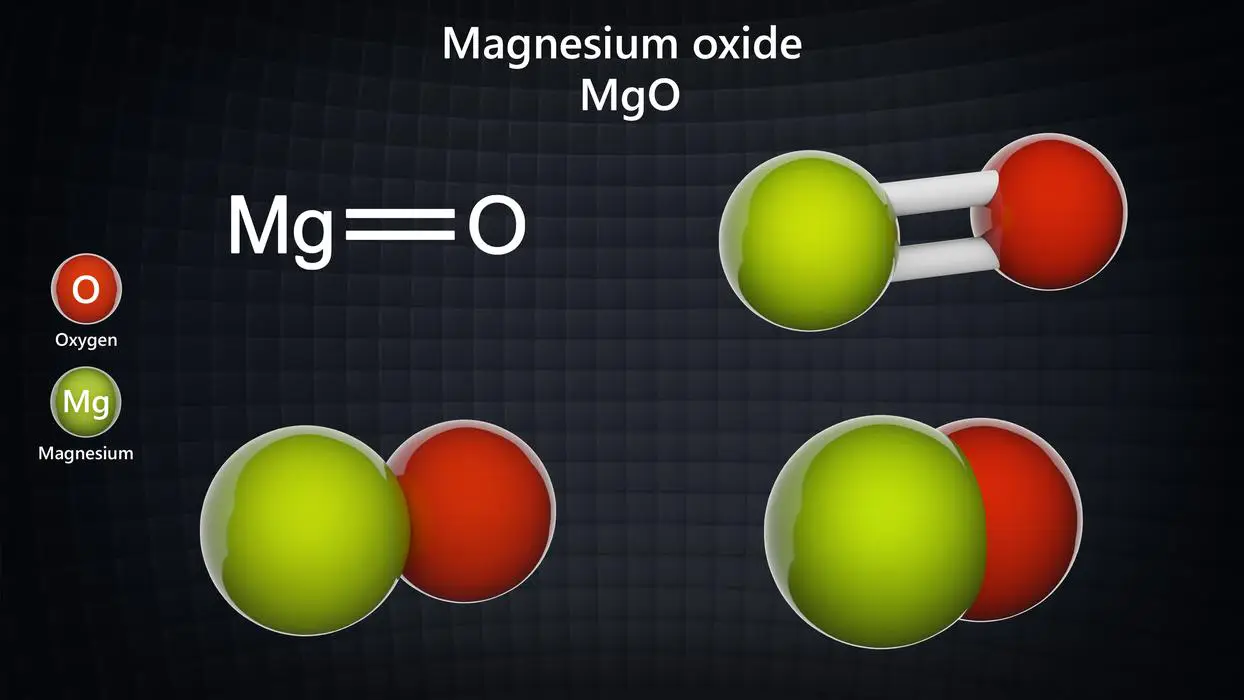
The formula unit of Magnesium oxide is MgO (which consists of one Mg2+, ion and Oxygen ion, O2-.ion)

For example,

1. Find out the formula mass unit of the ionic compound, such as potassium carbonate \({{\bf{K}}_{\bf{2}}}{\bf{C}}{{\bf{O}}_{\bf{3}}}\).

The formula mass of \({K_2}C{O_3}\) = Mass of 2 potassium atoms + Mass of one Carbon atom + Mass of 3 Oxygen atoms

=2 39+12+3 × 16

=78+12 +48

= 138 u

Thus, the formula mass of potassium carbonate is 138 u.

2. Calculate the formula unit mass of \({\bf{Ca}}{({\bf{OH}})_{\bf{2}}}\).


The Formula mass of \(Ca{\left( {OH} \right)_2}\), = mass of calcium atom + 2 (mass of oxygen atom+mass of the hydrogen atom)

= 40+2(16+1) 

= 74 u

The formula unit mass of Calcium Hydroxide is 74 u.

lead magnet

Practical Applications of Formula Unit Mass

Stoichiometry and balanced equations

Stoichiometry and balanced equations Formula unit mass is essential for solving stoichiometry problems, allowing chemists to convert between the mass of a substance and the number of formula units. Understanding formula unit mass helps balance chemical equations and predict the amount of products formed or reactants consumed.

Determining empirical formulas

Determining empirical formulas Empirical formulas represent the simplest whole-number ratio of elements in a compound. By calculating the formula unit mass and using the mass percentages of each element, chemists can determine the empirical formula of a compound, which is crucial for understanding its chemical properties.

Calculating percent composition

Calculating percent composition Percent composition expresses the percentage of each element in a compound by mass. Using the formula unit mass and the atomic masses of the constituent elements, chemists can calculate the mass percentage of each element in a compound, allowing for deeper analysis and comparison of substances.

Analyzing chemical reactions and compounds

Analyzing chemical reactions and compounds Understanding formula unit mass enables chemists to explore the properties of ionic compounds and their reactions. Knowledge of formula unit mass assists in predicting reaction outcomes, determining limiting reactants, and identifying unknown compounds in analytical chemistry.

Summary

The term “formula unit” refers to the simplest possible ion arrangement that results in an electrically neutral unit in an ionic compound. Atomic mass units serve as the basis for the formula mass unit. The formula mass unit is the mass of the completed chemical formula, whereas the molecular mass unit is the mass of the molecular mass. By adding the atomic mass of the number of moles of the atom present in the formula, the formula unit mass may be calculated.

Frequently Asked Questions

1. What do you mean when you refer to an atomic mass unit?

Ans. A unit of atomic mass is defined as the mass of 12 parts of carbon, which has an atomic mass of 12. The abbreviation for the atomic mass unit is amu or um (unit mass).

2. What is the difference between molecular mass and formula mass of elements?

Ans. The molecular mass unit depends on the attractive force such as that which forms dimers or trimers, whereas the formula mass depends on the number of moles of atoms involved and not on the attractive force involved in forming dimers or trimers.

3. What is the formula unit mass? Give example.

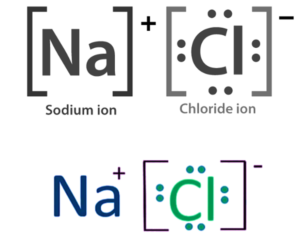
Ans. The total atomic masses of the constituent elements of a compound are used to define the formula mass of a substance. This is typically applied to compounds that are made up of ions rather than separate molecules. For example, Sodium and chlorine ions are used to form NaCl (sodium chloride).

The formula mass of NaCl= Mass of 1 Sodium atom+ Mass of one Chlorine atom

=1 × 23+1 × 35.5

= 58.5 amu

Thus, the formula mass of NaCl is 58.5 amu
Molecules of Compounds | Types of Compounds

An Introduction to Molecules of Compounds

A molecule is a group of two or more atoms held together by chemical bonds, which are attractive forces. Molecules are the smallest particles of a substance that possess all of its physical and chemical properties. Many thousands of atoms make up biological molecules like protein and DNA. A compound is a molecule composed of atoms from various chemical elements. Compounds are divided into two types: molecular compounds and ionic compounds. They can only be broken down chemically. Compounds are made up of a fixed number of atoms held together by chemical bonds.

Compounds are homogeneous in nature and cannot be physically separated.

What are Molecules of Compound

A compound molecule is a combination of two or more atoms of different types. This means that molecules of compounds contain atoms from two or more different chemical elements, such as methane, water, carbon dioxide, ammonia, and so on. We can further categorize them based on the number of atoms in the molecule. The chemical bonding between the atoms can be either covalent or ionic.

Ionic bonds are always formed between molecules containing cations (positive ions) and anions (negative ions). As a result, an ionic compound is always formed between two different chemical elements. Covalent bonds are formed when two atoms share electrons equally.

A compound molecule is a combination of two or more atoms of different types.

What are the types of Elements?

  1. Metals-They are substances with properties such as malleability, ductility, sonority, electrical and thermal conductivity, lustre, and solidity. Metals have extremely high melting points. The majority of pure metals are found in the earth’s crust. They are found in ores, which are solids. Zinc, iron, copper, aluminium, lead, chromium, cadmium, nickel, tin, zinc, and so on.
  2. Non-Metals– They are substances that are neither malleable nor ductile and do not conduct heat or electricity. Carbon, sulphur, phosphorus, silicon, oxygen, and other elements are examples.
  3. Metalloids– A chemical element with properties of both metals and non-metals. Metalloids have properties that fall somewhere between metals and non-metals. For example, arsenic, silicon, boron, and so on.
Elements can be made of one atom. Some elements are monatomic, meaning they are made of a single (mon-) atom (-atomic) in their molecular form.

What are the types of Compounds?

  1. Molecular Compounds-Molecules are compounds that can be formed by the combination of the same or different atoms. The atoms are joined to form a definite shape that is defined by the angles between the bonds and the lengths of the bonds. Carbon dioxide, water, ammonia, and other gases are examples.
  2. Ionic Compounds- It is made up of both positive and negative ions. When dissolved in water, they completely decompose into ions. Examples include sodium chloride (NaCl), potassium chloride (KCl), copper sulphate (\(CuS{O_4}\)), and others.

Summary

When two or more elements combine chemically in a fixed mass ratio, the resulting product is known as a compound. Compounds are substances made up of two or more different types of elements in a fixed ratio of their atoms. When the elements combine, some of their individual properties are lost, and the newly formed compound has new properties.

Frequently Asked Questions

1. How do molecules form?

Ans: When atoms come close together, their electron clouds interact with one another. Other, as well as with nuclei If the energy of the system decreases as a result of the interaction, the atoms bond together to form a molecule.

2. What do you understand by molecules of compounds?

Ans: A molecule is a general term for any atoms that are linked together by chemical bonds. A molecule is any atom combination. A compound is a molecule composed of atoms from various elements. Not all molecules are compounds, but all compounds are molecules.

3. What are the types of Molecules of Compounds?

Ans: There are two types of compounds: molecular compounds and Ionic compounds. Atoms in molecular compounds are held together by covalent bonds. It is held together in salts by ionic bonds. These are the two types of bonds that every compound is composed of.

Molecules of Elements | Difference between Atoms and Molecules

An introduction to Molecules

Atoms are the building blocks of all living things on this planet. An atom is the smallest unit that makes up a chemical element. Atoms make up everything else that is solid, liquid, or gas. Atoms are made up of protons, neutrons, and electrons that are contained within the nucleus of an atom. What happens when two or more atoms collide? They combine to form molecules. Molecules are formed when two or more atoms form chemical bonds with one another. Understanding the properties and structure of atoms and molecules is not easy, but once understood, it is a fascinating subject to study.

What are Molecules?

Elements are created when the same types of atoms combine. The number of atoms that make up a molecule has the same ratio. The structure of elements determines their properties. Elements can be made up of one or more atoms. Take, for example, oxygen, which has two atoms (\({O_2}\)). Atoms are not depicted to scale. A compound is formed when these elements are combined. We can use \({H_2}O\) in this case. Water contains two hydrogen atoms and one oxygen atom. Similarly, larger chemical compounds such as methane (\(C{H_4}\)). We can learn from these how a group of atoms with a nucleus can form elements and compounds with various properties and structures.

A molecule is a chemically combined group of two or more atoms that functions as a unit.

What is the difference between Atoms and Molecules?

AtomsMolecules
Atoms are the smallest particle that can exist.Two or more atoms combined to form molecules.
Atoms may not be stable due to the presence of electrons in the outer shells.Molecules attain stability.
They contain protons, neutrons, and electrons.Two or more atoms are formed and hence, they are strong.
Examples: Oxygen (O), phosphorus (P), sulphur (S) etc.Examples: Oxygen (O2), water (H2O), and sulphur (S8).

Summary

Elements can be single atoms, such as He, or elemental molecules, such as hydrogen (\({H_2}\)), oxygen (\({O_2}\)), chlorine (\(C{l_2}\)), ozone (\({O_3}\)), and sulphur (\({S_8}\)). Atoms are not depicted to scale. Some elements are monatomic, which means that their molecular form is made up of a single (mono-) atom (-atomic).

Frequently Asked Questions (FAQs)

1. What do you understand by the Law of Conservation of Mass?

Ans: According to this law, “Mass can neither be created nor destroyed.” This law can be applied to a chemical reaction in the following way:- During a chemical reaction, the total mass of reactants equals the total mass of products.

\[\left( {Reactant} \right){\rm{ }}A + B{\rm{ }} \to {\rm{ }}AB{\rm{ }}\left( {Product} \right)\]

2. What is an atom?

Ans. According to modern atomic theory, an atom is the smallest particle of an element that participates in a chemical reaction and retains its identity throughout the chemical or physical change.

3. What do you understand by the Law of Constant Proportion?

Ans. According to this law, “A pure chemical compound always contains the same elements combined in the same proportion by mass, irrespective of the fact from where the sample has been taken or from which procedure has it been produced.”

Particles of Matter Attract Each Other Explanation with Experiment

An Introduction to Matter

In addition to taking on various forms, the matter is composed of small particles. Because they are so small, it is impossible to see these particles with the human eye. We have mentioned below some of the various properties of matter. There are different states of matter can also be found. The three common states are solids, liquids, and gases. Atoms and other particles with mass and volume are included in the matter.

What do you understand by the Characteristics of Particles of Matter?

We are aware that every substance in our environment is composed of small particles. This means that these particles have some attributes and can affect the status of properties. These characteristics of the substance can be either physical or chemical.

Why are the particles drawn to one another?

1. The intermolecular force of attraction is the mechanism that pulls the particles toward one another. Additionally, the strength fluctuates according to the substance’s state.

2. The strongest and most stable objects are solids because they have the most of this force.

3. Since gases are not rigid and can take the shape of a vessel and be squeezed, we can say that it is significantly less in gases.

4. A higher force of attraction exists between the molecules of solids than in liquids and gases. However, the intermolecular force of attraction in liquids is higher than that of gases, making them less compressible than the gases.

Particles of Matter Attract Each Other 

Let us understand, this characteristic with the help of two different activities. 

Activity-1

1. Take a coin and a chalk 

2. On trying to hammer the chalk and coin, the chalk gets powdered with great ease. On the other hand, the coin does not break easily.

3. This shows that the coin has a relatively strong force of attraction, followed by chalk, which has the least force of attraction.

The coin has a relatively strong force of attraction
Chalk breaks on hammering

Activity-2

1. If we try to move our hands through water and air, our hands can move easily through the air as against the water.

2. This is because the force of attraction between the particles in water is greater than that in air.

Summary 

Every particle of matter is always drawn to other nearby particles. The intermolecular force of attraction is the name given to this force of attraction between the component particles. The particles of matter are held together by this force. We can also conclude that solid has the greatest amount of force of attraction between particles, followed by liquids and gases have the least amount of force of attraction.

Frequently Asked Questions

1.Do matter’s constituent particles always attract one another?

Ans: Every particle of matter is always drawn to other nearby particles. The intermolecular force of attraction is the name given to this force of attraction between the component particles. The particles of matter are held together by this force.

2. What are the several forms that matter can take?

Ans: Solids, liquids, and gases are the three states in which matter can be found. Ice is a solid, water is a liquid, and steam is water in a gaseous state. Therefore, matter exists in all three states.

3. How can you ascertain the material’s physical characteristics?

Ans: We are aware that everything we see is made of something. They take up space and have mass. It’s crucial to realize that not all matter has the same physical characteristics. One common illustration of this fact is the fact that while sand particles are insoluble in water, salt particles are. Therefore, these elements can be referred to as matter’s physical characteristics.

Matter Around Us

An Introduction to Matter

  1. The matter is anything that takes up space and has mass.
  2. All matter, whether it be living or non-living, is claimed to be composed of the five fundamental components (panch tattva) of air, earth, fire, sky, and water.
  3. The two ways that modern scientists categorize matter are based on its physical and chemical characteristics.
  4. Material is divided into three categories: solids, liquids, and gases based on its physical characteristics.
  5. The matter is divided into elements, compounds, and combinations based on its chemical makeup.
lead magnet

Physical nature of Matter

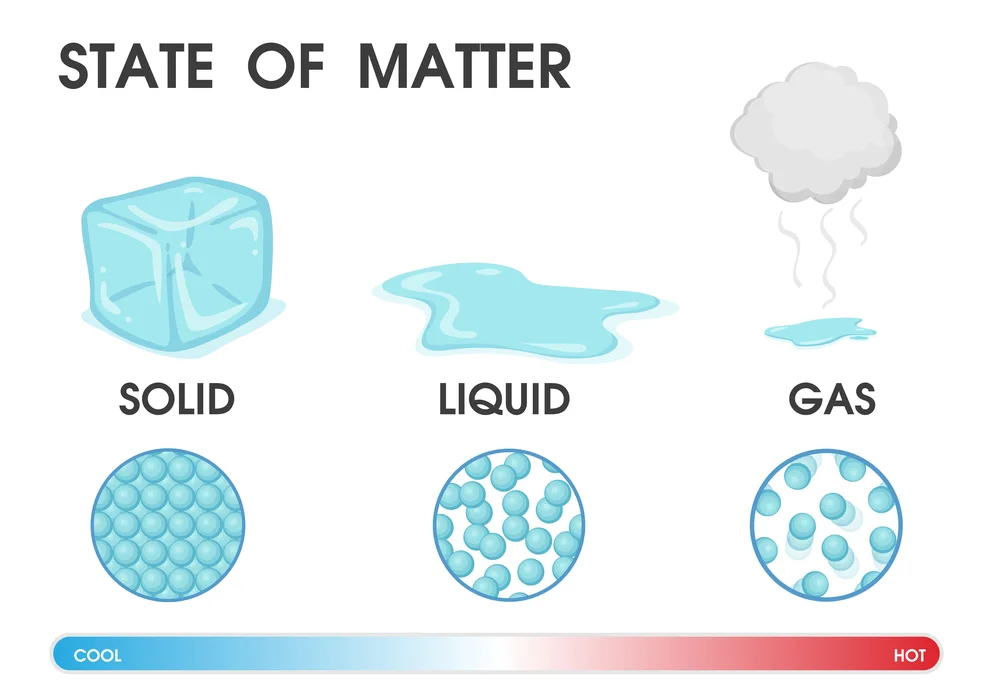
Tiny particles make up matter. The three fundamental categories of matter—solids, liquids, and gases—are based on how these particles are arranged. They are sometimes referred to as the physical states of matter. Additionally, this classification is based on variations in several physical characteristics, including mass, volume, form, stiffness, density, and particle arrangement.

The intermolecular attributes of different states of matter.

Physical Nature of Matter: The Solid-State

In general, all solids have a fixed volume with little compressibility, a fixed shape, and defined borders. When a force from outside the solid is applied, the solid usually keeps its shape. This demonstrates how stiff they are. Solids, however, may break under force.

Characteristics of Solids

  1. Solids have a definite shape
  2. Solids have fixed volume
  3. Solids cannot be compressed
  4. Solids have high density 
  5. Solids have negligible kinetic energy of the particle
  6. Solids do not show the property of diffusion
  7. Solids cannot flow

Physical Nature of Matter: The Liquid State

As we’ve seen, fluidity or particle motion is hardly noticeable, while stiffness is at its highest in the solid state. Both of these properties differ when the substance is liquid. In terms of the physical nature of matter, liquids are less rigid than solids and also exhibit considerably greater molecular motion. The presence of weaker inter-particle forces accounts for both of these properties in the liquid state.

Characteristics of Liquids

  1. Liquids do not have a fixed shape
  2. Liquids have a fixed volume
  3. Liquids cannot be compressed much 
  4. Liquids show fluidity but not rigidity 
  5. Liquids are less dense
  6. Particles can diffuse easily in a liquid state

Physical Nature of Matter: The Gaseous State

The gaseous state has the most inter-particle gaps out of the three states described by the Physical Nature of Matter. The different particles are kept together as tightly as possible in the gaseous state by inter-particle interactions. As a result, stiffness is at its lowest and fluidity is at its highest.

Characteristics of Gases

  1. Gases do not have fixed shapes
  2. Gases exhibit maximum fluidity
  3. Gases are highly compressible
  4. In the gaseous state, the kinetic energy of the particles is very high 
  5. Gases diffuse rapidly 

Summary

There are three different types of physical nature in the world around us. Solid, liquid, and gas are these we breathe in air, which is a gas, and we drink water, which is a liquid. Because different types of matter contain varied amounts of inter-particle space, we have mentioned three possible states of matter. In this article, we studied the characteristics of solids, liquids, and gases. In a nutshell, this is how matter behaves physically in the universe.

Frequently Asked Questions

1. What are the differences between solids, liquids and gases?

SolidsLiquids Gases
Have strong intermolecular force.Weak intermolecular force.Very weak intermolecular force.
Have definite shape and volume.Do not have a definite shape, but have a definite volume.Neither have definite shape nor definite volume.
Have high density.Have low density.Have very low density.
Solids can not be compressed.Liquids can be compressed.Gases are highly compressible.

2. What do you understand by matter?

Ans. The matter is anything with mass that takes up space. Atoms are the minuscule constituent parts of matter. Matter exists in three different states. Gas, liquid, and solid.

3. What are physical property and chemical properties?

Ans. A substance’s physical property is a quality that can be seen or quantified without affecting the substance’s identity. Colour, density, hardness, and melting and boiling points are examples of physical qualities. The capacity of a substance to go through a particular chemical transition is described by its chemical property.

How do Metals and Non Metals React

Metals and Non-Metals

Introduction

The crust of the Earth is packed with a variety of abundant and inexhaustible minerals, as we have studied in our geographical class. These minerals are a blend of natural elements that are extracted and used for various things. Each element and mineral has unique qualities of its own that make it useful.

Metals

Metals are among the sorts of elements that make up the crust of the Earth. They are a combination of substances that are frequently hard, malleable, ductile, glossy, etc. Metals are also effective electrical conductors. They can be found in a free state (without any combination) or a mixed state in the Earth’s core (with a mixture of oxygen, rock, and dust). 

Non-Metals

Non-metal elements are those that do not exhibit non-metallic properties. They are not malleable like metals and have different physical characteristics from metals. They are brittle and ductile as well. When compared to metals, they have a low density. Non-metals can be solid, liquid, and gas, and they are mostly bad conductors of electricity. Non-metals include things like oxygen, phosphorus, and sulphur.

How Do Metals and Non Metals React with Each Other?

  1. Metals react with non-metals by transferring electrons from metal atoms to non-metal atoms, resulting in the formation of ions.
  2. This process produces an ionic compound.
  3. Metal atoms transfer electrons to non-metal atoms.
  4. Metal atoms become positive ions, while non-metal atoms become negative ions.
  5. Example Sodium Chloride (NaCl)

What Reactions Occur Between Metals?

Metals interact with one another by their degree of reactivity, or strength. The less reactive metal is displaced when a metal reacts more vigorously than the metal with which it is bonding. It could be solid, liquid, or molten.

In other words, metal A is more reactive than metal B if it displaces metal B. Galvanic corrosion results from the collision of two metals. Two distinct metals connected by an electrolyte are required for galvanic corrosion to occur. If this occurs, the corrosion process will be initiated by the electrolyte. More reactive metals corrode more frequently.

Salt solution of A + Metal B > Salt solution of A + Metal

\[Zn\left( s \right){\rm{ }} + {\rm{ }}CuS{O_4}\left( {aq} \right) \to {\rm{ }}ZnS{O_4}\left( {aq} \right){\rm{ }} + {\rm{ }}Cu\left( s \right)\]

Summary

The concept of metals, non-metals, and their properties are all included in this article. The characteristic of metals and non-metals differ, and each has a unique state of reactivity. Each element and mineral has distinct properties of its own that make it useful.  A variety of organic elements are combined to form these minerals, which are then extracted and used for various purposes.

Frequently Asked Questions

1. What Characteristics do Non-Metals Generally have?

Ans. The characteristics of non-metals are as follows.

  • A metal’s qualities depend on its size.
  • They often have bad electrical conductivity. The main characteristic that sets them apart from metals is this one.
  • Due to their greater electronegativity, non-metals have a higher potential of attracting more electrons.
  • They retain their electrons and borrow from the metals due to their higher electronegativity.
  • The states of non-metals include solid, liquid, and gas. They are brittle by nature in the solid state, giving rise to ductile and non-malleable states.

2. What Significant Function do Non-Metals Play in Our Lives?

Ans. Non-metals such as nitrogen and phosphorus are used in fertilizers to increase plant yield. Phosphorus is used to make matchsticks and fireworks. Chlorine, a non-metal, is used in the water purification process. Carbon, a non-metal, is used in the majority of fuels.

3. What Happens to Metals During Recycling?

Ans. The majority will be smelted into ingots, so they can be melted and processed at metal facilities across the nation. The recycling facilities’ rubbish to the grocery store shelves can be accessible within as little as six weeks.

A Strong Base and a Strong Acid with Examples and pH Value

An Introduction to Acids and Bases

Acids are substances with a pH below 7 that release hydrogen ions or a proton when combined in an aqueous solution. The dissociable protons or hydrogen groups, also known as acidic hydrogen, that easily split apart in solution or the presence of bases are the main constituent of these acids.

Bases are substances that yield hydroxyl ions when combined with water in an aqueous solution when combined with water in an aqueous solution, yield hydroxyl ions. Their pH is higher than 7. Therefore, a base has a basic group that separates in an aqueous media or a dissociable hydroxyl group. Bases may also be referred to as substances that are hydrogen acceptors because they are substances that can either receive or accept hydrogen ions.

The pH Scale

The pH scale determines the strength of an acid or base by specifying the degree of dissociation. A strong acid or base dissociates in water, producing massive amounts of hydrogen or hydroxyl ions. A dissociation constant is used to calculate an acid or base’s dissociation of an acid or base.

Strong Acid

Since extremely acidic hydrogens are extremely acidic hydrogens present, strong acids HA has a high dissociation. Commonly, these hydrogens are attached to extremely electronegative groups (often halogens like chlorine, fluorine, and iodine). 

Low pH is found in strong acids. The amount of hydrogen ions in a solution is related to the pH. The negative logarithm of the concentration of hydrogen ions is the mathematical representation of pH.

\[pH =  – \log [{H^ + }]\]

The dissociation constant of acids, a parameter \({K_a}\), is used to account for the degree of dissociation. Increased dissociation and hence higher acidity are indicated by a high \({K_a}\) value. 

In chemistry, the \(p{K_a}\) value—the negative logarithm of \({K_a}\)—which is the logarithmic acid dissociation constant—is taken into account for convenience. Therefore, stronger acids will have a low pKa value and a high acid dissociation constant \({K_a}\) value, and vice versa.

\[p{K_a} =  – \log {K_a}\]

 Examples of Strong Acids

Strong AcidsFormula
Hydrochloric AcidHCl
Sulphuric AcidH2SO4
Nitric AcidHNO3

Strong Base

Strong bases NaOH are substances that split apart in solution to form high quantities of hydroxyl ions. In addition, bases have the potential to be strong proton acceptors, which means that they could grab a proton from the water molecule \({H_2}O\) in an aqueous solution to produce an \(O{H^ – }\) ion.

\[NaOH \to N{a^ + }(aq) + O{H^ – }(aq)\]

The base dissociation constant Kb describes the level of dissociation in the case of bases. Stronger bases are associated with lower values of the logarithmic base dissociation constant, or, which is equivalent to \(p{K_a}\).

\[p{K_b} =  – \log {K_b}\]

Similar to pH, the concentration of hydroxyl ions is related to pOH. A strong base that supplied a lot of hydroxyl ions would have low pOH because the concentration of hydroxyl ions is a negative logarithm.

\[pOH =  – \log [O{H^ – }]\]

The equation pH + pOH = 14 relates pH and pOH in an aqueous solution. If one is known, the other can be used to compute either pH or pOH.

Strong bases commonly have a pH range of 13–14.

Examples of Strong Bases

Strong BasesFormula
Calcium HydroxideCa(OH)2
Sodium HydroxideNaOH
Potassium HydroxideKOH
Lithium HydroxideLiOH
Image source: Englisplus Podcast

Summary

Strong acids and bases are the subjects of this article, which also examines how strong acids or basic solutions are based on their pH. Strong acids and strong bases have a high degree of dissociation. Strong acids and bases dissociate in solution, releasing a lot of proton and hydroxyl ions. Strong bases have high pH, whereas strong acids have low pH. 

Frequently Asked Questions

1. What is the Body’s pH?

Ans. The pH of human blood ranges from 7.35 to 7.45, making it very slightly alkaline. With a pH range of 1.5 to 3.5, the human stomach is the most acidic organ in the body. To break down food for digestion and remove any unwanted microorganisms, the stomach is kept at a low pH.

2. What are the Main Differences between a Strong Acid and a Weak Acid?

Strong AcidsWeak Acids
When exposed to water, strong acids completely dissociate into their ions.In an aqueous solution, weak acids are molecules that partially dissociate into ions.
A strong acid solution has a very low pH.A weak acid solution has a pH of 3-5.
It releases all the H+ ions to the solution.Partially releases all H+ ions to enter the solution.

3. What are the Main Differences between a Strong Base and a Weak Base?

Strong BasesWeak Bases
In a solution, a strong base can completely dissociate into its cation and hydroxyl ion.A weak base partially dissociates into its hydroxyl ion and cation, resulting in an equilibrium state.

Molecular Mass

The molar mass of a molecule is its weight. Expressed in Daltons. When dealing with the mass of a single or specific well-defined molecule, molecular weight is more commonly used than molecular weight when dealing with sample-weighted averages.
Molecular weights of small to medium-sized molecules are measured by mass spectrometry and used to determine the elemental composition of molecules or compounds.

lead magnet

What is Molecular Mass?

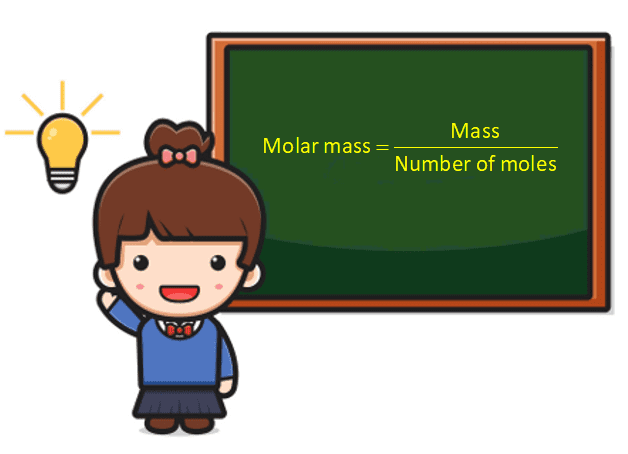
Molecular mass is also called molecular weight. The molecular weight of a molecule is its weight or mass. Different molecules of the same compound can have different molecular weights because elements have different types of isotopes present in compounds. The ratio of molecular mass to combined atomic mass is a measure of relative molecular weight. Molecular weight and molecular weight are separate but related concepts. The molar mass of a substance is defined as the mass divided by the number of moles of that substance. The unit of molar mass is g/mol. 

How to Find Molecular Mass?

To calculate molecular weight, first, use the periodic table to determine the atomic weight of each element. Multiply the number of atoms by the atomic mass of each element to sum the masses of all elements in the molecule.

The Formula of molecular mass/ molecular mass equation

The formula of molecular mass or molar mass is. 

Molecular-Mass

How to Calculate Molecular Mass?

A compound’s total mass is referred to as its molecular mass or molecular weight. It is equal to the sum of the atomic masses of all elements. 

Molecular Mass Examples

There are some examples of molecular mass:

H2O: In the periodic table, hydrogen has an atomic mass of 1u, and oxygen has an atomic mass of 16u. As a result, the molecular mass of a water molecule can be calculated as follows:

Hence, the molecular mass of water molecules is 18u.

NH3: In the periodic table, the atomic mass of hydrogen is 1u and the atomic mass of nitrogen is 14u. As a result, the molecular mass of an ammonia molecule can be calculated as follows:

Hence, the molecular mass of ammonia gas is 17u.

CaCO3: In the periodic table, calcium has an atomic mass of 40u, carbon has an atomic mass of 12u, and oxygen has an atomic mass of 16u. As a result, the molecular mass of calcium carbonate can be calculated as follows:

Hence, the molecular mass of calcium carbonate is 100u.

CaCl2: In the periodic table, calcium has an atomic mass of 40u, and chlorine has an atomic mass of 35.45u. As a result, the molecular mass of calcium chloride can be calculated as follows:

Hence, the molecular mass of calcium chloride is 110.9u.

The Molecular Mass of Compounds

The molecular mass of a compound can be found by using the following steps.

  • Determine the compound’s molecular formula.
  • Determine the atomic mass of each element in the compound using the periodic table.
  • Multiply the atomic mass of each element by the number of atoms in the compound. In the molecular formula, this number is denoted by the subscript next to the element symbol.
  • Add these values for each atom separately.
  • The total value will be the compound’s molecular mass.
lead magnet

The Molecular Mass of Elements

An element’s molecular mass is the sum of the atomic masses of its constituent atoms. Using the periodic table, calculate the atomic mass of each element.

Conclusion

Molecular mass is defined as the sum of the atomic masses of the elements present in a molecule, whereas molar mass is the ratio of compound mass to a compound number of molecules. Mechanical properties generally increase as molecular weight increases. A polymer’s molecular weight is directly related to its properties (strength, processability, and brittleness). The smallest molecular mass is hydrogen. Molecular mass is useful for analyzing experiment results.  Knowing the molecular formula allows you to calculate the molecular mass. 

Also Read: Formula Unit Mass and How is it Calculated?

Frequently Asked Questions

1.What is the Molecular Mass Equivalent to?

Ans: Molecular mass is a number equivalent to a molecule’s amount of nuclear masses.

2.What are the Characteristics of Polymers?

Ans: A polymer is a large molecule composed of chains or rings of linked repeating subunits known as monomers. Polymers have high molecular masses because they are made up of many monomers, and they also have high melting and boiling points.

3.What is a Compound Composed of Identical Molecules?

Ans: A compound is a substance made up of identical molecules made up of atoms of two or more chemical elements. Atoms of over 100 different chemical elements make up all matter in the universe, both in pure form and in chemical compounds.