Agricultural Chemistry

Introduction

Agriculture chemistry is the study of agricultural production, as well as the interaction of plants, bacteria, animals, and their environment. It is a scientific field that studies the composition of both chemistry and biochemistry. We study the production of food, Agri products, and beverages from raw materials in agriculture chemistry. Herbicides, growth regulators, fertilisers, insecticides, and pesticides are examples of agricultural materials. Agricultural chemistry seeks to increase agricultural yield, improve soil quality and fertility, and increase crop yield.

What is Agricultural Chemistry

Agriculture is the process of raising livestock, crops, and other food products. Agriculture in the modern era includes horticulture, agronomy, dairying, soil chemistry, animal husbandry, and so on. Organic, inorganic, and agricultural products are all studied in chemistry. Agricultural chemistry is the application of both agriculture and chemistry that deals with crop production and improvement. Photosynthesis, fertilisers, pesticides and insecticides, irrigation, agricultural produce storage, food processing, chemicals etc.
Agricultural chemistry is a science concerned with ways to influence chemical and biochemical processes in soil and plants, with plant mineral nutrition and with using fertilizers and other chemical means to improve fertility and increase yield.

Why Agricultural Chemistry is important?

Chemistry plays a significant role in crop and livestock production, controlling pathogens, insects, and weeds, and improving crop yield. The world’s population is growing by the day. To meet the growing population’s demand, agricultural chemistry not only improves crop production resources but also uses crops and crop waste to produce renewable fuel and feedstocks. We know that plants produce food through the process of photosynthesis. It is a natural phenomenon, but we can learn about the mechanism involved in the photosynthesis process thanks to agricultural chemistry. This aided us in increasing crop production.

  1. Agriculture chemistry contributes to soil quality improvement by testing soil and nutrients.
  2. Fertilisers are organic and inorganic compounds that can be found naturally or synthetically. They are applied to the soil during agriculture to increase crop yield. Fertilisers are applied to the soil to provide the macro and micronutrients required for crop production.
  3. Pesticides and insecticides are chemicals that are used in crop production to reduce damage caused by insects and pests.
  4. Agriculture chemistry aids in the storage of food products, such as sulphur dioxide, which is used to keep grains fresh for long-term storage. Salicylic acid and sodium benzoate are used in food preservation and shelf life extension.
  5. Modern agricultural chemistry is now using crop and food waste to produce renewable energy fuels and beverages. Examples include the production of alcohol from bagasse and the use of the Jatropha plant in the production of fuel.
Type of MaterialProducts
FoodRefined oil, Butter, cheese, etc. 
PetroleumKerosene, Diesel, Petrol, etc
ConstructionMortar, glass, chemicals, and chemical compounds.
HouseholdCooking gas, food process.

What is the purpose of Agricultural Chemistry?

Agricultural Chemistry’s goal is to increase crop production by using pesticides, fungicides, fertilisers, and other chemicals.  In modern chemistry, Crops and other crop wastes are used in the production of biofuels and beverages.

  1. As agriculture advances, chemistry improves irrigation techniques through the use of plastic pipes, drip irrigation techniques, sprinkler systems, and so on. Crop production has increased as a result of improved irrigation and a favourable climate.
  2. It has invented preservatives such as salicylic acid and sodium benzoates, as well as other chemicals, to extend the shelf life of food products.
  3. Agricultural chemistry applied science improves crop quality and yield and lowers production costs.
  4. A subfield of agricultural chemistry Chemurgy is working on utilising agricultural products as raw materials for subsequent production such as oil production, petroleum, cooking gas, and so on.

Summary

We learned that agricultural chemistry is a branch of science that deals with the intersection of chemistry and agriculture production. It aids in the production of agricultural products as well as the processing of food and beverages from raw materials. It establishes the relationship between the environment, microbes, plants, and animals. Furthermore, it aids in increasing the quantity and quality of food. Agriculture chemistry incorporates not only chemistry and agriculture, but also microbiology, genetics, physiology, entomology, ecology, and so on.

Frequently Asked Questions

1. Organic fertilisers: what are they?

Ans. Animal manure, fruit and vegetable compost, and fish are examples of living systems from which organic fertilisers are derived. The soil’s microbial population breaks down organic waste. It is rich in potassium, nitrogen, phosphorus, calcium, etc.

2. Inorganic fertilisers: What are they?

Ans. Minerals and synthetic chemicals are used to make inorganic fertiliser, which is synthetic. Petroleum is frequently used to produce inorganic nitrogen.

3. What do you mean by Insecticides and Pesticides?

Ans. Chemicals called pesticides are used to protect crops from things like fungi, weeds, and pests. Chemicals called insecticides are used to eradicate insects that are harmful to crops or livestock. 
Advantages And Disadvantages Of Plastic

Introduction

Most plastic is made up of organic polymers. The chains of carbon atoms that make up these polymers may or may not be linked together with oxygen, sulphur, and nitrogen atoms. Given that they are made up of numerous repeating monomers, plastics can be thought of as both macromolecules and polymers. Different polymers have different backbones and side chains, which is how plastics differ chemically from one another.

What are Plastics?

A wide variety of synthetic and semisynthetic materials are used to create plastics. Different polymers have different backbones and side chains, that is how plastics differ chemically from one another. Polyesters, Silicon, Polyurethanes, Acrylics, and Halogenated are significant groups into which Plastic is divided into various polymers. Different physical characteristics of plastic include its hardness, tensile strength, density, thermal conductivity, and resistance.

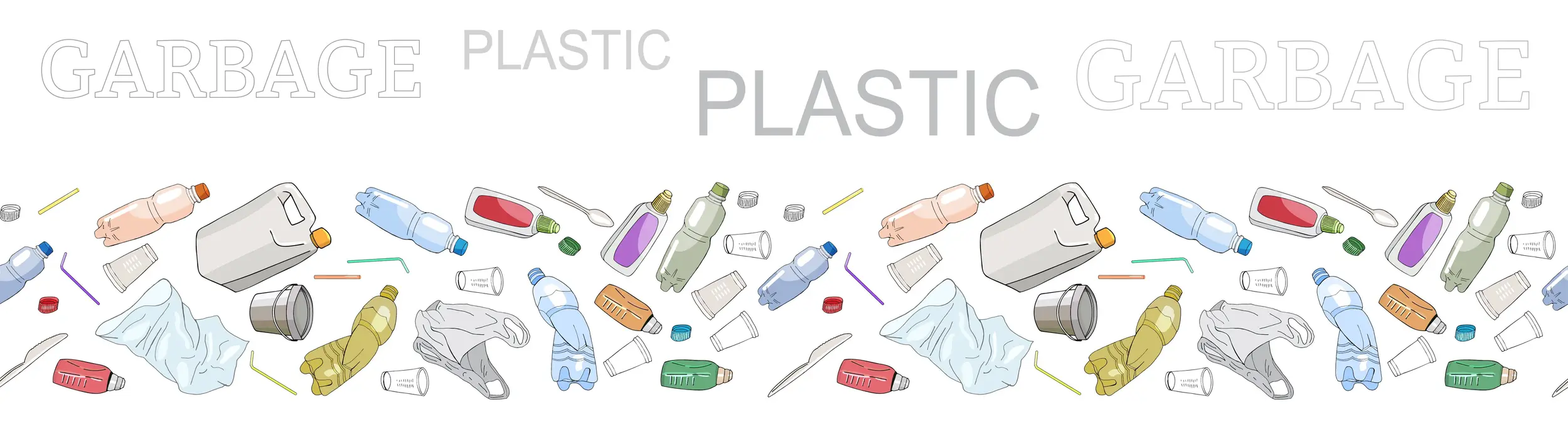
Image of example of plastics

What are Thermoplastic Plastics?

  1. Thermoplastics are soft and less brittle and are created by additional polymerization. 
  2. In organic solvents, they can be dissolved. 
  3. The thermoplastics become softer when heated and can therefore be moulded into any shape while still warm. 
  4. However, once cooled, the material hardens and rigidifies, holding the moulded shape. Without changing their chemical makeup, they can be repeatedly heated up and moulded into any other shape.

Mention some characteristics of Thermoplastic Plastics

  1. Have high molecular mass
  2. As the temperature rises, the intermolecular force between the chains weakens, producing a viscous liquid.
  3. These polymers are moldable.
  4. Easy to recycle
  5. These polymers are strong yet lightweight.

What are Thermosetting Plastics?

The macromolecular chains in thermosetting polymers tend to bond with one another to form a cross-linked 3D network. Thermosets are other names for these polymers. The word “thermosetting” is defined as a term that refers to permanently setting upon heating. Thus, after being heated to their pre-thermoset form, the thermosetting polymers acquire their hard texture.

Mention some characteristics of Thermosetting Plastics

  1. Typically, thermosetting plastics can withstand heat. They tend to break down before melting, though, when heat is applied at a high intensity.
  2. Thermosetting polymers are brittle by nature because heating causes them to lose their elasticity.
  3. These polymers cannot be heated again after they have been cured or moulded.
  4. The constituent elements used to make the polymer have an impact on the Thermoset density.
  5. Typically, thermosets are resistant to chemical harm.

Improve your Science concepts. Study Science Course for classes 6th, 7th, and 8th.

Advantages of Plastics

  1. Plastics are incredibly flexible and can be moulded into a wide variety of designs to suit our needs.
  2. It is extremely lightweight and strong in construction.
  3. It can be altered into various forms, colours, and textures and gives us a significant marketing advantage.
  4. Plastic products are corrosion-resistant and very inexpensive to produce.
  5. Instead of other metal materials, plastic products can be handled and stored more easily. They can also be recycled and reused repeatedly.
  6. Because plastic is water and moisture-resistant, it is also simple to store and transport food in plastic packets or containers.

Disadvantages of Plastics

  1. The biggest issue in the world is how to dispose of plastics because they cannot easily decompose through any natural process, such as the action of bacteria or microbes. Since plastic takes a long time to decompose, it is not environmentally friendly.
  2. Plastic contributes to environmental pollution because it releases a lot of harmful fumes into the air when it is burned.
  3. Unlike metals, plastics cannot be recycled repeatedly into a wide variety of products because doing so compromises their integrity and quality.
  4. Plastics are made from non-renewable resources like petroleum, natural gas, and coal, which contribute to the depletion of these resources and increased dependence on fossil fuels.
  5. Plastic production generates significant greenhouse gas emissions, contributing to climate change and its related negative impacts on ecosystems and human societies.
  6. Plastics can have adverse effects on human health, with exposure to certain chemicals in plastics linked to various health issues, such as endocrine disruption, cancer, and reproductive problems.
  7. The plastic manufacturing process can also negatively impact local communities and ecosystems near production facilities, often releasing toxic chemicals into the air and water, leading to pollution and potential health problems for nearby residents.

Summary

A wide variety of synthetic and semisynthetic materials are used to create plastics. One of the most significant chemical industry products that have an impact on modern life is polymers. The most prevalent examples of polymers are plastics, synthetic fibres, synthetic rubber, etc.  Compared to materials prepared with other metals like iron and copper, plastic-based products are more robust.

Plastic is more effective than metal for the preparation of various materials due to their distinct differences in characteristics. Plastics are incredibly flexible and can be moulded into a huge variety of patterns, vibrant colours, and forms. Consequently, many packaging materials are frequently made of plastic.

Frequently Asked Questions

1. Is plastic employed in the healthcare sector?

Ans. Yes, plastic is useful in the healthcare sector. This is because it is water and temperature-resistant, making it perfect for packaging medications, wound-sealing threads, syringes, gloves, and other medical equipment.

2. Why are plastics naturally non-corrosive?

Ans. The plastics are not corrosive because the materials inside them do not react or go through any chemical reactions. Plastic is used to make a lot of containers, including buckets, mugs, water bottles, and food containers.

3. Why is it necessary to recycle plastic?

Ans. Since almost all types of plastic materials are non-biodegradable and harmful to the environment, recycling plastic is crucial.

Acids Bases Salts

Introduction

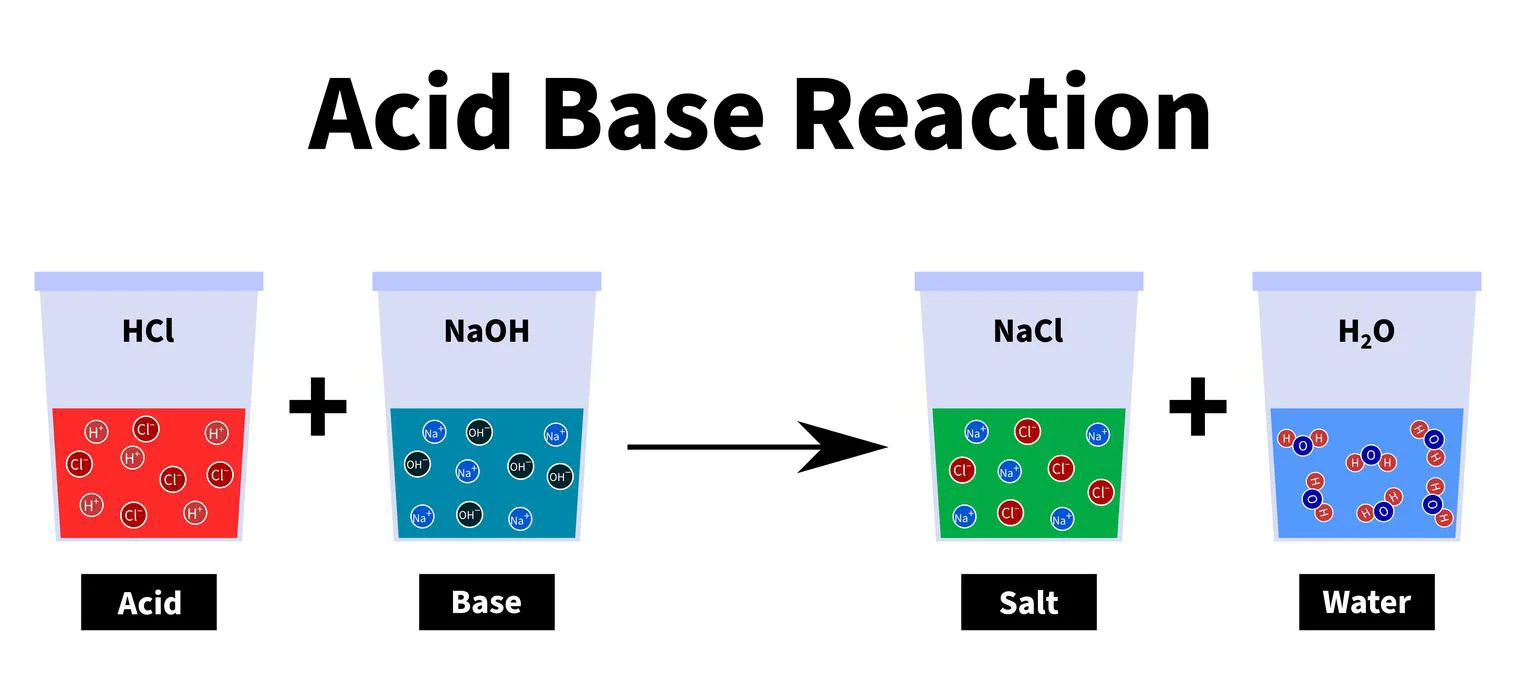
We currently know about 118 different chemical elements. These elements combine to form numerous compounds. These compounds are classified into Acids, Bases, and Salts based on their chemical properties. “All substances that produce \({H^ + }\) ions when dissolved in water are known as acids, while those that produce \(O{H^ – }\) ions when dissolved in water are known as bases.” When acids and bases are mixed together, they lose their acidic and basic properties, i.e. neutralise, and form salts.

What are Acids

“The word acid comes from the Latin word ‘acidus’ or ‘acere,’ which means sour. The most common feature is their sour taste. In its aqueous solution, an acid produces an ionizable hydronium ion (\({H_3}{O^ + }\)). It causes blue litmus paper to turn red. These dissociate in an aqueous solution to form their constituent ions, as illustrated by the examples below.”

\[HCl{\rm{ }}\left( {aq} \right){\rm{ }} \to {\rm{ }}{H^ + } + {\rm{ }}C{l^ – }\]

\[{H_2}S{O_4}\left( {aq} \right){\rm{ }} \to {\rm{ }}2{H^ + } + {\rm{ }}SO_4^{2 – }\]

\[C{H_3}COOH{\rm{ }}\left( {aq} \right){\rm{ }} \to {\rm{ }}{H^ + } + {\rm{ }}CH3CO{O^ – }\]

What are Bases

Bases are distinguished by their bitter taste and soapy texture. A base is a substance that produces the hydroxyl ion (\(O{H^ – }\)) in an aqueous solution. Bases cause red litmus paper to turn blue.

The bases dissociate in an aqueous solution to form their constituent ions, as shown in the examples below.

\[NaOH{\rm{ }}\left( {aq} \right){\rm{ }} \to {\rm{ }}N{a^ + } + {\rm{ }}O{H^ – }\]

\[Ca{\left( {OH} \right)_2} \to {\rm{ C}}{a^{2 + }} + {\rm{ }}2O{H^ – }\]

What are Salts

When an acidic solution is treated with an alkaline solution or aqueous solution of a metal oxide, a salt is formed, and the solution becomes neutral. A neutralization reaction occurs when \({H^ + }\) ions from an acid combine with \(O{H^ – }\) ions from the base of a metal oxide.

The chemical reactions shown below demonstrate the formation of salt.

\[HCl{\rm{ }} + {\rm{ }}NaOH{\rm{ }} \to {\rm{ }}NaCl{\rm{ }} + {\rm{ }}{H_2}O\]

\[{H_2}S{O_4} + Ca{\left( {OH} \right)_2}\, \to {\rm{ }}CaS{O_4} + {\rm{ }}2{H_2}O\]

Uses of Acids

  1. Sulphuric acid is used in the production of fertilizers such as ammonium sulphate, detergents, explosives, plastics, dyes, chemicals, etc.
  2. In the textile, food, and leather industries, hydrochloric acid is used as a dye. It is used to remove oxide films from steel objects prior to galvanization.
  3. Nitric acid is used in the production of fertilizers like ammonium nitrate, explosives like trinitrotoluene (TNT), plastics, and dye.

Uses of Bases

  1. Sodium hydroxide is commonly used in the production of soap, as well as synthetic fibre (Rayon) and paper.
  2. The reaction of calcium hydroxide, also known as slaked lime, produces bleaching powder.
  3. Magnesium Hydroxide, which acts as an antacid for the body, is used to neutralise excess acid in the stomach and cure indigestion.When an acidic solution is treated with an alkaline solution or aqueous solution of a metal oxide, a salt is formed, and the solution becomes neutral.

Summary

The compounds are classified into Acids, Bases, and Salts based on their chemical properties. “All substances that produce \({H^ + }\) ions when dissolved in water are known as acids, while those that produce \(O{H^ – }\) ions when dissolved in water are known as bases.” When acids and bases are mixed together, they lose their acidic and basic properties, i.e. neutralise, and form salts.

Frequently Asked Questions

1. What are the main differences between a strong acid and a weak acid?

Strong AcidsWeak Acids
When exposed to water, strong acids completely dissociate into their ions.In an aqueous solution, weak acids are molecules that partially dissociate into ions.
A strong acid solution has a very low pH.A weak acid solution has a pH of 3-5.
It releases all the H+ ions into the solution.Partially releases all H+ ions to enter the solution.

2. What are the main differences between a strong base and a weak base?

Strong BasesWeak Bases
In a solution, a strong base can completely dissociate into its cation and hydroxyl ion.A weak base partially dissociates into its hydroxyl ion and cation, resulting in an equilibrium state.

3. Do acids conduct electricity?

Ans. The conductivity is due to the presence of ions. Acids dissociate to form (\({H^ + }\)) ions in solutions. Hence, acids conduct electricity.

Acids and Bases

Introduction

Lemon juice, soap, milk, detergents, and other frequently used items in daily life are all made of acids and bases. In addition to these sustainable acids and bases, a large variety of chemical or mineral acids or bases are also used. Knowing the fundamental characteristics of acids and bases is essential to comprehend the concepts of acids and bases. Water can be combined with acids and bases to produce two different aqueous solutions. Any material that dissolves in water releases free \({H^ + }\) ions to produce hydronium (\({H_3}{O^ + }\)), which is referred to as an acid and releases hydroxyl ions (\(O{H^ – }\)), which is referred to as a base. This acid and base will neutralize each other when combined.

Definition-Acids and Bases

Acids: Chemical substances or compounds that can donate a proton (\({H^ + }\)) or accept electron pairs are known as acids.

Examples include hydrochloric acid (HCl) and sulphuric acid (\({H_2}S{O_4}\)).

Bases are substances or ions that can take a proton or donate a pair of electrons.

Examples include potassium hydroxide (KOH) and sodium hydroxide (NaOH).

Theories of Acids and Bases

Arrhenius theory

1. According to Arrhenius, an acid is any chemical that increases the concentration of protons (\({H^ + }\)) in a solution. For Example, the (\({H^ + }\)) and (\(C{l^ – }\)) ions are created when the acid HCl (which is a base) dissolves in water.

2. Bases are compounds that increase the number of hydroxide ions (\(O{H^ – }\)) in solutions. Take NaOH as an example, which dissolves in water to produce the ions \(N{a^ + }\) and \(O{H^ – }\). Consequently, increasing the \(O{H^ – }\) ion concentration.

Brønsted Lowry theory

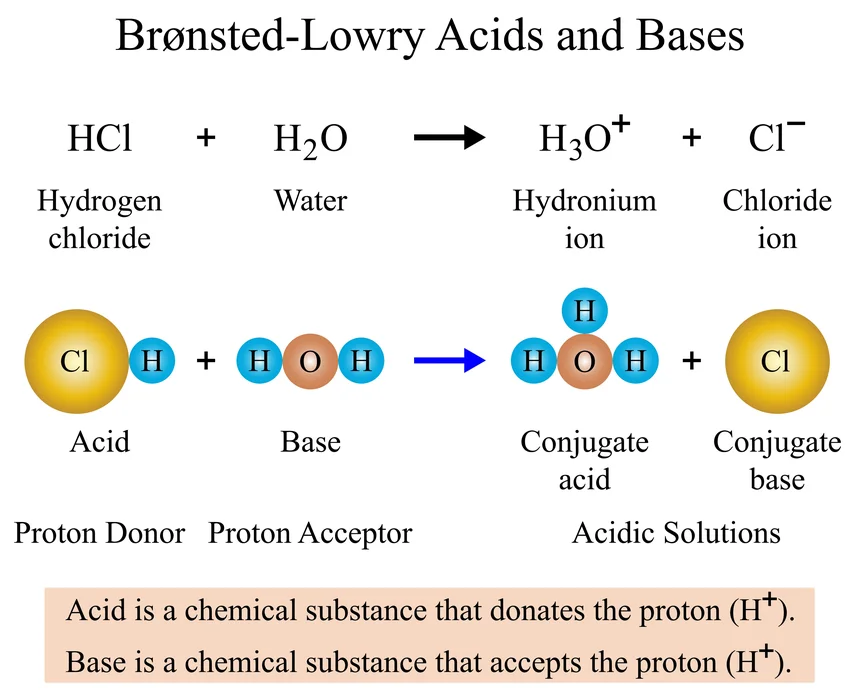
This theory states that bases are proton (\({H^ + }\)) acceptors and form a conjugate acid, whereas acids are proton (\({H^ + }\)) donors and form conjugate bases.

For example, hydrochloric acid (HCl), which is a Brønsted-Lowry acid, gives its proton to water when it is mixed with a base (\({H_2}O\)). Water is referred to be the Brønsted-Lowry base when it receives a proton.

Brønsted Lowry theory for acids and bases

Acids and bases in conjugates 

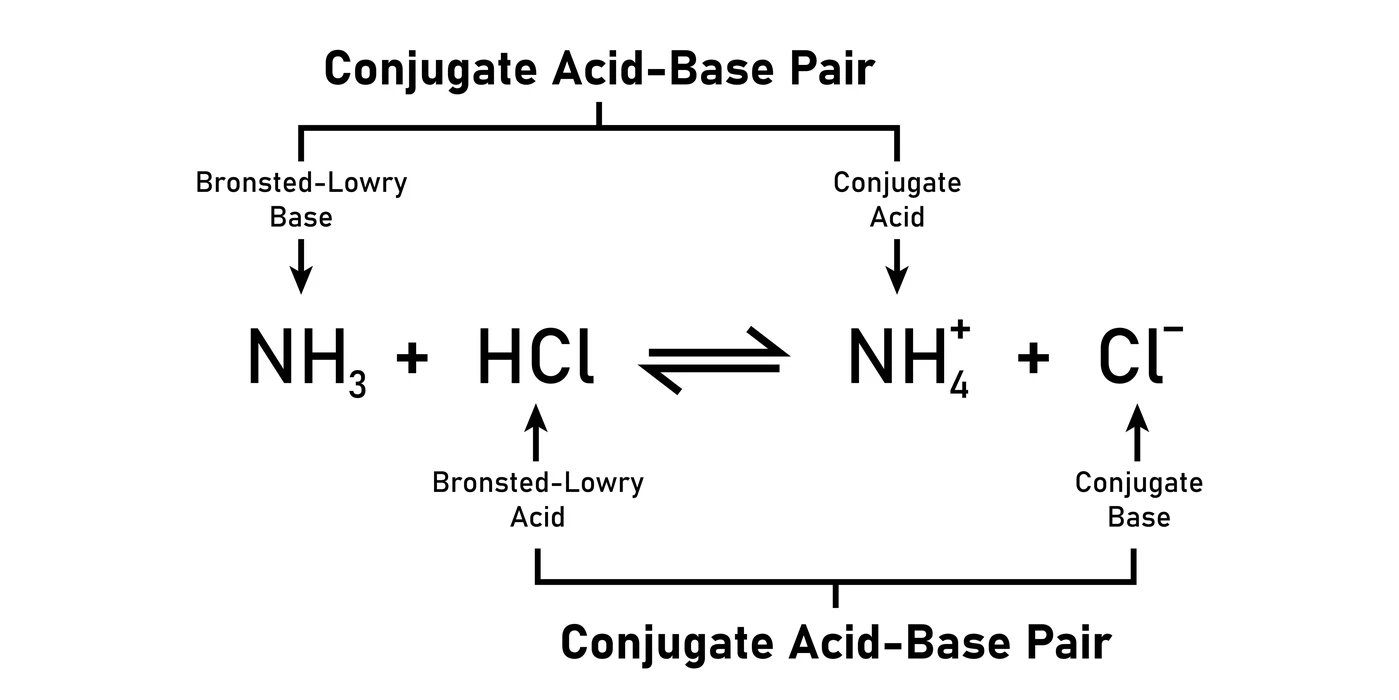
A conjugate base has one more negative (-) charge and one less H-atom than the acid that generated it, whereas a conjugate acid has one more positive (+) charge and one more H-atom than the base that formed it.

As an illustration, in this reaction, a base (\(N{H_3}\)) and an acid (HCl) combine to generate a conjugate acid (\(N{H^{4 + }}\)) and a conjugate base (\(C{l^ – }\)).

Acids and bases in conjugates 

Lewis Concept of Acids and Bases

Lewis bases or acids are terms used to describe substances that take electron pairs, whereas Lewis bases or acids are terms used to describe substances that contribute to electron pairs. Thus, the acceptance or donation of electrons determines the acidity or basicity of a substance. 

Acids and bases pH values

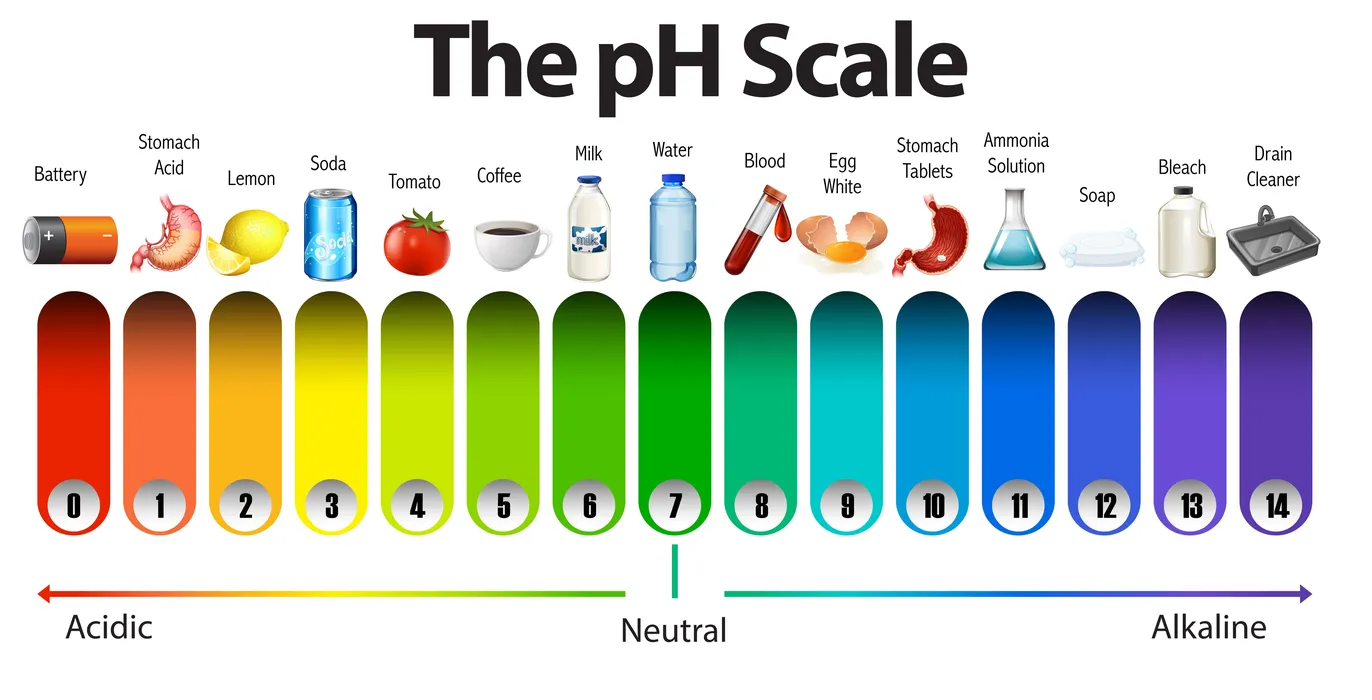
The word pH, which stands for potential hydrogen, helps scientists evaluate whether a solution is acidic or basic based on how many hydrogen ions are present in it. It is essentially a pH scale or negative logarithmic scale that ranges from 0 to 14 and quantifies the molar concentration of hydrogen ions from 1 to 14. It has no units for measurement.

The equation for calculating pH is pH =-log [\({H^ + }\)]

When a substance’s pH value is below 7, it is referred to be an acid. If the substance’s pH is more than 7, it is regarded as a base. The substance is regarded as neutral when the pH is 7.

The pH scale is useful for determining a substance's acidity or basicity.

Properties of Acids and Bases

  S. NoPropertyAcidsBases
1.Taste Sour in taste.Bitter in taste.
2.Test with phenolphthaleinAcid turns phenolphthalein colourless.Basic turns phenolphthalein pink.
3.Test with litmus paperBlue litmus turns red.Red litmus turns blue.
4.Whenever metals reactAcids and metals react to produce salt and H2 gas. (Only with metals in the activity series above hydrogen.)Salts and H2 gas are also produced when bases interact with metals (apart from Al).
5.When carbonates are reactedSuch reactions produce carbon dioxide.There is no reaction.

Uses of acids

  • Hydrochloric acid is used to remove rust from metals
  • Acetic acid is diluted into vinegar, which is used in many household processes. Its main application for it is as a food preservative.
  • Lemon juice and orange juice both include citric acid as primary ingredients. Additionally, it can be used to preserve food.
  • Nitric acid is used in fertilisers, plastic, photographic films, explosives, and dyes.

Uses of bases

  • The antidote for food poisoning, bleaching powder, and building construction all employ calcium hydroxide.
  • Petroleum is refined using sodium hydroxide, and it is also used to make soap, textiles, and paper.
  • Laxatives frequently contain magnesium hydroxide, popularly known as milk of magnesia. It is also used as an antacid, since it lowers any excess acidity in the human stomach.

Summary

Numerous items that are edible and non-toxic, such as grapes, oranges, turmeric powder, milk, and other items, are regarded as bases and acids. Taste and touch are two simple ways to recognise these natural acids and bases. However, some acids and bases are dangerous chemical reagents that cannot be distinguished by their physical qualities; for this reason, their chemical properties are crucial. These acids and bases mostly depend on the \({H^ + }\) ion and \(O{H^ – }\) ion concentrations. Acids are substances that cause protons (\({H^ + }\)) to be produced in water. Bases, on the other hand, are chemicals that generate more hydroxyl ions (\(O{H^ – }\)) in solution. The pH scale can be used to determine the numerical value of acids and bases.

Frequently Asked Questions

1. Are acids electrically conductive?

Ans. The flow of ions’ is what causes the conductivity. Acids split apart in solutions to produce (\({H^ + }\)) ions. Acids, therefore, carry electricity.

2. Why does dilute hydrochloric acid turn blue litmus red, but dry hydrogen chloride gas does not?

Ans. Dry hydrochloric acid does not produce ions, whereas diluted HCl does. Increasing the concentration of \({H^ + }\) in a solution causes it to change from blue litmus to red.

3. How does pH affect tooth decay?

Ans. The pH of the mouth decreases as we eat more foods that contain acid, which encourages the growth of harmful bacteria and leads to tooth decay. Therefore, tooth decay results from the mouth’s pH being decreased.

Acid Rain

Introduction

In today’s world, acid rain is a serious environmental issue. Midway through the 19th century, it was reported. As a result of excessive contaminants being removed from the atmosphere by both natural and man-made sources, this has occurred and therefore bringing down the pH of regular rainwater. There is no way to lessen the impact of natural sources, but there are various preventive steps that can be taken to lessen the impact of man-made sources. Since acid rain affects several ecosystems by lowering the pH of the material where it has been deposited, its prevention or mitigation is crucial.

What is acid rain?

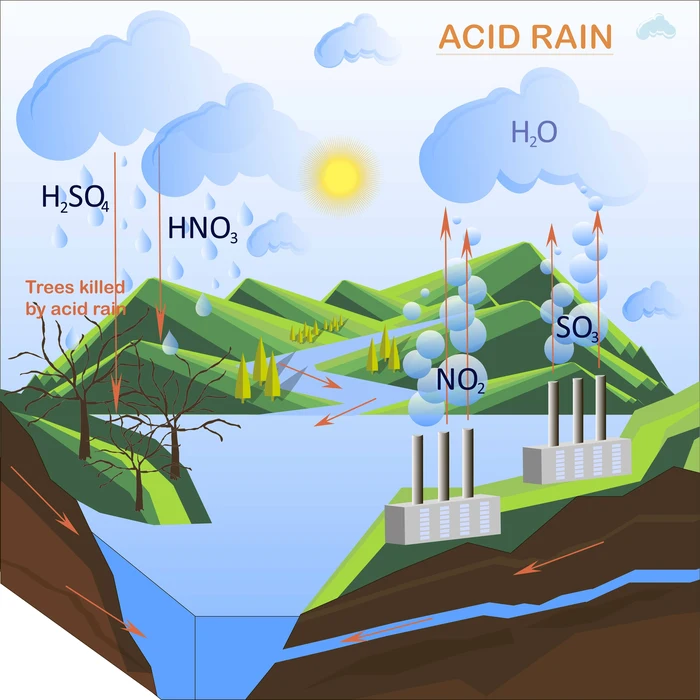
Acid rain, a severe environmental issue, is caused by \(S{O_2}\) and \(N{O_x}\) emissions into the atmosphere. Acid rain is created when these substances interact with water vapour in the atmosphere. Normally, \(S{O_2}\) does not interact with water, but when it interacts with ozone, it changes into \(S{O_3}\), which then reacts with water to create sulphuric acid, resulting in acid rain. The environment is being threatened by acid rain. Water bodies and biological beings suffer greatly from acidification. According to reports, acidification causes a greater release of aluminium from rocks or soil and which eventually gathers or deposits on water bodies, posing a hazard to the creatures that drink the water.

Acid rain results when sulphur dioxide (SO2) and nitrogen oxides (NOX) are emitted into the atmosphere and transported by wind and air currents.

What are the causes of acid rain?

  • The atmospheric release of \(S{O_2}\) and \(N{O_x}\) chemicals results in acid rain. These chemicals come from a variety of sources, including both natural processes and human activity. 
  • The natural sources include volcanic eruptions, sea spray, forest fires, etc. While man-made sources for sulphur dioxide include industrial combustion, coal burning from cars, oil refineries, home, and industrial boilers, automobiles, fertilizer plants, etc. 
  • Natural sources of \(N{O_x}\) include bacterial activity, volcanic eruption, lightning, forest fires, etc. 
  • When these substances are discharged in excess into the atmosphere, they react with the water that is already there to generate numerous acid molecules. 
  • They are sulphuric acid and nitric acid. These further contribute to acidification and bring about various environmental issues.

What are the effects of acid rain?

  • Nitrates are deposited on the soil as a result of acid rain, which also raises nitrogen saturation levels. This may also result in the loss of other significant ions from the soil, including calcium and magnesium ions that are beneficial to trees and plants. Additionally, acid rain removes the protective layer of trees, weakening them.
  • Since acids take aluminium from soil and deposit it in water bodies, acid rain also has an impact on surface waters by raising the concentration of aluminium in the water bodies. The aquatic species that live in the water bodies will ultimately be impacted by this.
  • Since the increased concentration of sulphuric acid and nitric acid promotes the corrosion of metals and fading of paints, acid rain impacts have been documented in man-made sculptures. 
  • Due to the particle build-up, acid rain has an impact on people’s health who have asthma and emphysema. 
  • Visibility is hampered by acid rain, which can often appear as fog.

Real-life examples of acid rain effects

  • Acid rain has caused the sculpture at Oakland University in Rochester, Michigan, to degrade. 
  • The US, Taiwan, Europe, Poland, and China’s southeast coast are some of the regions that are impacted. 
  • The glossy feature of the Taj Mahal is presently deteriorating as a result of acid rain.
  • Due to acid rain, the Statue of Liberty corroded and turned green. 
  • Nearshore and coastal oceans are significantly acidified as a result of acid rain.

How to prevent acid rain?

Acid rain can be prevented only by reducing the emission of acid rain-causing particulates into the atmosphere. Only man-made sources can be reduced by performing several preventive methods. This can be done by, 

a) Reducing the sulphur-containing fuels in automobiles or switching to alternative sources. 

b) Scrubbers can be used for reducing the emission of \(S{O_2}\) into the atmosphere since they will attract sulphur particles. 

c) For reducing the emission of \(N{O_x}\) catalytic converters can be used, thereby converting it into \({N_2}\) and \({O_2}\)

d) Liming water bodies can be done in reducing the impact of acid rain. 

e) The effect on metals due to acid rain can be reduced by coating them with corresponding materials.

Summary

Acid rain, a severe environmental issue, is caused by the atmosphere’s \(S{O_2}\) and \(N{O_x}\) emissions. The atmospheric release of \(S{O_2}\) and \(N{O_x}\) chemicals results in acid rain. Nitrates are deposited on the soil as a result of acid rain, which also raises nitrogen saturation levels. The glossy feature of the Taj Mahal is presently deteriorating as a result of acid rain. The effect on metals due to acid rain can be reduced by coating them with corresponding materials.

Frequently Asked Questions 

1. Write a note on the facts about acid rain.

Ans. Numerous substances, such as precipitation, snow, fog, and microscopic dry particles that fall on the surface of the planet, can carry acid rain to its surface. Additionally, regular precipitation has a pH of 5.6, whereas acid rain has a pH of roughly 4.6, which is a bigger difference and makes its effect more sensitive.

2. Can acid rain cause skin burns?

Ans. Since acid has a pH of 4.6, acid rain is not sufficiently acidic to cause skin burns. Additionally, it has no direct impact on humans. Patients with asthma and emphysema will experience issues if they come into contact with sulphur particles in the air.

3. Where does acid rain occur most often?

Ans. Acid rain is a widespread problem in places like Eastern Europe, and the US, and is now spreading to parts of India and China.

Accuracy And Precision Difference

Introduction

All science and technology are built on measurements. Every measurement is made by calculating an instrument which yields some ambiguity or doubt. This ambiguity is referred to as an error.  This measurement flaw can be described in two ways: 

1. Precision

Every measurement is dependent on the precision of the measuring tool and the skill of the person performing it. We won’t get the same result if we repeat a specific measurement because each result is susceptible to some experimental difficulty or inaccuracy. 

2. Accuracy

When getting measurements, it is critical to believe these measurements. Both values indicate the degree to which a measurement is close to a known or acceptable value.

Define Accuracy

It is defined as the ability to relate a physical quantity’s true value to a measurement. When these difficulties or inaccuracies are reduced, the measurement becomes more precise.

Define Precision

Precision is defined by the smallest count of measurement equipment. Precision is greatest when the count is the smallest. Precision is the amount of information conveyed in terms of its digits; it indicates the proximity of two or more measurements to one another. 

What are the differences between Accuracy and Precision?

AccuracyPrecision
The near value of a measurement to the true value of a physical quantity is defined as accuracy.Precision is defined as the slightest count of the measuring instrument. Or closeness to the actual readings of the same quantity.
Accuracy can only be dependent on a single factor or quantity.Whereas, the precision can be altered or dependent on multiple factors.
Accuracy is expressed in the terms of the errors.The precision is expressed in the terms of the deviation.
The determination of accuracy is dependent on a single measurement.The determination of precision is dependent on multiple measurements.
Accuracy is dependent on precision. When results are accurate, they are also precise.There is no dependence on accuracy. The results can be precise without being accurate. This shows no dependence of accuracy on precision.
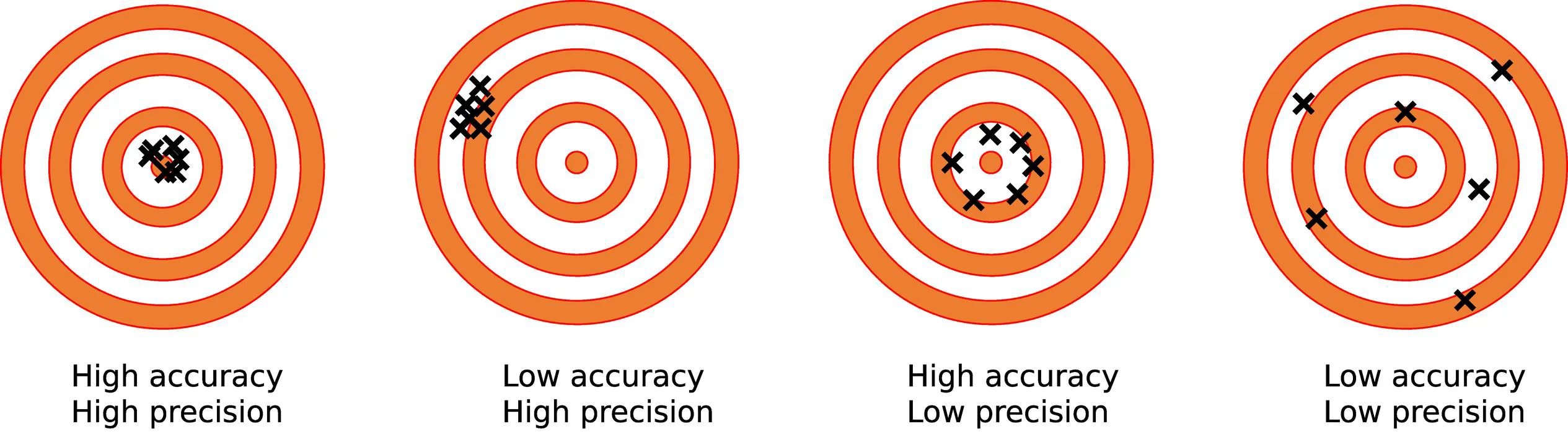
Pictorial illustration of accuracy and precision using a dart-board metaphor.

Summary

When experts consider error, they always think about accuracy and precision. It is defined as the ability to relate measurement to the true value of a physical quantity. Precision is defined as the measuring instrument’s smallest count. It is clear from the preceding explanation that the best scientific outcomes are only likely if they are both accurate and precise.

Frequently Asked Questions

1. According to one chocolate company, each bag of chocolate weighs 31.8 g. Jayant weighs two bags and discovers that they weigh 31.9 g and 32.3 g, respectively. How would Jayant describe the precision and accuracy of the first bag he measured?

Ans. The first bag’s claimed mass is correct. This is due to the fact that the brand specifies that each bag should contain 31.8 g, and the first bag did contain 31.8 gm. The claim for the first bag is not precise because the results are not identical.

2. How to determine Accuracy and Precision?

Ans. The accuracy of an experiment is calculated by the mean value of multiple measurements.

The precision of a set of measurements can be calculated by the standard deviation.

3. What is the relationship between accuracy, precision, and error?

Ans. The ability to relate the true value of a physical quantity to a measurement is defined as accuracy. When these difficulties or inaccuracies are reduced, the measurement becomes more precise. Precision is the ease with which a measurement can be replicated. Precision is defined by the measurement equipment’s smallest count. Precision is greatest when the count is the smallest. The precision of a set of values obtained by repeatedly measuring a quantity is defined as the closeness of the set of values obtained. As a result, more measurements will result in better precision, which will result in a smaller error, which will result in an improvement in accuracy.

118 Elements Their Symbols Atomic Numbers

Introduction

Chemical elements are the fundamental building blocks of chemistry, and everything around us is made up of elements. The periodic table is a tabular display of elements found in chemistry that are arranged by atomic number. A periodic table is an important tool for chemists, material scientists, and nanotechnologists because it provides so much information about the elements that it is easy to predict the physical and chemical properties of the elements. The periodic table demonstrates a fundamental but critical principle that the atomic number is responsible for chemical properties.

lead magnet

The periodic table contains how many elements?

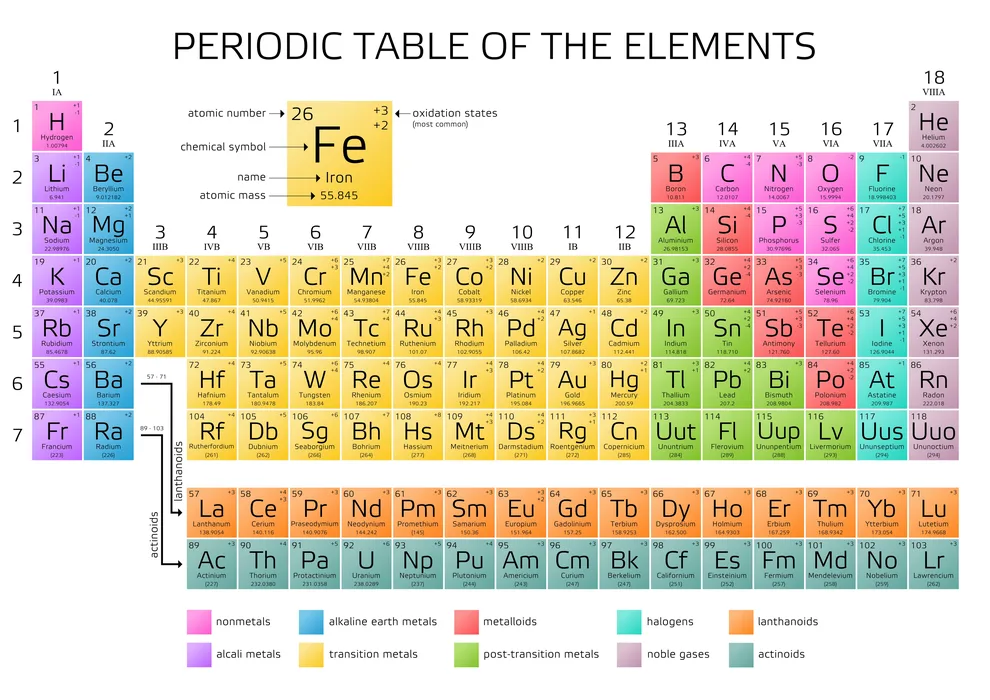
The periodic table contains 118 elements organized in 7 rows and 18 columns. The rows (from left to right) are called ‘periods,’ and the columns (from top to bottom) are called ‘groups.’ All chemical elements have different physical and chemical properties, which change as you move in the periodic table. The arrangement is made so that the elements in the same column have similar properties. Surprisingly, only 94 of these 118 elements exist naturally.

periodic table diagram

118 Elements Name and Symbols and Atomic Numbers in Chemistry

Name of the ElementSymbolAtomic Number
HydrogenH1
HeliumHe2
LithiumLi3
BerylliumBe4
BoronB5
CarbonC6
NitrogenN7
OxygenO8
FluorineF9
NeonNe10
SodiumNa11
MagnesiumMg12
AluminiumAl13
SiliconSi14
PhosphorusP15
SulphurS16
ChlorineCl17
ArgonAr18
PotassiumK19
CalciumCa20
ScandiumSc21
TitaniumTi22
VanadiumV23
ChromiumCr24
ManganeseMn25
IronFe26
CobaltCo27
NickelNi28
CopperCu29
ZincZn30
GalliumGa31
GermaniumGe32
ArsenicAs33
SeleniumSe34
BromineBr35
KryptonKr36
RubidiumRb37
StrontiumSr38
YttriumY39
ZirconiumZr40
NiobiumNb41
MolybdenumMo42
TechnetiumTc43
RutheniumRu44
RhodiumRh45
PalladiumPd46
SilverAg47
CadmiumCd48
IndiumIn49
TinSn50
AntimonySb51
TelluriumTe52
IodineI53
XenonXe54
CesiumCs55
BariumBa56
LanthanumLa57
CeriumCe58
PraseodymiumPr59
NeodymiumNd60
PromethiumPm61
SamariumSm62
EuropiumEu63
GadoliniumGd64
TerbiumTb65
DysprosiumDy66
HolmiumHo67
ErbiumEr68
ThuliumTm69
YtterbiumYb70
LutetiumLu71
HafniumHf72
TantalumTa73
TungstenW74
RheniumRe75
OsmiumOs76
IridiumIr77
PlatinumPt78
GoldAu79
MercuryHg80
ThalliumTl81
LeadPb82
BismuthBi83
PoloniumPo84
AstatineAt85
RadonRn86
FranciumFr87
RadiumRa88
ActiniumAc89
ThoriumTh90
ProtactiniumPa91
UraniumU92
NeptuniumNp93
PlutoniumPu94
AmericiumAm95
CuriumCm96
BerkeliumBk97
CaliforniumCf98
EinsteiniumEs99
FermiumFm100
MendeleviumMd101
NobeliumNo102
LawrenciumLr103
RutherfordiumRf104
DubniumDb105
SeaborgiumSg106
BohriumBh107
HassiumHs108
MeitneriumMt109
DarmstadtiumDs110
RoentgeniumRg111
CoperniciumCn112
NihoniumNh113
FleroviumFl114
MoscoviumMc115
LivermoriumLv116
TennessineTs117
OganessonOg118
lead magnet

The characteristics of the Periodic table

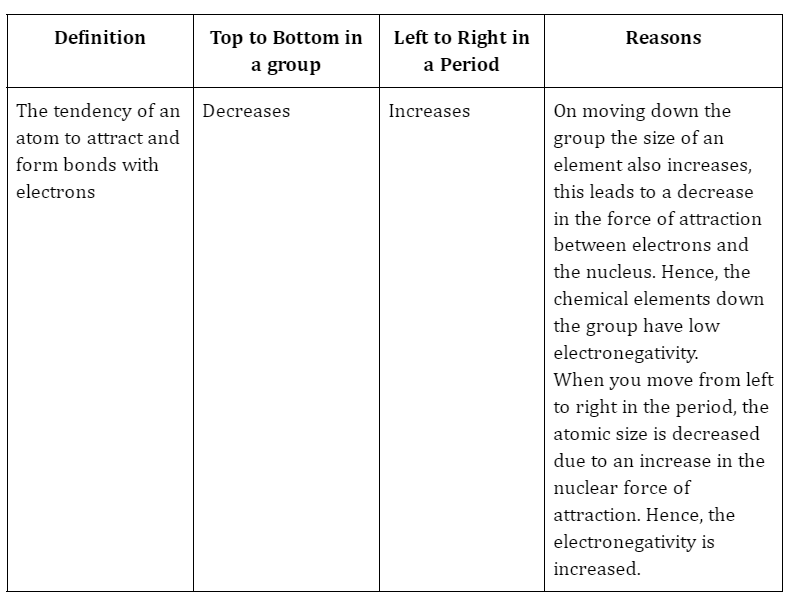
1. Electronegativity

electronegativity of periodic table elements

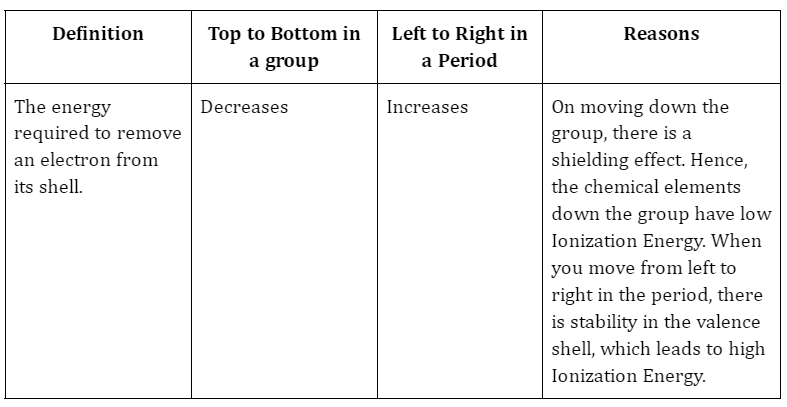
2. Ionization Energy

Ionization Energy

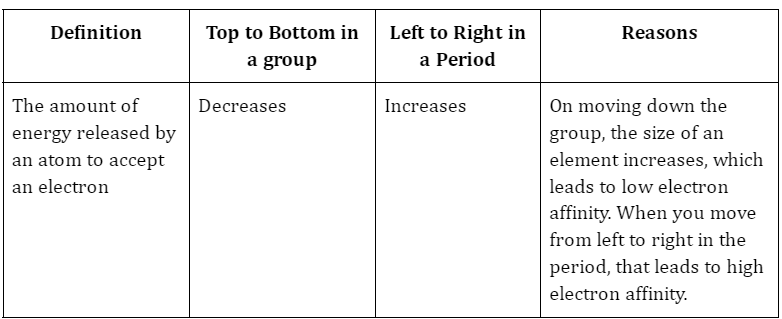
3. Electron Affinity

Electron Affinity

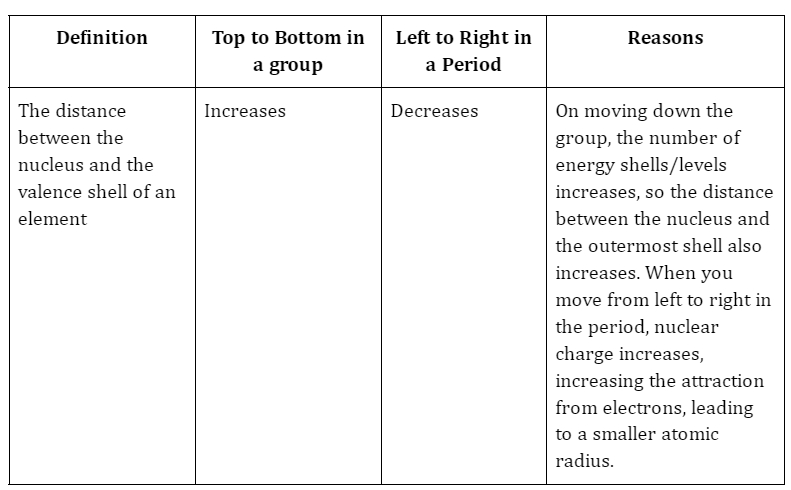
4. Atomic Radius

Atomic Radius

Summary

To date, mankind has discovered 118 elements. Only 94 of these occur naturally. These elements are represented in the periodic table, which has seven rows and eighteen columns. Columns represent groups, and rows represent periods. All elements are members of similar groups with similar chemical properties. The chemical properties of elements are determined by their atomic number. The number of protons in the atom determines the atomic number. This number also indicates the number of electrons in the atom. The chemical properties of an element are determined by the electrons in the valence cells.

lead magnet

Frequently Asked Questions

1. Why do elements in the same group share physical and chemical properties?

Ans. The physical and chemical properties of elements depend on the number of valence electrons. Elements present in the same group have the same number of valence electrons. Therefore, elements present in the same group have similar physical and chemical properties.

2. Why are noble gases also called inert gases?

Ans. Noble gases are also known as inert gases because their electron configuration is the most stable. Because the valence shells are completely filled, they cannot lose or gain electrons.

3. Why ionization energy is always positive?

Ans. Electrons in an atom are bounded by forces of attraction from the nucleus. And we know the electron will be attracted to the nucleus due to the charge difference. This means the energy that is provided to take out an electron from its shell. This is why the ionization energy is always positive.

What do All Acids and all Bases have in common

Introduction

The most important class of compounds in chemistry are acids and bases. Acids and bases are essential to practically every natural system, including human survival and the functioning of rocks and oceans. You must have come across acid and bases when you tasted lemon or washed your hands with soaps. Acids are sour and can be dangerously corrosive; bases are slippery and can be corrosive as well. In science, compounds are typically categorized as bases, acids, or neutral. The pH scale is used to determine how strong an acid or base is.

lead magnet

Acids

1. Acids release hydrogen ions or a proton when combined with water.

2. They exhibit a pH below 7 and turn blue litmus red. 

The pH scale is useful for determining a substance's acidity or basicity.

3. Arrhenius state that “those substances which give hydrogen ions \({H^ + }\) in aqueous solution” are known acids.

\[HA{\rm{ }} + {\rm{ }}{H_2}O{\rm{ }} \to {\rm{ }}{A^ – } + {\rm{ }}{H_3}{O^ + }\]

4. The common acids which we can use in the laboratory are—Hydrochloric acid (HCl), Nitric acid (\(HN{O_3}\)) and Sulphuric acid (\({H_2}S{O_4}\)).

Uses of Acids

AcidUses
Sulphuric Acid, H2SO4Used as solvent
Formic Acids, HCOOHUsed for tanning and dyeing
Hydrochloric Acid, HClUsed as Cleaner
Benzoic Acid, C6H5COOHUsed as food preservatives and in dyeing
Nitric Acid, HNO3Used in Fertilizer, dyes, and plastics

Bases

1. Bases are substances that release hydroxyl ions when combined with water to form an aqueous solution. 

2. They exhibit a pH level above 7 and turn red litmus to blue. 

3. A base has a basic group that separates in an aqueous media or a dissociable hydroxyl group (Arrhenius base). 

4. Metal hydroxides are mostly basic and rapidly produce hydroxyl ions in an aqueous solution. The majority of basic hydroxides are formed by alkali metals and a few alkaline earth metals.

\[BOH\left( {aq} \right){\rm{ }} \to {\rm{ }}{B^ + }\left( {aq} \right){\rm{ }} + {\rm{ }}O{H^ – }\left( {aq} \right)\;\]

5. Sodium hydroxide, potassium hydroxide, and ammonium hydroxide are some examples of bases. 

Uses of Bases

BasesUses
Potassium Hydroxide, KOHSoaps and Batteries
Ammonia NH3Fertilizer
Calcium Hydroxide, Ca(OH)2Mortar and Plaster
Magnesium Hydroxide, Mg(OH)2Detergent
Sodium Carbonate Na2CO3Detergent
lead magnet

Properties of Acids and Bases

PropertiesAcidBase
TasteSourBitter
pH valueless than 7greater than 7
Electric conductivityGood conductorGood conductor
Test with litmus paperTurn red litmus to blue.Turns blue litmus to red.
TouchSlippery

The similarity between an acid and a base

1. They both react with litmus.

2. They both are compounds

3. Likewise, they both release ions in their solution

4. Forms salt and water when combined. For example, when Ammonium hydroxide reacts with Hydrochloric acid, it gives Ammonium Chloride. 

\[N{H_4}OH{\rm{ }}\left( {aq} \right)\;{\rm{ }} + {\rm{ }}HCl\left( {aq} \right)\;\, \to {\rm{ }}N{H_4}Cl{\rm{ }}\left( s \right){\rm{ }} + {H_2}O{\rm{ }}\left( l \right)\]

Summary

Acidic substances are usually identified by their sour taste. An acid is a molecule which can donate an \({H^ + }\) ion and can remain energetically favourable after a loss of \({H^ + }\). Acids are known to turn blue litmus red.

Bases, on the other hand, are characterized by a bitter taste and a slippery texture. A base that can be dissolved in water is referred to as an alkali. When these substances chemically react with acids, they yield salts. Bases are known to turn red litmus blue.

Frequently Asked Questions

1. Which acid or base, when dissolved in water, releases hydroxyl ions?

Ans. Bases are chemicals that dissolve in water to produce hydroxyl ions, or \(O{H^ – }\), and are also referred to as alkalis.

2. What kind of salt is produced when a strong acid reacts with a weak base?

Ans. The salts are known as acidic salts because they are formed when strong acids and weak bases react. Every salt has a pH that is under 7. Similar to this, many salts’ aqueous solutions have a pH of 7 and are naturally neutral.

3. Which has a sour taste between acid and base?

Ans. Bases have a bitter taste, while acids have a sour taste. Acid always has a pH value lower than 7, which causes it to turn blue litmus paper red.

The Effects of Oxidation Reactions on Everyday Life

Introduction

We can see the effects of oxidation and reduction reactions in daily life. This has a variety of consequences. Some of its instances, such as burning fuels, digestion of food in our bodies, and so on, are boons to humanity and highly beneficial to the continuation of life.

lead magnet

Do you know, in human bodies, respiration is the oxidation reaction? During this process, the food is oxidized and produces energy. On the other hand, some of its effects are highly harmful, such as air pollution from burning fuels, food rancidification, metal corrosion, etc.

Oxidation Reaction Examples

In many ways, oxidation reactions have an impact on our daily lives. While some of them are advantageous, others have unfavourable effects. The following are some typical oxidation reaction examples:

  • In human bodies, respiration triggers an oxidation reaction. During respiration, food is oxidized to produce energy.
  • Metal corrosion is a type of oxidation reaction.
  • Fried foods acquire a bad flavour and a bad odour after being exposed to air for a long time (rancidity).
  • Any substance that burns or is consumed undergoes an oxidation reaction, which always results in the production of energy. 
  • Energy is produced by the combustion of various fuels in a variety of domestic and industrial processes.

Oxidation Reaction’s Effects on Daily Life

Now let us discuss oxidation reactions in everyday life. Have you ever noticed how oxidation processes affect your daily life? Maybe you have, but you’re not aware that they involve an oxidation process.  Rusting is an example of an oxidation reaction that you may be familiar with:

Rusting

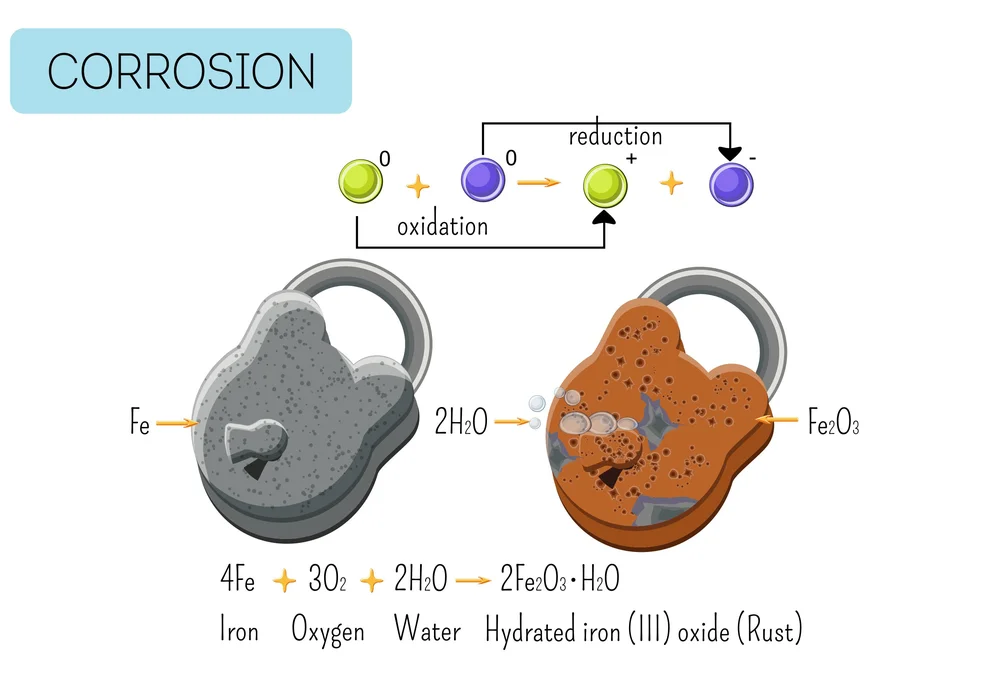
A type of metal corrosion is rusting. When air and moisture in the surrounding environment interact with a metal, corrosion results. It is a result of the metal oxidizing. Because iron oxidizes in the presence of air and water to produce hydrated iron oxide, it rusts (\(F{e_2}{O_3}.x{H_2}O\)). The metal surface develops a reddish-brown layer of iron oxide.

\[4Fe{\rm{ }} + {\rm{ }}3{O_2}\, + {\rm{ }}2x{H_2}O \to F{e_2}{O_3}.x{H_2}O{\rm{ }}\left( {Rust} \right)\]

Long-term corrosion or rusting harms metal-bodied constructions. Rust develops on car bodies, bridges, railings made of iron, and ships. The metal can be kept from corroding by having paint or enamel applied to its surface.

Image of corrosion. The metal surface develops a reddish-brown layer of iron oxide.
lead magnet

Rancidity

The rotting of food is another typical consequence of oxidation in daily life. When foods with fats or oils are left out in the air for a long time, they begin to rancid. This is caused by the food’s fatty acids slowly oxidizing in the air, which leaves the food tasting and smelling unpleasant. The phenomenon known as “rancidity” occurs when food items are exposed to the air and undergo colour, texture, taste, and odour changes due to atmospheric oxidation.

image of bun and bread becoming rancid/Rancidification.

Combustion

One of the most significant oxidation reactions is combustion. Since energy is a by-product of all combustion reactions, these processes are known as exothermic reactions because they emit heat energy.

  • Energy is a necessity for our society. Any fuel that burns in the presence of air, including kerosene, petroleum, coal, wood, and charcoal, produces heat. Methane in natural gas is burned during combustion, releasing carbon dioxide and water when there is too much oxygen.
  • Thermal power plants burn coal to create electricity, while natural gas is used in kitchens. We can observe how important redox reactions are to maintaining our quality of life in this way. Fuel combustion generates thermal energy, which not only powers our economy but also keeps us warm and alive. 

\[C{H_4}\, + \,2{O_2} \to C{O_2} + {\rm{ }}2{H_2}O\]

  • Animals need the heat energy that they produced during food digestion. The human body also acts as a machine that burns and oxidizes all the food that is given to it to produce energy. The body gets its energy from sugar or carbohydrates like glucose (C6H12O6), fructose, and starch. When sugar and oxygen are burned, carbon dioxide, water, and heat are produced.

\[{C_6}{H_{12}}{O_6} + {\rm{ }}6{O_2} \to {\rm{ }}6C{O_2} + {\rm{ }}6{H_2}O{\rm{ }} + {\rm{ }}energy\]

 The harmful effect of combustion

Despite the many benefits of combustion, its negative impact on our life needs to be properly addressed. Fossil fuel combustion results in hazardous vapours that contain dangerous gases such as carbon monoxide, nitrogen oxides, sulphur dioxide, and sulphur trioxide. When released into the atmosphere, fumes and smoke from furnaces and car exhaust severely pollute the air. It degrades our health and does direct harm to our bodies.

Summary

In addition to harming food, oxidation also harms metals. Corrosion is the term used to describe the harmful effect of oxidation on metals, and rancidity is used to describe it on food. Thus, the corrosion of metals and the rancidity of food are two common outcomes of oxidation reactions that are seen in daily life. Aerial oxidation is another name for the oxidation that oxygen in the air causes. The prevention of rancidity, corrosion, and their effects on daily life were all covered in this article.

Frequently Asked Questions

1.What happens when something oxidizes?

Ans. The deterioration in the quality of food products, including off flavours and odours, is caused by oxidation, a chain reaction that takes place in the presence of oxygen. It depends on how the product is made, how it is packaged, how it is stored, and what ingredients are used.

2. What distinguishes burning from combustion?

Ans. Combustion is just an oxidation reaction that releases energy; burning is a type of combustion that is followed by the evolution of gas and is distinguished by flame. Burning is combustion that results in a fire, but not all combustions result in a flame.

3. How is oxygen transported to the cell, so it can keep breathing?

Ans. Humans breathe in oxygen, which travels via many alveoli in the lung (tiny air sacs). These air sacs transfer oxygen into the blood, which carries it to the cells. The oxygen from the lungs is transferred to the blood, where it connects with the red blood cell’s haemoglobin and travels to all the cells where it is discharged. The lungs receive the waste carbon dioxide from the cells and transfer it there for expiration.

MATTER IS MADE UP OF PARTICLES

Introduction

Something that has mass, takes up space, and can be sensed by our five senses is said to be matter. We can put it simply by saying that the things we see and feel around us matter. There are different states of matter. Because of the characteristics of the constituent particles and how they interact, each of these forms of matter has a unique feature. Atoms and molecules make up these particles. The basic elements of matter, atoms, are capable of independent existence. The neutron, proton, and electron subatomic particles that make up each atom determine the characteristics of the atoms.

Matter

The matter is a combination of two or more pure elements. The classification of the material into solids, liquids, and gases is based on its physical characteristics. Its classification into elements, compounds, and mixtures is based on its chemical characteristics. Our surroundings can be either geographical or man-made. Geographical surroundings are formed by nature and affect the social and economic climate, while man-made environments are those that are man-made.

All living and non-living things are called matter because they contain mass and take up space, all forms of life, including gases like oxygen and hydrogen, are referred to as matter. The DNA in our cells, the ground we are standing on, electrons revolving around a nucleus, or any other object is matter.

Types of Matter

The matter is divided into the three categories below based on its physical nature:

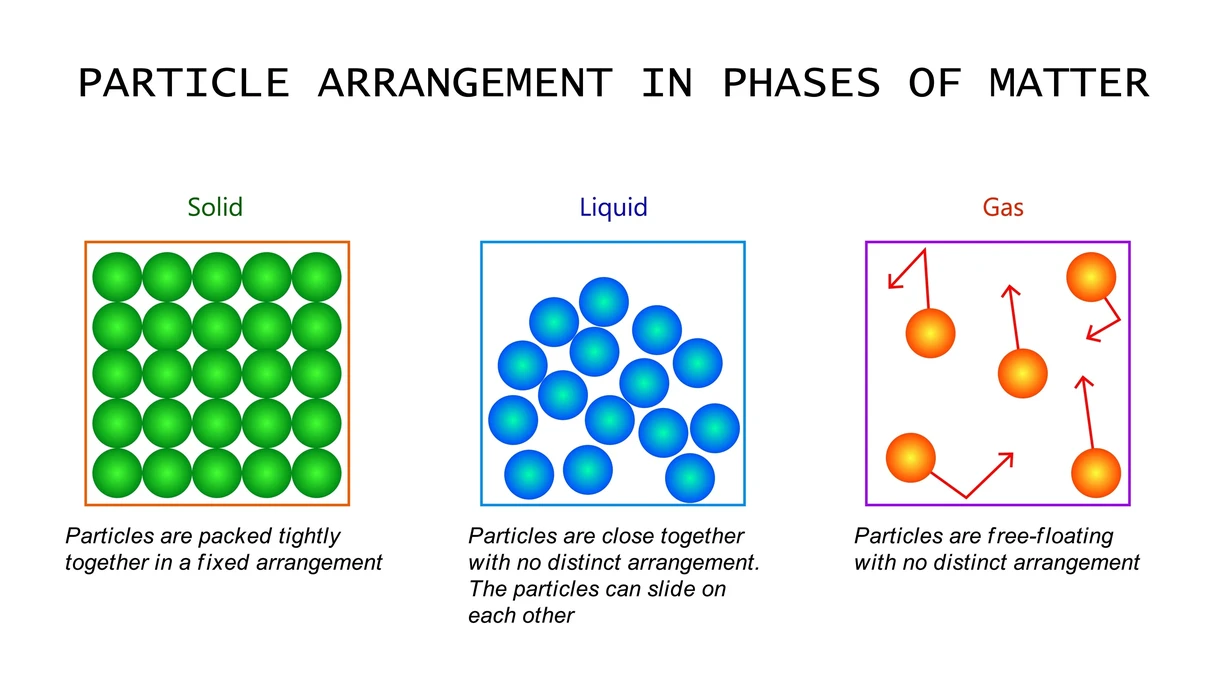
  • Solids: Particles in solids are so closely packed and held in place by extremely strong intermolecular interactions that only vibratory motion is possible. They have a distinct volume and shape. Wood, iron, etc. are some examples.
  • Liquids: Compared to solids, liquids have more freedom of movement due to the weak intermolecular interactions that allow for particle movement. Despite taking on the shape of the container they are poured into, they have specific volumes. Examples include milk, water, etc.
  • Gases: These molecules move very freely and have a weak intermolecular interaction. The distance between them is also very large. They fill the container in which they are placed because they lack a set shape and a volume. Examples include hydrogen and methane.
The matter is divided into three categories: Solid, Liquid and Gas. In this image, the arrangement of particle is shown in the different phase of matters.

Applying pressure and changing the temperature can modify the nature of the three matter states mentioned above. There are particles in a matter that have kinetic energy; this energy rises with temperature. In solids, the distance between particles and kinetic energy is the smallest, whereas it is greatest in gases. The three types of matter that make up our environment are interchangeable through temperature changes. For instance, changing the temperature will cause ice to turn into water and back again.

Subatomic Particles

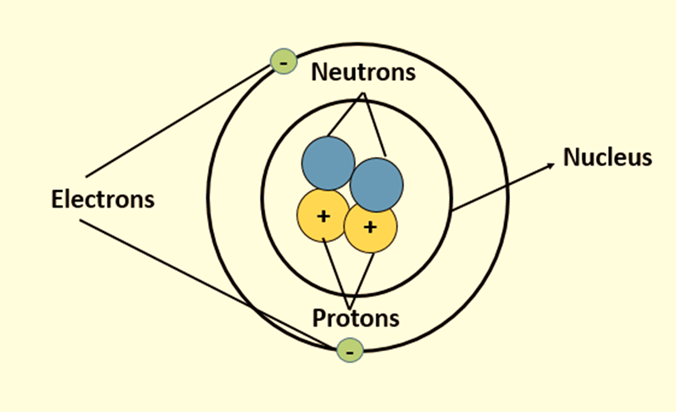
Protons, neutrons, and electrons make up the primary units of matter, known as atoms. Protons have a positive charge, whereas electrons have a negative charge, making neutrons neutral particles with no charge. The nucleus of an atom is made up of neutrons and protons, and electrons revolve around this nucleus in their respective orbitals. The quantity and configurations of these subatomic particles greatly influence the stability and characteristics of the atom.

Protons, neutrons, and electrons make up the primary units of matter

Summary

The Panch Tatva, or air, earth, fire, sky, and water, was the system used by our ancient Indian thinkers to categorize matter. There are billions of atoms in every gram of matter. The matter is everything that has mass and takes up space. Matter is composed of particles that are always moving and have different properties in each of the three states of matter. The particles of matter are very tiny and have space between them.  The three types of matter that make up our environment are interchangeable through temperature changes.

Frequently Asked Questions

1. What features do matter particles have?

Ans: The characteristics of matter particles are given below:

a) The intermolecular space that particles have is one of their distinguishing characteristics.

b) Intermolecular force exists among particles.

c) Matter is made up of moving particles.

2. In comparison to solids, liquids typically have a lower density. You must have seen that ice floats on water, though. Why?

Ans: Although ice is a solid, due to its structure, it has a lesser density than water. Ice floats on water because its molecules form a cage-like structure with lots of empty spaces.

3. How can water stored in a matka (earthen pot) cool throughout the summer?

Ans: Since the clay pot has many pores and is porous, the water seeps out of them and evaporates on the pot’s surface, which has a cooling effect. This chills the pot, which in turn causes the water inside to cool.