What is Animal Husbandry?- Its Types and Advantages

Introduction

The definition of agriculture is frequently misunderstood to mean just the production of crops for food and fiber. Agriculture, however, extends beyond just growing plants, it includes the breeding of livestock for their beneficial products. Since the beginning of time, humans have been raising animals for their own needs. Since humans first domesticated animals some 13,000 years ago, they have developed innovative techniques to increase both the quality and quantity of the things they can produce from animals. 

Types of Animal Husbandry

Dairy Farming
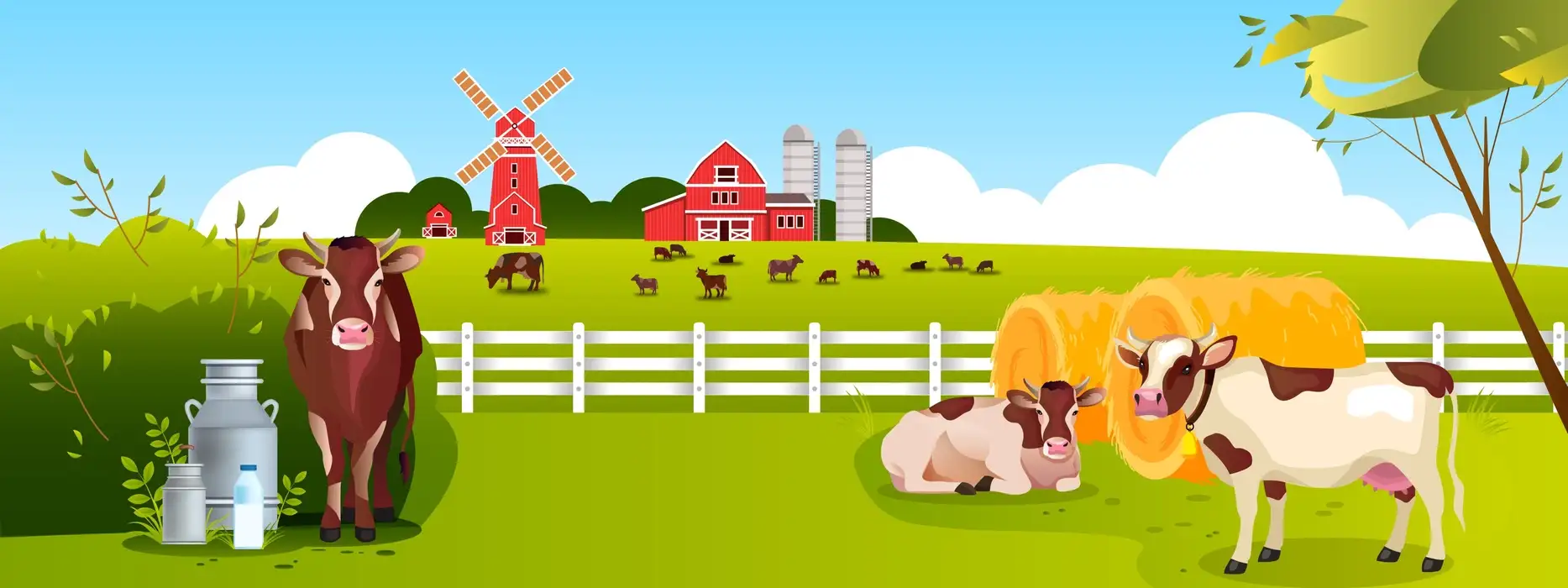
This image shows the rearing of animals for their dairy products.
  • The practice of raising dairy animals, such as cows, buffalo, goats, and others, for milk production and its subsequent processing to produce products like butter, ghee, cheese, and cream, among other things, is known as dairy farming.
  • Native Indian cow and buffalo breeds including the Gir, Sahiwal, Red Sindhi, Siri, Mahiwal, Surti, and Jaffarabadi, as well as exotic breeds like Jersey, Red Dane, and Holstein Friesian, are frequently bred for their desirable traits.
  • When raising cows to extract milk, it is essential to maintain the required standards of health and hygiene.
  • Good quality and safe-to-consume products are ensured by the good health and excellent living conditions of the animals.

Learn More about Agriculture. Check out more videos in Science Class 8 Lesson 1. Clear your doubts from the Science experts teacher.

Poultry Farming
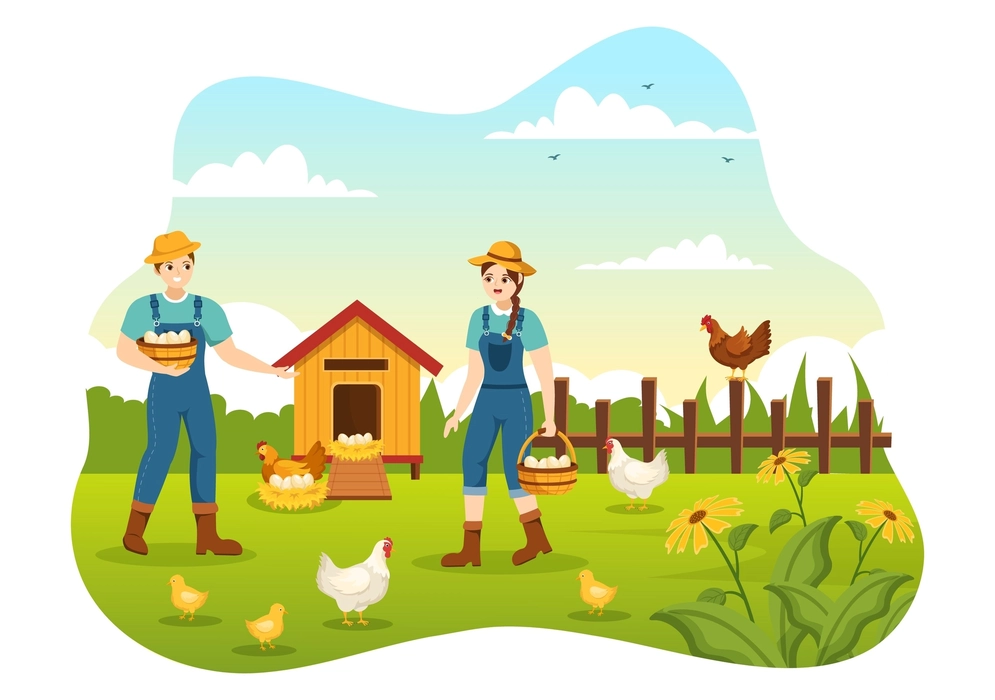
This image shows the rearing of animals for their poultry products.
  • The practice of domesticating and raising birds, such as hens, cocks, ducks, geese, and turkeys, for their meat, eggs, and other products is known as poultry farming.
  • Different techniques are used by poultry farmers to raise chickens.
  • The most popular method is intensive poultry farming, in which hundreds of birds are frequently raised in tier-by-tier battery cages.
  • Farmers are becoming more conscious of the drawbacks of intensive farming, which has led to a rise in the popularity of free-range farming.
  • In this style of poultry farming, the birds are given free access to a large area during specific hours of the day.
  • Better health and disease resistance are encouraged by this practice.
  • In poultry farming, hens are raised primarily for two products: eggs or meat.
  • It is advised to provide a healthy, disease-free environment, along with decent, nourishing meals and spacious places.

Pisciculture
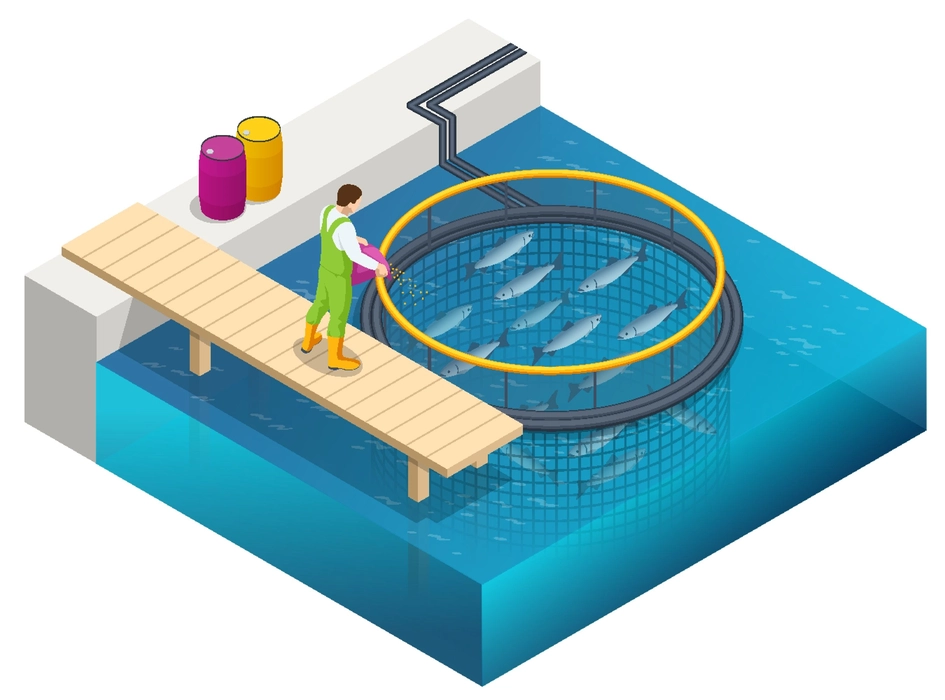
Pisciculture Fish farming
  • Fish rearing for food is often known as pisciculture or fish farming.
  • Typically, fish tanks or other enclosures such as ponds are used to raise the fish.
  • The fish are fed artificially and later harvested.
  • In composite fish culture, both domestic and foreign varieties are raised in the same pond or enclosure.
  • The fish that are selected to be raised together must be able to co-exist.
  • The most popular fish species raised for food include trout, carp, salmon, tuna, tilapia, etc.

Apiculture
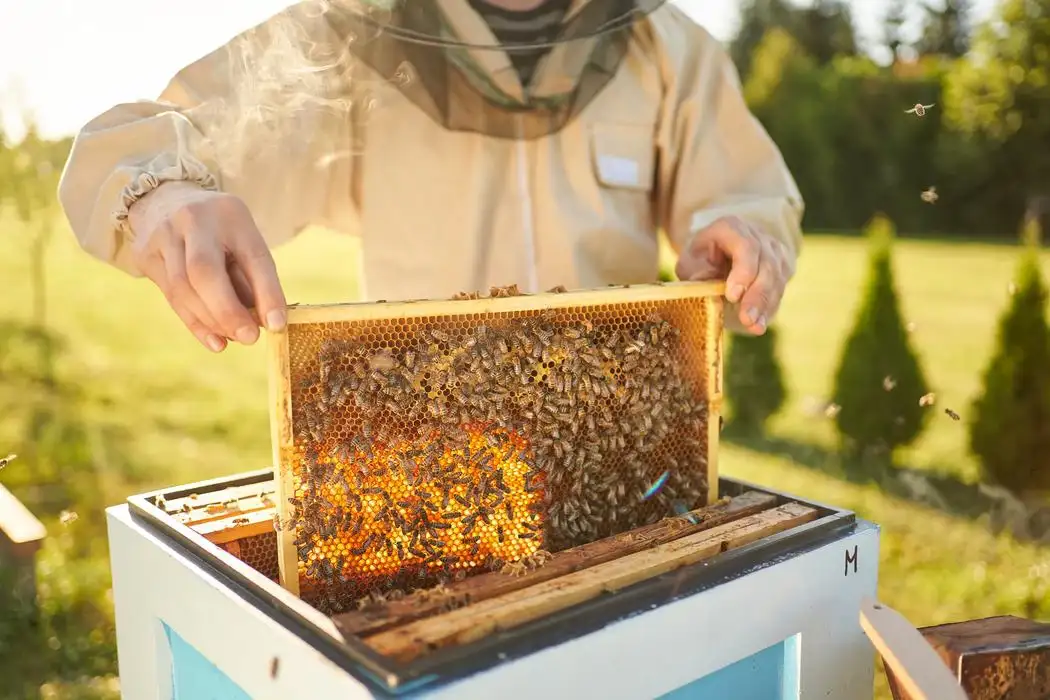
Man taking honey from tray(bee farming)
  • Apiculture is the practice of raising bees in colonies in places called apiaries to produce honey and other items like royal jelly, beeswax, etc.
  • In addition, bees are also utilized for their pollination services.
  • For the colonies to expand, beekeepers frequently employ wooden hives.
  • Bee farming is a low-cost, low-labor method of farming.
  • Bees can be easily grown without the requirement for any fertile ground.
  • However, it is important to make sure the bee farm is situated close to a flower garden with enough pollen and nectar.
  • In addition, it is necessary to prevent the use of insecticides near the apiaries.

Advantages of Animal Husbandry

Following are the advantages of animal husbandry in agriculture and human welfare.

  • The dairy industry in animal husbandry makes a significant contribution to the global food sector by offering a wide range of goods, including milk and its derivatives like butter, various types of cheese, ghee, cream, etc.
  • Dairy farming makes a vital contribution to a nation’s economy. With 186 million tonnes of milk consumed yearly. India is one of the world’s largest milk producers.
  • In addition to being raised for their milk, dairy farm animals are also used for their flesh.
  • Because of its high protein content and flavor meat is a very popular food item.
  • Livestock and poultry raised on the grounds, generally graze there, this helps in suppress weed development.
  • The items that are obtained from all the reared animals help in increasing the nation’s economy as they are exported to various foreign countries.
  • All these animal-rearing activities have generated employment options in rural areas. 
  • It has increased food security and provided money to rural impoverished people.
  • Utilizing animal waste as manure on farmland is one example of how sustainable practices to aid in the efficient management of waste. It encourages effective nutrient cycling.
  • Moreover, manure can be used in fish meals.
  • Manure and cow dung are valuable sources of fuel.
  • Additionally, animal husbandry is managed to produce fibers that are crucial to the textile industry.

Summary

  • The process of raising livestock to exploit their products is known as animal husbandry.
  • Dairy farming, poultry farming, fish farming, and bee farming are the four main subfields of animal husbandry.
  • Animal husbandry procedures must assure a safe, secure, and healthy environment for the animals’ well-being, which will in turn yield high-quality goods.
  • Animal husbandry produces a number of significant goods that are essential to our daily life.
  • Additionally, animal husbandry creates job opportunities.

Frequently Asked Questions

1. Differentiate between layers and broiler.
Ans: 

Layers

Broilers

These are chickens that are raised for egg production.

These are chickens that are raised for meat production.

They need protein in less quantity in their  diet.

They require a protein-rich diet.

They need proper spacing and lighting.

They do not need much spacing and lighting.

2. Enlist types of Honey bees used in apiculture.
Ans: Honey bees reared for apiculture are-

  • Apis dorsata or The Rock Bee
  • Apis cerana indica or The Indian hive Bee
  • Apis mellifera or The European Bee
  • Apis florea or The Little Bee.

3. Which state of India produces the maximum number of fish under pisciculture?
Ans: Andhra Pradesh is the highest fish-producing state in India. It produces around 34.50 lakh tonnes of fish per year.
Introduction to Population Growth

Introduction

A population is a collection of people belonging to the same species who coexist in one location. These people are susceptible to the same environmental factors and need the same resources to survive and develop. When analyzing the population, we categorize the population based on its size and location.

A population is never constant and always exhibits some fluctuations. Natality, mortality, immigration, and emigration are some terms used to characterize these dynamic oscillations that occur in a population. Mathematical methods, such as the logistic growth models and the exponential growth curve, are used to study population dynamics.

Population Growth

The term “population growth” describes the shift in the total number of people within a population. This growth can be positive if the no.of individuals increases in an area and population growth can be termed negative if the no.of individuals decreases in an area.

Birth, immigration, death, and migration are the four main factors that influence change in the number of individuals in an area. The first two elements increase the population, whilst the latter two cause it to decrease.

Growth models that describe the basic growth trend in a population

There are two growth models which describe the basic growth trend in a population. The two models are-

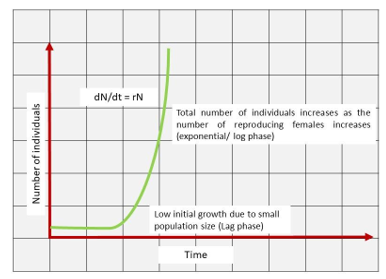
Exponential Growth Model

  • When an ideal environment with unlimited resources is taken into account, this growth model represents the rapid growth rate of a population.
  • Under ideal circumstances, a small number of individuals would have the means to develop and propagate. This is because they are not constrained by any external forces.
  • Every birth would result in an increase in population and every death will decrease the population.
  • This model, is often employed to find out the maximum capacity of growth and the kind of ideal conditions required for such growth to take place.

Mathematically, it can be shown as follows-

\(\frac{{\Delta {\rm{ }}N{\rm{ }}}}{t} = {\rm{ r}} \times {\rm{N }}\; –  –  –  –  – 2\)

\(\frac{{\Delta {\rm{ }}N{\rm{ }}}}{t} = {\rm{ }}B{\rm{ }} – {\rm{ }}D{\rm{ }}\; –  –  –  –  – 1\)

Where \(\frac{{\Delta {\rm{ }}N{\rm{ }}}}{t}\)= change in population size(Δ N) over a time interval (t)

B – D = per capita number of births – per capita number of deaths

B – D can be substituted by the quantity r, hence the equation becomes:

\(\frac{{\Delta {\rm{ }}N{\rm{ }}}}{t} = {\rm{ r}} \times {\rm{N }}\; –  –  –  –  – 2\)

Applying differential calculus to the above equation, we get:

\(\frac{{{\bf{dN}}}}{{{\bf{dt}}}}{\rm{ }} = {\rm{ }}{\bf{rN}}\;\)

where r = per capita change in population size occurring at each instant of time / intrinsic rate of population growth 

From this equation, the following cases arise:

  1. If r = 0, there’s no change in population size
  2. If r > 0, population size increases exponentially 
  3. If r < 0, population size declines exponentially

Logistic Growth Model 

  • The Logistical Model is based on the notion that as an individual is “added” to a population, they have access to fewer resources, due division of resources amongst individuals. This is in contrast to the exponential model, which assumes limitless resources.
  • Realistically, a certain geographic area can only support a certain number of inhabitants while ensuring that each has equal access to all available resources.
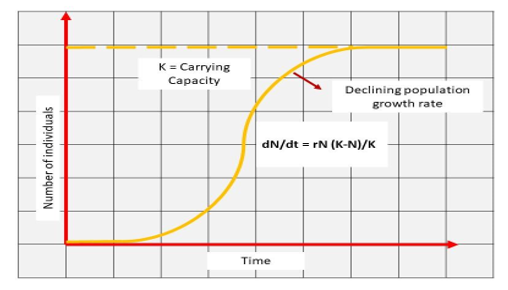
  • This maximum limit of population growth that an environment can sustain is known as its carrying capacity, represented as (K).  
  • Limiting variables such as water, food, shelter, protection from predators, etc. govern the carrying capacity of an environment.
  • The reproductive capacity of individuals is reduced when resources are scarce and the area is congested.
  • Similar to this, factors like an increase in disease incidence can cause the per capita death rate to rise.
  • Declining per capita population growth rate is the result of higher per capita mortality rates and lower per capita birth rates.
  • Therefore, r decreases as N increases. In the logistic growth the model, per capita growth rate tends to 0 as population size approaches K. 
  • If (K-N) = no. of excess individuals that the environment can support, then 
  • (K-N)/K = the amount of K still available for population growth

           \[\;{\rm{\;}}\frac{{{\rm{dN}}}}{{{\rm{dt }}}}{\rm{ =  }}\frac{{{\rm{rN }}\left( {{\rm{K – N}}} \right)}}{{\rm{K}}}\;\]

Where dN/dt = rate of change in population size at time t

            N = population density 

           r= intrinsic rate of growth under ideal conditions

           K = carrying capacity  

Factors that Influence Population Fluctuation:

The population is susceptible to regular dynamic variations brought on by the influx of new inhabitants into a region or the emigration of residents from that region. The following are the factors that influence population change.

  • Natality- It is also known as birth rate and is defined as the number of children born in a certain area per unit of time. Natality rises when an organism reaches its maturity and declines as it nears senescence. There are two types of natality-
    • Maximum/ absolute natality– This refers to the maximum number of persons that might theoretically be born under optimal and non-resource-limiting circumstances. It is also called the fecundity rate.
    • Ecological/realized natality- This is the actual population growth brought on by births under given environmental circumstances. It is  also known as the “fertility rate.”
  • Mortality-It is also known as the death rate and is defined as the number of individuals that have died in a population per unit of time. There are two types of mortality-
    • Specific or potential mortality- This refers to a theoretical decrease in the no. of indualivials under ideal climatic and resource availability conditions. People pass away through natural reasons, such as old age.
    • Ecological/realized mortality-Ecological/realized mortality is the actual death of members of a population as a result of ongoing environmental issues and resource shortages. With changes in population and environment, this type of mortality keeps on changing.
  • Immigration-
    • The term “immigration” describes the flood of new people from other places into a new geographic area.
    • It enhances population growth by increasing the number of individuals who already live in the area.
  • Emigration
    • Emigration is the movement of people away from a certain geographic area.
    • It drives people out of the area, which decreases the local population there.

Summary

  • Population growth refers to an increase in the number of people living in a particular location.
  • Four significant factors—natality, death, immigration, and emigration—affect population growth.
  • Models of population growth aid in analyzing and forecasting trends in population growth.
  • The exponential model is theoretical since it is based on unlimited resource availability.
  • The logistical model is realistic and takes into account the environment’s carrying capacity and limited resources.
  • Natality is the number of children born in a region per unit of time.
  • The number of individuals who die in a population per unit of time is known as mortality.
  • Immigration is the movement of new people into a country or region from other places.
  • Emigration is the movement of people out from a specific location.

Frequently Asked Questions

1. What benefits does population growth have?
Ans: Benefits of population growth are-

  • Economic growth can be caused by population expansion. 
  • more parents are investing in their children as a result of more births.
  • The economy is supported by rising spending on food, clothing, textbooks, recreational equipment, and toys.

2. What effects does population expansion have on the environment?
Ans: Population growth has the following impacts on the environment-

  • The consumption of resources including land, food, water, air, fossil fuels, and minerals increases to a great extent.
  • Lots of waste products are generated due to the consumption of various resources.
  • Waste products such as hazardous substances, greenhouse gases, and air and water pollutants are also generated, harming the environment.

3. Mention different types of populations.
Ans: The different types of the population are-

  • Finite population
  • Infinite population
  • Existent population
  • Hypothetical population

Animal Cells- Structure, Function, Diagram, and Types

Introduction

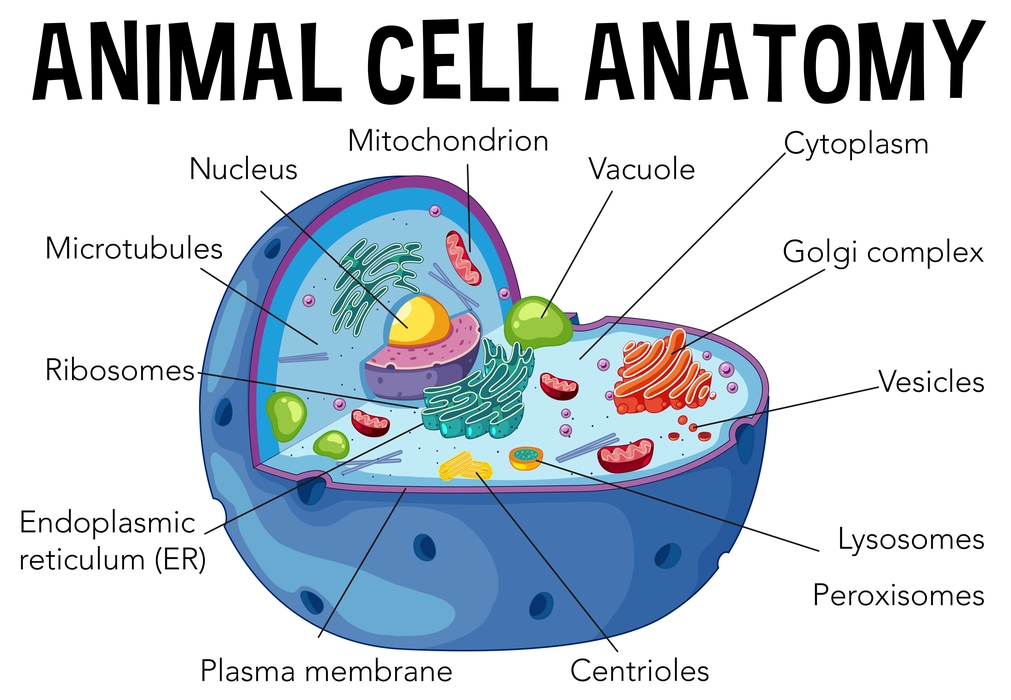
Any living organism’s fundamental structural and functional unit is its cell. In any living organism, cells serve a variety of important tasks in terms of growth, development, and daily activities. They perform these activities through chemical processes that take place inside specialized structures called cell organelles. Eukaryotic cells without a cell wall are referred to as animal cells. Since these cells are eukaryotic, they exhibit the existence of membrane-bound organelles as well as a well-defined nucleus that is protected by a nuclear membrane. It has been noted that animal cells are smaller than plant cells. According to their role in the animal body, they also exhibit a wide variety of sizes and shapes.

lead magnet
Diagram of Animal cell

Learn More about Animal Cells. Check out more videos in Science Class 8, Lesson 8 – Cell-the unit of life.

Animal Cell Organelles

Cell Membrane

  • It is a unique structure that encircles the animal cell and gives it structural stability.
  • It controls the movement of various molecules in and out of the cell.
  • The characteristic property of the cell membrane is selective permeability.
  • A phospholipid bilayer, as well as many kinds of specialized proteins, lipids, and carbohydrates, make up its structure.
  • The cell membrane is termed “amphipathic” because the phospholipids of the cell membrane have a hydrophilic head and a hydrophobic tail.
  • The cell membrane also plays a critical role in shielding the cell from the outside environment.
  • Specialized proteins termed transport proteins aid in the transit of polar molecules through the cell membrane.

Nuclear Membrane

  • It can be described as the nucleus’ outer boundary.
  • It is the membrane that confines the nuclear area from the cytoplasm It is a double-membrane structure.
  • It protects the genetic material from chemical reactions that take place in the cytoplasm.
  • The movement of materials into and out of the nuclear area is controlled by the nuclear membrane.
  • It consists of nuclear pores, which are points of entry into the nucleus. 
  • These nuclear pores assist in the transportation of material and help in regulating their movement.

Nucleus

  • It is frequently referred to as the cell’s “control center.”
  • It is the area where the cell’s genetic material is kept and is in charge of controlling daily cell functions and multiplication.
  • It is made up of the nuclear membrane, the genetic material, chromatin, nucleolus, and nucleoplasm.
  • The production of ribosomes takes place in the nucleolus.
  • DNA, which makes up chromosomes, contains instructions for cell division and growth.
lead magnet

Centrosome

  • Animal cells only have these organelles, which are missing from plant cells.
  • During cell division, they serve as the main organizing unit for microtubules.
  • They are made up of two centrioles, which are two groups of microtubules that are kept perpendicular to one another.
  • The development of spindle fibers, which bind to chromosomes in the metaphase and move them toward the poles in the anaphase, is aided by these cells.

Lysosome (Cell Vesicles)

  • It is frequently referred to as the cell’s suicide bag.
  • These membrane-bound organelles are crucial for breaking down big molecules and eliminating waste from the cell.
  • It has an acidic pH and a wide variety of hydrolytic enzymes that aid in its function in the disintegration of molecules.
  • Lysosomes develop as budding from the Golgi body, whereas the endoplasmic reticulum makes the hydrolytic enzymes.

Cytoplasm

  • It refers to the thick liquid that envelops cellular volume.
  • The cytoplasm, includes the cytosol, various organelles (apart from the nucleus), and other macro- or macromolecules.
  • The majority of cellular responses and metabolic processes take place there.
  • It serves as a matrix in which the other organelles are suspended.
  • The fluid nature helps molecules flow more easily inside cells.

Golgi apparatus

  • In the Golgi apparatus, molecules created in the endoplasmic reticulum are packaged, modified, and transported to their final location.
  • The molecule that has to be delivered is contained in vesicles made by the Golgi system.
  • It has two primary faces: the forming face, also known as the cis face, where vesicles attach to be modified in the Golgi cisternae, and the mature face, also known as the trans face, where the vesicles are released.
  • Lysosome synthesis is also carried out by the Golgi apparatus.

Mitochondrion

  • These are frequently referred to as the “powerhouse” of the cell since they participate in ATP creation.
  • This organelle is referred to as a semi-autonomous organelle because it has its own DNA.
  • Within this organelle, cellular respiration occurs to finally produce energy.
  • It also plays a role in apoptosis, cell communication, and signaling. Other activities include the storage of calcium ions to maintain a balance of calcium ions in the cell.
lead magnet

Ribosomes

  • They are small organelles that are not membrane-bound.
  • They are mostly located in the mitochondrial matrix, the nucleus, and the cytoplasm.
  • They serve as the main location for the synthesis of protein.
  • It typically has 2 subunits. It can be distinguished as the 70s and 80s ribosomes in prokaryotes and eukaryotes, respectively.

Endoplasmic Reticulum (ER)

  • ER is regarded as the cell’s biggest single membrane-bounded compartment.
  • It is made up of a network of vesicles, tubules, and cisterns.
  • Here Protein synthesis and protein modification take place.
  • The membrane of ER is responsible for the synthesis of lipids and proteins for all organelles of the cell
  • Depending on how they appear under the microscope, they are divided into the rough and smooth endoplasmic reticulum.

Vacuole

  • It is a unique organelle that is used to store extra cell materials.
  • It is surrounded by a tonoplast membrane.
  • Water can occasionally be found in vacuoles, which gives the cell a turgor pressure that helps it keep its form and survive adverse circumstances.

Functions of an Animal Cell

The fundamental tasks of an animal cell are-

  • Reproduction to insure the continuation of the generation 
  • Physical growth of the organism.
  • Respiration and metabolism fulfill the energy demands of the body.

Animal Cell types

Skin Cells

  • These cells are located on the outside of the body and are frequently very thinly layered.
  • These cells act as the body’s initial line of defense against germs and various stresses coming from the outside.
  • Melanocytes are an example.

Muscle Cells

  • These cells have specialized functions that help in the movement of organisms.
  • The skeletal, cardiac, and smooth muscles are some examples.

Nerve Cells

  • These long, branched cells, also known as neurons, carry electrical impulses throughout the body, aiding in the coordination and control of the entire body.
  • Along with neurons, glial and Schwann cells are also present.

Blood Cells

  • Red Blood Cells (RBC) and White Blood Cells are the two primary types of Blood cells.
  • RBCs utilizing the pigment hemoglobin, function as a transporter of oxygen throughout the body.
  • WBCs also referred to as leukocytes, are the body’s defenders that resist and fight infections.

Fat Cells

These large cells, also known as adipocytes, are responsible for storing fat droplets or lipids when the body has an excess of them.

Summary

  • Animal cells are made up of various organelles such as Ribosomes, centrosomes, Endoplasmic Reticulum, Nucleus, Nuclear membrane et,c.
  • Animal cell types include- skin cells, Muscle cells, Nerve cells, Blood cells, etc.
  • Thus, all the cells and their organelles work in unison to bring about proper control and coordination of the entire body.
lead magnet

Frequently Asked Questions

1. Who developed the plasma membrane model?
Ans: Singer and Nicolson presented the fluid mosaic model of the plasma membrane in 1972. According to this, the cell membrane bilayer is made up of phospholipid molecules and proteins are present on the surface and are embedded in the lipid bilayer.

2. What three types of lysosomes?
Ans: The lysosome’s type:

  • Primary lysosomes: These are lysosomes that have just formed.
  • Secondary lysosomes: When primary lysosomes and phagosomes combine, secondary lysosomes are produced.
  • Autophagosomes: They are formed by the digestion of intracellular organelles by the process of autophagy.

3. What are the functions of smooth ER?
Ans: Smooth ER is a membrane-bound organelle that is devoid of ribosomes. The main function of this organelle is the synthesis of carbohydrates, lipids, and steroids. It also performs the metabolism of foreign compounds such as drugs and toxins.

Agricultural Chemistry

Introduction

Agriculture chemistry is the study of agricultural production, as well as the interaction of plants, bacteria, animals, and their environment. It is a scientific field that studies the composition of both chemistry and biochemistry. We study the production of food, Agri products, and beverages from raw materials in agriculture chemistry. Herbicides, growth regulators, fertilisers, insecticides, and pesticides are examples of agricultural materials. Agricultural chemistry seeks to increase agricultural yield, improve soil quality and fertility, and increase crop yield.

What is Agricultural Chemistry

Agriculture is the process of raising livestock, crops, and other food products. Agriculture in the modern era includes horticulture, agronomy, dairying, soil chemistry, animal husbandry, and so on. Organic, inorganic, and agricultural products are all studied in chemistry. Agricultural chemistry is the application of both agriculture and chemistry that deals with crop production and improvement. Photosynthesis, fertilisers, pesticides and insecticides, irrigation, agricultural produce storage, food processing, chemicals etc.

Agricultural chemistry is a science concerned with ways to influence chemical and biochemical processes in soil and plants, with plant mineral nutrition and with using fertilizers and other chemical means to improve fertility and increase yield.

Why Agricultural Chemistry is important?

Chemistry plays a significant role in crop and livestock production, controlling pathogens, insects, and weeds, and improving crop yield. The world’s population is growing by the day. To meet the growing population’s demand, agricultural chemistry not only improves crop production resources but also uses crops and crop waste to produce renewable fuel and feedstocks. We know that plants produce food through the process of photosynthesis. It is a natural phenomenon, but we can learn about the mechanism involved in the photosynthesis process thanks to agricultural chemistry. This aided us in increasing crop production.

  1. Agriculture chemistry contributes to soil quality improvement by testing soil and nutrients.
  2. Fertilisers are organic and inorganic compounds that can be found naturally or synthetically. They are applied to the soil during agriculture to increase crop yield. Fertilisers are applied to the soil to provide the macro and micronutrients required for crop production.
  3. Pesticides and insecticides are chemicals that are used in crop production to reduce damage caused by insects and pests.
  4. Agriculture chemistry aids in the storage of food products, such as sulphur dioxide, which is used to keep grains fresh for long-term storage. Salicylic acid and sodium benzoate are used in food preservation and shelf life extension.
  5. Modern agricultural chemistry is now using crop and food waste to produce renewable energy fuels and beverages. Examples include the production of alcohol from bagasse and the use of the Jatropha plant in the production of fuel.
Type of MaterialProducts
FoodRefined oil, Butter, cheese, etc. 
PetroleumKerosene, Diesel, Petrol, etc
ConstructionMortar, glass, chemicals, and chemical compounds.
HouseholdCooking gas, food process.

What is the purpose of Agricultural Chemistry?

Agricultural Chemistry’s goal is to increase crop production by using pesticides, fungicides, fertilisers, and other chemicals.  In modern chemistry, Crops and other crop wastes are used in the production of biofuels and beverages.

  1. As agriculture advances, chemistry improves irrigation techniques through the use of plastic pipes, drip irrigation techniques, sprinkler systems, and so on. Crop production has increased as a result of improved irrigation and a favourable climate.
  2. It has invented preservatives such as salicylic acid and sodium benzoates, as well as other chemicals, to extend the shelf life of food products.
  3. Agricultural chemistry applied science improves crop quality and yield and lowers production costs.
  4. A subfield of agricultural chemistry Chemurgy is working on utilising agricultural products as raw materials for subsequent production such as oil production, petroleum, cooking gas, and so on.

Summary

We learned that agricultural chemistry is a branch of science that deals with the intersection of chemistry and agriculture production. It aids in the production of agricultural products as well as the processing of food and beverages from raw materials. It establishes the relationship between the environment, microbes, plants, and animals. Furthermore, it aids in increasing the quantity and quality of food. Agriculture chemistry incorporates not only chemistry and agriculture, but also microbiology, genetics, physiology, entomology, ecology, and so on.

Frequently Asked Questions

1. Organic fertilisers: what are they?

Ans. Animal manure, fruit and vegetable compost, and fish are examples of living systems from which organic fertilisers are derived. The soil’s microbial population breaks down organic waste. It is rich in potassium, nitrogen, phosphorus, calcium, etc.

2. Inorganic fertilisers: What are they?

Ans. Minerals and synthetic chemicals are used to make inorganic fertiliser, which is synthetic. Petroleum is frequently used to produce inorganic nitrogen.

3. What do you mean by Insecticides and Pesticides?

Ans. Chemicals called pesticides are used to protect crops from things like fungi, weeds, and pests. Chemicals called insecticides are used to eradicate insects that are harmful to crops or livestock. 

Advantages And Disadvantages Of Plastic

Introduction

Most plastic is made up of organic polymers. The chains of carbon atoms that make up these polymers may or may not be linked together with oxygen, sulphur, and nitrogen atoms. Given that they are made up of numerous repeating monomers, plastics can be thought of as both macromolecules and polymers. Different polymers have different backbones and side chains, which is how plastics differ chemically from one another.

What are Plastics?

A wide variety of synthetic and semisynthetic materials are used to create plastics. Different polymers have different backbones and side chains, that is how plastics differ chemically from one another. Polyesters, Silicon, Polyurethanes, Acrylics, and Halogenated are significant groups into which Plastic is divided into various polymers. Different physical characteristics of plastic include its hardness, tensile strength, density, thermal conductivity, and resistance.

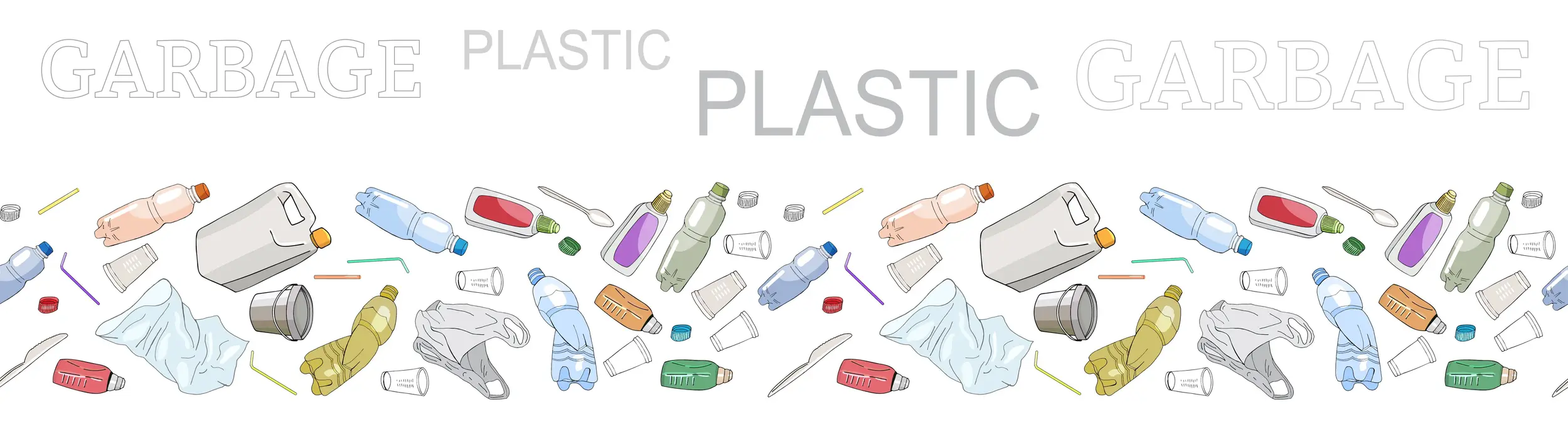
Image of example of plastics

What are Thermoplastic Plastics?

  1. Thermoplastics are soft and less brittle and are created by additional polymerization. 
  2. In organic solvents, they can be dissolved. 
  3. The thermoplastics become softer when heated and can therefore be moulded into any shape while still warm. 
  4. However, once cooled, the material hardens and rigidifies, holding the moulded shape. Without changing their chemical makeup, they can be repeatedly heated up and moulded into any other shape.

Mention some characteristics of Thermoplastic Plastics

  1. Have high molecular mass
  2. As the temperature rises, the intermolecular force between the chains weakens, producing a viscous liquid.
  3. These polymers are moldable.
  4. Easy to recycle
  5. These polymers are strong yet lightweight.

What are Thermosetting Plastics?

The macromolecular chains in thermosetting polymers tend to bond with one another to form a cross-linked 3D network. Thermosets are other names for these polymers. The word “thermosetting” is defined as a term that refers to permanently setting upon heating. Thus, after being heated to their pre-thermoset form, the thermosetting polymers acquire their hard texture.

Mention some characteristics of Thermosetting Plastics

  1. Typically, thermosetting plastics can withstand heat. They tend to break down before melting, though, when heat is applied at a high intensity.
  2. Thermosetting polymers are brittle by nature because heating causes them to lose their elasticity.
  3. These polymers cannot be heated again after they have been cured or moulded.
  4. The constituent elements used to make the polymer have an impact on the Thermoset density.
  5. Typically, thermosets are resistant to chemical harm.

Improve your Science concepts. Study Science Course for classes 6th, 7th, and 8th.

Advantages of Plastics

  1. Plastics are incredibly flexible and can be moulded into a wide variety of designs to suit our needs.
  2. It is extremely lightweight and strong in construction.
  3. It can be altered into various forms, colours, and textures and gives us a significant marketing advantage.
  4. Plastic products are corrosion-resistant and very inexpensive to produce.
  5. Instead of other metal materials, plastic products can be handled and stored more easily. They can also be recycled and reused repeatedly.
  6. Because plastic is water and moisture-resistant, it is also simple to store and transport food in plastic packets or containers.

Disadvantages of Plastics

  1. The biggest issue in the world is how to dispose of plastics because they cannot easily decompose through any natural process, such as the action of bacteria or microbes. Since plastic takes a long time to decompose, it is not environmentally friendly.
  2. Plastic contributes to environmental pollution because it releases a lot of harmful fumes into the air when it is burned.
  3. Unlike metals, plastics cannot be recycled repeatedly into a wide variety of products because doing so compromises their integrity and quality.
  4. Plastics are made from non-renewable resources like petroleum, natural gas, and coal, which contribute to the depletion of these resources and increased dependence on fossil fuels.
  5. Plastic production generates significant greenhouse gas emissions, contributing to climate change and its related negative impacts on ecosystems and human societies.
  6. Plastics can have adverse effects on human health, with exposure to certain chemicals in plastics linked to various health issues, such as endocrine disruption, cancer, and reproductive problems.
  7. The plastic manufacturing process can also negatively impact local communities and ecosystems near production facilities, often releasing toxic chemicals into the air and water, leading to pollution and potential health problems for nearby residents.

Summary

A wide variety of synthetic and semisynthetic materials are used to create plastics. One of the most significant chemical industry products that have an impact on modern life is polymers. The most prevalent examples of polymers are plastics, synthetic fibres, synthetic rubber, etc.  Compared to materials prepared with other metals like iron and copper, plastic-based products are more robust.

Plastic is more effective than metal for the preparation of various materials due to their distinct differences in characteristics. Plastics are incredibly flexible and can be moulded into a huge variety of patterns, vibrant colours, and forms. Consequently, many packaging materials are frequently made of plastic.

Frequently Asked Questions

1. Is plastic employed in the healthcare sector?

Ans. Yes, plastic is useful in the healthcare sector. This is because it is water and temperature-resistant, making it perfect for packaging medications, wound-sealing threads, syringes, gloves, and other medical equipment.

2. Why are plastics naturally non-corrosive?

Ans. The plastics are not corrosive because the materials inside them do not react or go through any chemical reactions. Plastic is used to make a lot of containers, including buckets, mugs, water bottles, and food containers.

3. Why is it necessary to recycle plastic?

Ans. Since almost all types of plastic materials are non-biodegradable and harmful to the environment, recycling plastic is crucial.

Acids Bases Salts

Introduction

We currently know about 118 different chemical elements. These elements combine to form numerous compounds. These compounds are classified into Acids, Bases, and Salts based on their chemical properties. “All substances that produce \({H^ + }\) ions when dissolved in water are known as acids, while those that produce \(O{H^ – }\) ions when dissolved in water are known as bases.” When acids and bases are mixed together, they lose their acidic and basic properties, i.e. neutralise, and form salts.

What are Acids

“The word acid comes from the Latin word ‘acidus’ or ‘acere,’ which means sour. The most common feature is their sour taste. In its aqueous solution, an acid produces an ionizable hydronium ion (\({H_3}{O^ + }\)). It causes blue litmus paper to turn red. These dissociate in an aqueous solution to form their constituent ions, as illustrated by the examples below.”

\[HCl{\rm{ }}\left( {aq} \right){\rm{ }} \to {\rm{ }}{H^ + } + {\rm{ }}C{l^ – }\]

\[{H_2}S{O_4}\left( {aq} \right){\rm{ }} \to {\rm{ }}2{H^ + } + {\rm{ }}SO_4^{2 – }\]

\[C{H_3}COOH{\rm{ }}\left( {aq} \right){\rm{ }} \to {\rm{ }}{H^ + } + {\rm{ }}CH3CO{O^ – }\]

What are Bases

Bases are distinguished by their bitter taste and soapy texture. A base is a substance that produces the hydroxyl ion (\(O{H^ – }\)) in an aqueous solution. Bases cause red litmus paper to turn blue.

The bases dissociate in an aqueous solution to form their constituent ions, as shown in the examples below.

\[NaOH{\rm{ }}\left( {aq} \right){\rm{ }} \to {\rm{ }}N{a^ + } + {\rm{ }}O{H^ – }\]

\[Ca{\left( {OH} \right)_2} \to {\rm{ C}}{a^{2 + }} + {\rm{ }}2O{H^ – }\]

What are Salts

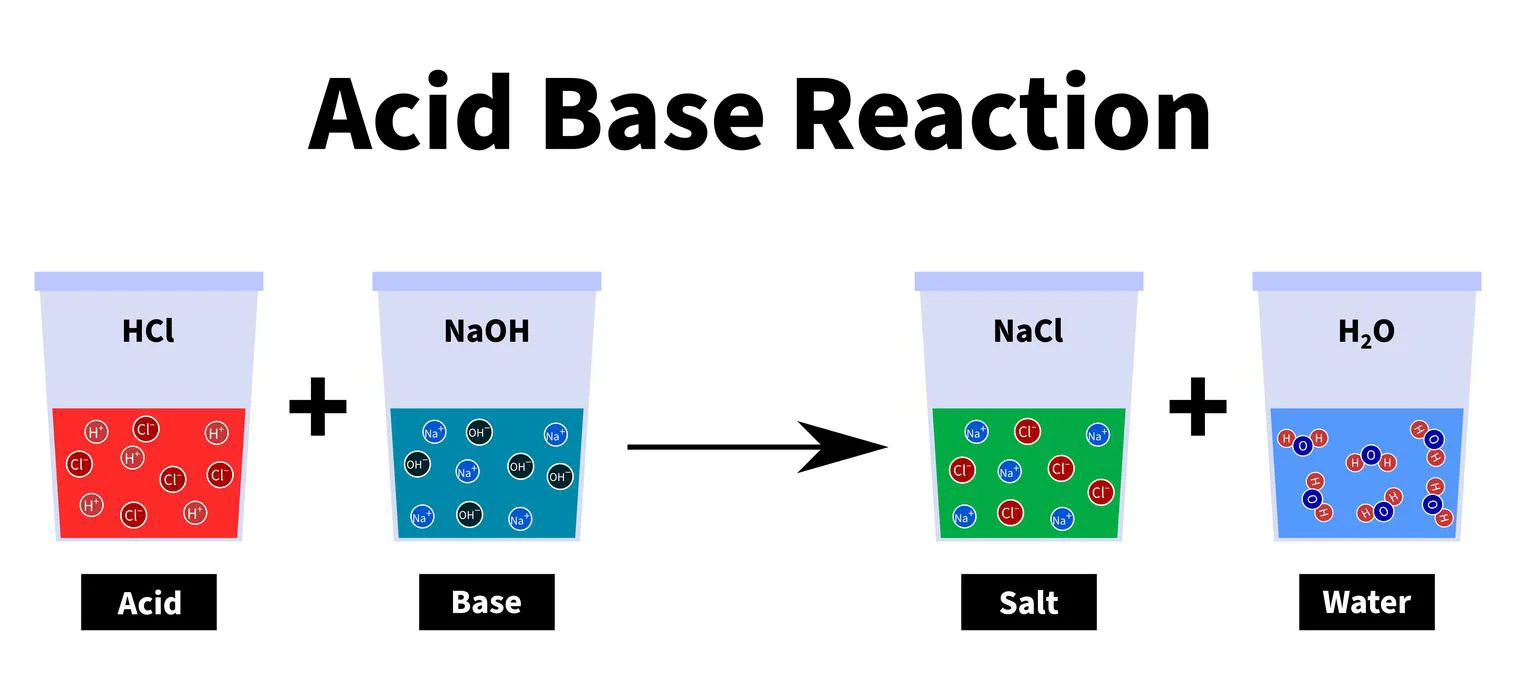
When an acidic solution is treated with an alkaline solution or aqueous solution of a metal oxide, a salt is formed, and the solution becomes neutral. A neutralization reaction occurs when \({H^ + }\) ions from an acid combine with \(O{H^ – }\) ions from the base of a metal oxide.

The chemical reactions shown below demonstrate the formation of salt.

\[HCl{\rm{ }} + {\rm{ }}NaOH{\rm{ }} \to {\rm{ }}NaCl{\rm{ }} + {\rm{ }}{H_2}O\]

\[{H_2}S{O_4} + Ca{\left( {OH} \right)_2}\, \to {\rm{ }}CaS{O_4} + {\rm{ }}2{H_2}O\]

Uses of Acids

  1. Sulphuric acid is used in the production of fertilizers such as ammonium sulphate, detergents, explosives, plastics, dyes, chemicals, etc.
  2. In the textile, food, and leather industries, hydrochloric acid is used as a dye. It is used to remove oxide films from steel objects prior to galvanization.
  3. Nitric acid is used in the production of fertilizers like ammonium nitrate, explosives like trinitrotoluene (TNT), plastics, and dye.

Uses of Bases

  1. Sodium hydroxide is commonly used in the production of soap, as well as synthetic fibre (Rayon) and paper.
  2. The reaction of calcium hydroxide, also known as slaked lime, produces bleaching powder.
  3. Magnesium Hydroxide, which acts as an antacid for the body, is used to neutralise excess acid in the stomach and cure indigestion.When an acidic solution is treated with an alkaline solution or aqueous solution of a metal oxide, a salt is formed, and the solution becomes neutral.

Summary

The compounds are classified into Acids, Bases, and Salts based on their chemical properties. “All substances that produce \({H^ + }\) ions when dissolved in water are known as acids, while those that produce \(O{H^ – }\) ions when dissolved in water are known as bases.” When acids and bases are mixed together, they lose their acidic and basic properties, i.e. neutralise, and form salts.

Frequently Asked Questions

1. What are the main differences between a strong acid and a weak acid?

Strong AcidsWeak Acids
When exposed to water, strong acids completely dissociate into their ions.In an aqueous solution, weak acids are molecules that partially dissociate into ions.
A strong acid solution has a very low pH.A weak acid solution has a pH of 3-5.
It releases all the H+ ions into the solution.Partially releases all H+ ions to enter the solution.

2. What are the main differences between a strong base and a weak base?

Strong BasesWeak Bases
In a solution, a strong base can completely dissociate into its cation and hydroxyl ion.A weak base partially dissociates into its hydroxyl ion and cation, resulting in an equilibrium state.

3. Do acids conduct electricity?

Ans. The conductivity is due to the presence of ions. Acids dissociate to form (\({H^ + }\)) ions in solutions. Hence, acids conduct electricity.

Acids and Bases

Introduction

Lemon juice, soap, milk, detergents, and other frequently used items in daily life are all made of acids and bases. In addition to these sustainable acids and bases, a large variety of chemical or mineral acids or bases are also used. Knowing the fundamental characteristics of acids and bases is essential to comprehend the concepts of acids and bases. Water can be combined with acids and bases to produce two different aqueous solutions. Any material that dissolves in water releases free \({H^ + }\) ions to produce hydronium (\({H_3}{O^ + }\)), which is referred to as an acid and releases hydroxyl ions (\(O{H^ – }\)), which is referred to as a base. This acid and base will neutralize each other when combined.

Definition-Acids and Bases

Acids: Chemical substances or compounds that can donate a proton (\({H^ + }\)) or accept electron pairs are known as acids.

Examples include hydrochloric acid (HCl) and sulphuric acid (\({H_2}S{O_4}\)).

Bases are substances or ions that can take a proton or donate a pair of electrons.

Examples include potassium hydroxide (KOH) and sodium hydroxide (NaOH).

Theories of Acids and Bases

Arrhenius theory

1. According to Arrhenius, an acid is any chemical that increases the concentration of protons (\({H^ + }\)) in a solution. For Example, the (\({H^ + }\)) and (\(C{l^ – }\)) ions are created when the acid HCl (which is a base) dissolves in water.

2. Bases are compounds that increase the number of hydroxide ions (\(O{H^ – }\)) in solutions. Take NaOH as an example, which dissolves in water to produce the ions \(N{a^ + }\) and \(O{H^ – }\). Consequently, increasing the \(O{H^ – }\) ion concentration.

Brønsted Lowry theory

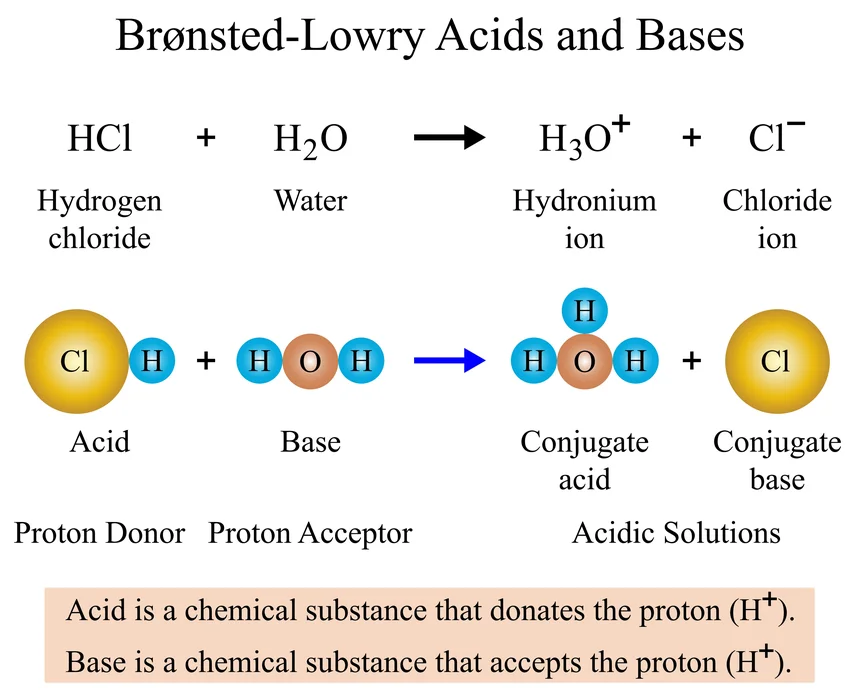
This theory states that bases are proton (\({H^ + }\)) acceptors and form a conjugate acid, whereas acids are proton (\({H^ + }\)) donors and form conjugate bases.

For example, hydrochloric acid (HCl), which is a Brønsted-Lowry acid, gives its proton to water when it is mixed with a base (\({H_2}O\)). Water is referred to be the Brønsted-Lowry base when it receives a proton.

Brønsted Lowry theory for acids and bases

Acids and bases in conjugates 

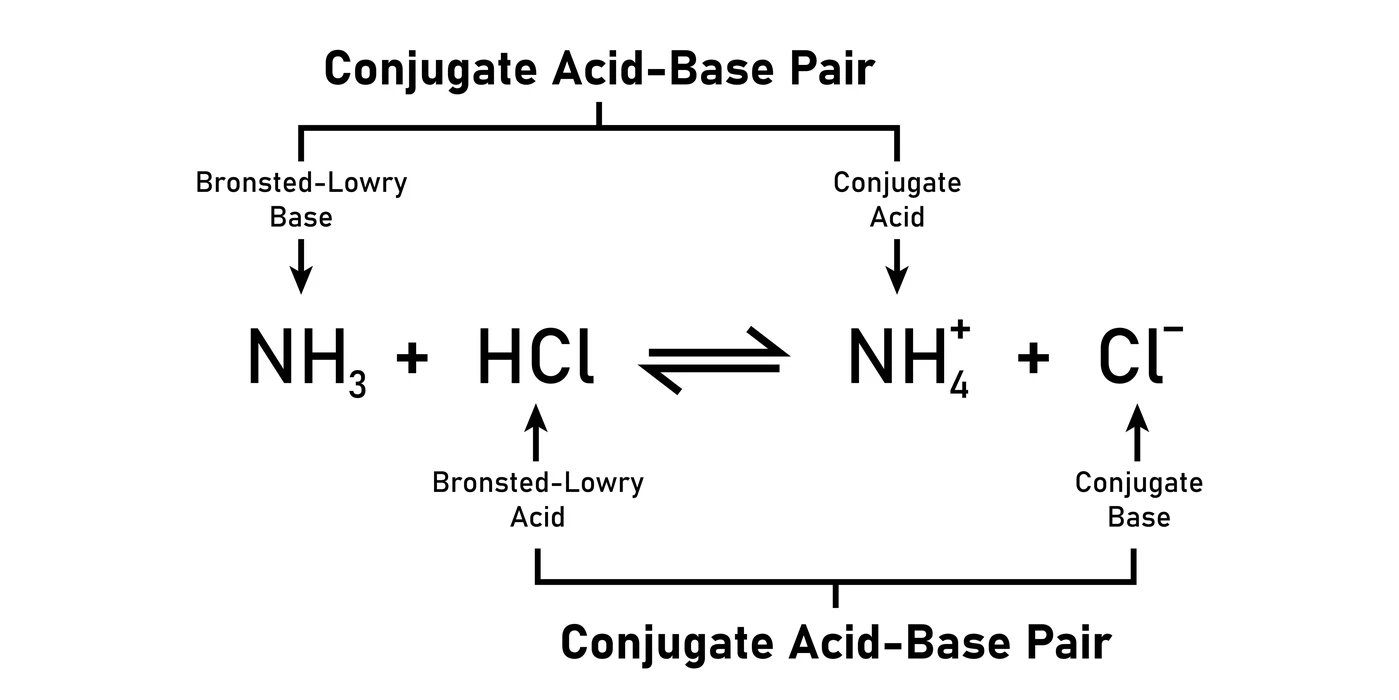
A conjugate base has one more negative (-) charge and one less H-atom than the acid that generated it, whereas a conjugate acid has one more positive (+) charge and one more H-atom than the base that formed it.

As an illustration, in this reaction, a base (\(N{H_3}\)) and an acid (HCl) combine to generate a conjugate acid (\(N{H^{4 + }}\)) and a conjugate base (\(C{l^ – }\)).

Acids and bases in conjugates 

Lewis Concept of Acids and Bases

Lewis bases or acids are terms used to describe substances that take electron pairs, whereas Lewis bases or acids are terms used to describe substances that contribute to electron pairs. Thus, the acceptance or donation of electrons determines the acidity or basicity of a substance. 

Acids and bases pH values

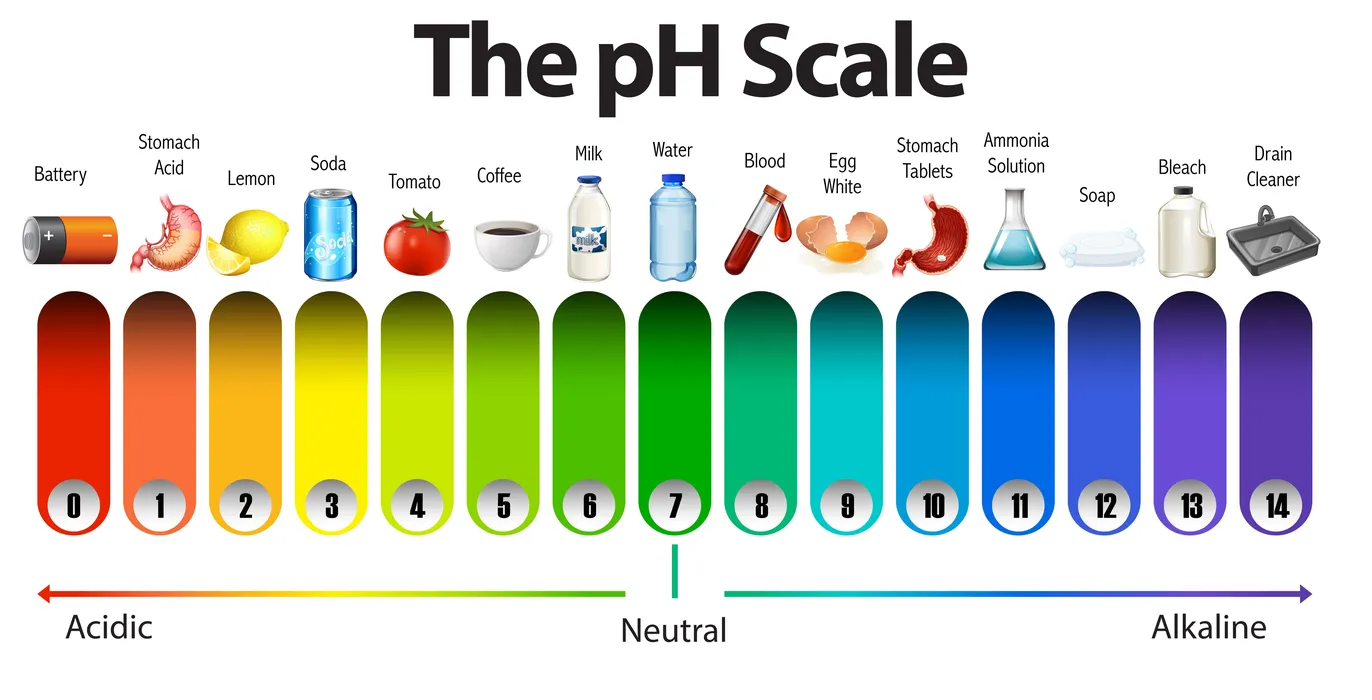
The word pH, which stands for potential hydrogen, helps scientists evaluate whether a solution is acidic or basic based on how many hydrogen ions are present in it. It is essentially a pH scale or negative logarithmic scale that ranges from 0 to 14 and quantifies the molar concentration of hydrogen ions from 1 to 14. It has no units for measurement.

The equation for calculating pH is pH =-log [\({H^ + }\)]

When a substance’s pH value is below 7, it is referred to be an acid. If the substance’s pH is more than 7, it is regarded as a base. The substance is regarded as neutral when the pH is 7.

The pH scale is useful for determining a substance's acidity or basicity.

Properties of Acids and Bases

  S. NoPropertyAcidsBases
1.Taste Sour in taste.Bitter in taste.
2.Test with phenolphthaleinAcid turns phenolphthalein colourless.Basic turns phenolphthalein pink.
3.Test with litmus paperBlue litmus turns red.Red litmus turns blue.
4.Whenever metals reactAcids and metals react to produce salt and H2 gas. (Only with metals in the activity series above hydrogen.)Salts and H2 gas are also produced when bases interact with metals (apart from Al).
5.When carbonates are reactedSuch reactions produce carbon dioxide.There is no reaction.

Uses of acids

  • Hydrochloric acid is used to remove rust from metals
  • Acetic acid is diluted into vinegar, which is used in many household processes. Its main application for it is as a food preservative.
  • Lemon juice and orange juice both include citric acid as primary ingredients. Additionally, it can be used to preserve food.
  • Nitric acid is used in fertilisers, plastic, photographic films, explosives, and dyes.

Uses of bases

  • The antidote for food poisoning, bleaching powder, and building construction all employ calcium hydroxide.
  • Petroleum is refined using sodium hydroxide, and it is also used to make soap, textiles, and paper.
  • Laxatives frequently contain magnesium hydroxide, popularly known as milk of magnesia. It is also used as an antacid, since it lowers any excess acidity in the human stomach.

Summary

Numerous items that are edible and non-toxic, such as grapes, oranges, turmeric powder, milk, and other items, are regarded as bases and acids. Taste and touch are two simple ways to recognise these natural acids and bases. However, some acids and bases are dangerous chemical reagents that cannot be distinguished by their physical qualities; for this reason, their chemical properties are crucial. These acids and bases mostly depend on the \({H^ + }\) ion and \(O{H^ – }\) ion concentrations. Acids are substances that cause protons (\({H^ + }\)) to be produced in water. Bases, on the other hand, are chemicals that generate more hydroxyl ions (\(O{H^ – }\)) in solution. The pH scale can be used to determine the numerical value of acids and bases.

Frequently Asked Questions

1. Are acids electrically conductive?

Ans. The flow of ions’ is what causes the conductivity. Acids split apart in solutions to produce (\({H^ + }\)) ions. Acids, therefore, carry electricity.

2. Why does dilute hydrochloric acid turn blue litmus red, but dry hydrogen chloride gas does not?

Ans. Dry hydrochloric acid does not produce ions, whereas diluted HCl does. Increasing the concentration of \({H^ + }\) in a solution causes it to change from blue litmus to red.

3. How does pH affect tooth decay?

Ans. The pH of the mouth decreases as we eat more foods that contain acid, which encourages the growth of harmful bacteria and leads to tooth decay. Therefore, tooth decay results from the mouth’s pH being decreased.

Acid Rain

Introduction

In today’s world, acid rain is a serious environmental issue. Midway through the 19th century, it was reported. As a result of excessive contaminants being removed from the atmosphere by both natural and man-made sources, this has occurred and therefore bringing down the pH of regular rainwater. There is no way to lessen the impact of natural sources, but there are various preventive steps that can be taken to lessen the impact of man-made sources. Since acid rain affects several ecosystems by lowering the pH of the material where it has been deposited, its prevention or mitigation is crucial.

What is acid rain?

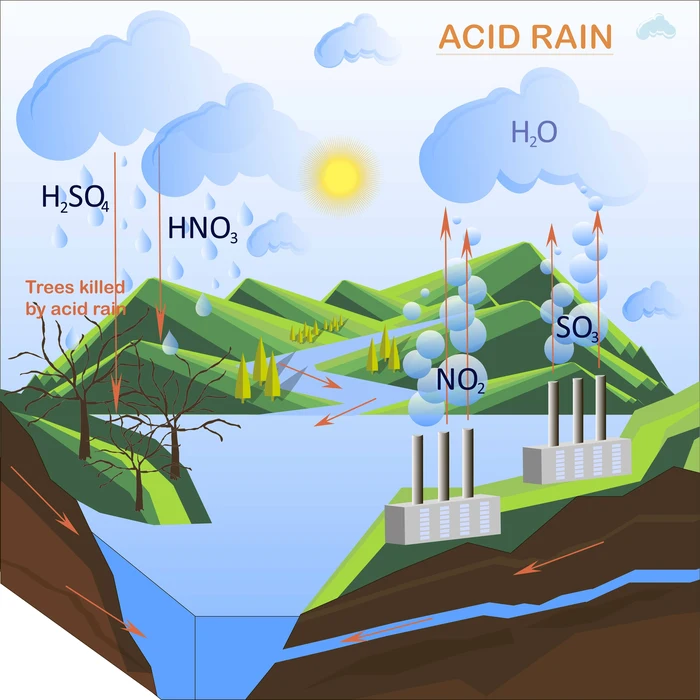
Acid rain, a severe environmental issue, is caused by \(S{O_2}\) and \(N{O_x}\) emissions into the atmosphere. Acid rain is created when these substances interact with water vapour in the atmosphere. Normally, \(S{O_2}\) does not interact with water, but when it interacts with ozone, it changes into \(S{O_3}\), which then reacts with water to create sulphuric acid, resulting in acid rain. The environment is being threatened by acid rain. Water bodies and biological beings suffer greatly from acidification. According to reports, acidification causes a greater release of aluminium from rocks or soil and which eventually gathers or deposits on water bodies, posing a hazard to the creatures that drink the water.

Acid rain results when sulphur dioxide (SO2) and nitrogen oxides (NOX) are emitted into the atmosphere and transported by wind and air currents.

What are the causes of acid rain?

  • The atmospheric release of \(S{O_2}\) and \(N{O_x}\) chemicals results in acid rain. These chemicals come from a variety of sources, including both natural processes and human activity. 
  • The natural sources include volcanic eruptions, sea spray, forest fires, etc. While man-made sources for sulphur dioxide include industrial combustion, coal burning from cars, oil refineries, home, and industrial boilers, automobiles, fertilizer plants, etc. 
  • Natural sources of \(N{O_x}\) include bacterial activity, volcanic eruption, lightning, forest fires, etc. 
  • When these substances are discharged in excess into the atmosphere, they react with the water that is already there to generate numerous acid molecules. 
  • They are sulphuric acid and nitric acid. These further contribute to acidification and bring about various environmental issues.

What are the effects of acid rain?

  • Nitrates are deposited on the soil as a result of acid rain, which also raises nitrogen saturation levels. This may also result in the loss of other significant ions from the soil, including calcium and magnesium ions that are beneficial to trees and plants. Additionally, acid rain removes the protective layer of trees, weakening them.
  • Since acids take aluminium from soil and deposit it in water bodies, acid rain also has an impact on surface waters by raising the concentration of aluminium in the water bodies. The aquatic species that live in the water bodies will ultimately be impacted by this.
  • Since the increased concentration of sulphuric acid and nitric acid promotes the corrosion of metals and fading of paints, acid rain impacts have been documented in man-made sculptures. 
  • Due to the particle build-up, acid rain has an impact on people’s health who have asthma and emphysema. 
  • Visibility is hampered by acid rain, which can often appear as fog.

Real-life examples of acid rain effects

  • Acid rain has caused the sculpture at Oakland University in Rochester, Michigan, to degrade. 
  • The US, Taiwan, Europe, Poland, and China’s southeast coast are some of the regions that are impacted. 
  • The glossy feature of the Taj Mahal is presently deteriorating as a result of acid rain.
  • Due to acid rain, the Statue of Liberty corroded and turned green. 
  • Nearshore and coastal oceans are significantly acidified as a result of acid rain.

How to prevent acid rain?

Acid rain can be prevented only by reducing the emission of acid rain-causing particulates into the atmosphere. Only man-made sources can be reduced by performing several preventive methods. This can be done by, 

a) Reducing the sulphur-containing fuels in automobiles or switching to alternative sources. 

b) Scrubbers can be used for reducing the emission of \(S{O_2}\) into the atmosphere since they will attract sulphur particles. 

c) For reducing the emission of \(N{O_x}\) catalytic converters can be used, thereby converting it into \({N_2}\) and \({O_2}\)

d) Liming water bodies can be done in reducing the impact of acid rain. 

e) The effect on metals due to acid rain can be reduced by coating them with corresponding materials.

Summary

Acid rain, a severe environmental issue, is caused by the atmosphere’s \(S{O_2}\) and \(N{O_x}\) emissions. The atmospheric release of \(S{O_2}\) and \(N{O_x}\) chemicals results in acid rain. Nitrates are deposited on the soil as a result of acid rain, which also raises nitrogen saturation levels. The glossy feature of the Taj Mahal is presently deteriorating as a result of acid rain. The effect on metals due to acid rain can be reduced by coating them with corresponding materials.

Frequently Asked Questions 

1. Write a note on the facts about acid rain.

Ans. Numerous substances, such as precipitation, snow, fog, and microscopic dry particles that fall on the surface of the planet, can carry acid rain to its surface. Additionally, regular precipitation has a pH of 5.6, whereas acid rain has a pH of roughly 4.6, which is a bigger difference and makes its effect more sensitive.

2. Can acid rain cause skin burns?

Ans. Since acid has a pH of 4.6, acid rain is not sufficiently acidic to cause skin burns. Additionally, it has no direct impact on humans. Patients with asthma and emphysema will experience issues if they come into contact with sulphur particles in the air.

3. Where does acid rain occur most often?

Ans. Acid rain is a widespread problem in places like Eastern Europe, and the US, and is now spreading to parts of India and China.

Acute and Chronic Diseases

Introduction

A disease is any adverse change from an organism’s usual anatomical, genetic, or physiological state. An illness is accompanied by a distinctive collection of signs and symptoms that are illustrative of that specific condition and aid in its diagnosis and treatment. Diseases can be acquired, congenital, communicable, non-communicable, chronic, and acute diseases. Medical science has cured some of the diseases while some diseases are not curable and hence prove to be fatal. 

Classification of disease

Various diseases can be classified based on the source of detection, causative agents, medium of infection, Duration, Communicability, and Extent.

Based on Communicability there are two types of diseases-

  • Communicable disease-These diseases are contagious and are brought on by microbes like bacteria, fungi, viruses, worms, and protozoans. For eg COVID-19, chickenpox, cholera,
  • Non- Communicable disease-These are not contagious and do not pass from person to person. These bind the person who contracts them inside. Cataracts, Alzheimer’s, cataracts, and heart conditions are a few examples.

 Based on duration there are two types of diseases-

  • Acute diseases-These illnesses are severe, last very briefly, are typically curable with appropriate medical care, and the patient regains their normal bodily functions after being treated. Common colds, fractures, pneumonia, bronchitis, etc. are a few examples. Chronic diseases can develop from acute illnesses if they are not treated on time. 
Chronic diseases can develop from acute illnesses if they are not treated on time.
  • Chronic diseases- These illnesses last three years or longer before they are diagnosed. Depending on the organism’s immunity, the disease’s stage of development, the organ or organ system that is affected, and other factors, they may be curable. Such illnesses have the potential of being deadly and incurable. Examples include high blood pressure, diabetes, HIV, arthritis, and cancer etc.

Differentiate between Acute diseases and Chronic diseases
Acute diseases

Chronic diseases

Generally spread from one infected individual to another.

They do not usually spread from one infected individual to another.

These are generally communicable diseases

These diseases are generally non-communicable diseases

These are caused due to contaminated food, water, vectors or from direct or indirect contact with an infected person.

They are caused due to genetic, allergic, deficiencies or environmental factors.

People who are unvaccinated, immunosuppressed or who are constantly travelling to the infected regions have a high risk of getting this disease. 

People who show various comorbidities such as high blood pressure, obesity, and various metabolic disorders are at high risk of getting these diseases.

Poor living conditions, underdeveloped healthcare systems and lack of cleanliness are responsible for these kinds of diseases.

Behavioural factors, Poor dietary habits and Genetic factors are responsible for these kinds of diseases.

Eg- COVID-19, SARS, Chlorella, TB etc

Eg- Cancer, HIV, Diabetes etc

Diseases due to environmental changes

Polluted environment is one of the main factors for diseases to occur. Some of these are explained below.

  • Air pollution: Respiratory disorders such as chronic bronchitis, emphysema, lung cancer, acute lower respiratory infections, etc. are caused by harmful gases in the air such as sulphates, nitrates, together with VOC, PM and Polyaromatic Hydrocarbons (PAHs).
  • Water pollution: Several pathogenic bacteria can cause cases of botulism, dysentery, cholera, giardiasis, amoebiasis, naegleriasis, etc. These are caused due to contaminated water as  sewage sources, swimming pools, or untreated drinking water containing all different kinds of microbes.
  • Toxins- The presence of lead, arsenic, and mercury in the environment are some  toxins, and they cause various diseases including malignancies like mesothelioma and melanoma, cardiovascular diseases like atherosclerosis, kidney ailments, and cerebrovascular diseases.

Summary

Disease is a state of the body that deviates from its usual state. There are many different ways to categorise diseases, including according to how long they have persisted, what caused them, how they spread, and how contagious they are.Acute disorders manifest abruptly and last only briefly. Chronic diseases are those that take longer to develop, last for a year or, occasionally for a lifetime. A healthy person can contract a communicable disease from an infected person using a variety of carriers, such as air, water, and animals. Cardiovascular diseases, CRDs, cancer, and diabetes are examples of non-communicable diseases that cannot be passed from one person to another. Pollution in the environment can also cause diseases.

Frequently Asked Questions

1. What do zoonotic illnesses mean?
Ans: Diseases which are caused by animals.i.e. animals carry disease-causing microbes such as bacteria or viruses are known as zoonotic illness. These diseases can be spread by scratches, body fluids etc. Eg- malaria, rabies, zika virus etc.

2. Explain the terms- Pathogen, Pathogenesis.
Ans: Pathogen- Any organism which causes disease is known as a pathogen eg- virus, fungus, bacteria etc.

Pathogenesis- It is a series of events which occur between the entry of the pathogen inside the body  and spread of the disease in the body.

3. How can the  transmission of communicable illness be prevented?
Ans: It is crucial to improve one’s personal hygiene as well as societal awareness and societal hygiene. Vaccinations have already contributed to the global eradication of several serious diseases.

Alternative to Dams-Conservation and Efficient use of Water

Introduction

A dam is a man-made obstruction built across a river or underground stream to restrict the flow of water. This results in the creation of artificial lakes or reservoirs. Then, this has other uses. such as irrigation, domestic purposes, flood control, commercial purposes, aquaculture, electricity production, etc. They used bricks, clay, concrete, cement, iron riding, etc. to build their construction. Even though it provides a lot of benefits, there are some drawbacks as well. The environment of the river will be impacted when more dams are built over it. due to the abundance of aquatic life in the river. There is therefore a pressing need for a dam alternative.

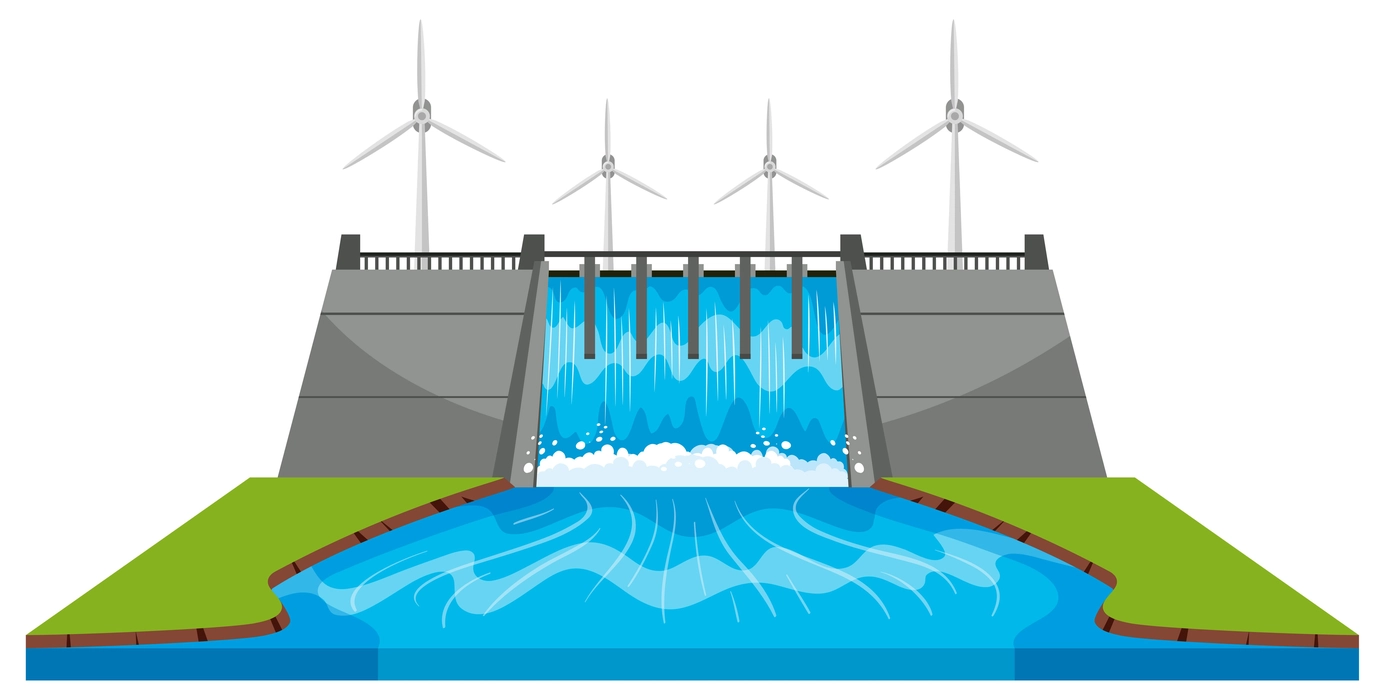
This image is of a Dam which preserves water and supplies water for various purposes.

Advantages of Dams

A dam has several advantages, ranging from economic to social advantages. The following is a list of benefit of a dam.

  • Water storage: It can serve as a sizable water reserve that can be used for domestic, commercial, and agricultural purposes. Additionally, it has the capacity to accept extra surface water.
  • Recreation: Dam’s are a point of public attraction as many leisure activities like boating, camping, swimming, etc. can be done in this area.
  • Irrigation:The dam is a significant source of water for irrigation.
  • Debris control: The dam has improved environmental protection by reducing the amount of trash thrown into rivers.
  • Electricity production: Hydropower is a crucial source of electricity because it doesn’t produce any chemical waste. The majority of the nation’s primary source of electricity is generated from water.

Disadvantages of Dams

Dams are constructed to generate additional electricity for use by people. However, the bulk of these dams are unable to make a significant impact on the generation of power for human needs. Instead, it has certain negative repercussions on both the ecology and people as a whole. Some of them are mentioned below-

  • Dam construction has an negative impact on the aquatic life that exists in the water.
  • There is lots of water wastage during the process of dam construction.
  • It has affected the people who live nearby as a sizable portion of land has been buried to serve as a water reservoir.
  • Due to dam construction biodiversity in the water has reduced.
  • There is an increased sediment accumulation
  • Soil erosion has occurred in places nearby to the dams.
  • There is a danger of catastrophe because by chance if the dam structure breaks it will threaten the lives of  thousands of people,
  • Overflow of water in the dam may happen if more water reaches the surface by rain which might lead to flooding in the nearby areas.

Alternative solutions to Dams

Dams have a number of drawbacks since they are not the ideal solution for meeting human requirements. Therefore, finding a dam replacement is essential. Some of the alternative solutions to dams are given below-

  • Concentrating on alternative energy sources-The construction of dams is a result of the rise in electricity demand; therefore, finding an effective source of energy production will lessen the danger posed by dams. Some common alternative energy sources ares nuclear power plants, thermal power plants, solar electricity, wind power, etc.
  • Reuse of water: The dam provides water for numerous uses that. Therefore, locating new alternate water sources can also help to lower the number of dams. For instance, sewage water can be recycled and used again for a variety of various purposes, including industrial and agricultural ones.
  • Managing flood: By reducing the water runoff we can control the flood of many rivers. Since dams play a prominent role in the prevention of floods in rivers.
  • Concentrate more on the current dams: Only small a fraction of dams are used effectively. Hence,prior to building a new dam, one must pay attention to the older dams and make the best use of them.As a result, fewer dams may be constructed to bridge rivers.
  • Groundwater recharge: Increased water deposition from surface water to groundwater is known as groundwater recharge. This process increases the water content below the ground level which can be used for various other purposes.

Summary

Water is a priceless resource that is essential to maintaining human life. It may be used for everything from generating electricity to drinking puropses. Consequently, a reliable water source is always going to be required. A dam is a man-made structure designed to preseve water. Nevertheless, while there are numerous benefits of dams, there are also some drawbacks. Being a man-made construction, it has a severe impact on the ecosystem around us. Therefore, a water  resource other than the dam is desperately needed. Alternative methods of dams include replenishing the groundwater table, locating alternate energy sources, etc. If appropriate measures are not taken into consideration, we could face a number of issues. And hence for this purpose new technologies must be implemented..

Frequently Asked Questions

1. Which of the dams on Earth is the oldest?
Ans: The dam Jawa, which is situated in Jordan, is the oldest dam still in use today. There are still some of this dam’s remains.

2. How long do dams last?
Ans: A dam’s lifespan is estimated to be 50 years on average. In this lifespan, it can function successfully. There are also other dams that date back far more.

3. Can a dam contaminate water?
Ans: Since dams stop the flow of water, they can accelerate the growth of any existing microbes in the water, which can render the water hazardous. The number of diseases spurred on by water pollution has been rising daily. Additionally, metallic components can also accumulate in such stagnant waters which can further harms marine life.