Advantages of Dams

Introduction

A dam is a physical structure that slows or restricts the flow of subsurface or surface water. Dams build reservoirs that serve multiple purposes, including flood control, irrigation, human consumption, industrial use, aquaculture, and navigability. Although they are more frequently erected on rivers, dams can be constructed anywhere. They may also be built on streams and estuaries.

What is a Dam?

A dam is a sizable, barrier-like structure that is erected across a body of flowing water. Water is held back and stored for later use because of construction. A reservoir is a term used to describe the vast amount of water storage created on the upstream side of a river when it is prevented from flowing by a barrier. Floodgates on dams can be opened or closed to allow only a small flow for human use.
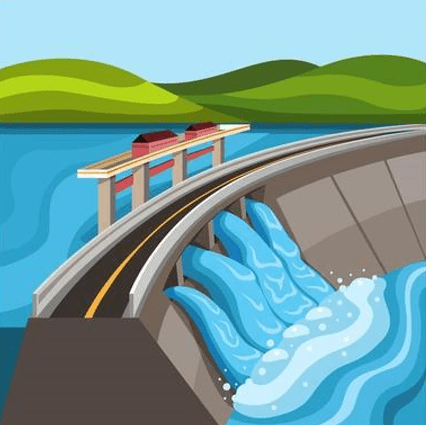
During floods, gates also enable the release of extra water from the reservoir side. A surplus of water collects on the reservoir side of a river when it floods. To let surplus water out, the floodgates are slowly opened. Dams are primarily built for this reason.

For more help, you can Refer to lesson 16 – Water in Science Class 7. Checkout the video Lesson for a better understanding

Uses of Dams

  • Irrigation: In recent years, irrigation for crops has primarily been provided by dams. Rainfall in tropical nations like India is only experienced for a portion of the year. However, agriculture is a year-round industry that uses water for growth, depending on the stage of growth. While others, like rice and sugarcane, require excessive amounts of water. Agriculture was made possible by irrigation, even in remote areas with low subterranean water levels.
  • Electricity: The floodgates are opened, allowing the reservoir’s water which is already under high pressure to pass through the turbine that powers the generator. A turbine transforms the kinetic energy of water into mechanical energy, which is then transformed into electrical energy by a generator.
  • Reservoirs are a great place for recreation. Many reservoirs provide the local people with camping, boating, and fishing facilities.

Advantages of Dams

  • Hydroelectric power, which is produced by dams, is independent of all fossil fuels. As a result, hydroelectricity is a source of energy that is constantly replenishing and can be used. With a growing population comes a rising need for energy. One of the safest methods to address the energy situation is using hydroelectric electricity.
  • A reservoir maintains a sizable water reserve that is mostly used to store fresh water that can be used later in times of water scarcity.
  • You can irrigate with the reservoir water. Crop plants can be effectively watered across long distances. Food is produced on the irrigated farmlands. Demands for drinking water are alarmingly rising along with population growth.
  • Floods are prevented by dams, which redirect water flow. Numerous lives are saved every time water is slowly released from reservoirs through floodgates, and property damage is also avoided. 
  • A reservoir is a gathering place for many aquatic animals, including fish and turtles. When dams are built, a river that is already flowing becomes a lake. It becomes a lake environment when freshwater fish and turtle species seize the opportunity to multiply.

Disadvantages of Dams

  • To create a sturdy basement and reservoir, large layers of dirt must be dug out during the dam’s construction. The earth’s topography is harmed by this. Because of this, earthquakes happen more frequently. However, effective engineering, design, and planning can stop such destruction. 
  • Dams are substantial, concrete buildings. They are not built economically
  • Dam construction necessitates a vast area. It is necessary to move the local farmers and residents to the area. Their social and economic lives are affected, and there are long-term repercussions.
  • In addition to displacing people, the natural habitat is also greatly disturbed. Concerns about the flora impacted by dam construction are mostly focused on deforestation and the loss of agriculturally productive land. 
  • Natural wildlife that lives in the dam region is also out of control and occasionally even poses a threat to its population. To maintain their populations, breeding grounds and nesting locations are crucial. When other factors perturb these areas, their population changes. 
  • Bird species are disturbed, in addition to terrestrial and aquatic species. 
  • Fish living in freshwaters are the primary food source for migratory birds that nest on riverbanks. 
  • Migratory birds lose their feed and are prevented from reproducing as they do throughout the year due to the drastic shift in aquatic life caused by dam building.
  • The groundwater table in the surrounding areas is decreased as a result of deepening the riverbed to create reservoirs. This has a significant negative influence on nearby, naturally occurring vegetation.

Summary

A dam is a physical obstruction that slows or restricts the flow of subsurface or surface water. Floodgates on dams can be opened or closed to allow only a small flow for human use. In recent years, irrigation for crops has primarily been provided by dams.  A reservoir maintains a sizable water reserve that is mostly used to store fresh water that can be used later in times of water scarcity. Dams are substantial, concrete buildings. They are not built economically.

Frequently Asked Questions 

1. Do Dams Last Forever?
Ans. A dam may be built in around ten years, and its lifespan is about one hundred years. Certain mechanical components, including motors and gates, need to be changed after a dam has been in place for 50 years. However, operational dams will undergo routine inspections. When necessary, all repairs and maintenance will be carried out right away.

2. Can we Rely Solely on Hydroelectricity to Provide our Electricity?
Ans. A renewable energy source is a hydroelectricity. Since the dam-related operation does not disrupt the water cycle, the claim that water will not run out is valid. The problem is that rivers and streams are the only sources of flowing water that dams may use. Hydroelectric power cannot be the only source of sustainably produced energy.

3. What Connection does a Dam have to Greenhouse Gases?
Ans. Large expanses of vegetation are flooded when a dam is built, submerging numerous trees. Low oxygen levels can be found near the bottom of stagnant waters in reservoirs. The reservoir’s lower layers, which are abundant in biomass, effectively release methane into the atmosphere as it breaks down.

4. What Advantages do Dams Offer to Farmers?
Ans. Large amounts of water are stored in reservoirs where they can be irrigated for use in agriculture. Croplands can also be effectively irrigated in semiarid areas far from the riverbed. Rainfall is not necessary for farmers to be able to cultivate.

The System of Ashram

Introduction

Human desires are not constrained in any way. People are driven by lust, avarice, and rage. There is an Ashram system in place to help us overcome all the negative aspects of our lives. Since ancient times, the Ashram system has existed throughout India. They held the view that the ashram system enables a man to live a happy, healthy life. Moreover, by adhering to the Ashram system, one can acquire spiritual understanding, education, and life principles.

What is An Ashram? 

One of the facets of the Hindu notion of Dharma is the Ashrama system. It is also a component of the ethical theories found in Indian philosophy, where it is connected to the Purusartha, or four proper human life aims, including satisfaction, happiness, and spiritual emancipation. The individual lifespan was split into four phases under the Ashram system. The individual’s fulfilment and growth were each period’s main objectives.

Learn More about The System of Ashram. Check out more videos in Class 6th Social Science Lessons

lead magnet

How Does An Ashram Work? 

The four guiding principles for ashram operations are Dharma, Artha, Kama, and finally Moksha. These four principles are the only ones that guide a person throughout their entire existence. Dharma, Artha, Kama, and Moksha all refer to virtue, riches, willingness, and liberation respectively. To attain the purpose of life, order is crucial. First, there is Dharma, which fulfils the definition of the term. In various life circumstances, this life principle functions in a distinct way. The source of all human values, it is.

The second tenet is that Artha represents prosperous accomplishments. Achievements might include developing skills, habits, and moral principles for living. Therefore, attaining artha necessitates a moderate level of motivation. It alludes to the notions shaped by societal conditioning and influencing personal desire. Such cultural conceptions vary in their profundity and tenacity. Because they are shared by a huge number of individuals within the community, which endures even as individuals come and go, they are more expansive and long-lasting than personal goals. Therefore, attaining Artha necessitates a moderate level of motivation.

The third principle is the Kama, which represents people’s openness to receiving anything. Each person has different desires. Time and experience both have the power to lessen or manage it. The Kama Principle is the ideal illustration for inspiring someone.

Bringing a man to Moksha is the ultimate objective of the Ashram system. It means that people are free. The existence of desires is non-existent. People are not affected by the things that harm their bodily and emotional well-being. There is only knowledge and spirituality, and nothing else. All ashrams, though, employ spiritual doctrine.

Importance of An Ashram in Ancient Indian Society 

When entering a new stage of life, people prepare themselves by taking a break in an ashram. It was very important in controlling how ancient people lived. According to the Ashrams’ idea, four stages of life are classified in antiquity.

Significance of Brahmacharya

The beginning of life is referred to as Brahmacharya. Through the ceremony of upanayana, a child enters the cycle of Ashrams of life phases and is regarded as a reborn kid. The ceremony will be performed by a boy who is eight years old. Children are educated about the Vedas, Indian customs, and several disciplines during this period. Ashram’s goal is to help people develop their personalities.

Significance of Grihastha

In this era of life, a boy transitions from childhood into adolescence. He got married and started a family. However, they must serve the public, which necessitates both them and the birds and animals.

Significance of Vanaprastha

At the age of fifty, Vanaprashta, the following stage of life, begins. At this point, he must depart from both the village and his family. He has to go to the wilderness by himself to meditate. This is the method for purifying the soul.

Significance of Sannyasa

After the vanaprastha occurred at the age of 75, the ultimate stage of life began. At this point, one forgets about all ties to the outside world and serves God.

Education in Ashrams

The optimum location for learning is an ashram, as was previously discussed. A child studies the Vedas and spirituality, starting at the level of Brahmacharya. He then discovers how to get rid of cravings of life. In the instance of Grihastha, he learns to shoulder both his family’s responsibilities and his obligation to assist the entire world. In the Vanaprastha stage, a person serves not only the world but also the younger generations by passing on knowledge and wisdom. He learns to give his life to God in the Sannyasi stage and begins working for God. Additionally, he learns to let go of his tie to his family and the cosmos.

lead magnet

Summary

The Ashram system is the foundation of Indian history and culture. A person’s mental and physical development is greatly aided by the ashram. The objectives of ashrams, however, are currently at odds with the way of life of the younger generations. People neglect to fulfil their obligations to both the nation and the rest of society. Without understanding life stages, a person cannot function in society or experience inner happiness. Therefore, there is a need to swiftly raise awareness of ashrams among the current generation.

Frequently Asked Questions (FAQs)

1. What is taught through an Ashram?
Ans. A person’s personality grows in an ashram, and his spirit becomes serene and pure. Additionally, yoga and other forms of physical exercise as well as Indian cultural ideals are taught in an ashram.

2. Which of the Ashrams is nowadays performed by the people?
Ans. The current generation’s primary goals are to settle down and get married. Therefore, everyone today performs on the Grihastha stage of Ashrams.

3. What is the main target of life to be achieved by the system of Ashrams?
Ans. One aspect of Hinduism’s Dharma concept is the Ashrama system. Additionally, it is a part of Indian philosophy’s ethical beliefs, where it is paired with the four legitimate aims of Purushartha, which are fulfilment, happiness, and spiritual liberation.

4. How many types of Ashrams are there in our life?
Ans. The beginning of life is referred to as Brahmacharya. In this stage of life, a boy transitions from childhood into adolescence, gets married and starts a family. This period is called grihastha. At the age of fifty, Vanaprashta, the next stage of life, begins. After the vanaprastha occurred at the age of 75, the ultimate stage of life, sannyasa, begin.

What are Nouns? Definition, Example & Types

Definition

A noun is the name of any person, place, thing, quality, or group. For example, Ryan, Shivani, Delhi, New York, kindness, etc.

lead magnet

Types of Noun

Nouns can be classified broadly into five types: proper nouns, common nouns, collective nouns, material nouns, and abstract nouns. Let us discuss these types in detail further.

Types of Noun

Proper Nouns

A name given to a particular person, place, or thing is a proper noun. Proper nouns always begin with a capital letter.

Examples: 

  • His name is Karan. (name of individual)
  • This is my rabbit, Bunny. (name of a pet)
  • Sridhar just returned from Delhi. (name of the place)

Common Nouns

A generic name given to a place, person, or material is a common noun. These do not begin with a capital letter unless they are used to begin a sentence.

Examples:

  • I had some blue pens. (Common object). 
  • He has always lived in cities. ( Common place).
  • Only ten students are there in the class. (Common group). 
  • The gas cylinder is exhausted. (Common items).

Collective Nouns 

A name given to a group of individuals or objects is a collective noun. These do not begin with a capital letter if they are not the first word of a sentence.

Collective Names for a group of Animals 

  • A troop of monkeys.
  • A swarm of bees
  • A school of fish.

Collective Nouns for a group of Individuals

  • An orchestra of musicians.
  • A jury of judges. 
  • A class of students.

Collective Nouns for a set of Items/Things

  • A pair of shoes.
  • A bunch of keys.
  • A bouquet of flowers.

Abstract Nouns 

 Abstract nouns are names of emotions, ideas, feelings, states of mind, actions, and qualities. You cannot hold or touch them as they are not physical.

Examples:

  • Honesty is the best policy.
  • Childhood is the most memorable part of one’s life.
  • Growth is an important characteristic of living beings.
lead magnet

Material Noun

A word that names a substance that is tangible but cannot be counted is called material noun.

Examples:

  • This ring is made up of gold.
  • Water is an essential element of life.
  • Sugar is missing in the recipe.

Some other Categories of Nouns

Nouns can be classified based on numbers, countability, and gender as well. Let us understand them.

Countable and Uncountable Nouns

Names of things or objects that can be counted and can be in numbers are called countable nouns. For example, pen, pencil, ball, page, etc.

Names of things or objects that cannot be counted or in numbers are called uncountable nouns. For example, milk, water, gold, etc.

Singular and Plural Nouns

Nouns that represent a single person/ object/entity are called singular nouns. For example, boy, city, flower, school, brush, etc.

Nouns that represent more than one person/ object/entity are called plural nouns. For example, boys, cities, flowers, schools, brushes, et

Gender Nouns (Masculine, Feminine, Neuter, and Common)

Nouns that name the males of a given species are called masculine nouns. For example, boy, man, horse, etc.

Nouns that name the females of a given species are called feminine nouns. For example, girl, woman, mare, etc.

Nouns that name lifeless objects are called neuter nouns. For example, book, pen, notebook, etc.

Nouns that denote either a male or a female belong to the common gender. For example, child, human, etc.

Do you Know?

  • Some nouns have the same singular and plural forms. For example, fish, sheep, deer, etc.
  • Some nouns are always plural. For example, pants, scissors, etc.

Frequently Asked Questions

1. What is a Noun Clause?

A noun clause is a group of words that functions as a noun in a sentence. It can serve as a subject or the object of the verb. For example, consider the following sentence: I hope that I shall be there in time.  In this statement, ‘I shall be there in time’ functions as the object of the verb ‘hope’. 

2. How does a Noun Phrase Differ from a Noun Clause?

A phrase is a group of words in a sentence that does not make complete sense. A noun phrase is a phrase that acts as a noun and functions as the subject or object of the verb. Whereas a noun clause in turn is a group word that contains a subject as well as a predicate, makes complete sense, and functions as a noun. 

3. What are Mass Nouns?

Nouns that name a substance that cannot be counted at all are called mass nouns. For example, rice, sand, milk, etc. These nouns are quantified by using prefixes such as some, a little, etc.

The Sangha

Introduction

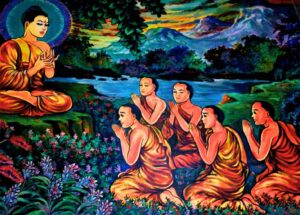
Buddha established the sangha for his followers. The sangha’s original purpose was to provide a way for practitioners who wanted to commit to full-time, rigorous penance. People who desired to devote their lives to Buddha and his teachings joined the sangha. The sangha’s monks and commoners would travel around while Buddha preached his teachings. In a ceremony, those who joined the sangha had their heads shaved to symbolize their renunciation of this life.


What is Sangha?

Sangha is simply a Buddhist social structure. Monks, nuns, regular men, women, and kids can be part of the Sangha. The sangha’s members claim to be genuine disciples of Buddha. Sangha has two meanings. One is a group of people who left their homes, desires for their families, and passions to adhere to the stringent and rigorous manner of the Buddha’s teaching. They adhere to tight rules and shave their heads to symbolize renunciation.

Sangha also has a second meaning that is connected to the Buddha. Buddha’s devotees would seek refuge with him and travel with him wherever he went. Men, women, and kids who would accompany Buddha on his journey were referred to as members of this sangha. The vows of celibacy, scarcity, and faith had to be taken by everyone who wanted to enter the sangha.

Importance of Sangha: 

The sangha gained significance for devotees of the Buddha in a variety of ways: 

  • Buddhism is promoted by monks and laymen who joined the sangha after it was formed. 
  • They travel everywhere and share the Buddha’s teachings. 
  • People who joined the sangha had to leave their homes and families, thus for them, their community served as a place of belonging and support. 
  • They would frequently get together and recite Buddhist prayers and teachings.
  • The rising popularity of yoga and meditation can be attributed to the sangha, a group of monks who practice both disciplines together and spread their influence wherever they go.

Buddhism is typically thought of as a solitary and isolated religion. The individual practices meditation and looks for happiness on his own. However, the Buddhist idea of sangha is the exact opposite of solitude; it asserts to create a community where everyone works toward pleasure together. The Buddha’s followers are given a sense of security and hope, and they all share the same objective.

Ancient Social Life and Sangha:

  • The ancient Indian society was divided into Varnas or sections such as Brahaman, the most dominant and powerful section, Kshatriya, the warrior class, Vaishya, the merchant class, and Sudra, the labour class.
  • Due to the sangha’s egalitarian culture, it rose to popularity. In the sangha, there was no varna system because Buddhism strongly disapproved of it. 
  • People of lower castes became equal as a result of their adoption of Buddhism. The sangha evolved into a group of equals who lived in peace and adhered to the way and teachings of the Buddha.

Buddha and Sangha

When Buddha was alive, he used to travel from place to place, teaching others, and his followers would accompany him wherever he went. Men, women, and children of all ages gathered around Buddha. The Sangha was the name given to this group of devoted Buddhist adherents who accompanied the Buddha on his journey for enlightenment, abandoning all wants and their homes in the process. This tradition persisted even after his passing, and the sangha developed into the centre of Buddhism. For Buddhism to become a religion of secular principles, the sangha was essential.

The sangha allowed participation in spreading Buddhism to each of those who sincerely adhered to the Buddha’s teachings. Sangha established a framework within which the average person might pursue his goals and follow his customs. The support of kings like Ashoka, who adopted Buddhism and spread it over the globe, played another role in the growth of Buddhism.

Summary

Buddha established the Sangha for his followers. The Sangha is simply a Buddhist social structure. Monks, nuns, regular men, women, and kids are all present.  Buddhism is promoted by monks and laypeople who joined the sangha after it was formed. In the sangha, there was no varna system because Buddhism strongly disapproved of it. For Buddhism to become a religion of secular principles, the sangha was essential.

Frequently Asked Questions

1.What is the Eightfold Policy in Buddhism?
Ans. The eightfold policy of the Buddha leads to emancipation and, eventually, Nirvana. The eight ways are the right speech, the right resolution, the right vision, the right effort, the right lifestyle, the right mindfulness, and the right samadhi.

2.What is Triratna?
Ans. A Buddhist symbol, Triratna, or the Triple Jewel (Dhamma, Buddha, and Sangha), is believed to visually represent the three jewels of Buddhism. In addition to a lotus flower within a circle, the Triratna symbol is also composed of a trisula or trident with three branches and a vajra, or diamond rod.

3.What are the Four Noble Truths in Buddhism?
Ans. The four great truths are:

  • Suffering
  • Desire is the root of suffering
  • Suffering will stop when desire ceases
  • There is a way out of desire and suffering.

4.What did Buddha do After Attaining Enlightenment?
Ans. Buddha initially travelled to Sarnath to give a lecture after attaining enlightenment. After that, he travelled around to share his knowledge and his religion.

5.Who Could not Join the Sangha?
Ans. Although anyone might join the sangha, there were a few limitations. The masters had to provide their consent for the slaves to join the sangha because they were unable to do it on their own. Parents had to permit their children, and husbands had to permit their wives.

How do Metals and Non Metals React

Metals and Non-Metals

Introduction

The crust of the Earth is packed with a variety of abundant and inexhaustible minerals, as we have studied in our geographical class. These minerals are a blend of natural elements that are extracted and used for various things. Each element and mineral has unique qualities of its own that make it useful.

Metals

Metals are among the sorts of elements that make up the crust of the Earth. They are a combination of substances that are frequently hard, malleable, ductile, glossy, etc. Metals are also effective electrical conductors. They can be found in a free state (without any combination) or a mixed state in the Earth’s core (with a mixture of oxygen, rock, and dust). 

Non-Metals

Non-metal elements are those that do not exhibit non-metallic properties. They are not malleable like metals and have different physical characteristics from metals. They are brittle and ductile as well. When compared to metals, they have a low density. Non-metals can be solid, liquid, and gas, and they are mostly bad conductors of electricity. Non-metals include things like oxygen, phosphorus, and sulphur.

How Do Metals and Non Metals React with Each Other?

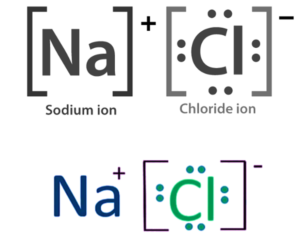
  1. Metals react with non-metals by transferring electrons from metal atoms to non-metal atoms, resulting in the formation of ions.
  2. This process produces an ionic compound.
  3. Metal atoms transfer electrons to non-metal atoms.
  4. Metal atoms become positive ions, while non-metal atoms become negative ions.
  5. Example Sodium Chloride (NaCl)

What Reactions Occur Between Metals?

Metals interact with one another by their degree of reactivity, or strength. The less reactive metal is displaced when a metal reacts more vigorously than the metal with which it is bonding. It could be solid, liquid, or molten.

In other words, metal A is more reactive than metal B if it displaces metal B. Galvanic corrosion results from the collision of two metals. Two distinct metals connected by an electrolyte are required for galvanic corrosion to occur. If this occurs, the corrosion process will be initiated by the electrolyte. More reactive metals corrode more frequently.

Salt solution of A + Metal B > Salt solution of A + Metal

\[Zn\left( s \right){\rm{ }} + {\rm{ }}CuS{O_4}\left( {aq} \right) \to {\rm{ }}ZnS{O_4}\left( {aq} \right){\rm{ }} + {\rm{ }}Cu\left( s \right)\]

Summary

The concept of metals, non-metals, and their properties are all included in this article. The characteristic of metals and non-metals differ, and each has a unique state of reactivity. Each element and mineral has distinct properties of its own that make it useful.  A variety of organic elements are combined to form these minerals, which are then extracted and used for various purposes.

Frequently Asked Questions

1. What Characteristics do Non-Metals Generally have?

Ans. The characteristics of non-metals are as follows.

  • A metal’s qualities depend on its size.
  • They often have bad electrical conductivity. The main characteristic that sets them apart from metals is this one.
  • Due to their greater electronegativity, non-metals have a higher potential of attracting more electrons.
  • They retain their electrons and borrow from the metals due to their higher electronegativity.
  • The states of non-metals include solid, liquid, and gas. They are brittle by nature in the solid state, giving rise to ductile and non-malleable states.

2. What Significant Function do Non-Metals Play in Our Lives?

Ans. Non-metals such as nitrogen and phosphorus are used in fertilizers to increase plant yield. Phosphorus is used to make matchsticks and fireworks. Chlorine, a non-metal, is used in the water purification process. Carbon, a non-metal, is used in the majority of fuels.

3. What Happens to Metals During Recycling?

Ans. The majority will be smelted into ingots, so they can be melted and processed at metal facilities across the nation. The recycling facilities’ rubbish to the grocery store shelves can be accessible within as little as six weeks.

A Strong Base and a Strong Acid with Examples and pH Value

An Introduction to Acids and Bases

Acids are substances with a pH below 7 that release hydrogen ions or a proton when combined in an aqueous solution. The dissociable protons or hydrogen groups, also known as acidic hydrogen, that easily split apart in solution or the presence of bases are the main constituent of these acids.

Bases are substances that yield hydroxyl ions when combined with water in an aqueous solution when combined with water in an aqueous solution, yield hydroxyl ions. Their pH is higher than 7. Therefore, a base has a basic group that separates in an aqueous media or a dissociable hydroxyl group. Bases may also be referred to as substances that are hydrogen acceptors because they are substances that can either receive or accept hydrogen ions.

The pH Scale

The pH scale determines the strength of an acid or base by specifying the degree of dissociation. A strong acid or base dissociates in water, producing massive amounts of hydrogen or hydroxyl ions. A dissociation constant is used to calculate an acid or base’s dissociation of an acid or base.

Strong Acid

Since extremely acidic hydrogens are extremely acidic hydrogens present, strong acids HA has a high dissociation. Commonly, these hydrogens are attached to extremely electronegative groups (often halogens like chlorine, fluorine, and iodine). 

Low pH is found in strong acids. The amount of hydrogen ions in a solution is related to the pH. The negative logarithm of the concentration of hydrogen ions is the mathematical representation of pH.

\[pH =  – \log [{H^ + }]\]

The dissociation constant of acids, a parameter \({K_a}\), is used to account for the degree of dissociation. Increased dissociation and hence higher acidity are indicated by a high \({K_a}\) value. 

In chemistry, the \(p{K_a}\) value—the negative logarithm of \({K_a}\)—which is the logarithmic acid dissociation constant—is taken into account for convenience. Therefore, stronger acids will have a low pKa value and a high acid dissociation constant \({K_a}\) value, and vice versa.

\[p{K_a} =  – \log {K_a}\]

 Examples of Strong Acids

Strong AcidsFormula
Hydrochloric AcidHCl
Sulphuric AcidH2SO4
Nitric AcidHNO3

Strong Base

Strong bases NaOH are substances that split apart in solution to form high quantities of hydroxyl ions. In addition, bases have the potential to be strong proton acceptors, which means that they could grab a proton from the water molecule \({H_2}O\) in an aqueous solution to produce an \(O{H^ – }\) ion.

\[NaOH \to N{a^ + }(aq) + O{H^ – }(aq)\]

The base dissociation constant Kb describes the level of dissociation in the case of bases. Stronger bases are associated with lower values of the logarithmic base dissociation constant, or, which is equivalent to \(p{K_a}\).

\[p{K_b} =  – \log {K_b}\]

Similar to pH, the concentration of hydroxyl ions is related to pOH. A strong base that supplied a lot of hydroxyl ions would have low pOH because the concentration of hydroxyl ions is a negative logarithm.

\[pOH =  – \log [O{H^ – }]\]

The equation pH + pOH = 14 relates pH and pOH in an aqueous solution. If one is known, the other can be used to compute either pH or pOH.

Strong bases commonly have a pH range of 13–14.

Examples of Strong Bases

Strong BasesFormula
Calcium HydroxideCa(OH)2
Sodium HydroxideNaOH
Potassium HydroxideKOH
Lithium HydroxideLiOH
Image source: Englisplus Podcast

Summary

Strong acids and bases are the subjects of this article, which also examines how strong acids or basic solutions are based on their pH. Strong acids and strong bases have a high degree of dissociation. Strong acids and bases dissociate in solution, releasing a lot of proton and hydroxyl ions. Strong bases have high pH, whereas strong acids have low pH. 

Frequently Asked Questions

1. What is the Body’s pH?

Ans. The pH of human blood ranges from 7.35 to 7.45, making it very slightly alkaline. With a pH range of 1.5 to 3.5, the human stomach is the most acidic organ in the body. To break down food for digestion and remove any unwanted microorganisms, the stomach is kept at a low pH.

2. What are the Main Differences between a Strong Acid and a Weak Acid?

Strong AcidsWeak Acids
When exposed to water, strong acids completely dissociate into their ions.In an aqueous solution, weak acids are molecules that partially dissociate into ions.
A strong acid solution has a very low pH.A weak acid solution has a pH of 3-5.
It releases all the H+ ions to the solution.Partially releases all H+ ions to enter the solution.

3. What are the Main Differences between a Strong Base and a Weak Base?

Strong BasesWeak Bases
In a solution, a strong base can completely dissociate into its cation and hydroxyl ion.A weak base partially dissociates into its hydroxyl ion and cation, resulting in an equilibrium state.

Acromegaly

Introduction

The endocrine system consists of many organs such as glands, that include the thyroid, adrenal, parathyroid, pituitary, thymus, hypothalamus, pancreas, and pineal. Hormones, which are chemical messengers secreted by these glands, are responsible for the coordination of different organ systems of the body. Endocrine diseases are caused by either insufficient or excessive secretion of hormones. The pituitary gland, a tiny organ on the underside of the brain, secretes the hormones like growth hormone (GH) and somatotropin, which control bone and muscle growth as well as height. Acromegaly, which alters the body’s appearance, results from GH hypersecretion.

What is Acromegaly?

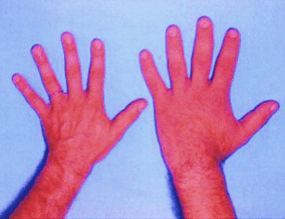
In case of Acromegaly, hands and feet are tingling and have no feeling.
Acromegaly is a rare hormonal condition brought on by the pituitary gland’s ongoing hypersecretion of growth hormone (GH). The increased GH secretion in adults causes the hands, feet, and face to have larger bones. It results in enlarging of the hands, feet, and face.


What are the Causes of Acromegaly?

When the pituitary gland secretes too much GH into the blood, the liver is signalled to generate an additional hormone called insulin-like growth factor-1 (IGF-1). It controls how bones and other tissues grow. Acromegaly results from the IGF-1 being triggered by greater levels of GH. Acromegaly in adults has been linked to tumours such as non-pituitary and pituitary tumours.

Pituitary tumours: It is an adenoma of the pituitary gland, a non-cancerous tumour. It secretes an excessive amount of the GH hormone, which results in acromegaly symptoms. This tumour grows slowly and takes a while to become apparent. The tumour pressing on nearby brain regions may cause headaches and vision loss.

Non-pituitary tumour: It is a tumour that has grown in the pancreas, lungs or other parts of the chest. This is an uncommon tumour instance. While this tumour occasionally secretes growth hormone (GH), more frequently it releases growth hormone-releasing hormone (GH-RH), which causes the pituitary gland to release excessive amounts of GH.

Acromegaly Symptoms

Acromegaly can cause a variety of symptoms, but the most prevalent ones are swollen hands and feet. The symptoms can include the following and are recognizable.

  • Enlarged facial characteristics include the face bone, nose, lips, and tongue.
  • Excessive sweating and odour from the skin
  • Very thick, greasy, and coarse skin
  • Aching joints
  • Headaches
  • Distorted vision
  • Expansion of skin tags
  • Deep voice
  • Fatigue and weakened muscles 
  • The separation between teeth
  • Gaining weight 
  • Hands and feet tingle and have no feeling
  • Abnormal female hair growth
  • Unreliable menstrual cycles 
  • The effects of abnormal thyroid hormones on skin, hair, and weight
  • Male erectile dysfunction

Facts About Acromegaly

  • Acromegaly is a term for growth hormones and tumour-related enlargement. 
  • It is typically brought on by a benign tumour called a pituitary adenoma, which is found on the anterior lobe of the pituitary gland. 
  • It is not a genetic illness and only affects people in their middle years. 
  • Children who experience an increase in GH exhibit gigantism.
  • Acromegaly is a dangerous illness that can cause blindness in its victims. 
  • The remedy is accessible and capable of averting serious consequences.
  • Acromegaly is an uncommon illness that affects a very small number of people worldwide.

Acromegaly Diagnosis

Acromegaly is difficult to diagnose because the early signs are not always present. The results of the imaging and blood testing show that the person has acromegaly.

Blood tests: 

IGF test: The blood level of GH often varies throughout a person’s lifespan. IGF levels are more consistent throughout the day than GH levels, even though GH and IGF-1 are closely related hormones. To determine the level of IGF hormone in the blood, a blood test is used.

Oral glucose tolerance test: Using this test, you may see how your growth hormone levels respond to changes in blood sugar. Several time intervals can pass after consuming the glucose solution before the blood is drawn. Drinking sugar typically lowers GH levels, but if someone has acromegaly, GH levels won’t drop.

Imaging tests:

The imaging tests are used to pinpoint the tumour’s site and track its expansion. Two imaging exams exist: 

  • MRI (Magnetic resonance imaging): To determine the location and size of the pituitary tumour, an MRI scan is used. To obtain an in-depth image of the inside organs and tissues, radio waves and magnets are employed. 
  • Computerized tomography (CT): If an MRI scan is not possible, a computerized tomography (CT) scan is performed to get images of the inside organs and tissues.

Treatments

Acromegaly-related long-term consequences can be avoided by the patient with certain treatments. Some of these remedies include 

  • Surgery: The location and size of the tumour affect the course of treatment. Only surgery is required if the tumour is to be eliminated. However, if only a portion of the tumour is removed after surgery, chemotherapy and radiation treatment are still required. 
  • Chemotherapy: Drugs and injections are used to control hormone levels and treat symptoms that help the body return to normal.
  • Radiation therapy: Radiation therapy is used to treat acromegaly when medicine and surgery are ineffective. Through sophisticated equipment, it allows the radiation beams to reach the target tumour’s location. Although it can lower the level of growth hormone, the full effects don’t appear for several years.

Summary

Acromegaly is a rare hormonal condition brought on by the pituitary gland’s ongoing hypersecretion of growth hormone (GH). Acromegaly results from IGF-1 being triggered by higher levels of GH. Acromegaly can cause a variety of symptoms, but the most prevalent ones are swollen hands and feet. It is not a genetic illness and only affects people in their middle years. Drugs and injections are used to control hormone levels and treat symptoms that help the body return to normal.

Frequently Asked Questions

1. How is Gigantism related to Acromegaly?
Ans. Acromegaly and gigantism are both GH (growth hormone) diseases. Hormonal issues result from the pituitary gland’s excessive GH production. However, their signs and symptoms vary.

2. What is the Glucose Tolerance Test Conducted in Acromegaly?
Ans. Using this test, you may see how your growth hormone levels respond to changes in blood sugar. Several time intervals can pass after consuming the glucose solution before the blood is drawn. Drinking sugar typically lowers GH levels, but if someone has acromegaly, GH levels won’t drop.

3. Who gets Acromegaly and how Frequent is it?
Ans. Acromegaly is a rare genetic condition. It is a rare condition that can occur in middle-aged people if they produce too much GH.

4. What is Pituitary Adenoma?
Ans. A pituitary adenoma is an adenoma of the pituitary gland, a non-cancerous tumour. It secretes an excessive amount of the GH hormone, which results in acromegaly symptoms. This tumour grows slowly and takes a while to become apparent.

Molecular Mass

The molar mass of a molecule is its weight. Expressed in Daltons. When dealing with the mass of a single or specific well-defined molecule, molecular weight is more commonly used than molecular weight when dealing with sample-weighted averages.
Molecular weights of small to medium-sized molecules are measured by mass spectrometry and used to determine the elemental composition of molecules or compounds.

lead magnet

What is Molecular Mass?

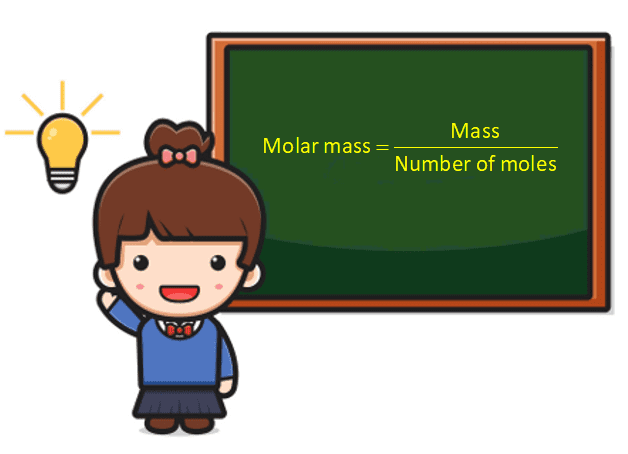
Molecular mass is also called molecular weight. The molecular weight of a molecule is its weight or mass. Different molecules of the same compound can have different molecular weights because elements have different types of isotopes present in compounds. The ratio of molecular mass to combined atomic mass is a measure of relative molecular weight. Molecular weight and molecular weight are separate but related concepts. The molar mass of a substance is defined as the mass divided by the number of moles of that substance. The unit of molar mass is g/mol. 

How to Find Molecular Mass?

To calculate molecular weight, first, use the periodic table to determine the atomic weight of each element. Multiply the number of atoms by the atomic mass of each element to sum the masses of all elements in the molecule.

The Formula of molecular mass/ molecular mass equation

The formula of molecular mass or molar mass is. 

Molecular-Mass

How to Calculate Molecular Mass?

A compound’s total mass is referred to as its molecular mass or molecular weight. It is equal to the sum of the atomic masses of all elements. 

Molecular Mass Examples

There are some examples of molecular mass:

H2O: In the periodic table, hydrogen has an atomic mass of 1u, and oxygen has an atomic mass of 16u. As a result, the molecular mass of a water molecule can be calculated as follows:

Hence, the molecular mass of water molecules is 18u.

NH3: In the periodic table, the atomic mass of hydrogen is 1u and the atomic mass of nitrogen is 14u. As a result, the molecular mass of an ammonia molecule can be calculated as follows:

Hence, the molecular mass of ammonia gas is 17u.

CaCO3: In the periodic table, calcium has an atomic mass of 40u, carbon has an atomic mass of 12u, and oxygen has an atomic mass of 16u. As a result, the molecular mass of calcium carbonate can be calculated as follows:

Hence, the molecular mass of calcium carbonate is 100u.

CaCl2: In the periodic table, calcium has an atomic mass of 40u, and chlorine has an atomic mass of 35.45u. As a result, the molecular mass of calcium chloride can be calculated as follows:

Hence, the molecular mass of calcium chloride is 110.9u.

The Molecular Mass of Compounds

The molecular mass of a compound can be found by using the following steps.

  • Determine the compound’s molecular formula.
  • Determine the atomic mass of each element in the compound using the periodic table.
  • Multiply the atomic mass of each element by the number of atoms in the compound. In the molecular formula, this number is denoted by the subscript next to the element symbol.
  • Add these values for each atom separately.
  • The total value will be the compound’s molecular mass.
lead magnet

The Molecular Mass of Elements

An element’s molecular mass is the sum of the atomic masses of its constituent atoms. Using the periodic table, calculate the atomic mass of each element.

Conclusion

Molecular mass is defined as the sum of the atomic masses of the elements present in a molecule, whereas molar mass is the ratio of compound mass to a compound number of molecules. Mechanical properties generally increase as molecular weight increases. A polymer’s molecular weight is directly related to its properties (strength, processability, and brittleness). The smallest molecular mass is hydrogen. Molecular mass is useful for analyzing experiment results.  Knowing the molecular formula allows you to calculate the molecular mass. 

Also Read: Formula Unit Mass and How is it Calculated?

Frequently Asked Questions

1.What is the Molecular Mass Equivalent to?

Ans: Molecular mass is a number equivalent to a molecule’s amount of nuclear masses.

2.What are the Characteristics of Polymers?

Ans: A polymer is a large molecule composed of chains or rings of linked repeating subunits known as monomers. Polymers have high molecular masses because they are made up of many monomers, and they also have high melting and boiling points.

3.What is a Compound Composed of Identical Molecules?

Ans: A compound is a substance made up of identical molecules made up of atoms of two or more chemical elements. Atoms of over 100 different chemical elements make up all matter in the universe, both in pure form and in chemical compounds.

Jainism

Introduction

One of the world’s most peaceful religions is Jainism, which originated in India. The Jain religion is well known for its strong dedication to non-violence and refraining from injuring any living thing. The word “Ji,” which means to conquer in ancient Sanskrit, is where Jainism got its start. According to Jain monks, enlightenment cannot be attained without letting go of all earthly passions and wants. People who achieve enlightenment become referred to as “Jina.” Between 500 and 600 BCE, in the Gangetic Plains, Jainism was born. It belonged to one of the numerous religious movements that emerged during that period. For Jains, enlightenment and breaking free from the cycle of life and death are the main goals.

jainism symbol
Image Source: Wikimedia

Origin of Jainism

It is quite challenging to pinpoint the precise roots of Jainism. Rishabhnath is the first Tirthankara of Jainism, but it only gained popularity and became a fully recognized religion during the reign of Mahavir. The 24th Tirthankara of the Jains, Vardhman Mahavir, lived during the lifetime of Gautam Buddha. The Buddha was born into the Kshatriya family in a village close to Vaishali, Bihar. His mother Trishla was the sister of the Lichhavi monarch Chetak, while his father Siddhartha was the head of the Kshatriya tribe. 

At the age of 30, Mahavir left the family to look for the truth. He gave up all passion and desire, followed the austere path of solitude and meditation, and became an ascetic for 12 years. After the tribulation of 12 years, he acquired Kaivalya, which signifies omniscience. He has conquered both bliss and suffering. He travelled with his followers for the next 30 years, spreading the teachings of the Jain religion.

Causes of the rise of Jainism:

Brahman, Kshatriya, Vaisya, and Sudra were the four Varna. The hierarchy of society placed the Brahmans as the most powerful and pre-eminent Varna. They were given priestly responsibilities. The main causes of the rise of Jainism are as follows:

  • The Kshatriya Varna’s resistance to Brahmanical rule was one of the primary factors. 
  • The increasing ritualistic dominance of Brahman infuriated other Varna as well.
  • Another element in the birth of the new religion was corruption inside pre-existing religions. 
  • People’s discontent was also greatly influenced by language because Brahmans spoke Sanskrit, a language that the general populace did not know.

Teachings of Jainism

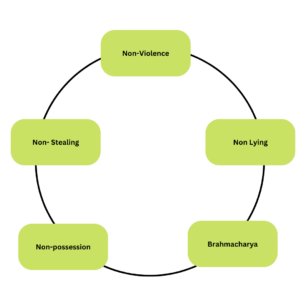
The non-violent Ahimsa principle is central to Jainism. They hold that the sole path to moksha, or unending emancipation, is through the soul’s purification. There are five doctrines of Jainism:

  • Non-violence
  • Do not lie
  • Do not steal
  • Do not stock unnecessarily
  • Observe brahmacharya

Every Jain is required to adhere to these five precepts. Mahavira advised his disciples to live a rigorous life and even give up wearing clothing. In Jainism, three Triratnas can be used to achieve ultimate liberation. These are: 

  • Through the right knowledge
  • Through right faith
  • Through right action

  • The first level discusses the elements that make up the universe: 
    • The universe’s living soul is known as Jiva. 
    • The world’s non-living substance is ajiva.
  • The universe’s behaviours are described in the second stage. 
    • Punya is a noble action. 
    • Papa, that was a poor act. 
  • Karma in the universe is discussed in the third level. 
    • Through yoga and meditation, Asrava describes the influx of karma into the soul. 
    • Samvara is the halting of material karma from entering the soul. 
    • Simply said, bandha refers to the relationship between karma and the soul.
    • The final stage before achieving eternal liberty is called Nirjara. Nirjara is the act of giving up karma altogether. If someone wants to achieve moksha, they must give up their past deeds and refrain from creating new ones. 
  • Complete soul emancipation and achieving moksha are the last stages. The end of the birth-and-death cycle.

Split in Jainism

About 200 years after Mahavir’s passing, north India was devastated by a severe famine. Twelve years passed during the severe famine. In search of better living conditions, people began to move. Many Jainas immigrated to south India with other individuals. Numerous pieces of evidence demonstrate how Jainism expanded throughout Karnataka at this time. The migrant Jainas insisted that they fully adhered to Jainism’s principles and teachings and that they never violated any vows. They stopped wearing garments and started being called Digambaras.

When the hunger was over, Digambaras returned to Magadha. They asserted that local Jainas had been distorted and that Jainas who had never left Magadha had broken the law and broken their vows. They were called Shvetambaras and wore white clothing. Jainism was split into the Digambara and Svetambara factions.

Facts about Jainism:

  • In Jainism, there are no priests. There are solely nuns and monks there. 
  • Like Buddhism, Jainism did not criticise the Varna system. 
  • Jainism did not initially engage in idol worship or any other form of image worship. 
  • The use of Prakrit gained popularity thanks to Jainism. 
  • Jains always place a piece of cloth in front of their mouths to prevent unintentional organism inhalation.

Summary

The Jain religion is well known for its strong dedication to non-violence and refraining from injuring any living thing. Rishabhnath is the first Tirthankara of Jainism, but it only gained popularity and became a fully recognized religion during the reign of Mahavir. The non-violent Ahimsa principle is central to Jainism. Jainism did not initially engage in idol worship or any other form of image worship.

Frequently Asked Questions (FAQs)

1.What was the main reason for Fewer Followers of Jainism?
Ans. The rigorous and stringent restrictions that had to be followed were one of many reasons why Jainism had fewer adherents. For instance, becoming a vegetarian and giving up all ties to the world, including family and clothing. Jainism also advises against farming since it can harm species that live underground.

2.How did Jainism spread in India?
Ans. To spread their religion, the various Jain sects split up and dispersed throughout India. Many caves and Jaina pilgrimage sites were constructed by Jaina kings. Jainism was also welcomed by the local populace because it had no caste system.

3.What are Agamas?
Ans. Jain Agamas are religious texts or literary works of Jainism. The number of Jain Agamas is 46. A Jain agama is a revelation from a Tirthankara.

4.What is the core belief of Jainism?
Ans. As far as possible, Jainism believes that to reach enlightenment, non-violence must be practised and harm to living beings reduced. Jains also believe in reincarnation, just like Hindus and Buddhists. Moreover, they believed that karma was responsible for this birth, rebirth, and death cycle.

5.How did Jainas migrate to South India?
Ans. It was predicted by Acharya Bhadrabahu that north India would suffer a twelve-year famine, so the Jain sangha migrated south. The Sangha stopped at Chandragiri Hill with his disciple Chandragupta Maurya.

The Wise Beggar

Introduction

One of the earliest Upanishads, the Chhandogya Upanishad, has eight chapters. This Upanishad stressed several philosophical ideas, including awareness of virtue and evil, a connection to space, the cosmos as a whole, and unity with parmataman, among others. The lives of individuals started to alter at that point. 

In parallel, Buddhism was developing in ancient India, where Gautam Buddha was available to respond to their inquiries. He imparted knowledge about life’s secrets. He explained that difficulties and suffering are a natural part of life. The people’s unchecked desires are to blame for these issues. With time and the passage of life, this can be overcome. Man must show compassion and deference to all living things, including animals. There are numerous stories of individuals realising the truths that the Buddha wanted to impart to us. These tales are referred to as the Buddha’s Tale. One of the most well-known tales is about the wise beggar. We shall go into great detail about the story and its effects in this tutorial.

History in The Story

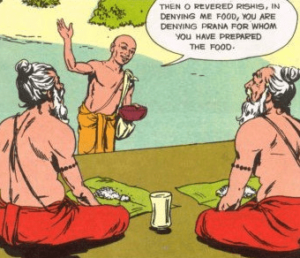
Shaunaka and Abhipratarin were two saints who lived in the distant past. Both of them have practised meditation there before. They worshipped a divinity called Vāyu or a spirit god. He is also considered the god of the universe. People used to think that all living things are connected by a common deity. The saints bowed before the god and then sat down for their meal. Unexpectedly, a beggar approached the saints. He requested food from the saints. However, the saints weren’t ready to provide the beggar with food. The saint Shaunaka then instructed him to depart after declaring that they would not give him their food.

The beggar then enquired as to whom they were worshipping. The saint Abhipratarin then told the beggar that they revered Vāyu, a spirit god. According to the beggar, if they were worshipping a god of spirits, they should be aware that he was present throughout the entire universe. The saints responded by stating that they were aware that God’s spirit existed throughout the cosmos, and that this was why he was referred to as the universe’s creator. The beggar said, “If the god Vāyu is full of the entire world, then he is likewise full of the world. Thus, I am also a part of the universe.”  The saints claimed that the beggar told the truth. The beggar then asked the saints whether they were having a meal with him, implying that they were depriving the universe’s creator god of sustenance. The beggar’s message was clear to the saints. They understood that their choice was unwise. The two sages, Shaunaka and Abhipratarin, then decided to give the beggar some of their food.

The beggar organised his food with wisdom and confidence. With this conviction, the beggar persuaded two learned sages that their acts and sermonising were not the same. The lesson here is that words and actions must match when it comes to giving to the less fortunate. Everyone should practise kindness and share their food. Furthermore, personality is defined by traits like generosity, kindness, serving others, etc.

Learnings from Story

People began exploring information through theses, or statements of opinion, in the ancient world. Second, an objection is a response that disputes or challenges the argument. Third, the synthesis is referred to as the dialectical approach to information assessment. This chapter has shown us that a book cannot be used to locate information. The book also incorporates concepts from the human brain in its writing. Our brain’s knowledge and thoughts can help us deal with any scenario we face in life. The more you learn for yourself, the more you may discover about the world. A person with minimal education ages like a plough ox. His intelligence does not grow, but his flesh does. He was able to get food for the wise by acting like a clever beggar and using his cleverness.

Summary

From this story, we can conclude that it is better to put things into action in which we believe, rather than just merely believing and not practising. The beggar similarly taught two saints that if they trusted in the universal soul, the universal soul would assist the beggar in obtaining food.

Frequently Asked Questions

1.What are Upanishads?
Ans. Hindus have ancient religious works known as the Upanishads, which are a subset of the later Vedic literature. The name “Upanishad” literally translates to “sitting down,” alluding to the fact that during the Vedic period, students would sit next to their enlightened gurus under a tree to get an education.

2.What was the main Belief of these Upanishads?
Ans. The Upanishads include the ideas of thinkers who looked for solutions to philosophical problems. They believed the Universe to be made up of something enduring that even death could not destroy. This “permanence” was created by the union of the individual soul (atman) and the universal soul (Brahman).

3.Write a note on Chhandogya Upanishad.
Ans. One of the biggest Upanishadic compounds is the Chhandogya Upanishad, which comprises eight Prapathakas and several volumes and verses in each. The volumes contain a jumble of tales and subjects. Om’s melody, the substance of everything, language structure, and cosmic literature are all present in the first prapathaka.

4.What is Atma and Paramatma?
Ans. While Paramatma alludes to the absolute, Atma refers to the human soul. Atma is used to refer to the human soul in Vedantic philosophies, while Paramatma or Brahma is used to refer to the Absolute.

5.When were the Upanishads Written? Which is the First Upanishad?
Ans. From the fifth century BCE to the second century BCE, the Upanishads were written. Brihadaranyaka wrote the original Upanishad.